For readers who think of Nairobi mainly as a gateway to somewhere else, Karura Forest Nairobi can be unexpectedly corrective. It is not a decorative city park or a thin strip of urban greenery. It is a large, layered forest landscape within the city, one that combines trails, cycling routes, river sections, colobus monkeys, conservation history, and the strange pleasure of walking through deep shade while traffic and business districts continue only a short distance away.
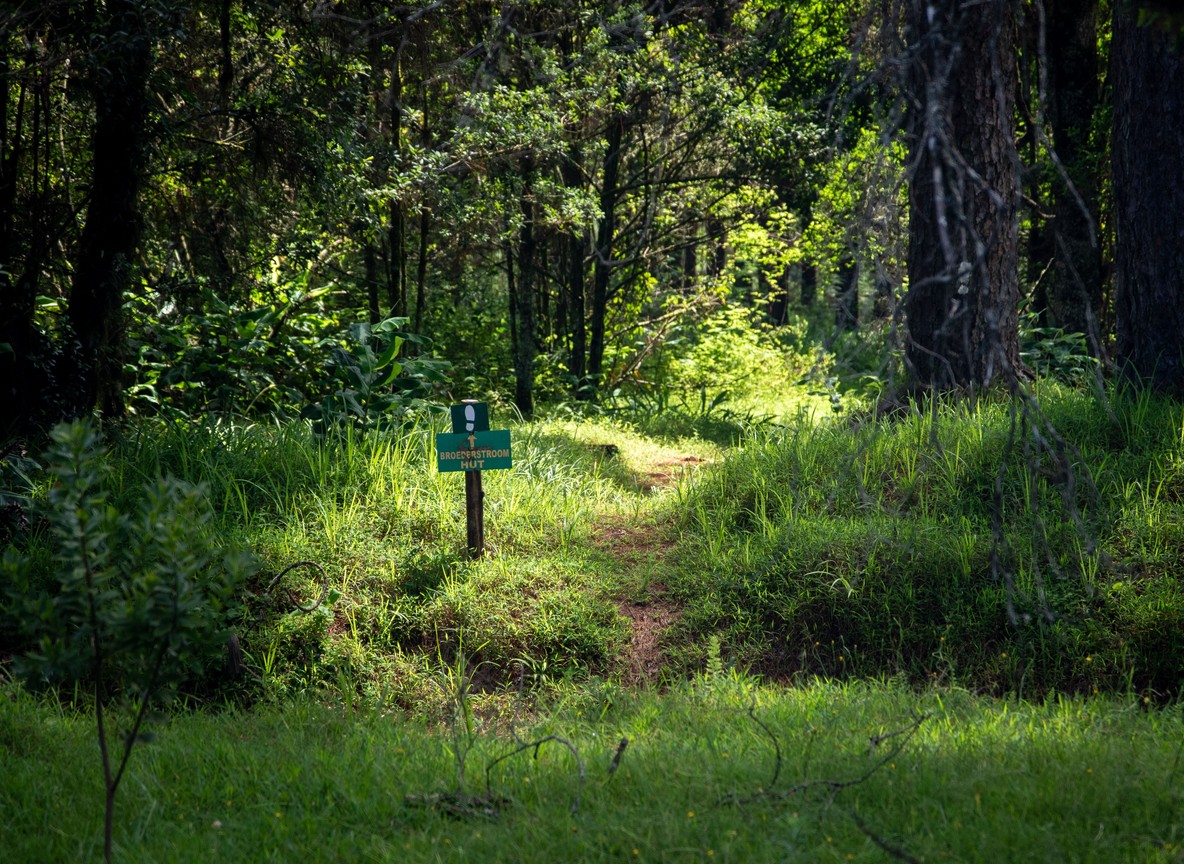
This guide looks at what makes Karura more than a casual stroll, how the trails and waterfalls work, what wildlife readers are likely to notice, and why the forest deserves to be understood as part of Nairobi itself rather than as a pleasant extra on the margins.
Why Karura Matters in Nairobi
The importance of Karura is ecological, historical, and psychological all at once. Ecologically, it functions as a major urban forest within a rapidly developing capital. Historically, it is tied to one of Nairobi’s most important environmental struggles. Psychologically, it changes the scale at which readers think about the city.
Karura matters because it proves that Nairobi is not only a built capital with wildlife at the edges. It is also a city that contains substantial forest space within it.
That gives readers something unusual:
- urban access to real canopy cover
- wildlife encounters without leaving the city
- long-form walking and cycling rather than only attraction-based stops
- a conservation story embedded directly in the urban landscape
What the Forest Feels Like
One reason Karura Forest Nairobi stays with visitors is that the forest does not feel like a single thing. Some sections are open and easy, others denser and more atmospheric. There are plantation areas, indigenous sections, river corridors, bamboo stands, and places where the air feels distinctly cooler than the city beyond the gates.
This variation matters. It keeps the forest from becoming visually repetitive. A reader can move from wide paths to shaded water sections to wildlife viewing and then to a waterfall, all within one outing.
Karura Forest Trails
The trails are central to the experience. Readers who enjoy walking as a way of understanding place usually get more from Karura than from more compressed Nairobi stops.
Main Walking Routes
The best-known Karura forest trails combine moderate distance with enough variety to keep the walk interesting. River-oriented routes tend to produce the strongest forest atmosphere, especially where canopy cover thickens and water changes the soundscape.
Shorter loops work well for readers with limited time. Longer routes suit those who want the forest to become the main activity rather than a quick add-on. In both cases, the attraction is not only the destination points. It is the cumulative rhythm of walking through an urban forest large enough to keep changing.
The Waterfall Sections
The waterfalls are among the most memorable parts of the forest because they challenge what many readers expect from Nairobi. Waterfall viewing platforms and river sections create a pause in the walk that feels almost improbably remote for a city setting.
The falls are not monumental in the way of major mountain cascades. Their appeal lies in context: shade, sound, rock, and the surprise of finding moving water and thick vegetation inside the capital.
Cycling in Karura
Karura also works well for readers who prefer movement over strolling. Karura forest cycling gives the forest a different rhythm. Distances compress, route variation becomes easier, and the outing can feel more exploratory than contemplative.
Cycling changes what readers notice:
- the transitions between forest zones
- the scale of the trail network
- how much ground the forest really covers
- the alternating feeling of openness and enclosure
It also makes Karura one of the few Nairobi activities where the city can be felt physically through exertion and terrain rather than through traffic and transfers.
Wildlife in the Forest
Wildlife is one of the reasons the forest feels more substantial than a city park. Readers are not only walking through trees. They are moving through habitat.
Colobus Monkeys and Other Primates
The black-and-white colobus monkeys are among the forest’s most visually striking residents. Their movement through the canopy gives some parts of the walk a distinctly East African forest character that many first-time readers do not expect from Nairobi.
Other primates may be seen as well, but the colobus are often the species that define the wildlife memory of the visit.
Birds and Smaller Wildlife
Birdlife adds another layer, especially in the morning. Readers interested in urban wildlife Nairobi often find Karura rewarding because it is not dominated by a single spectacle. Instead, the forest reveals itself through accumulation: calls in the canopy, movement at the edge of a trail, a primate crossing overhead, a quieter zone near water, a sudden bird sighting in filtered light.
This is part of what makes the forest satisfying. It rewards attention rather than hurry.
The Conservation Story
Karura is not only a good-looking forest. It is a politically meaningful one. Its survival is tied to public environmental resistance in Nairobi, especially the struggle against land grabbing and the defense of urban green space associated with Wangari Maathai and other environmental actors.
Readers do not need to know every detail before entering, but the basic point matters: the forest exists in its current form because people fought for it.
That changes the moral texture of the visit. Karura is not simply a surviving natural area. It is a defended one.
Karura as a Nairobi Day
One of the most useful things about Karura is that it can function at several scales.
It can be:
- a focused morning walk
- a half-day cycling outing
- part of a broader Nairobi nature day
- a decompression stop before or after more intense travel
This flexibility is why the forest fits well into different kinds of city time. It suits readers on long layovers, readers staying in Nairobi for several days, and readers who want one activity that changes their sense of the city before heading onward to safari country. For shorter timing decisions, the Nairobi layover guide gives the clearest stopover framing.
Why It Matters Before or After Safari
Karura has a subtle but useful relationship to the wider safari experience. For some readers it is a gentle prelude. It sharpens visual attention, slows pace, and reminds visitors that wildlife observation starts with patience rather than scale.
For other readers it works in reverse: after a major safari, Karura becomes a softer return to Kenya’s ecological life inside an urban setting. It shows that wildlife and conservation are not confined only to famous reserves.
This is why the forest works so well in Nairobi. It changes how the city connects to the rest of the country. It also balances well with more wildlife-focused stops like the Nairobi National Park Safari guide and the broader Nairobi city guide.
Practical Reader Expectations
Readers should approach Karura as a real outdoor environment rather than as a polished promenade. A good visit depends on:
- allowing enough time
- wearing suitable shoes
- starting early if wildlife and quiet matter
- deciding in advance whether the outing is for walking, cycling, or both
The forest is accessible, but it is still best enjoyed with a little intention. Treated casually, it is pleasant. Treated attentively, it becomes one of Nairobi’s strongest nature experiences.
Explorer Notes
- Karura is one of the clearest reasons not to reduce Nairobi to an airport-and-hotel city.
- The trail network matters as much as any single attraction point.
- The waterfalls work because of their urban context as much as their form.
- Colobus monkeys give the forest a memorable wildlife identity.
- The conservation history makes the forest feel earned rather than incidental.
Frequently Asked Questions
Is Karura Forest worth visiting in Nairobi?
Yes, especially for readers who want nature, walking, or urban conservation context rather than only city traffic and standard attractions.
Can readers cycle in Karura?
Yes. Cycling is one of the main ways to experience the forest and helps reveal its scale.
Are the waterfalls a major attraction?
Yes, though their appeal is tied to the overall forest setting rather than sheer size.
Is there wildlife in Karura?
Yes. Colobus monkeys, birds, and smaller forest wildlife are among the most notable.
Is Karura mainly for quick visits or longer walks?
It can work as either, depending on route choice and how much time the reader gives it.
Conclusion
Karura Forest Nairobi is one of the best examples of how the city resists simple description. It is not just an urban center with safari departures at its edges. It is also a place with deep forest paths, active conservation memory, wildlife overhead, and enough green space to change the rhythm of a day completely.
For readers willing to give it time, Karura becomes more than a pleasant break from Nairobi. It becomes one of the places that explains the city more fully.
If this guide has you ready to travel, a safari specialist can handle the route, camps, and logistics end to end.
Want to Book a Tour With Us?