Kenya offers some of the strongest luxury safari accommodation in Africa. The range extends from classic tented camps that have operated for decades on the Mara River to newer conservancy lodges with private concessions, architectural ambition, and low guest counts. Understanding what genuinely distinguishes high-end properties from well-marketed mid-range ones is the most useful starting point for planning a premium safari.
This guide covers the main regions and what their best accommodation delivers, how to evaluate a luxury lodge’s real strengths, and the questions worth asking before committing to a high-end booking.
What Makes a Luxury Safari Lodge in Kenya
Price alone does not define luxury in Kenya’s safari market. Several lodges charge premium rates while delivering experiences that feel generic rather than genuinely distinctive. The properties that consistently earn their reputation are differentiated by:
Exclusive location. The strongest luxury options occupy private conservancy land or prime riverside positions where the surrounding land is under conservation management rather than open to multiple operators. This matters for the on-the-ground experience because it determines whether you share game drive circuits with ten other vehicles or spend the morning alone with a sighting.
Low guest count. Camps with ten to twenty-four guests create a fundamentally different atmosphere from those with forty or sixty rooms. Meal times, guide attention, and the feeling of the camp itself all change when the scale is small.
Private vehicles. Genuine luxury safari camps include private vehicles per booking as standard – not as an add-on or upgrade. The difference between following a group vehicle schedule and having complete freedom over your drive timing and pace is significant.
Guiding quality. The guide often determines the quality of the experience more than the lodge itself. Premium properties employ guides with formal training, years of field experience in the specific ecosystem, and the ability to provide depth of interpretation rather than simple species identification.
Conservation integration. The lodges that occupy private conservancies typically contribute to the conservation fees that make those conservancies financially viable. For guests who care about the sustainability of what they are seeing, this is worth investigating before booking.
Masai Mara: Kenya’s Most Famous Luxury Region
The Masai Mara is where the highest concentration of Kenya’s luxury safari accommodation sits, concentrated in the national reserve itself and in the private conservancies on its northern and eastern boundaries.
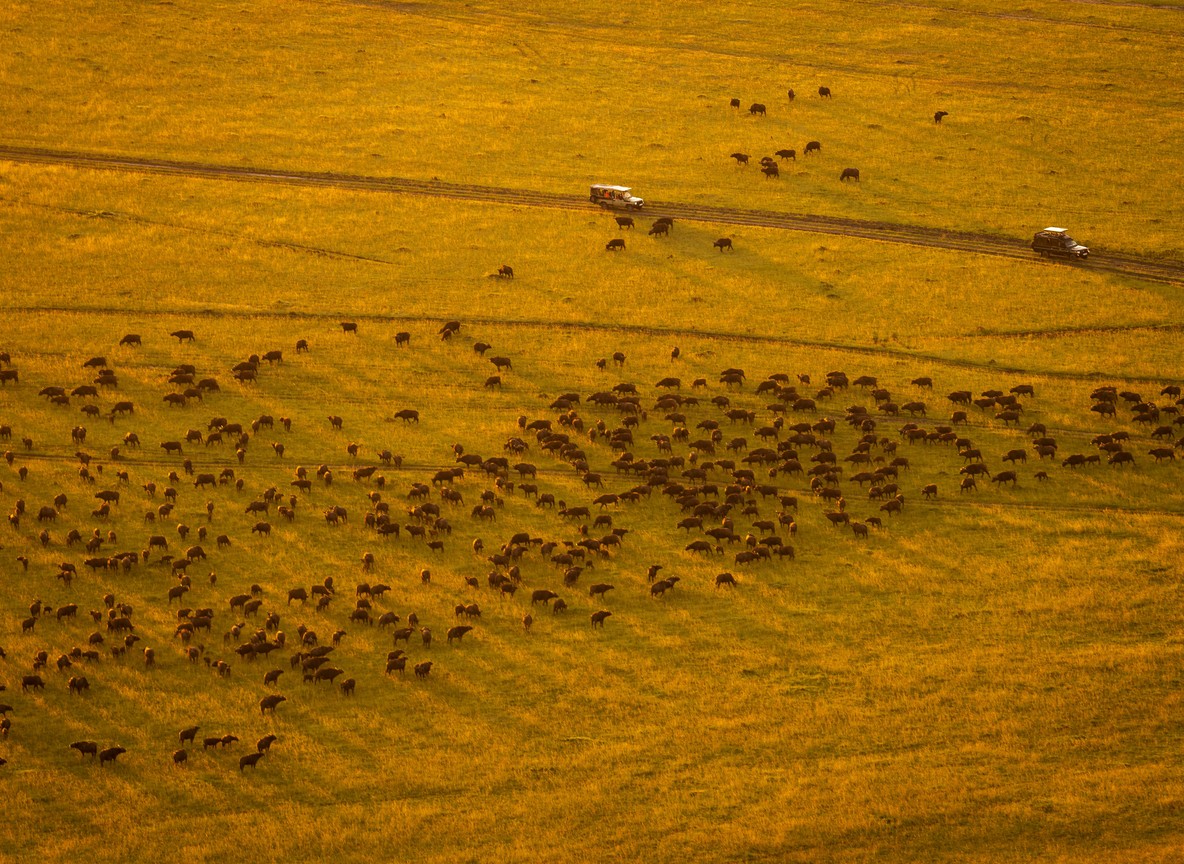
The conservancy advantage. The properties that consistently receive the strongest reviews from serious safari travellers are those operating on the Mara conservancies rather than inside the national reserve boundary. Conservancy lodges typically offer off-road driving, night drives, walking activities, and far fewer vehicles per kilometre than the national reserve allows. This makes the experience substantially more controlled and exclusive. Lion, leopard, and cheetah are all resident in strong numbers across the conservancies, and conservancy guides share sightings between properties, so a strong cat sighting on one lodge’s territory is often accessible to guests staying nearby.
Notable Masai Mara properties in the high-end bracket:
Angama Mara, positioned on the Oloololo escarpment above the Great Rift Valley, offers thirty tented suites with floor-to-ceiling glass fronts and panoramic views over the Mara below. The setting is visually striking in a way few safari lodges anywhere in Africa match.
Mahali Mzuri, in the Motorogi Conservancy, operates twelve suites in a true private concession where wildlife encounters are exclusive to lodge guests. The low guest count and private conservancy access define the experience.
Governors’ Camp is one of the most established luxury properties on the Mara River – a classic camp with a track record since the early 1970s and strong positioning for river crossings during migration season.
Entim Camp in the Mara Naboisho Conservancy is consistently cited by wildlife-focused travellers for its guiding quality and conservancy access. Boutique scale with serious ecological credentials.
Price range: Masai Mara luxury properties run approximately $600 to $1,500 per person per night, inclusive of accommodation, meals, drives, and activities (excluding premium drinks, spa, balloon safari, and conservation fees).
Nairobi Area: Giraffe Manor and the Urban Safari Option
Giraffe Manor in Nairobi’s Karen suburb is one of Kenya’s most photographed properties for a specific reason: resident Rothschild giraffes access the dining room and guest rooms directly during feeding times. The experience is genuine and surprising even for repeat visitors.
The manor hosts twelve rooms in a 1930s house and regularly books out six to twelve months ahead. It is not a destination wildlife camp – it is a one-or-two-night experience most effectively used as the opening or closing night of a longer Kenya itinerary. It is worth being honest about who this is not for: there are no game drives or big-game viewing on site, the giraffe encounters happen at set feeding times rather than continuously, and travellers expecting a full safari experience in Nairobi will be disappointed. Book it as a bookend, not a main event. Adjacent to the Giraffe Centre conservation project.
Samburu: Northern Kenya’s Remote Alternative
Samburu offers a completely different safari character from the Masai Mara: arid, dramatic, and focused on species that do not exist in the south. Grevy’s zebra, reticulated giraffe, gerenuk, and Beisa oryx are the target animals. African wild dog also turn up in the Samburu and Laikipia conservancies more reliably than almost anywhere else in Kenya, a genuine draw for travellers who have already ticked off the Mara’s big cats. The ecosystem has a wild, expedition quality that appeals to repeat safari travellers who want something they have not seen before.
Sasaab, in the Laikipia Plateau overlooking Samburu, is the most architecturally ambitious luxury property in this region – Moroccan in design, with nine suites and a view that is among the most striking of any safari property in Kenya.
Saruni Samburu, in the Kalama Conservancy, provides a more intimate scale with six villas and strong conservation programming. The Italian-Kenyan character of the property adds a distinctive dining quality.
Elephant Bedroom Camp sits on the Ewaso Nyiro River with consistent elephant access from the camp itself – a different dynamic from properties positioned primarily for game drive output.
What Luxury Safari Rates Include (and What They Do Not)
Most Kenyan luxury lodges publish full-board or all-inclusive rates. Understanding what is typically included and what is not saves booking surprises.
Usually included: Accommodation, all meals, twice-daily game drives, soft drinks and house wines at meals, guided activities (walking, night drives where available), and conservation fees for the property’s own concession.
Usually excluded: Premium alcohol, spa treatments, hot air balloon safari (significant additional cost at Masai Mara), laundry, gratuities, national park entry fees (for lodges adjacent to but outside park boundaries), and inter-camp flight costs.
Conservation fees: Many conservancy lodges charge a separate conservation fee per night, which funds the community land leases that make private conservancy access possible. This fee can be $50 to $100 per person per night and is worth confirming at the booking stage.
How to Choose Between Luxury Properties
Match the lodge to the season. The Masai Mara’s luxury camps reach peak value July through October when the migration is active and large predator concentrations are at their seasonal high. Samburu is worth a visit year-round but is best June through October and January through February for dry-season wildlife. The coast combination works year-round.
Match the scale to the group. Couples and honeymooners generally do better in smaller boutique camps where the atmosphere is more personal and the guiding more individual. Families with children should check minimum age requirements carefully – several high-end camps have age restrictions (commonly a minimum of 7 or 12 years) that affect family compatibility.
Ask about guide assignments. In some luxury camps, guests share a guide pool; in others, dedicated guides stay with the same guests for their entire visit. The second model consistently produces better experiences because the guide learns the group’s interests and adjusts interpretation accordingly.
Check conservancy status. If night drives, off-road driving, and walking safaris matter to you, confirm these are offered before booking. These activities are not available everywhere and depend on the camp’s specific land access arrangements.
Seasonal Considerations
Kenya’s dry season (June to October, and January to February) produces the clearest skies, most concentrated wildlife, and highest demand – and the highest rates. Green season (March to May and November to December) brings lower rates, fewer tourists, and lush landscape conditions. Some luxury camps reduce rates by 20 to 40 percent in the green months.
For more on planning a Kenya safari, see the custom mid-range and luxury Kenya safaris guide and the grand Kenya safari itinerary guide on Touring Insights.
If this guide has you ready to travel, a safari specialist can handle the route, camps, and logistics end to end.
Want to Book a Tour With Us?Further reading
More safari planning resources
- Interactive Maasai Mara map from Valley Safaris
- Luxury safari collection on FindMySafari
- Masai Mara destination guide on FindMySafari
- Map of Samburu from Valley Safaris