

These options may appear in the same planning conversation, but they do not deliver the same safari. Wildlife style, road time, camp feel, and the kind of stories you bring home all shift with the choice. That is why aberdare vs mount kenya national park matters.
Trunktrails Safaris helps travellers make this decision every week. We are Nairobi-based and Kenyan-owned. We weigh real drive times, wildlife strengths, camp standards, and what guests actually want from the trip, not brochure shortcuts. That makes the recommendation easier to trust.
Here is the honest aberdare vs mount kenya national park comparison, the same way we break it down before a safari is booked.
Overview
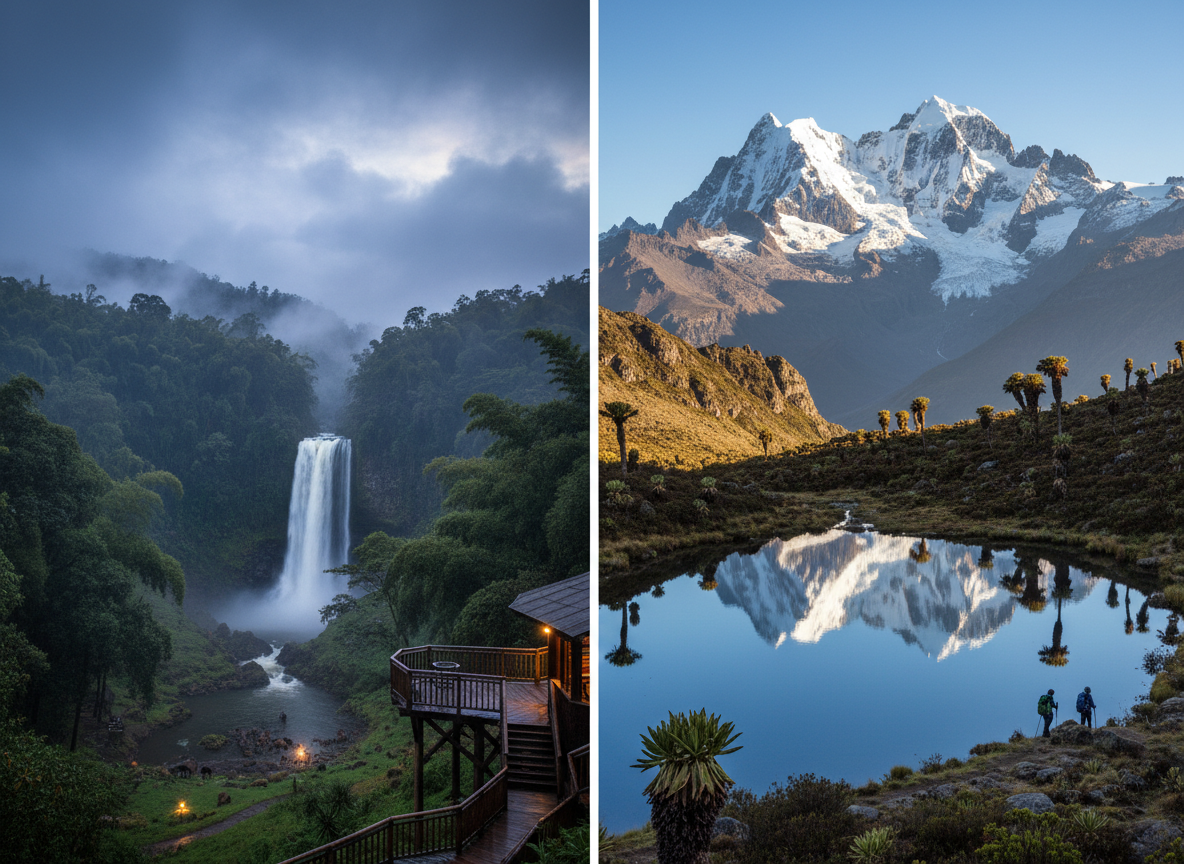
Aberdare National Park covers approximately 767 km2 in the central highlands of Kenya, rising from dense bamboo forest and moorland at 2,000 metres to the alpine zone at 4,000+ metres. The park is famous for its waterfalls, black leopard sightings, and the unique “treetop” safari lodge experience.
Mount Kenya National Park encompasses the upper slopes and summit zone of Mount Kenya: Africa’s second-highest peak at 5,199 metres. The park covers approximately 715 km2 and includes the mountain’s glaciated peaks, high-altitude moorland, and montane forest on the lower slopes. The park overlaps with Mount Kenya UNESCO World Heritage Site.
Wildlife: Aberdare vs Mount Kenya
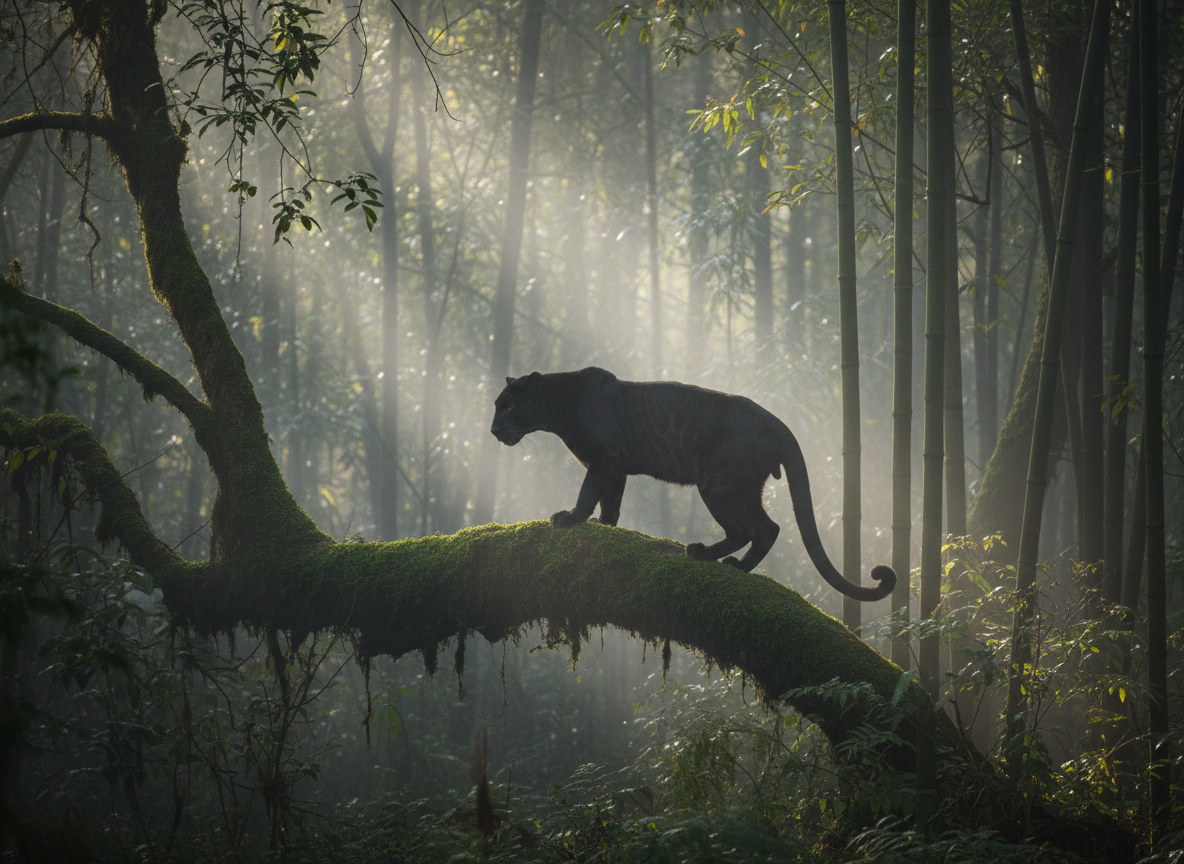
Aberdare Wildlife
Aberdare national park safari offers a surprisingly diverse wildlife experience, shaped by the dense forest and bamboo habitat:
- Black leopard: Aberdare is one of Africa’s best locations for melanistic (black) leopard sightings: a rare colour variant of the normal spotted leopard. Sightings are not guaranteed but they are more likely here than almost anywhere else.
- Black rhino: Aberdare has a population of black rhino, though sightings require patient game drives.
- Elephant, buffalo, giant forest hog: All present and relatively common in the moorland and forest transition zones.
- Lion: Present but rarely seen in the dense forest habitat.
- Bongo: The mountain bongo: one of Africa’s most elusive forest antelopes: is found in Aberdare. Extremely difficult to see.
- Waterbuck, bushbuck, defassa waterbuck: Common in the moorland and stream valleys.
The treetop safari lodges in Aberdare (The Ark and Treetops) are positioned over salt licks and waterholes where wildlife comes to drink at night. Night-time wildlife watching from these elevated viewing decks is a unique experience: elephant, buffalo, rhino, and (very occasionally) leopard visiting the floodlit waterhole.
Mount Kenya Wildlife
Mount Kenya national park safari wildlife is concentrated on the forest and moorland zones below the summit:
- Elephant and buffalo: Common in the forest belt
- Black and white colobus monkey: Highly visible in the upper montane forest
- Syke’s monkey and olive baboon: Lower forest zones
- Eland, waterbuck, and bushbuck: Moorland species
- Leopard: Present but rarely seen in dense forest
- Rock hyrax: Common on the higher rocky areas
The upper summit zone (above 4,000 metres) supports relatively little wildlife due to extreme altitude. The primary draw of Mount Kenya NP above the forest zone is not wildlife but landscape: the glaciated peaks, tarns, and dramatic alpine scenery.
Activities: Aberdare vs Mount Kenya
Aberdare offers:
- Game drives on the moorland plateau
- Treetop lodge night viewing at salt licks (The Ark, Treetops)
- Day and overnight waterfall walks
- Fly-camping
- Aberdare is accessible from Nairobi for a day or overnight visit
Mount Kenya offers:
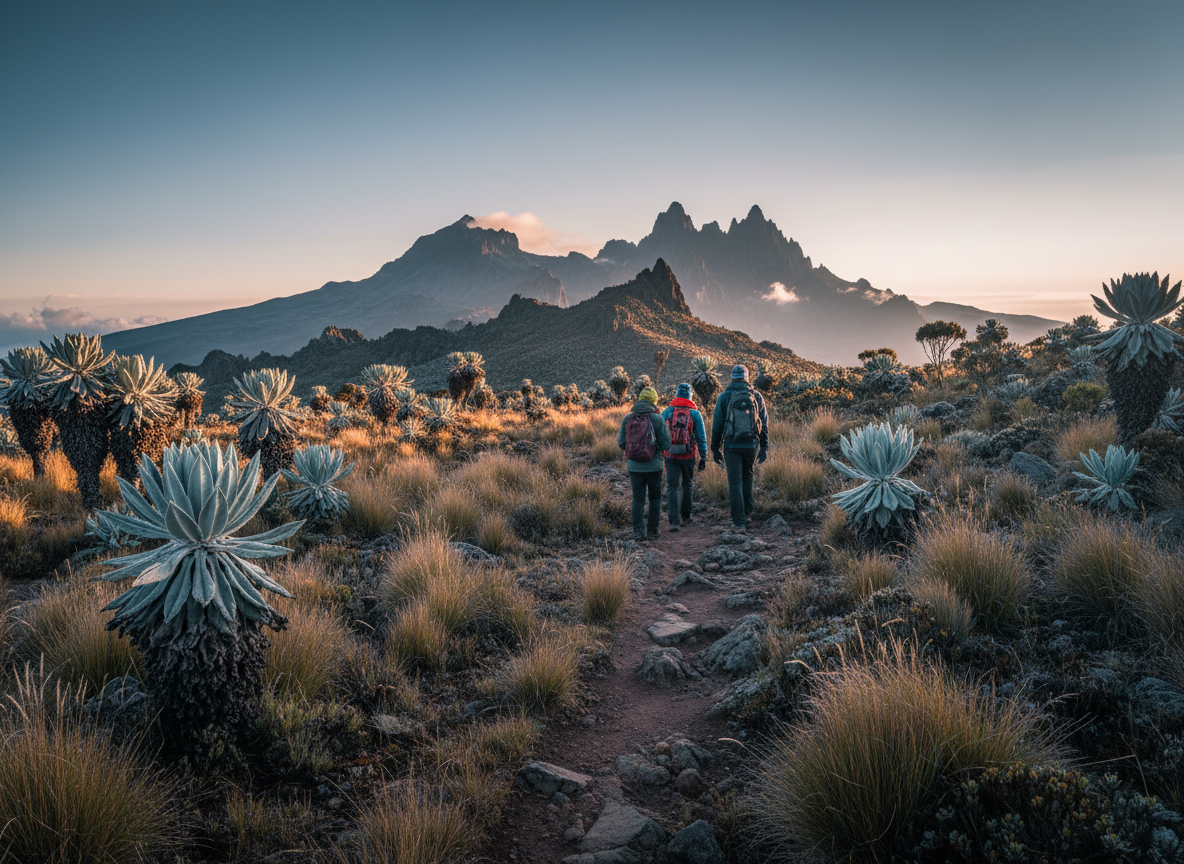
- Summit trekking (technical climbing to Batian and Nelion peaks, or non-technical Point Lenana at 4,895 metres)
- Forest walks and birdwatching in the lower zones
- Rock climbing routes on the summit peaks
- Mountain biking on lower forest trails
- Fishing (trout) in mountain streams
The fundamental difference: Aberdare is a wildlife and forest park with night-viewing accommodation. Mount Kenya is primarily a mountain park where the activities are trekking, climbing, and mountain exploration: with wildlife as a secondary experience in the lower forest zones.
Scenery
Aberdare offers dramatic highland scenery: the Salient (lower moorland plateau) with open views, the dense bamboo and forest zones, waterfalls (Karuru and Chania falls), and the Kinangop plateau. The landscape is lush, green, and often misty: very different from any other Kenya park.
Mount Kenya delivers one of the most dramatic mountain landscapes in Africa. The glaciated summit towers, high-altitude moorland, and the dramatic tarn lakes below the peaks (Lake Michaelson, Hausberg Tarn) create an alpine environment with genuine wilderness character. The view of Mount Kenya from the surrounding plains: Nanyuki, Meru, Embu: is extraordinary on a clear morning.
Accessibility
Aberdare National Park is approximately 150 km from Nairobi, accessible via Nyeri: around two to three hours by road. The Aberdare Country Club (Salient zone entry) is the most commonly used base.
Mount Kenya National Park is accessible from multiple gates: Sirimon Gate (Nanyuki side, northwest), Chogoria Gate (southeast, Meru side), and Kamweti Gate. Nanyuki is the most commonly used base, approximately 200 km from Nairobi, three hours by road, or 45 minutes by scheduled flight.
Both parks are easily combined with Ol Pejeta Conservancy and Samburu on a central/northern Kenya circuit.
Which Should You Choose
Choose Aberdare National Park if:
- The treetop lodge night-viewing experience (The Ark or Treetops) is on your list
- You want a wildlife safari in a very different habitat from the Masai Mara
- Black leopard or mountain bongo are specific targets (patience required)
- You want to combine a highland safari with central Kenya parks like Ol Pejeta
Choose Mount Kenya National Park if:
- Trekking or summit climbing is a goal: Point Lenana, Batian, or Nelion
- Alpine mountain scenery and glaciated peaks are the priority
- You want a non-safari activity as part of your Kenya itinerary
- Wildlife in a montane forest setting is of interest alongside the mountain experience
Combine both: Many Kenya highland itineraries from Trunktrails Safaris include both parks in a central Kenya circuit: Aberdare treetop lodge experience, then northward to Ol Pejeta for rhino and the northern white rhino encounter, then Samburu for the Special Five. A Mount Kenya base at Nanyuki allows trekking on the mountain alongside these parks.
Quick Comparison: Aberdare vs Mount Kenya
| Factor | Aberdare National Park | Mount Kenya National Park |
| Primary appeal | Wildlife in highland forest, night viewing | Mountain trekking and climbing |
| Wildlife highlights | Black leopard, black rhino, elephant | Elephant, colobus monkey, leopard (forest) |
| Unique feature | Treetop lodge waterholes | Africa’s second highest peak |
| Activities | Game drives, night viewing, waterfall walks | Trekking, climbing, birdwatching |
| Scenery | Forest, moorland, waterfalls | Glaciated peaks, moorland, tarns |
| Distance from Nairobi | ~150 km (2 to 3 hrs) | ~200 km (3 hrs to Nanyuki) |
| Combined with | Ol Pejeta, Samburu, Lake Nakuru | Ol Pejeta, Samburu, Laikipia |
Ready to Plan Your Kenya Safari? Talk to Trunktrails Safaris
Trunktrails Safaris designs tailor-made tours and safaris for every traveller and every budget. From green-season adventures to private luxury camps, our tours and safaris are built by a Nairobi-based team that speaks to you directly, not through a call centre. Most WhatsApp enquiries about our Kenya tours and safaris get a reply from Trunktrails Safaris within the hour.
KATO Member | TRA Licensed | Native Kenyan Owned | Conservation First | 24/7 Support