

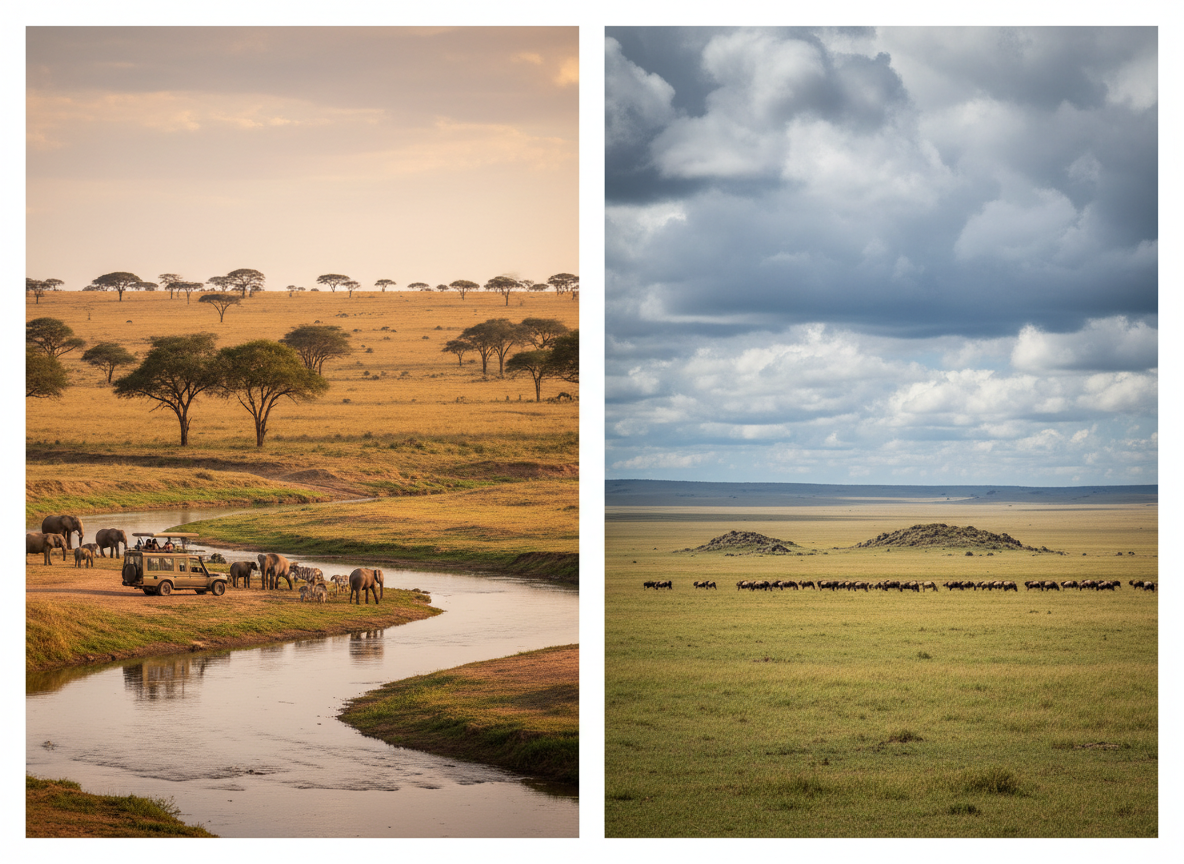
The Masai Mara in Kenya and the Serengeti in Tanzania share the same continuous ecosystem. The Great Migration wildebeest herds cross the border seasonally: spending July to October in Kenya’s Mara and January to June in Tanzania’s Serengeti. For travelers asking whether they should add a Serengeti leg to their Masai Mara safari, the answer depends on timing, budget, and what specifically draws them to the Serengeti.
This guide from Trunktrails Safaris compares the Masai Mara-only safari with a Masai Mara plus Serengeti combination, helping you decide whether the Tanzania add-on is worth the additional investment.
Quick Comparison: Masai Mara Only vs Masai Mara + Serengeti
| Factor | Masai Mara Only | Masai Mara + Serengeti |
| Countries | Kenya only | Kenya + Tanzania |
| Countries Fee | Kenya park fees | Kenya + Tanzania park fees |
| Visa | Kenya eTA only | Kenya eTA + Tanzania visa (or EAC Tourist Visa) |
| Logistics | Simple: internal Kenya flights | Complex: cross-border flight or road |
| Migration Coverage | July to October (Kenya crossing season) | Year-round: different herds at different times |
| Ngorongoro Crater | Not included | Can be added as a Tanzania extension |
| Park Fee Difference | Kenya reserve fees | Serengeti ($70/person/day) + Tanzania concession fees |
| Flight Addition | None | Nairobi or Mara to Arusha or Kilimanjaro |
| Trip Duration Needed | 5 to 10 days | Minimum 12 days for meaningful combination |
| Best For | First safari; July–Oct travel; Kenya focus | Return visitors; January–June travel; Tanzania highlights |
Why the Masai Mara and Serengeti Ecosystem is One
The Masai Mara (Kenya) and the Serengeti (Tanzania) are not two separate places that happen to be near each other. They are one continuous ecosystem: the Greater Serengeti-Mara Ecosystem: separated only by a political border drawn in the colonial era. The wildlife moves freely between them.
The Great Migration is the most visible expression of this continuity. The million-plus wildebeest follow rainfall and grass growth in a circular annual pattern across the ecosystem:
- January to March: Calving season in the Serengeti’s southern short-grass plains
- April to June: Herds move northward through the central Serengeti
- June to July: Herds enter the Mara ecosystem via the northern Serengeti (Kenya border)
- July to October: River crossings at the Mara River; peak activity in Kenya’s Masai Mara
- November to December: Return migration south through the Serengeti
Understanding this calendar helps you decide whether to visit one side of the border or both.
When Adding the Serengeti Makes Most Sense
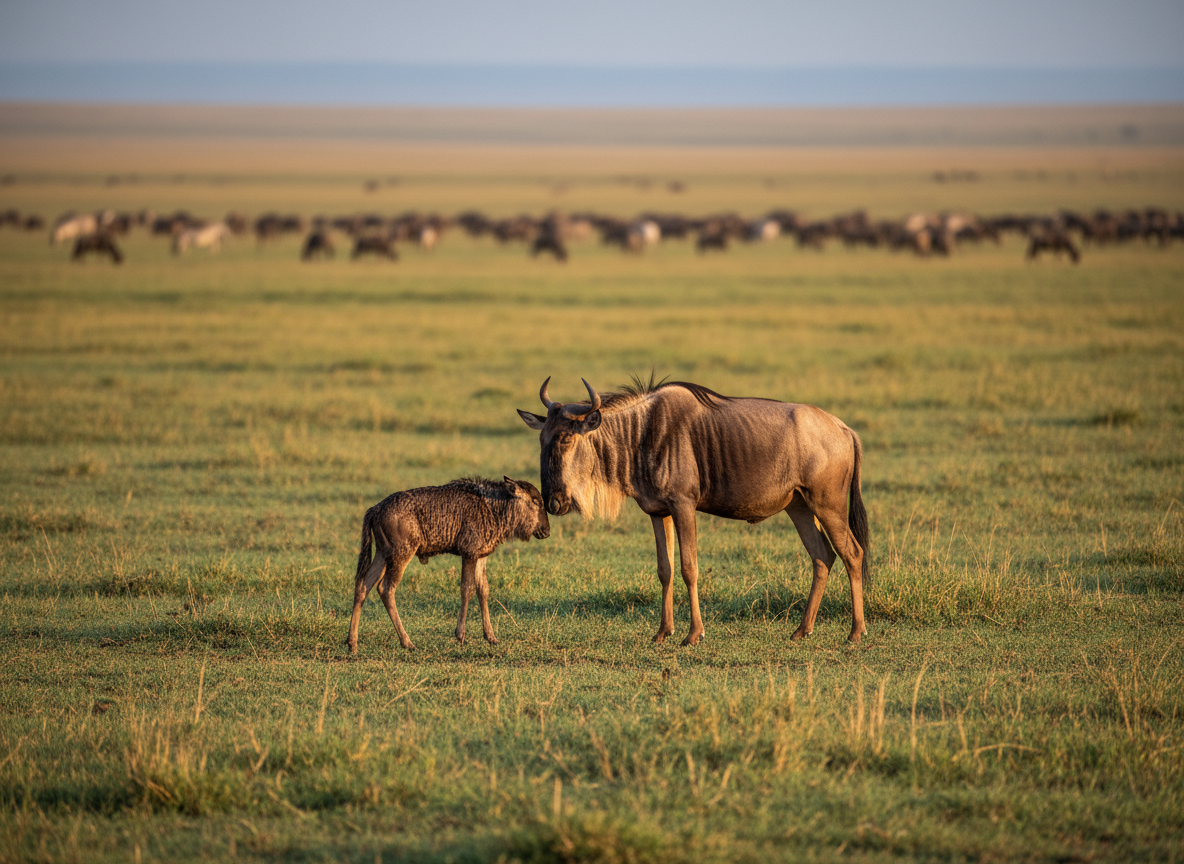
January to June Travel
If your travel window falls between January and June, the Great Migration is in the Serengeti: not yet in Kenya’s Masai Mara. For travelers who want the classic wildebeest spectacle, the Serengeti is the better primary destination during these months.
Adding a Masai Mara leg to a January-June Tanzania itinerary gives you Kenya’s resident wildlife while the wildebeest are still in Tanzania: a reverse of the typical approach.
Adding Ngorongoro Crater
The Ngorongoro Crater is one of the world’s greatest wildlife experiences: a collapsed volcanic caldera 19 kilometers wide, supporting one of the highest densities of wildlife in Africa. Lion prides, black rhino, flamingo-fringed lakes, and enormous elephant bulls all inhabit this extraordinary enclosed ecosystem. Ngorongoro is not accessible from Kenya without crossing into Tanzania.
For travelers whose primary draw is Ngorongoro, a Tanzania add-on to a Masai Mara safari is entirely justified on this basis alone.
The Logistics of a Cross-Border Safari
How to Cross from Kenya to Tanzania
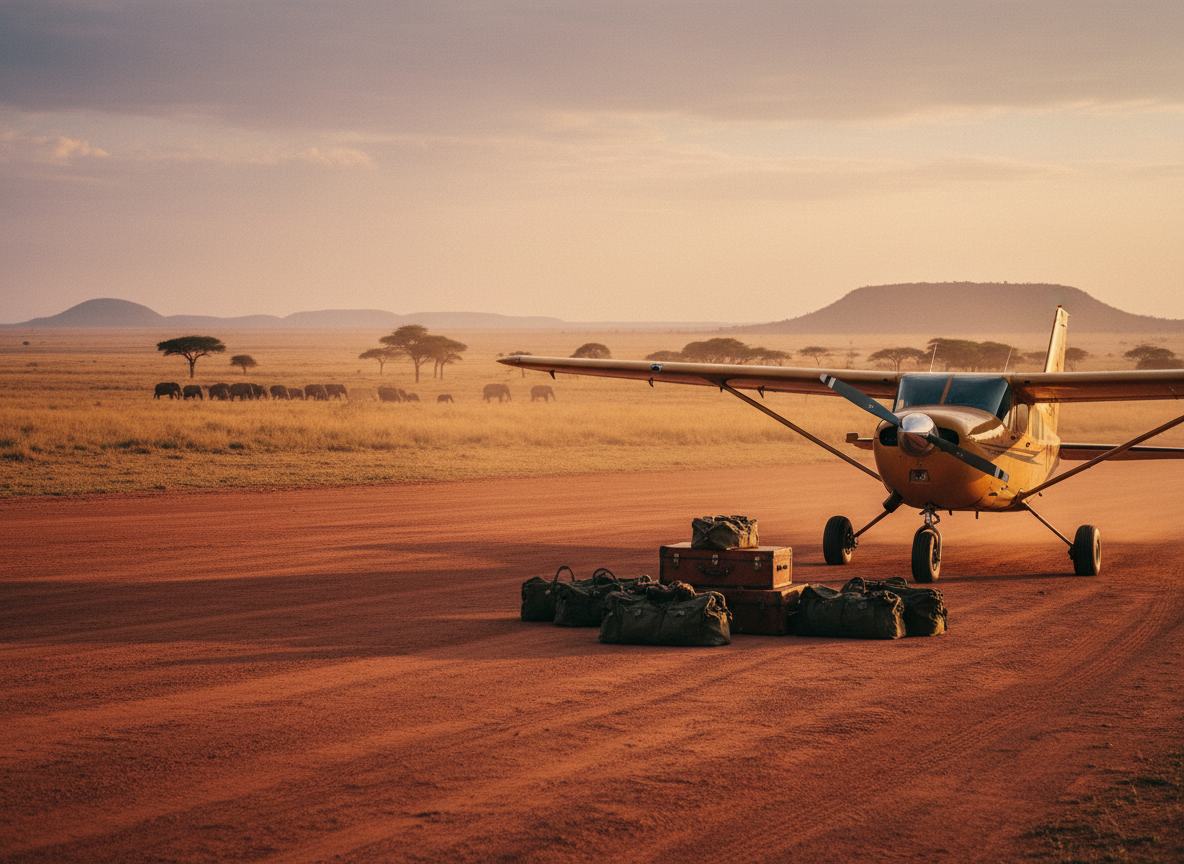
- By air: Direct flights connect Nairobi (JKIA) to Arusha (Kilimanjaro International or Arusha Airport); approximately 1 hour flight; cost $150 to $300 per person one way
- By charter: Private aircraft can cross directly from Masai Mara airstrips to northern Serengeti airstrips (Kleins, Lobo, Kogatende); 1 to 2 hour flight
- By road: Namanga border crossing between Kenya and Tanzania; 4 to 5 hours from Nairobi to Arusha: viable but slow
Tanzania Entry Requirements
Most nationalities require a Tanzania visa ($50 USD on arrival at major entry points, or online e-visa). The East Africa Tourist Visa ($100 USD) covers Kenya, Uganda, and Tanzania together: an excellent value for travelers combining multiple countries.
Tanzania park fees for the Serengeti are approximately $70 per person per day. Ngorongoro Conservation Area has a $70 per person per day crater descent fee plus per-vehicle fees.
Cost Comparison
Masai Mara Only (7 nights)
- Accommodation + all-inclusive: $2,100 to $10,500 per person
- Internal flights: $300 to $600 return to Mara from Nairobi
- Kenya park fees: included in camp rate
Masai Mara + Serengeti (12 to 14 nights)
- Masai Mara component: $2,100 to $10,500 per person
- Serengeti component: $2,000 to $8,000 per person
- Cross-border flights: $300 to $800 per person
- Tanzania visa: $50 per person
- Tanzania park fees: $70+ per person per day
Total cost for a combined 12-day itinerary ranges from approximately $5,000 to $25,000+ per person depending on accommodation category. This is a significant investment that makes sense for travelers committed to experiencing both sides of the ecosystem.
Which Should You Choose?
Choose Masai Mara Only If You:
- Are traveling July to October when Kenya’s Mara River crossings are at peak
- Are on your first Kenya or Africa safari and want a focused, deep experience
- Have 7 to 10 days available: not enough for a meaningful combined itinerary
- Want to minimize logistics complexity and cross-border costs
- Have a budget that makes the Tanzania addition prohibitive
Choose Masai Mara + Serengeti If You:
- Are traveling January to June when the migration is in Tanzania
- Want Ngorongoro Crater as a specific experience: only accessible from Tanzania
- Have 12 to 14 days and significant budget for a comprehensive East Africa circuit
- Are a return visitor who has already done a Kenya-only safari and wants Tanzania’s parks
- Want to follow the entire Great Migration circuit across both countries in one trip
Plan Your Kenya-Tanzania Safari with Trunktrails Safaris
Trunktrails Safaris designs Kenya-based safari itineraries and can coordinate Tanzania extensions including Serengeti camps, Ngorongoro Crater visits, and cross-border flight logistics. We work with trusted Tanzania partners to deliver seamless multi-country East Africa safaris.
Tell us your travel dates and we will show you exactly where the Great Migration is during your trip: and whether Kenya, Tanzania, or both is the right choice for your safari.