

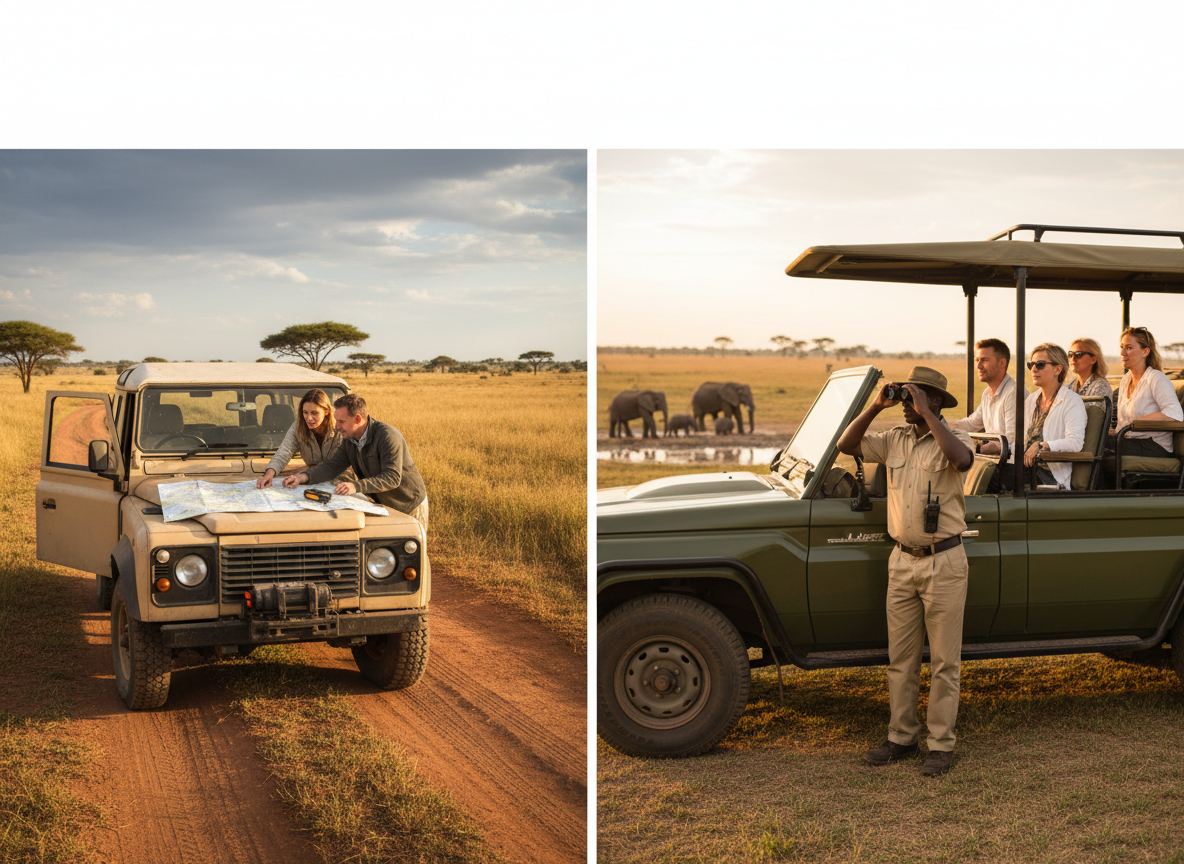
Self-drive safaris are a popular concept worldwide, and Kenya does allow independent driving in some parks. However, the self-drive option in Kenya has important limitations and genuine trade-offs that every traveler should understand before deciding to navigate independently.
This guide from Trunktrails Safaris compares self-drive and guided safaris in Kenya across feasibility, cost, wildlife experience quality, safety, and which parks actually allow independent access.
Quick Comparison: Self-Drive vs Guided Safari Kenya
| Factor | Self-Drive Safari | Guided Safari |
| Available In | Amboseli, Tsavo, Lake Nakuru (mainly) | All Kenya parks and conservancies |
| Masai Mara | Restricted: guide required in most zones | Full access with professional guide |
| Wildlife Knowledge | Your own knowledge and field guides | Expert local wildlife knowledge |
| Animal Behavior Reading | Limited unless experienced | Guides read tracks, posture, behavior cues |
| Navigation | Maps, apps, self-routing | Guide knows every track and current wildlife locations |
| Cost | Vehicle hire + park fees (no guide fee) | Vehicle + park fees + guide fees ($150 to $300/day) |
| Safety | Self-responsible in remote wilderness | Guide carries first aid knowledge and communication |
| Language | English-only interaction | Multilingual guides; Swahili and Maasai community access |
| Flexibility | High: your own pace and timing | High: private guides adapt to your interests |
| Photography | Good; you control stopping | Better: guide positions for light and behavior |
Where Self-Drive Is Possible in Kenya
Parks That Allow Self-Drive
Self-drive is permitted in several of Kenya’s national parks:
- Amboseli National Park: Self-drive is allowed and relatively straightforward. The park is compact (392 km²) with clearly marked circuits. Wildlife concentrates around the swamp areas and is relatively easy to locate without a guide
- Tsavo East National Park: Self-drive is permitted but challenging given the park’s enormous size (11,747 km²). Getting genuinely lost on unmarked tracks is a real risk. Recommended only for very experienced bush travelers
- Tsavo West National Park: Similarly vast; self-drive permitted but complex terrain
- Lake Nakuru National Park: Self-drive possible and manageable given the compact size; flamingos and rhinos are reliable finds
- Hell’s Gate National Park: Specifically designed for self-drive (and even cycling): gorges, geothermal activity, and easily navigated circuit roads
Where Self-Drive Is Restricted: Masai Mara
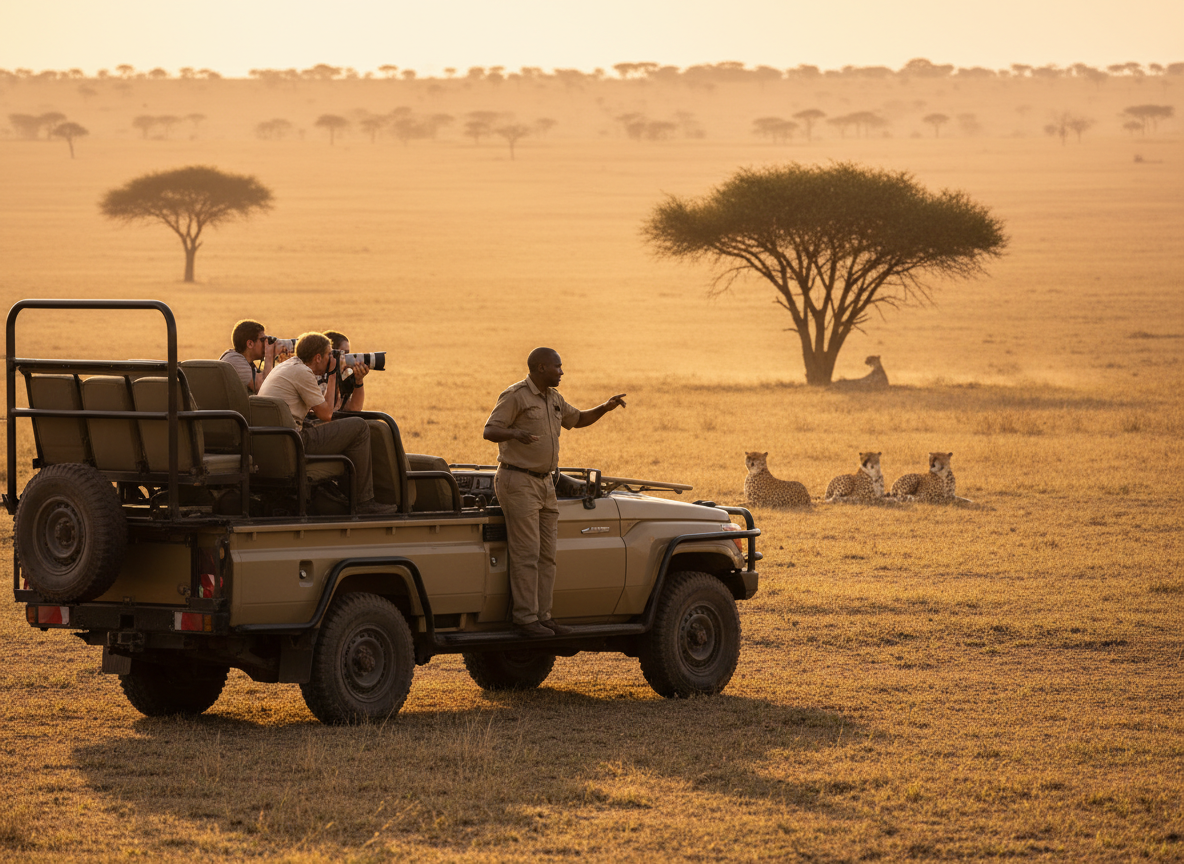
The Masai Mara National Reserve requires visitors to be accompanied by a licensed guide in official game drive vehicles. Independent private cars are generally not permitted for game drives inside the reserve. Some exceptions exist for specific entry scenarios, but for practical purposes, the Masai Mara is a guided-only destination.
Private conservancies adjacent to the Masai Mara (Olare Motorogi, Naboisho, Mara North) are exclusively guided: they are private land requiring booked camp stays and guided activities.
What You Gain with a Professional Guide
Wildlife Knowledge
A professional Kenyan safari guide brings years of training in wildlife behavior, ecology, and animal identification. The difference between a trained guide and a self-drive tourist is the difference between watching an animal and understanding what it is doing and why.
A guide reads the lion’s ear position and body angle to predict a charge or a relaxed posture. A guide hears a particular bird call that indicates a leopard is nearby and the bush is alarmed. A guide follows tracks in the dust to find a cheetah that has moved into a new area since morning. This layered intelligence is simply not replicable from a field guide or a wildlife app.
Navigation
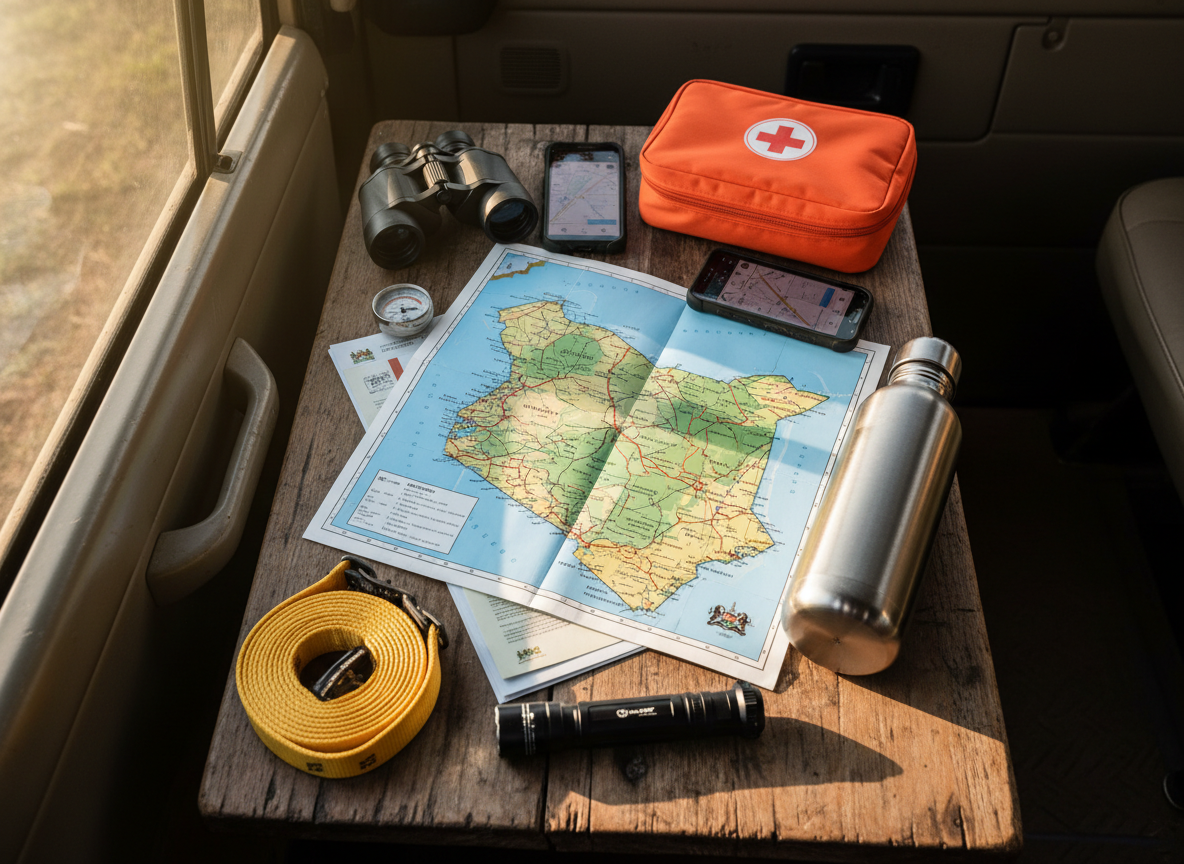
The Masai Mara is a complex terrain of seasonal tracks, flooded crossings, and camp-specific routes. Guides know which tracks flood in the rains, which sections have been recently active with lions, and the quickest route to the Mara River for a crossing report. Self-drive tourists in large parks frequently get lost, stuck in mud, or miss wildlife entirely because they do not know where to look.
Safety
Kenya’s national parks contain dangerous wildlife. While attacks on tourists are rare, they do occur: particularly during walking activities or in the event of a vehicle breakdown near big game. A professional guide knows emergency protocols, has communication equipment, and carries the knowledge to manage a range of bush scenarios.
Cultural and Community Access
A local Kenyan guide opens doors to cultural interactions, Maasai community encounters, and the human story of the landscape that no self-driving tourist ever accesses. The connection a guide has to the land they grew up in or trained in adds an irreplaceable dimension to the safari experience.
Cost Comparison
Self-Drive Costs
- Vehicle hire: $80 to $200 per day for a 4×4 vehicle (ensure the vehicle has good clearance and a working spare)
- Park fees: Same as any visitor: $80 per adult per day at Masai Mara Reserve; $40 to $70 at Amboseli
- No guide fee: The daily guide cost ($150 to $300) is eliminated
- Fuel: Approximately $50 to $100 per day depending on driving distance
Guided Safari Costs
- Guide fee: $100 to $300 per day depending on whether the guide is included in a camp package or hired independently
- Vehicle: Usually included in camp package or hired with guide
- Park fees: Same
The cost saving of self-drive is real but may not be as significant as it appears. When a guide is included in a camp’s all-inclusive rate (as is common at quality safari camps), the effective cost of the guide is already built into what you pay.
Practical Reality in Kenya’s Parks
| Park | Self-Drive Practical Assessment |
| Amboseli | Manageable: compact park, clear circuits, reliable wildlife at swamps |
| Lake Nakuru | Easy: small, fenced park; flamingos and rhinos straightforward to find |
| Hell’s Gate | Excellent for self-drive and cycling: specifically designed for it |
| Tsavo East | Challenging: vast, easy to get lost; bring detailed offline maps and recovery gear |
| Masai Mara | Effectively guided-only for practical and regulatory reasons |
| Samburu | Possible but complex terrain; guide knowledge adds enormous value |
Which Should You Choose?
Choose Self-Drive If You:
- Are an experienced bush traveler or have done multiple African safaris
- Are visiting compact, clearly signposted parks like Amboseli or Lake Nakuru
- Have a specific interest in independent exploration and navigation
- Are on a tight budget and want to eliminate guide costs
- Are visiting Hell’s Gate for hiking and cycling (specifically designed for self-exploration)
Choose a Guided Safari If You:
- Are visiting the Masai Mara (guide required)
- Want the maximum wildlife sighting quality and behavior interpretation
- Are visiting a large or complex park where navigation is genuinely challenging
- Are on your first or second African safari
- Value cultural interaction and local guide knowledge
- Are traveling with family members or children who benefit from expert interpretation
For most Kenya safari destinations: and especially the Masai Mara: a professional guide transforms a good wildlife experience into an extraordinary one.
Book a Guided Kenya Safari with Trunktrails Safaris
Trunktrails Safaris provides professional guided safari experiences across Kenya’s parks and conservancies. Our guides are trained, licensed, and deeply knowledgeable about their specific ecosystems. We also assist with self-drive logistics at parks where independent access is permitted.
Tell us which parks you want to visit and whether you are considering self-drive options: and we will give you honest, ground-level advice on what works best for your trip.