

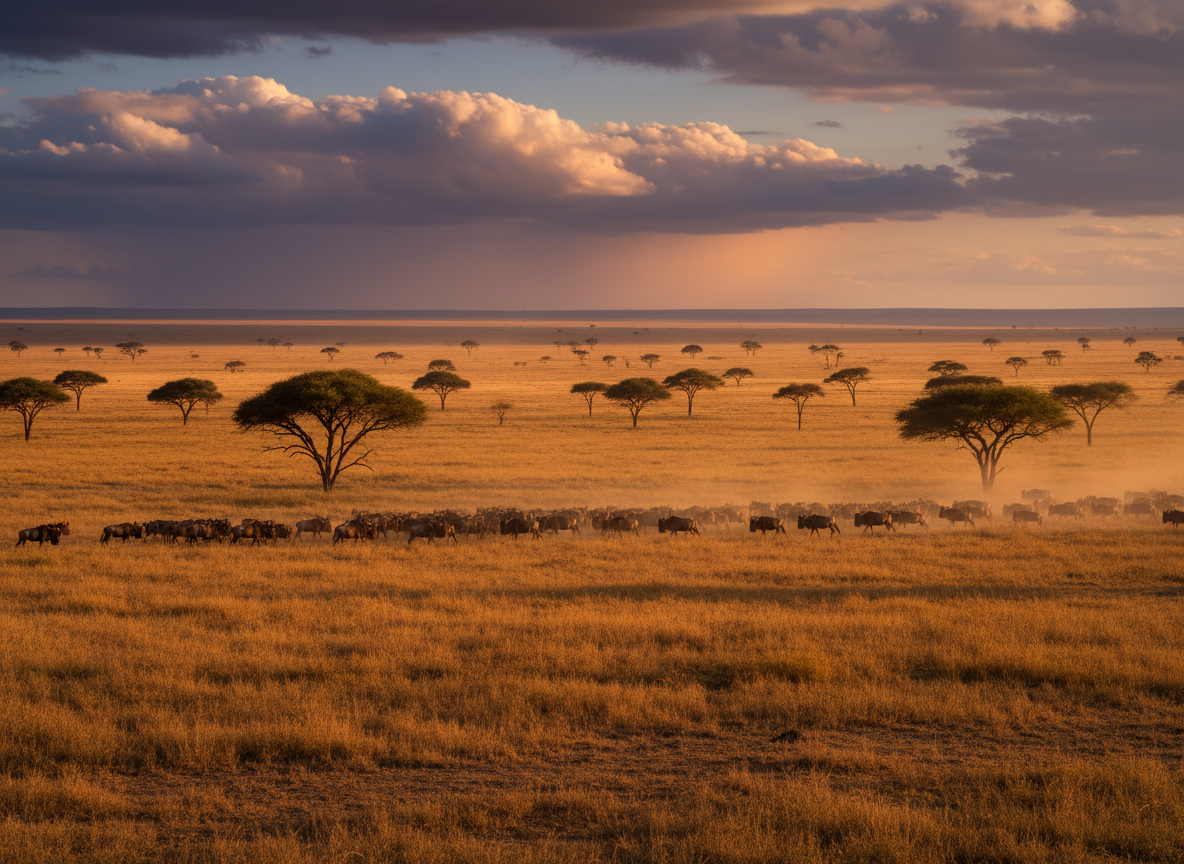
Tanzania is a year-round safari destination, but timing shapes everything. The wildlife you see, the landscapes you encounter, the crowds you share space with—all of it shifts with the seasons.
There’s no single “best” time to visit Tanzania. There’s only the right time for what you want to experience. Here’s a month-by-month breakdown to help you plan smarter.
January to March: Calving season and open skies
January through March is calving season in the southern Serengeti. Over 8,000 wildebeest are born daily during this period, drawing predators in massive numbers. Lions, cheetahs, and hyenas follow the herds, and the predator action is some of the best you’ll see all year.
The weather is warm, with occasional afternoon showers. The landscape is green and lush from the short rains. Crowds are moderate, and lodges are easier to book than during peak migration months.
This is one of the best times to visit if you want dramatic predator-prey interactions without the July-to-October rush.
April to May: The long rains
April and May bring the long rains. Roads can become muddy and difficult to navigate, especially in remote areas. Some lodges and camps close for maintenance during this period.
But if you don’t mind the rain, this is the quietest time of year. Rates drop significantly, and you’ll have parks almost to yourself. The landscape is at its most photogenic—vivid greens, dramatic skies, wildflowers in bloom.
Birdlife is exceptional. Migratory species arrive, and resident birds are in full breeding plumage. If you’re a birder or photographer chasing moody landscapes, this is your window.
June: Transition and migration buildup
June marks the transition from wet to dry season. The rains taper off, roads dry out, and wildlife viewing improves as animals concentrate around water sources.
The Great Migration begins moving northwest through the central Serengeti, heading toward the western corridor and Grumeti River. Herds are on the move, and the energy shifts as the dry season takes hold.
Crowds are still light, and prices remain reasonable. It’s a strong shoulder-season option for travelers who want good wildlife viewing without peak-season pricing.
July to October: Peak migration and high season
July through October is peak safari season in Tanzania. The Great Migration reaches the northern Serengeti and Masai Mara, and river crossings at the Mara and Grumeti rivers are in full swing.
The weather is dry, cool, and clear. Wildlife viewing is at its best, with animals concentrated around rivers and waterholes. Predator sightings are frequent, and the drama of the migration is at its height.
But this is also the busiest time of year. Lodges book out months in advance, and popular areas can feel crowded. Prices are at their highest.
If you’re set on witnessing the migration and river crossings, this is the window. Just book early and be prepared for company.
November: Short rains and fewer crowds
November brings the short rains. Showers are typically brief and localized, and they don’t disrupt game drives the way the long rains do.
The migration herds begin moving south again, leaving the northern Serengeti and heading back toward the central and southern plains. Wildlife is still abundant, but the crowds thin out significantly.
Rates drop, lodges are easier to book, and the landscape starts to green up again. It’s a solid time to visit if you want good wildlife viewing without the peak-season intensity.
December: Festive season and migration return
December is a popular travel month, especially around the holidays. The migration herds are moving into the southern Serengeti, and calving season is just around the corner.
The weather is warm and pleasant, with occasional short rains. Wildlife viewing is strong, and the parks feel alive as the herds return to the southern plains.
Lodges fill up quickly during the Christmas and New Year period, so early booking is essential. Prices are higher than shoulder season but lower than the July-to-October peak.
Ngorongoro Crater: Year-round consistency
The Ngorongoro Crater is one of the few places in Tanzania where wildlife viewing is consistently excellent year-round. The crater floor is home to resident populations of lions, elephants, rhinos, and buffalo, and animals don’t migrate in and out with the seasons.
The crater can be cold and misty in the mornings, especially from June to August. Afternoons are generally clear and warm. Crowds peak during high season, but the crater’s sheer wildlife density makes it worth visiting any time of year.
Tarangire National Park: Dry season star
Tarangire is at its best during the dry season, from June to October. Elephants gather in massive herds around the Tarangire River, and predator sightings increase as animals concentrate around water.
During the wet season, wildlife disperses across the wider ecosystem, and sightings can be more scattered. The park is still beautiful and worth visiting, but the dry season offers the most reliable game viewing.
Zanzibar: Beach season considerations
If you’re combining your safari with a Zanzibar beach extension, timing matters. The best beach weather is from June to October and December to February—dry, sunny, and calm seas.
March to May sees heavy rains, and some beach resorts close. November can be wet but is often still pleasant. The Indian Ocean is warm year-round, so swimming is always an option.
How to choose your timing
Start with your priorities. If witnessing the Great Migration and river crossings is non-negotiable, plan for July to October. If you want calving season and predator action, aim for January to March. If you prefer fewer crowds and lower prices, consider June or November.
Weather tolerance matters too. If rain doesn’t bother you, April and May offer incredible value and solitude. If you want guaranteed dry conditions, stick to June through October.
And if you’re flexible, consider working with an operator like Trunktrails Safaris who can tailor your itinerary to the season and your specific interests. They know where the wildlife is, what the conditions are like, and how to position you for the best experience.
Final thoughts
Tanzania doesn’t have an off-season in the traditional sense. Every month offers something worth seeing. The key is aligning your visit with what matters most to you—whether that’s migration drama, predator action, solitude, or budget.
Choose your timing intentionally, and Tanzania will deliver.