Tsavo East and Tsavo West are two separate national parks that share a boundary in southeastern Kenya. They appear in many of the same itineraries and are often grouped as a single destination, but they deliver distinctly different safari experiences. Wildlife focus, landscape character, road times, and camp options all shift depending on which park you prioritize.
This comparison covers the key differences between the two parks to help you choose the right one, or decide whether a combined circuit makes sense for your trip.
Overview of Each Park
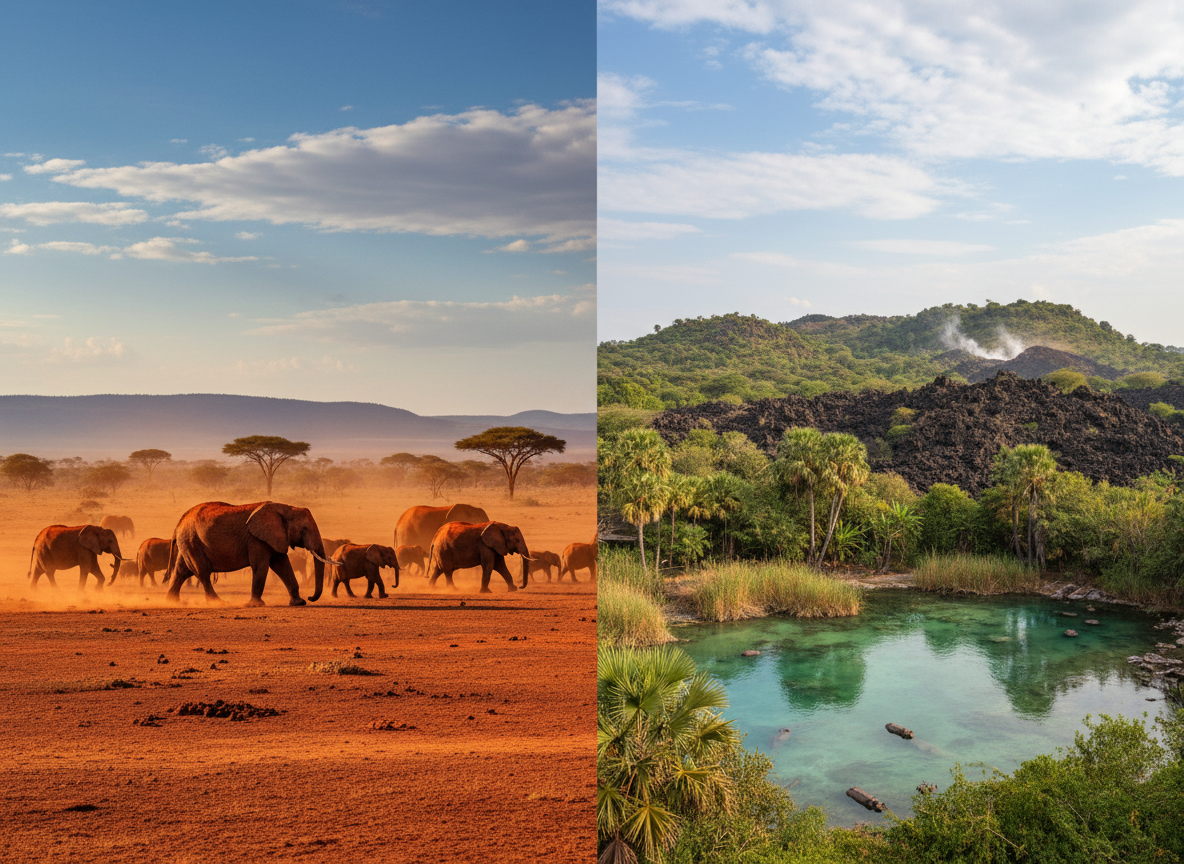
Tsavo East National Park covers approximately 13,747 km2, making it Kenya’s largest national park by area. The landscape is characterised by flat, semi-arid plains, open scrubland, and the Galana River running through its southern section. The red volcanic soils are famous for giving the park’s elephants their distinctive appearance.
Tsavo West National Park covers approximately 9,065 km2, sitting on the western side of the Mombasa highway. The terrain is more varied: volcanic hills, ancient lava flows, wetlands, and the Mzima Springs complex. On clear days, Mount Kilimanjaro is visible from the western section of the park.
Both parks are in southeastern Kenya, accessible from Nairobi via the Mombasa highway or from the coast heading inland.
Wildlife: Tsavo East vs Tsavo West
Tsavo East Wildlife
Tsavo East is best known for its elephant herds, which frequently number in the hundreds. These animals are coated in the park’s distinctive red volcanic dust, giving them a color unlike any other elephant population in Africa. The red Tsavo elephant is one of Kenya’s most iconic wildlife images.
Beyond elephants, the park supports lion, leopard, cheetah, buffalo, hippo, and Nile crocodile along the Galana River. Gerenuk, lesser kudu, and fringe-eared oryx add species diversity that is less common in other Kenya parks. Rhino are present in specific protected areas within the park. Birdlife is exceptional, with over 500 species recorded.
The open, sparse vegetation of Tsavo East creates good visibility for wildlife spotting. The park is vast, though, which means locating specific animals may require covering significant distances.
Tsavo West Wildlife
Tsavo West has a greater diversity of habitats: volcanic hills, wetlands, riverine forest, and open savannah. This variety supports a different wildlife mix. Black rhino are found in the Ngulia Rhino Sanctuary within Tsavo West, making it one of Kenya’s more reliable parks for rhino viewing. Hippos are abundant and visible at Mzima Springs. Lion, leopard, and cheetah are all present throughout the park.
Birdwatching in Tsavo West is exceptional. Ngulia Lodge is a globally recognised birdwatching site, particularly during the northward migration season in October and November when the ridge position captures migrating raptors and passerines.
Wildlife Summary
| Feature | Tsavo East | Tsavo West |
|---|---|---|
| Elephants | Very large herds (red elephants) | Good populations |
| Rhino | Protected areas (present) | Ngulia Sanctuary (more reliable viewing) |
| Hippo | Galana River | Mzima Springs (very good) |
| Lion, Leopard, Cheetah | Present | Present |
| Gerenuk and Lesser Kudu | Yes | Less common |
| Birdlife | Exceptional (500+ species) | Exceptional (Ngulia migration site) |
| Habitat diversity | Open semi-arid plains | Varied: hills, wetlands, lava flows |
Scenery and Landscape
Tsavo East is vast, flat, and elemental. The red laterite soils, sparse acacia scrub, and enormous skies create a landscape of stark, almost harsh beauty. The Galana River and Lugard’s Falls provide dramatic focal points within an otherwise open terrain. The Yatta Plateau, considered the world’s longest lava flow, runs along the northern section.
Tsavo West is more visually varied. The Chyulu Hills provide a forested green backdrop to the west. Mzima Springs produces crystal-clear water from an underground lava system and supports hippo and crocodile in water you can observe through an underground viewing chamber. Volcanic cones and ancient lava flows across the park add geological texture that Tsavo East lacks.
Travelers who want dramatic open plains and wide, unobstructed skies are better suited to Tsavo East. Travelers who want more varied scenery, including springs, hills, and volcanic formations, tend to prefer Tsavo West.
Accessibility
Both parks are accessible from Nairobi via the A109 Mombasa highway:
- Tsavo East (Voi Gate): Around 340 km from Nairobi, approximately four hours by road
- Tsavo West (Mtito Andei Gate): Around 240 km from Nairobi, approximately three hours by road
Tsavo West’s closer proximity to Nairobi makes it more commonly included in shorter itineraries departing from the capital. Both parks are also accessible from Mombasa for travelers combining safari with a coast stay: Tsavo East is closer to Mombasa.
Bush flights serve both parks from Wilson Airport in Nairobi and from Mombasa, making fly-in itineraries a practical option for those who want to avoid the road entirely.
Accommodation
Tsavo East has a moderate accommodation range including Satao Camp, Ashnil Aruba Lodge, Severin Safari Camp, and Ndololo Camp. Options are primarily mid-range, with limited ultra-luxury inventory.
Tsavo West offers Kilaguni Serena Safari Lodge (one of Kenya’s oldest safari lodges, built beside a waterhole), Severin Safari Camp, Finch Hattons Luxury Tented Camp (a well-regarded luxury property), and several mid-range options.
Both parks are considerably less developed for tourism than the Masai Mara. This is part of their appeal: quieter camps, fewer vehicles, and a stronger sense of remoteness. The trade-off is a narrower range of accommodation options and less flexibility for budget travelers.
Which Park Should You Choose?
Choose Tsavo East If:
- Seeing large elephant herds, including the famous red elephants, is your primary wildlife focus
- You want the classic open, vast savannah landscape with wide skies
- You are combining a Kenya safari with the coast and are traveling from or to Mombasa
- Birdwatching in open-country habitat is a key interest
- You want a remote, less commercially developed park with a strong sense of space
Choose Tsavo West If:
- Rhino viewing is a priority (Ngulia Sanctuary is one of Kenya’s better rhino locations)
- You want varied scenery including springs, volcanic hills, and views toward the Chyulu Hills
- Mzima Springs is on your list (hippo and crocodile viewed through an underwater observation chamber)
- You are heading from Nairobi and want the closer park
- Birdwatching during migration season (October to November) is a specific goal
The Combined Circuit
Many Kenya itineraries covering the Tsavo region include both parks in a single loop: entering Tsavo West from Nairobi and exiting through Tsavo East toward Mombasa, or the reverse. The parks share a boundary and flow naturally together as a combined destination. This approach gives you the volcanic diversity and rhino habitat of Tsavo West alongside the red elephant herds and open plains of Tsavo East, without significant backtracking.
Quick Comparison: Tsavo East vs Tsavo West
| Factor | Tsavo East | Tsavo West |
|---|---|---|
| Size | 13,747 km2 | 9,065 km2 |
| Red elephants | Yes (iconic) | Less prominent |
| Rhino | Protected areas (present) | Ngulia Sanctuary (reliable) |
| Mzima Springs | No | Yes |
| Scenery | Open plains, red soil | Varied: hills, lava, wetlands |
| Distance from Nairobi | 340 km (approximately 4 hours) | 240 km (approximately 3 hours) |
| Distance from Mombasa | Closer | Further |
| Crowd levels | Very low | Low |
| Accommodation | Mid-range focused | Mid-range to luxury |
| Best combined with | Mombasa coast, Masai Mara | Nairobi circuit, Tsavo East loop |
Explorer Notes: Planning a Tsavo Safari
- Best time to visit both parks: The dry seasons from January to March and July to October provide the best wildlife visibility. The long rains (April to May) make some tracks impassable
- Bush flights: If you are short on time, flying into Tsavo East or Tsavo West from Wilson Airport saves the four-hour road journey and gives you more days in the park
- Park fees: Both parks use the Kenya Wildlife Service fee structure, which charges in USD for international visitors. Fees change periodically; confirm current rates before planning
- Camp location within parks: In Tsavo East, camps near the Voi River or Aruba Dam tend to concentrate wildlife and game drive variety. In Tsavo West, camps near Mzima Springs and the waterhole at Kilaguni put you closest to the park’s best-known attractions
- Night drives: Not available inside the parks (KWS regulations). Some private conservancies bordering Tsavo offer night game drives as part of their programming
Conclusion
Tsavo East and Tsavo West are complementary rather than interchangeable. The flat red plains and iconic elephant herds of Tsavo East offer something qualitatively different from the volcanic springs and habitat diversity of Tsavo West. Which one suits your safari depends on what you want to see and how you are routing your trip.
For most travelers with five or more days in the Tsavo region, the combined circuit through both parks is the most satisfying approach.
What to Read Next
If you are comparing Tsavo with other Kenya parks, the guides on Masai Mara vs Tsavo East and Amboseli vs Tsavo cover the most common park comparison questions. For coast extension planning, trunktrailssafaris.com has itinerary resources covering Tsavo combined with Diani Beach and the Kenya coast.
Have questions about this itinerary or destination? Get answers from a safari specialist before you commit.
Inquire More