

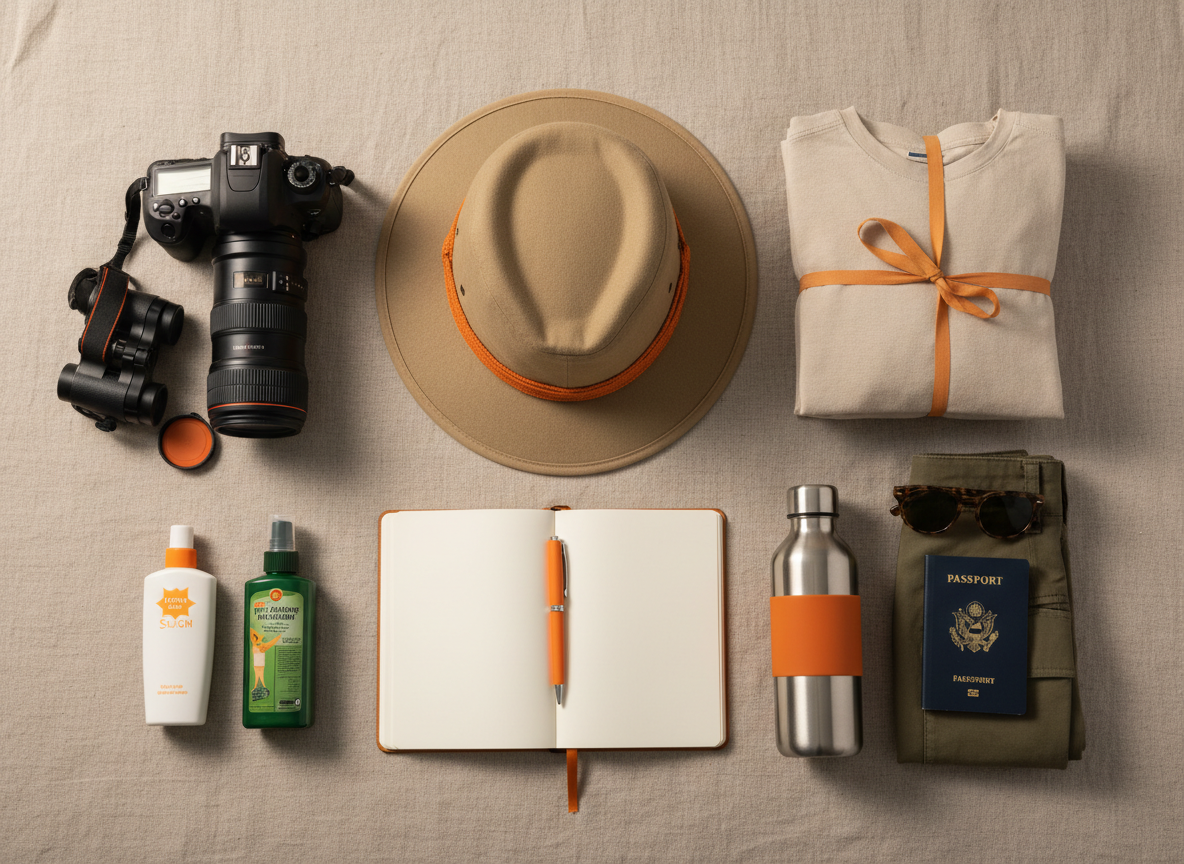
Packing for a Kenya safari is about balance-comfort meets practicality, style meets functionality. Pack the wrong items and you’ll be uncomfortable in the African heat. Pack right, and you’ll be ready for any safari situation.
At Trunktrails Safaris, we’ve guided hundreds of travelers on safari packing essentials journeys. This safari clothing guide covers everything you need for an unforgettable experience, from dawn game drives to sunset cocktails.
Clothing: Dress for the African Climate
Master the Art of Safari Fashion
What to pack for safari starts with understanding Kenya’s climate. Daytime temperatures range from 20-30°C (68-86°F), but mornings and evenings can be cool.
Essential clothing items:
- Neutral-colored shirts: Khaki, tan, olive, and beige (avoid bright colors that startle wildlife)
- Long-sleeved shirts: Protection from sun and insects
- Lightweight pants: Quick-dry materials for comfort and protection
- Shorts: For lodge relaxation (bring 2-3 pairs)
- Fleece or light jacket: Essential for early morning game drives
- Sweater or cardigan: For evening warmth at higher elevations
- Hat or cap: Wide-brimmed for sun protection
- Comfortable walking shoes: Broken-in before your trip
- Closed-toe hiking boots: For walking safaris and uneven terrain
- Sandals: For lodge wear (bring 2 pairs)
- Socks: Merino wool or synthetic blend (avoid cotton)
- Underwear: Moisture-wicking materials (bring 7-10 days worth)
- Sleepwear: Comfortable and warm
Your Kenya safari packing list should prioritize comfort and functionality over fashion.
Safari Gear: Essential Equipment
Invest in Quality Gear for Maximum Comfort
Safari packing essentials include gear that makes your experience more enjoyable and safe.
Must-have equipment:
- Binoculars: Quality optics (8×42 magnification) for wildlife viewing
- Camera: DSLR or mirrorless with telephoto lens (200mm+ recommended)
- Daypack: 20-30 liter capacity for game drive essentials
- Reusable water bottle: 1-2 liters (stay hydrated)
- Sunscreen: High SPF (30+) and reef-safe formula
- Insect repellent: DEET-based for mosquito and tick protection
- Headlamp or flashlight: For night activities and emergencies
- Portable charger: For camera and phone batteries
- Travel adapter: Kenya uses Type G plugs (British standard)
- Binoculars case: Protective carrying solution
- Camera lens cleaning kit: Keep optics clear
This safari gear recommendations list ensures you’re prepared for any situation.
Sun and Skin Protection: Non-Negotiable
Protect Yourself from Africa’s Intense Sun
The African sun is intense and unforgiving. What to pack for safari must include comprehensive sun protection.
Sun protection essentials:
- Sunscreen (SPF 50+): Waterproof and reef-safe
- Lip balm with SPF: Prevent chapped lips
- Sunglasses: UV-protective (polarized recommended)
- Hat with neck protection: Wide brim or legionnaire style
- Lightweight long-sleeve shirts: UPF-rated for sun protection
- Lightweight pants: Breathable but protective
- Aloe vera gel: For minor sunburns
- After-sun lotion: Soothe and hydrate skin
Sunburn ruins safaris—prioritize protection in your Kenya safari packing list.
Health and Toiletries: Stay Healthy and Fresh
Maintain Wellness Throughout Your Safari
Safari packing essentials include health and hygiene items that keep you feeling good.
Health and toiletry items:
- Prescription medications: In original containers with labels
- Malaria prophylaxis: As recommended by your doctor
- First aid kit: Bandages, antibiotic ointment, pain relievers
- Anti-diarrhea medication: Imodium or similar
- Antihistamine: For allergies and insect bites
- Pain relievers: Ibuprofen or paracetamol
- Antacid: For digestive issues
- Decongestant: For altitude or congestion
- Prescription glasses/contacts: Extra pair plus solution
- Toiletries: Toothbrush, toothpaste, deodorant, shampoo
- Feminine hygiene products: Limited availability in remote areas
- Wet wipes: For quick cleanups during game drives
- Hand sanitizer: For hygiene between washings
- Toilet paper and tissues: Some lodges have limited supplies
Your safari clothing guide extends to personal care items.
Photography Gear: Capture Your Adventure
Pack Like a Professional
If you’re serious about wildlife photography, safari packing essentials must include quality camera gear.
Photography equipment:
- Camera body: DSLR or mirrorless (weather-sealed preferred)
- Telephoto lens: 200-400mm for distant wildlife
- Wide-angle lens: 16-35mm for landscape shots
- Macro lens: 60-100mm for close-up details
- Extra batteries: At least 2-3 per camera body
- Memory cards: High-capacity (128GB+) with fast write speeds
- Tripod: Lightweight and stable for vehicle mounting
- Lens cleaning kit: Brush, blower, and microfiber cloths
- Camera bag: Protective and weather-resistant
- Lens filters: Polarizing and ND filters
- Remote shutter release: For hands-free shots
This safari gear recommendations section ensures you capture stunning images.
Documents and Money: Essential Papers
Organize Your Travel Documents
What to pack for safari includes critical documents and financial items.
Essential documents:
- Passport: Valid for 6 months beyond travel dates
- Visa: Kenya e-visa (apply online before travel)
- Travel insurance: Comprehensive coverage including medical evacuation
- Vaccination certificates: Yellow fever (required for some countries)
- Driver’s license: International permit recommended
- Hotel confirmations: Printed or digital copies
- Flight tickets: E-tickets or printed confirmations
- Emergency contacts: List of important phone numbers
- Medical records: Prescription information and allergies
Money and financial:
- Credit cards: Visa and Mastercard widely accepted
- Debit card: For ATM withdrawals
- Cash: Kenyan Shillings (KES) for tips and small purchases
- Traveler’s checks: Backup payment method (less common now)
- Money belt: Secure storage for valuables
Optional Items: Nice-to-Haves
Enhance Your Comfort and Convenience
These safari packing essentials aren’t critical but significantly improve your experience.
Optional items:
- Portable speaker: For lodge relaxation
- E-reader: For downtime reading
- Travel pillow: For flight and vehicle comfort
- Compression bags: Maximize luggage space
- Lightweight scarf: Multi-purpose (sun, warmth, dust)
- Notebook and pen: Document observations and experiences
- Playing cards or travel games: For lodge entertainment
- Snacks: Favorite treats from home
- Gifts: Small items for local guides and staff
- Drone: For aerial photography (check regulations)
What NOT to Pack: Common Mistakes
Avoid These Packing Errors
What to pack for safari is as important as what NOT to pack.
Don’t bring:
- Bright colors: Reds, yellows, and whites startle wildlife
- Excessive luggage: Limit to one carry-on and one checked bag
- Heavy items: Minimize weight for small aircraft transfers
- Valuable jewelry: Keep it simple and secure
- Lots of cash: Use cards and ATMs instead
- Perfume or cologne: Scents interfere with wildlife and attract insects
- Plastic bags: Kenya banned single-use plastics
- Illegal items: Research Kenya’s customs regulations
- Unnecessary electronics: Keep it minimal
- Formal clothing: Safaris are casual (except special dinners)
Packing Tips: Pro Strategies
Pack Like a Safari Veteran
Safari clothing guide professionals use these strategies:
Packing tips:
- Roll clothes: Saves space and reduces wrinkles
- Use packing cubes: Organize by category (shirts, pants, etc.)
- Pack versatile items: Pieces that work in multiple outfits
- Wear bulky items: Jacket and boots on the plane
- Leave room: For souvenirs and purchases
- Check weather: Review forecasts for your travel dates
- Confirm luggage limits: Verify airline baggage allowances
- Take photos: Document your luggage contents for insurance
- Prepare a checklist: Use this guide to ensure nothing is forgotten
- Pack early: Avoid last-minute stress
By Destination: Customized Packing
Adjust Your Packing for Specific Parks
Different Kenya safari destinations require slight adjustments.
- Warmer daytime temperatures
- Cooler mornings and evenings
- Bring extra layers
- Higher elevation means cooler temperatures
- Bring warm layers even in dry season
- Dust protection (bandana or scarf)
Diani Beach (post-safari):
- Swimsuit and beach cover-up
- Light, breathable clothing
- Reef-safe sunscreen
Tsavo (dry season):
- Extra sun protection
- Dust protection items
- Warm layers for early mornings
Final Checklist: Don’t Forget Anything
Your Complete Kenya Safari Packing List
Clothing (14 items):
- 5 neutral-colored shirts
- 2 pairs lightweight pants
- 2 pairs shorts
- 1 fleece jacket
- 1 hat/cap
- 2 pairs shoes (hiking boots + casual)
- 1 pair sandals
- 7 pairs socks
- 10 pairs underwear
Gear (10 items):
- Binoculars
- Camera with lenses
- Daypack
- Water bottle
- Sunscreen
- Insect repellent
- Headlamp
- Portable charger
- Travel adapter
- Lens cleaning kit
Health & Toiletries (12 items):
- Medications (prescription + over-the-counter)
- First aid kit
- Toiletries
- Feminine hygiene products
- Wet wipes
- Hand sanitizer
- Glasses/contacts + solution
Documents & Money (8 items):
- Passport
- Visa
- Travel insurance
- Vaccination certificates
- Hotel confirmations
- Credit/debit cards
- Cash (KES)
- Emergency contacts
Ready to Pack?
Your Kenya safari packing list is complete. You’re prepared for comfort, safety, and adventure. Pack smart, travel light, and focus on the incredible experiences ahead.
Need help planning your safari?
Let Trunktrails Safaris handle the logistics while you focus on packing. We’ll customize your itinerary based on your interests and ensure you have everything you need.
Your safari adventure starts with proper packing. Let’s make it unforgettable. 🎒🦁✨
[…] Planning tips before you book […]
[…] a Kenya safari, two very different Indian Ocean beach extensions are within reach. The Kenya Coast: particularly […]