

Why the Serengeti Migration Is Worth the Hype (And the Planning)
Over two million wildebeest, zebras, and gazelles moving across 1,200 miles of East African savanna in an endless cycle of survival.
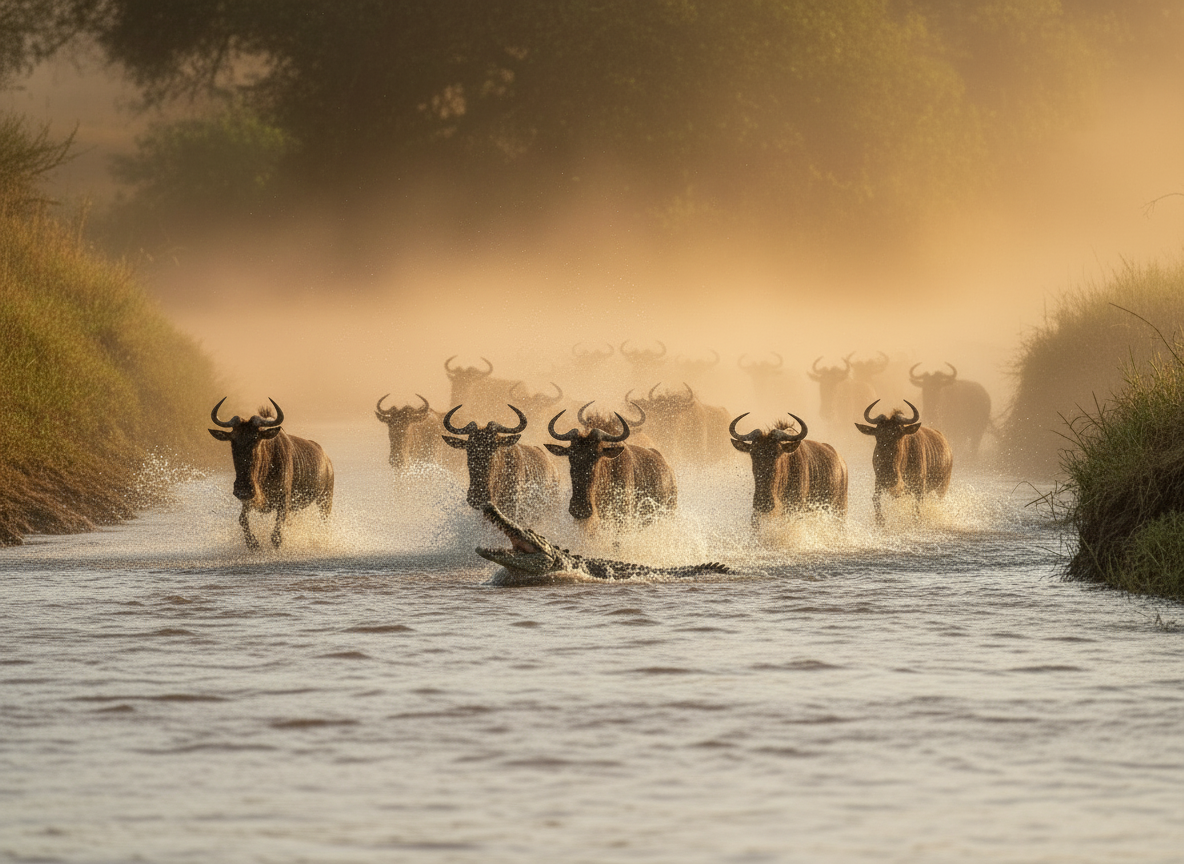
River crossings where crocodiles wait. Predators shadowing every move. Newborn calves taking their first steps minutes after birth.
The Great Migration isn’t just a wildlife spectacle—it’s one of the planet’s most dramatic natural events, and witnessing it in person is unforgettable.
But here’s what most safari operators won’t tell you upfront: the migration is constantly moving, and timing your visit wrong means missing it entirely.
This guide cuts through the marketing fluff and gives you the real information you need to plan a Serengeti migration safari that actually delivers.
The Migration Isn’t a Single Event (And That Changes Everything)
It’s a Year-Round Cycle, Not a Season
The migration never stops. The herds are always moving, following rain and fresh grass in a continuous clockwise loop through the Serengeti-Mara ecosystem.
What this means for you:There’s no single “migration season.” Instead, different phases of the migration happen in different locations throughout the year.
If you visit the wrong area at the wrong time, you’ll miss the herds entirely—even during peak safari season.
The Three Migration Phases That Matter Most
- Calving Season (January–March, Southern Serengeti)
Half a million wildebeest calves are born in a six-week window on the southern plains near Ndutu and Ngorongoro.
Why it’s incredible:Predators converge for easy prey. You’ll see cheetahs, lions, hyenas, and leopards hunting in broad daylight. The concentration of wildlife is staggering.
Best for:Photographers, predator enthusiasts, and travelers who want dramatic action without river crossings.
- River Crossings (July–September, Northern Serengeti & Masai Mara)
The herds reach the Mara River, where they must cross crocodile-infested waters to reach Kenya’s Masai Mara.
Why it’s incredible:This is the iconic migration moment—thousands of wildebeest plunging into the river, crocodiles attacking, chaos and survival playing out in real time.
Best for:Travelers seeking the classic migration experience and willing to pay peak-season prices.
- The Rut (May–June, Western Corridor)
Hundreds of thousands of wildebeest gather in the Western Corridor for mating season. The Grumeti River crossings (smaller than Mara River but still dramatic) happen here.
Why it’s incredible:Fewer tourists, lower prices, and excellent predator activity. The landscape is lush and green after the rains.
Best for:Budget-conscious travelers and those seeking a less-crowded migration experience.
Month-by-Month Migration Guide (Where to Go and When)
January–March: Southern Serengeti (Ndutu, Ngorongoro Conservation Area)
What’s happening:Calving season. Hundreds of thousands of wildebeest give birth on the short-grass plains.
Wildlife highlights:
- Newborn calves everywhere
- Predators (lions, cheetahs, hyenas) hunting vulnerable young
- Massive herds concentrated in open plains
- Excellent cheetah sightings
Logistics:
- Mobile tented camps follow the herds
- Ndutu area is the epicenter
- Roads can be muddy after rains but passable
- Fewer tourists than peak season
Best for: Predator action, photography, and dramatic wildlife interactions.
April–May: Southern & Central Serengeti
What’s happening:The herds begin moving north as the plains dry out. This is the “long rains” season.
Wildlife highlights:
- Herds dispersed across central Serengeti
- Lush green landscapes
- Excellent general game viewing (resident wildlife)
- Fewer migration-focused tourists
Logistics:
- Some camps close for maintenance
- Heavy rains can limit access to certain areas
- Significant discounts on lodges and flights
Best for: Budget travelers and those prioritizing solitude over guaranteed migration sightings.
June–July: Western Corridor (Grumeti River Area)
What’s happening:The herds move west toward the Grumeti River. Smaller river crossings begin, and the rut (mating season) peaks.
Wildlife highlights:
- Grumeti River crossings (less crowded than Mara River)
- Mating season drama and territorial battles
- Excellent predator activity
- Resident hippos and crocodiles
Logistics:
- Dry season begins—excellent weather
- Fewer tourists than northern Serengeti
- Good value for money
Best for: Travelers seeking migration experiences without peak-season crowds and prices.
July–September: Northern Serengeti (Mara River Area)
What’s happening:The herds reach the Mara River and begin the iconic crossings into Kenya’s Masai Mara.
Wildlife highlights:
- Dramatic Mara River crossings
- Massive crocodiles and predator action
- Thousands of wildebeest and zebras concentrated along the river
- The most famous migration spectacle
Logistics:
- Peak season—highest prices and most tourists
- Book 6–12 months in advance
- Weather is dry and excellent for game viewing
- Can combine with Masai Mara (Kenya) for extended migration experience
Best for: Travelers wanting the classic migration experience and willing to pay premium prices.
October–November: Northern Serengeti & Masai Mara (Kenya)
What’s happening:The herds begin moving south from the Mara back into the Serengeti as rains return to Tanzania.
Wildlife highlights:
- Reverse Mara River crossings (south to north)
- Fewer tourists than July–September
- Excellent predator sightings
- Short rains bring lush landscapes
Logistics:
- Shoulder season—lower prices than peak
- Short afternoon rains (usually not disruptive)
- Good availability at top lodges
Best for: Travelers seeking migration experiences with better value and fewer crowds.
December: Central & Southern Serengeti
What’s happening:The herds return to the southern plains as rains trigger fresh grass growth. Calving season approaches.
Wildlife highlights:
- Herds gathering on southern plains
- Predators following the herds south
- Excellent general game viewing
- Festive season safari atmosphere
Logistics:
- Holiday season—higher prices and more tourists
- Weather is generally good with occasional afternoon showers
- Book early for Christmas and New Year dates
Best for: Families and travelers seeking a festive safari with strong wildlife activity.
What Most Travelers Get Wrong About the Migration
Mistake 1: Assuming the Migration Is Always in the Same Place
The herds move constantly. A lodge that’s perfect in July might be completely empty of migration wildlife in January.
Solution: Choose your travel dates first, then select the Serengeti region that matches the migration’s location during that period.
Mistake 2: Expecting Guaranteed River Crossings
River crossings are unpredictable. The herds may cross multiple times per day, or they may wait for days before attempting.
Solution: Plan for 3–4 nights in the northern Serengeti during peak crossing season (July–September) to maximize your chances.
Mistake 3: Overlooking Calving Season
Most travelers fixate on river crossings, but calving season (January–March) offers equally dramatic wildlife action—with fewer crowds and lower prices.
Solution: Consider southern Serengeti in January–March if predator action and photography matter more than river crossings.
Mistake 4: Booking Fixed Lodges Instead of Mobile Camps
Fixed lodges stay in one location. Mobile camps follow the herds, ensuring you’re always in the best position.
Solution: For migration-focused safaris, prioritize mobile tented camps that relocate seasonally to track the herds.
Mistake 5: Underestimating Travel Time Within the Serengeti
The Serengeti is massive (5,700 square miles). Driving from southern to northern Serengeti takes 6–8 hours.
Solution: Fly between camps if you’re covering multiple regions, or plan longer stays in each area to minimize transit time.
How to Choose the Right Serengeti Migration Safari
1. Decide Which Migration Phase You Want to See
- Calving season (Jan–Mar): Southern Serengeti, predator action, newborn calves
- River crossings (Jul–Sep): Northern Serengeti, iconic migration spectacle, peak season
- The rut (May–Jun): Western Corridor, mating season, fewer crowds
2. Choose Mobile Camps Over Fixed Lodges (If Possible)
Mobile camps relocate seasonally to follow the herds, ensuring you’re always in the right place.
Recommended mobile camp operators:
- Nomad Tanzania
- Asilia Africa
- &Beyond
- Singita (luxury mobile options)
3. Plan for 3–4 Nights Minimum in Each Region
One or two nights isn’t enough to experience the migration properly. Wildlife movements are unpredictable, and you need time to maximize sightings.
4. Combine Serengeti with Ngorongoro Crater
The Ngorongoro Crater offers guaranteed Big Five sightings and complements the Serengeti’s migration focus beautifully.
Suggested itinerary:
- 3 nights in Serengeti (migration area)
- 2 nights in Ngorongoro Crater
- Optional: 2–3 nights in Tarangire or Lake Manyara
5. Work with a Migration Specialist
Generic safari operators book Serengeti year-round without understanding migration timing. Specialists like Trunktrails design itineraries around the herds’ actual location during your travel dates—ensuring you’re in the right place at the right time.
What to Expect (The Honest Version)
You Might Not See a River Crossing
Even during peak season, crossings are unpredictable. The herds may wait days before attempting, or they may cross while you’re at lunch.
What you will see: Massive herds gathered along the river, predators stalking, and the tension of thousands of wildebeest preparing to cross.
The Serengeti Is Huge—And Sometimes Quiet
The migration is concentrated in specific areas. Outside those zones, the Serengeti can feel empty.
What this means: Location and timing are everything. A poorly planned safari will miss the herds entirely.
Dust, Heat, and Early Mornings Are Part of the Deal
Migration safaris mean long game drives, dusty roads, and 5:30 AM wake-up calls.
What this means: Come prepared for adventure, not luxury resort relaxation.
It’s Worth Every Bit of Effort
When you see a thousand wildebeest plunge into the Mara River, or watch a cheetah chase down a newborn calf on the southern plains, you’ll understand why travelers plan entire trips around this experience.
Serengeti Migration Safari Budget
Mid-Range Migration Safari: $4,000–$7,000 per person (7 days)
- Comfortable tented camps in migration areas
- Shared game drives (small groups)
- Includes Ngorongoro Crater
- Domestic flights between parks
Luxury Migration Safari: $8,000–$12,000 per person (7 days)
- High-end mobile camps following the herds
- Private game drives and guides
- Premium locations and service
- Includes Ngorongoro and optional extensions
Ultra-Luxury Migration Safari: $15,000–$25,000+ per person (7–10 days)
- Exclusive mobile camps and private concessions
- Helicopter transfers and private guides
- Bespoke itineraries and special access
- White-glove service throughout
Why Trunktrails Safaris Specializes in Migration Timing
The Great Migration is one of the world’s most spectacular wildlife events—but only if you’re in the right place at the right time.
Trunktrails designs migration safaris based on real-time herd movements, seasonal patterns, and decades of on-the-ground experience. We don’t book generic Serengeti trips—we build itineraries around where the migration actually is during your travel dates.
What we offer:
- Migration-focused itineraries timed to your travel dates
- Mobile camps that follow the herds
- Private guides who know migration patterns intimately
- Flexible planning to maximize your chances of witnessing key events
- Honest advice about what to expect (and what’s realistic)
Ready to experience the Great Migration? Explore our Serengeti safari options and discover what’s possible when timing, expertise, and planning come together.