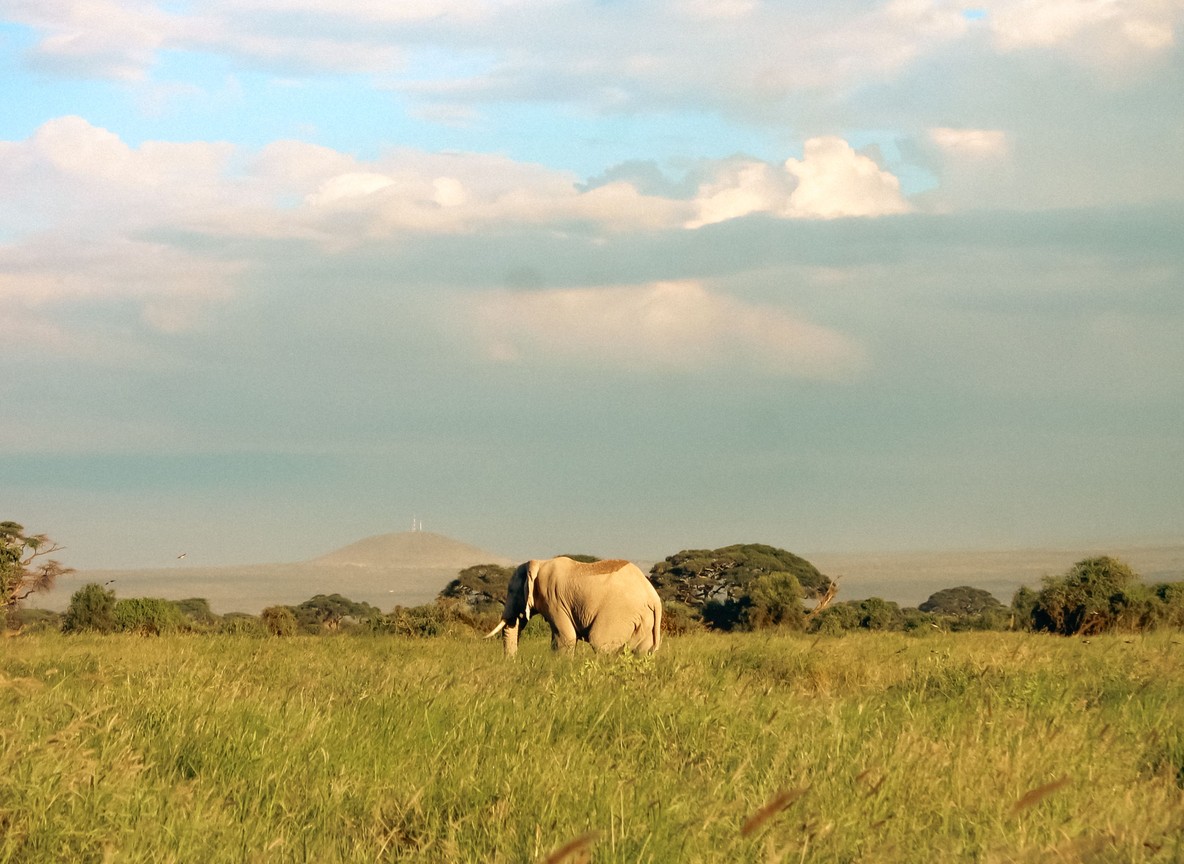
Kenyan media has flagged a hard problem along the Nairobi to Mombasa Standard Gauge Railway. Barbed wire strung along parts of the fence line meant to keep elephants off the tracks is instead catching them by the trunk, ears, or legs. The railway was built to move people and freight fast. It also cuts straight through the Tsavo ecosystem, home to Kenya’s largest elephant population. Touring Insights looks at what the fencing actually does, why it exists, and what it means if Tsavo is on your safari itinerary.
This is not a story about a railway failing. It is a story about a fix that solved one problem and created another.
What’s Happening Along the SGR Fence Line in Tsavo
The SGR runs about 472 km from Mombasa to Nairobi and cuts through roughly 93 miles, close to 150 km, of the unfenced Tsavo East and Tsavo West national parks. Engineers raised the track on embankments in places and fenced long stretches with electric and barbed wire. The goal was simple: stop elephants and other animals from walking onto the line and getting hit by trains. It largely worked for that specific risk. But wire strung low, sagging, or damaged by weather and wildlife pressure has become its own hazard. Reports describe elephants getting tangled trying to push through or reach food on the far side, sometimes tearing skin or getting stuck for hours before rangers can respond.
Elephants are strong enough to snap ordinary wire fencing. They usually only get caught when the wire wraps around a foot, trunk, or tusk during a struggle to break free. That makes an entanglement incident slow and traumatic rather than instant, and it often takes a veterinary team from Kenya Wildlife Service to sedate the animal and cut it loose safely.
Why Kenya Fenced the Railway After It Opened
The SGR opened in 2017 without full fencing along its Tsavo stretch. Elephants and other wildlife kept using old embankment crossings, which put them in the path of trains. Kenya Wildlife Service later confirmed the railway was worsening human-elephant conflict in Taita Taveta County, as animals rerouted around the barrier and pushed further into farmland and community land near Voi and Mwatate. Fencing sections of the line cut train collisions. Save the Elephants research found that once electric fencing went up, most species stopped using embankments to cross, elephant and leopard being the notable exceptions that kept trying.
The trade-off is now visible. Fewer elephants get hit by trains, but more get funneled toward fence lines that were never meant to be climbed, pushed, or squeezed through.
The 41 Underpasses: Built for Elephants, Used Unevenly
Planners did not ignore wildlife movement. They mapped traditional elephant paths and built 41 underpasses, culverts, and bridges through the Tsavo section, including named crossing points at Maungu, Bachuma, Ndara, Kenani, Manyani, and Kanga, plus a bridge over the Tsavo River itself. The idea was to let elephants keep crossing without touching the fenced rail corridor.
Not every structure gets used equally, though. Save the Elephants monitoring found that taller bridge-style crossings accounted for 56 percent of recorded crossings despite being only about 19.5 percent of available structures. Lower culverts, the cheaper and more common design, saw far less elephant use. Most crossings, 78 percent, happened at night, when elephants feel safer moving near infrastructure. An elephant that cannot find or trust a nearby underpass will eventually test the fence instead, and that is where barbed wire becomes a trap rather than a barrier.
How Many Elephants Have Been Affected
The scale is not small. One tracking period around 2018 and 2019 found more than 500 elephants blocked from reaching Tsavo East National Park because of the new fence line, including a well-known bull nicknamed Sagalla. Tsavo’s elephant population has kept growing since then, now estimated near 16,500 animals across the wider conservation area and rising roughly 5 percent a year. More elephants sharing the same limited set of crossing points means more pressure on the fence itself, and more chances for an animal to get caught in wire rather than find its way through a culvert.
SGR Wildlife Corridor: Key Facts and Distances
| Feature or location | Figure | Why it matters |
|---|---|---|
| Mombasa-Nairobi SGR route length | Approx. 472 km, opened 2017 | Full line elephants and other wildlife must contend with |
| SGR stretch through Tsavo East and West | Approx. 93 miles (150 km) | Section carrying the fenced, barbed-wire boundary |
| Wildlife crossing structures in Tsavo | 41 underpasses, culverts and bridges (Maungu, Bachuma, Ndara, Kenani, Manyani, Kanga, Tsavo River bridge) | Built to replace the open ground the fence removed |
| Elephants blocked from Tsavo East, 2018-19 survey | 500+ | Scale of disruption when fencing outpaces crossing capacity |
| Tsavo Conservation Area | Approx. 42,000 km2 (Tsavo East 13,747 km2, Tsavo West 6,586 km2) | Ecosystem the corridor is meant to keep connected |
| Tsavo elephant population | Approx. 16,500, growing about 5%/year | More elephants need more working crossings, not fewer |
| Tsavo East entry fee, 2026 (gazetted rates) | USD 80 non-resident adult / USD 40 non-resident child (KWS eCitizen); indicative, confirm current rate before travel | Cost to budget entering via Voi or Sala gate |
| Nairobi to Mombasa by SGR | Approx. 472 km, about 4.5 hr on the Madaraka Express | Standard way most visitors now cross the same landscape the fence divides |
Human-Elephant Conflict Beyond the Rail Line
The fence problem does not stay inside the park boundary. Communities around Voi and Mwatate in Taita Taveta County report growing conflict as elephants search for alternate routes. Local reports this year describe elephant groups entering school compounds in the area, and fatal encounters between elephants and people herding livestock near Kasigau Ranch. None of this means elephants are more aggressive. It means a herd that cannot find its usual crossing point will wander until it finds one, and that search sometimes ends in a farm, a school compound, or a barbed wire fence line.
For travelers, this context matters. Guides in Tsavo and Taita Taveta increasingly build sightings and route planning around known conflict zones, not just wildlife density.
What KWS and Conservation Groups Are Doing
Kenya Wildlife Service, Save the Elephants, and the Wildlife Research and Training Institute have run joint SGR monitoring since 2016. One study fitted ten elephants, five male and five female, with satellite collars to track how they used the new crossings. That data has already reshaped thinking about which structures work. Bridges beat culverts for elephant use, so newer conservation proposals favor taller, wider designs over the cheaper low culverts built in the first phase. Rangers also patrol known weak points in the fence line to repair sagging or snapped wire before it becomes a snag hazard, though the sheer length of fencing across Tsavo makes full coverage difficult with current staffing.
What This Means for Your Tsavo Safari
None of this should keep a well-planned Tsavo trip off your list. Tsavo East and Tsavo West remain two of Kenya’s most reliable places to see large elephant herds, red-dust bathing included. What it does mean is that the fence line and its underpasses are now part of the landscape’s story, not just infrastructure in the background. Ask your guide which crossing points, such as Maungu or Kanga, sit closest to your camp. Many guides can point out fence repair work in progress, a small but real sign of active conservation management rather than neglect.
Explorer Notes
Guides who work the Voi and Mtito Andei stretch of Tsavo often know the fence better than published maps suggest. Ask about it directly rather than expecting it to come up on its own. A few things worth knowing before you go. First, if you are driving the Nairobi-Mombasa highway rather than the SGR, you will pass directly alongside several fenced sections between Mtito Andei and Voi, a good moment to see the scale of the barrier firsthand. Second, elephant sightings near underpasses like Kanga and Maungu tend to cluster around dawn and dusk, matching the night-crossing pattern researchers recorded. Third, if you spot loose or sagging wire during a game drive, mention it to your guide or camp management. Camps with strong KWS relationships often relay these reports directly to rangers, and a fast repair can prevent an entanglement before it happens.
What to Read Next
- Want the fuller picture on Tsavo’s elephants this year? Read our Tsavo West elephant drought guide.
- Curious how another Kenyan wildlife corridor recently won government backing? See our Nairobi-Athi-Kapiti corridor cabinet approval piece.
- Planning where to base yourself for elephant sightings? Check our complete Tsavo National Park guide.
FAQ
Why is barbed wire on the SGR catching elephants? Fencing was added along parts of the railway to stop elephants and other wildlife from wandering onto the tracks and getting hit by trains. Sagging or damaged wire can snag a trunk, ear, or leg when an elephant pushes against it, especially near weak points away from the official underpasses.
Where does the SGR cross Tsavo National Park? The railway runs through roughly 93 miles, about 150 km, of the Tsavo East and Tsavo West ecosystem. Kenya Wildlife Service and Save the Elephants have monitored elephant crossings here since 2016, focused on named crossing points like Maungu, Manyani, and Kanga.
Does the SGR fence stop elephants from crossing entirely? No. The line includes 41 underpasses, culverts, and bridges designed for wildlife movement, and elephants do use them, especially the taller bridge-style structures. Fencing is meant to funnel animals toward these crossings rather than block movement outright, though not every elephant finds or trusts a nearby underpass.
Is it still safe to visit Tsavo given these fence issues? Yes. The entanglement problem affects specific weak points along the fence line, not the parks themselves. Tsavo East and Tsavo West remain well-managed, popular safari destinations with strong elephant populations and active ranger patrols addressing the fencing.
How can travelers help if they notice a fence problem? Report sagging or damaged wire to your guide or camp management immediately. Camps with established Kenya Wildlife Service relationships can often relay the report to rangers quickly, which matters most in the hours before an elephant tests that same stretch of fence.
A fence built to save elephants from trains is now testing conservationists in a different way, and the fix is ongoing rather than finished. If Tsavo’s elephant corridors and the people working to protect them are part of why you travel to Kenya, our Tour Packages page can point you toward Tsavo-based itineraries and camps that support this kind of ranger-led monitoring directly.
Further reading
More safari planning resources
- Map of Tsavo from Valley Safaris
- Tsavo complete guide on Touring Insights
- Tsavo destination guide on FindMySafari
- Big Five safari collection on FindMySafari
Related guides: Amboseli Elephants: A Guide to Kenya’s Giants Beneath Kilimanjaro.