A nairobi to diani beach safari works so well because it gives readers one of Kenya’s clearest travel arcs. The route begins in the highland capital, moves through inland wildlife country, then opens out into the Indian Ocean coast. It feels less like a string of unrelated destinations and more like a gradual geographic release. Dust, plains, train lines, baobabs, humidity, reef water, and white sand begin to replace one another in sequence.
This guide looks at why that route is so effective, how safari-and-coast pacing works, what Tsavo and Amboseli contribute to the journey, and why the ending at Diani matters as more than a generic beach add-on. Readers comparing coastward route structures can also pair it with the Diani coast safari overview.
Why Safari and Coast Work So Well Together in Kenya
Safari and beach Kenya combinations are common because the country supports strong inland wildlife systems and a distinctly attractive coastline within a workable travel frame. But the pairing only becomes memorable when the route itself has structure. Readers do not only want contrast. They want a progression that makes sense.
That is why this format succeeds. It moves through:
- capital-city arrival logic
- classic inland safari landscapes
- transitional transport stages
- a final coast chapter that feels earned rather than appended
The coast is not simply recovery time after the safari. It is the final landscape in the route’s sequence.
The Shape of the Route
The strongest Kenya safari and beach holiday versions of this itinerary usually avoid feeling overstuffed. The route works because it has a natural south-and-east pull:
- Nairobi as the start point
- one or more safari landscapes such as Tsavo or Amboseli
- the inland-to-coast transition
- Diani as the concluding base
Readers starting from the city side of the route often also benefit from the Nairobi travel guide.
Readers often find the route especially satisfying because it reads the country through movement rather than through disconnected destination names.
Why Tsavo Fits the Route So Well
Tsavo is one of the most important pieces of the Nairobi-to-Diani logic. On the map, it acts as a bridge between inland safari country and the coast. In experience, it introduces a wider, drier, more open-feeling landscape that makes the eventual shift to the Indian Ocean even more dramatic.
Tsavo to Diani works because the two places are genuinely different in atmosphere:
- Tsavo offers scale, red earth, and a more expansive wilderness feel
- Diani offers reef water, palms, and a lower-pressure coastal rhythm
That contrast is strongest when readers allow Tsavo to be read on its own terms rather than as a quick transit stop.
Where Amboseli Can Fit
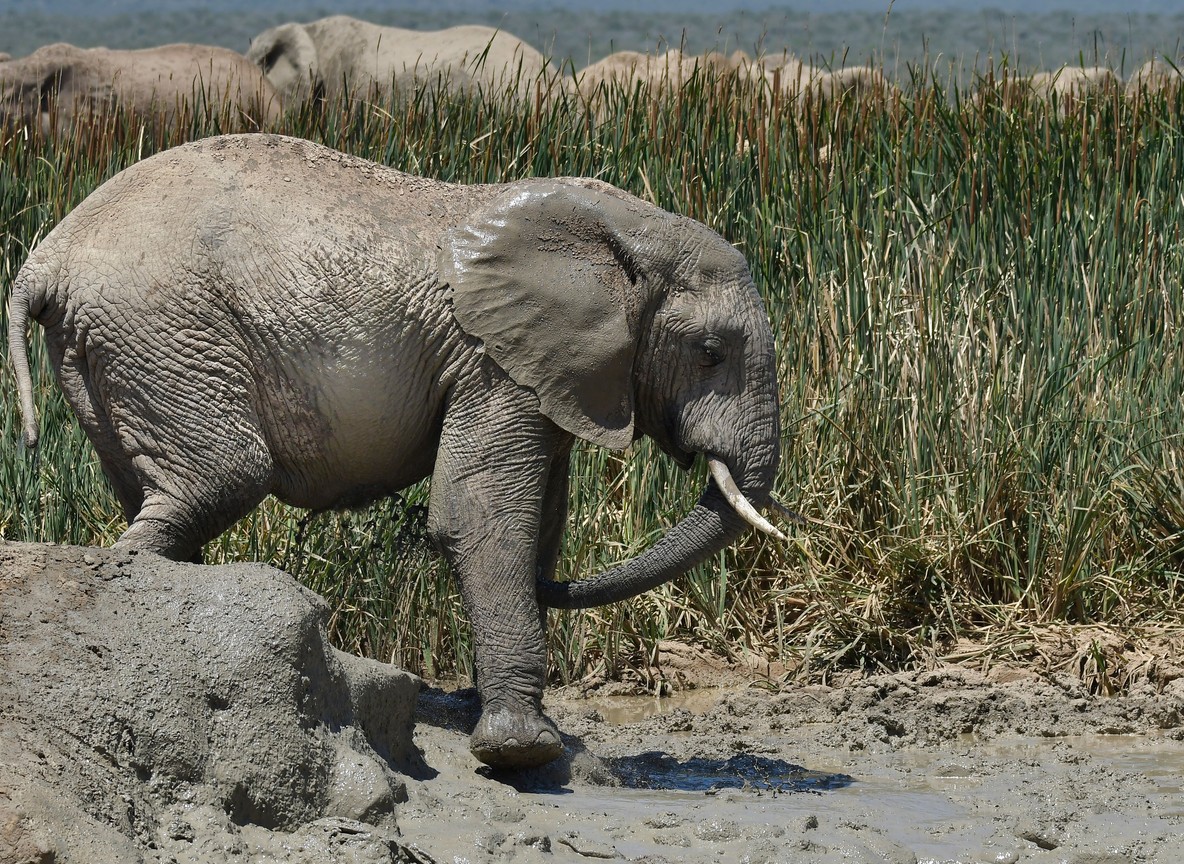
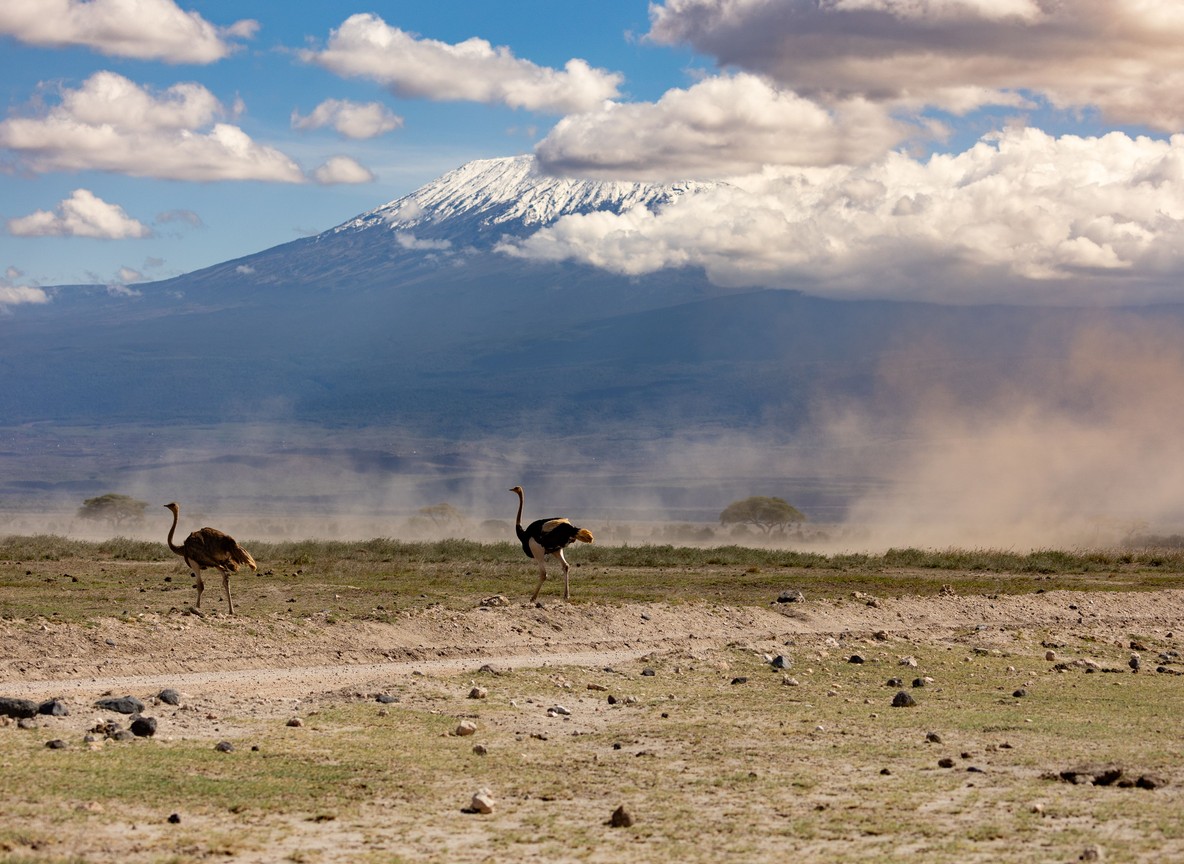
Amboseli changes the route in a different way. Readers who include it often want the mountain-and-elephant image that has become one of Kenya’s defining safari motifs. It adds another ecological register to the journey before the coast stage begins.
Its value in the route comes from:
- the visual drama of open plains below Kilimanjaro
- strong elephant associations
- a safari mood distinct from Tsavo
- a sense that inland Kenya is not one repeated landscape type
The main planning question is pacing. Amboseli can deepen the route, but only if readers give it enough time to feel like part of the journey rather than a forced extra stop.
The Importance of Pacing
One reason some Kenya beach and safari routes disappoint is that they treat movement as an inconvenience rather than as part of the experience. Readers can feel when an itinerary is assembled only to maximize checklist density. The Nairobi-to-Diani route works best when transit has breathing room and the inland chapters are not rushed.
Good pacing usually means:
- not compressing too many parks into too few days
- allowing at least one real transition between bush and coast
- understanding that the beach chapter should feel distinct in rhythm from the safari chapter
The coast becomes more rewarding when readers arrive with enough space to actually register the shift.
Train, Road, and Transition Logic
One of the strongest parts of the route is that the inland-to-coast move can itself become memorable. Readers often think about transport only as a practical problem, but in this itinerary it can be part of the story.
The Nairobi to coast itinerary can be shaped through:
- overland progression through safari country
- rail segments that turn the transition into part of the journey
- coastal arrival patterns that make the beach chapter feel geographically connected rather than artificially inserted
That matters because the route gains force when the reader feels the country changing rather than simply disappearing from one airport and reappearing at another.
Why Diani Works as the Finish
Diani is often the most natural coast ending for this route because it offers clarity. Readers arrive after dust, game drives, and early starts, and the coast presents an immediate counterpoint: warm sea air, broad beach, lower stakes, and a different daily rhythm.
Diani Beach safari route logic is strong because Diani can function in two different ways.
As Rest
For some readers, Diani is the decompression phase. It absorbs the effort and alertness of safari travel and turns the trip toward rest.
As Continuation
For others, Diani still holds activity: reef access, dhow movement, water sports, forest edges, and coast-based day trips. The route therefore does not always end in stillness. It can continue into a marine or coastal chapter.
This flexibility is part of why Diani works so well as the route’s final base.
Who This Route Suits Best
A nairobi to diani beach safari tends to suit readers who want more than one Kenya in a single journey. It is especially strong for:
- first-time visitors wanting both wildlife and coast
- readers who value route coherence over destination accumulation
- couples and small groups wanting contrast in travel rhythm
- travelers who find all-safari itineraries rewarding but physically intense over time
It can also work well for readers who want a trip that begins with outward focus and ends with slower reflection.
How to Think About Route Length
The route usually needs enough days to separate the safari chapter from the coast chapter. This is one of the most important planning principles. If the journey is too compressed, the beach becomes recovery from logistics rather than a true travel phase.
Readers generally benefit from:
- enough safari days to settle into wildlife rhythm
- enough transition space to avoid route fatigue
- enough coast time to feel the shift fully
This is less about hitting a universal number and more about respecting the route’s internal structure.
Why the Route Stays Memorable
The reason readers remember this journey is not only because it includes attractive places. It stays memorable because Kenya reveals itself through sequence. Inland cold mornings give way to hotter plains. Wildlife intensity gives way to coastal openness. Road and rail become part of the emotional pacing. The beach arrives not as a separate holiday pasted onto the end, but as the final answer to the route.
That is what makes this style of itinerary stronger than a simple safari-plus-resort combination. It feels narrated by geography.
Readers who want the inland bridge logic spelled out more clearly can also compare this with the Tsavo parks guide and the Safari from Diani Beach to Tsavo and Amboseli guide.
Explorer Notes
- The route works because it has a clear geographic arc, not just because it combines bush and beach.
- Tsavo is one of the strongest bridge landscapes between inland safari and coast.
- Amboseli adds depth only when pacing allows it to breathe.
- Transport can be part of the travel story, not just a logistical gap.
- Diani is effective because it can function as either decompression or continuation.
Frequently Asked Questions
Why is the Nairobi-to-Diani route so popular?
Because it combines strong inland wildlife travel with one of Kenya’s clearest and most accessible coast finishes.
Is Tsavo necessary for this route?
Not strictly, but it is one of the most natural inland bridge landscapes between Nairobi and the coast.
Does the beach stage work only as relaxation?
No. Diani can function as either rest or a more active marine-and-coast chapter, depending on the reader’s style.
Is Amboseli worth adding?
Often yes, if the trip has enough time to support another inland chapter without making the route feel crowded.
What makes this better than a generic safari-and-beach package?
The route has stronger geographic coherence when readers let the journey unfold through connected landscapes rather than disconnected stops.
Conclusion
A nairobi to diani beach safari succeeds because it allows Kenya to unfold in a sequence that feels both varied and coherent. City, plains, wildlife, transition, and coast all arrive in the right order. Tsavo and Amboseli deepen the inland story. Diani resolves it with a completely different kind of landscape and pace.
That structure is what gives the route its staying power. Readers do not only remember the safari or the beach. They remember the movement between them, which is often the part that makes the whole journey feel complete.
Have questions about this itinerary or destination? Get answers from a safari specialist before you commit.
Inquire More