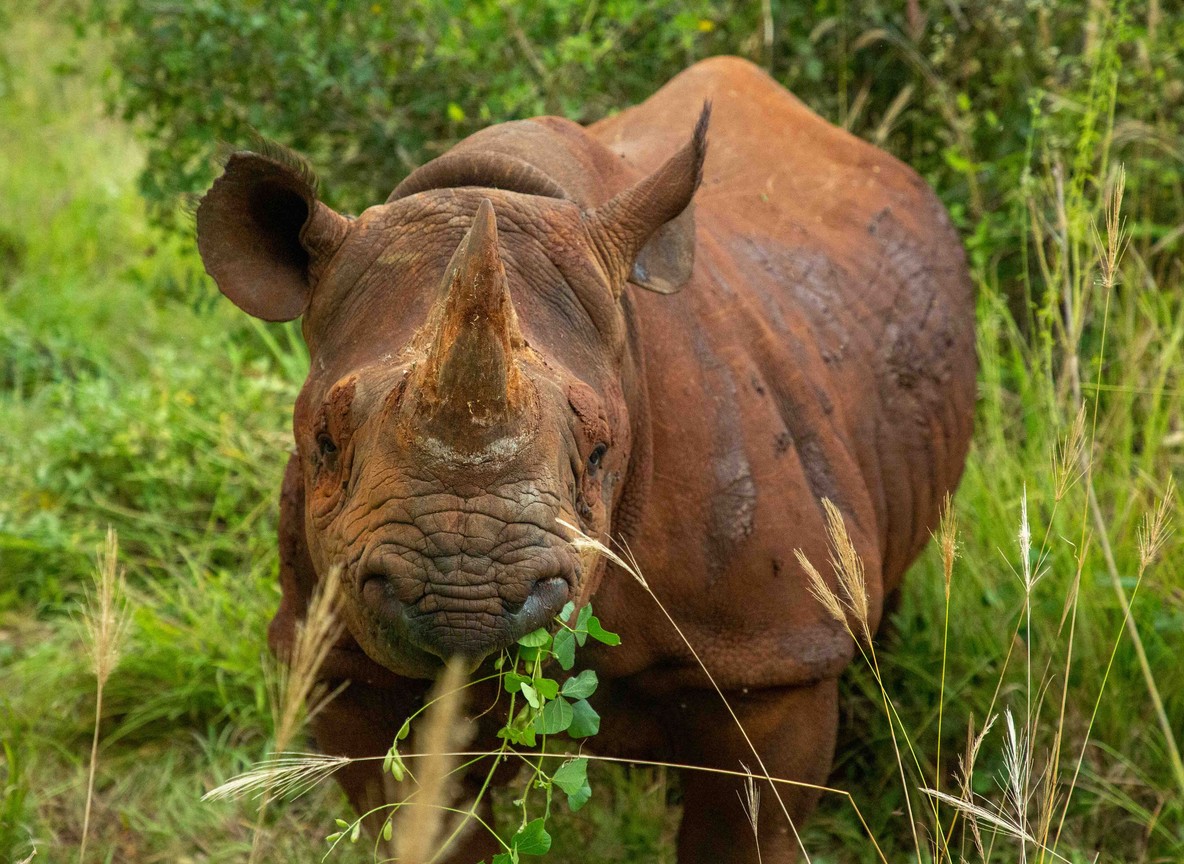
Meru National Park lost almost every rhino it had by the late 1980s. Poaching gangs worked the park’s remote northern range faster than rangers could cover it, and by the early 1990s the population was close to zero. Few Kenya parks fell that far and came back.
Today a fenced sanctuary inside Meru holds roughly 100 black and white rhinos, rebuilt from that low point over two decades. Touring Insights put together this guide to what the sanctuary actually is, what it costs to see it, and how it compares with Kenya’s better-known rhino strongholds like Ol Pejeta and Lake Nakuru.
Where Meru National Park’s Rhino Sanctuary Sits
Meru National Park covers about 870 km2 northeast of Mount Kenya, roughly 348 km from Nairobi. Most visitors drive up via Nanyuki and Meru town, a trip of five to six hours, and enter through Murera Gate on the park’s western edge.
The rhino sanctuary is not the whole park. It is a separate, electrified, fenced zone inside Meru, sitting close to Murera Gate itself. Rangers patrol the fence line daily, and entry into the sanctuary happens on a specific game drive route rather than as open wandering territory like the rest of the park.
Five permanent rivers cross Meru, the Tana, Rojewero, Ura, Bisanadi, and Kindani, which is unusual for a Kenya park this far from a lake. That water is part of why rhino, and the vegetation they need, held on here even after the population crashed.
Why Meru Needed a Fenced Rhino Sanctuary
Meru once ran one of Kenya’s largest rhino populations outside Nairobi National Park. Organized poaching through the 1970s and 1980s stripped that down to almost nothing by the time Kenya Wildlife Service tightened enforcement nationally.
A park this size, bordered by the wilder Bisanadi and Kora reserves, was too large to protect rhino across open ground with the ranger numbers available at the time. KWS answered with a model already working elsewhere in Kenya: fence a defensible core area, staff it with a dedicated rhino security unit, and reintroduce animals from parks where numbers could spare them.
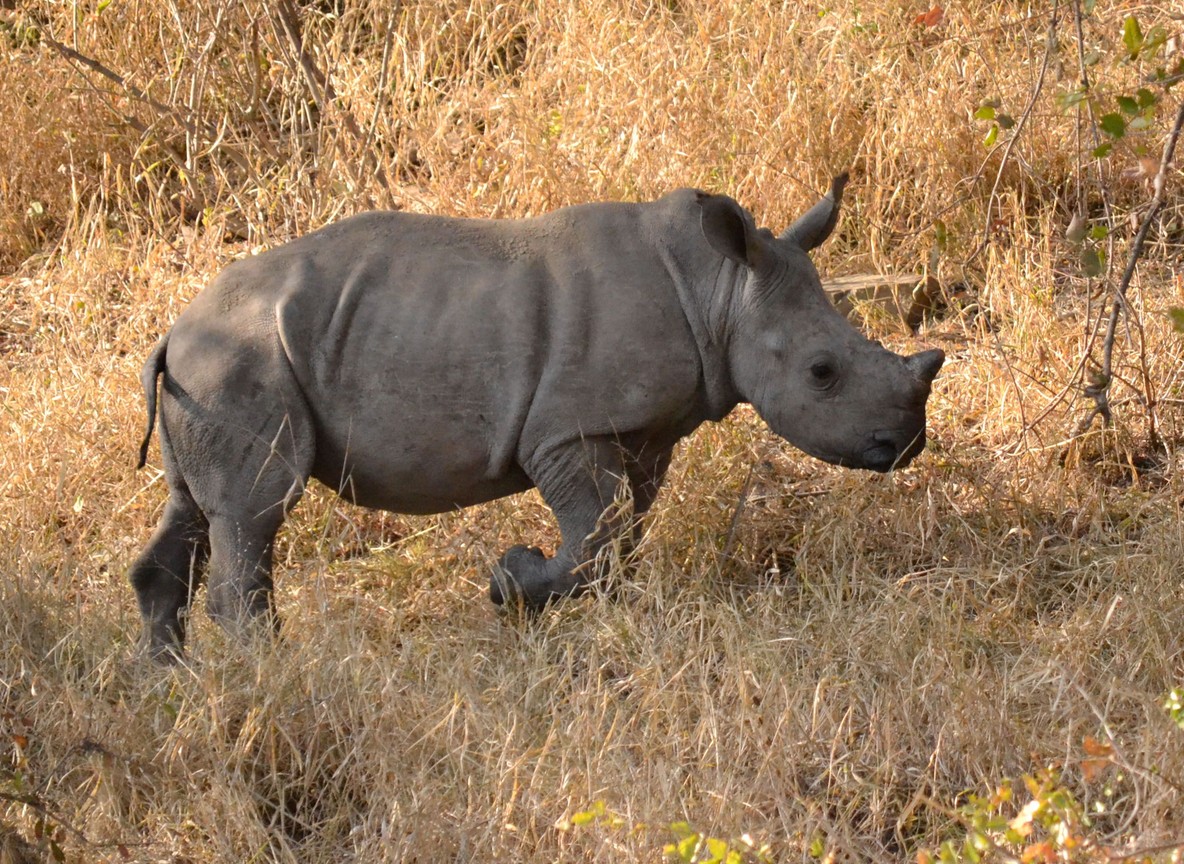
Reintroductions began in the early 2000s, bringing in black rhino first and white rhino later. Two decades on, Meru’s herd has grown steadily rather than exploded, which conservation staff read as a healthy, breeding population rather than one propped up entirely by fresh transfers.
Inside the Sanctuary: Size, Fencing, and Rhino Numbers Today
The fenced sanctuary covers an estimated 80 km2 inside Meru’s 870 km2 total, a small fraction of the park built specifically around rhino security. Solar-powered electric fencing rings the zone, backed by a ranger unit that patrols on foot and by vehicle.
KWS puts the current population at approximately 100 black and white rhinos combined as of early 2026, up from close to zero three decades earlier. That number moves as calves are born and occasional animals are relocated to seed other sanctuaries, so treat any single figure as a snapshot rather than a fixed count.
Guides inside the sanctuary know individual rhino by sight, including scarred ears and horn shape, which is common practice at fenced sanctuaries where the herd is small enough to track animal by animal.
How Meru Compares to Kenya’s Other Rhino Sanctuaries
Meru is not the only fenced rhino stronghold in Kenya, and it is smaller than the two most visited alternatives. Here is how the numbers line up.
| Sanctuary | Fenced Area | Rhino Species | Approx. Population | Non-Resident Adult Fee (indicative) |
|---|---|---|---|---|
| Meru Rhino Sanctuary | approx. 80 km2 (within 870 km2 park) | Black and white | approx. 100 | USD 70 |
| Ol Pejeta Conservancy | approx. 364 km2 | Black, southern white, plus the world’s last northern white rhinos | East Africa’s largest black rhino population | indicative USD 90-100 |
| Lake Nakuru National Park | approx. 188 km2, fully fenced park | Black and white | 100+ | USD 90 |
Ol Pejeta and Nakuru both draw heavier visitor traffic because they sit closer to Nairobi and the Mara circuit. Meru’s distance works in its favor for anyone who wants rhino sightings without the vehicle density common at those two.
Planning Your Visit: Gates, Fees, and Getting There
Meru National Park charges a non-resident adult entry fee of approximately USD 70, paid cashless through the KWSPay system at the gate or in advance. Murera Gate is the main entry point for visitors coming from Nanyuki and Meru town, while Ura Gate serves arrivals from the south.
Flying in is the faster option. Kinna Airstrip inside the park receives scheduled light-aircraft flights from Nairobi’s Wilson Airport, a flight of roughly 45 to 60 minutes, against five to six hours by road.
| Route | Distance / Duration |
|---|---|
| Nairobi to Meru NP by road (via Nanyuki) | approx. 348 km, 5-6 hours |
| Nairobi (Wilson Airport) to Kinna Airstrip by air | approx. 45-60 minutes |
| Murera Gate to rhino sanctuary core area | short drive within the park, typically under 30 minutes |
Where to Stay Near the Rhino Sanctuary
Elsa’s Kopje sits on Mughwango Hill with sweeping views over the park, and takes its name from Elsa the lioness, raised nearby by George and Joy Adamson in the 1950s and 1960s before her story became the book and film Born Free. It is the best-known lodge inside Meru and sits within reach of the rhino sanctuary on a morning game drive.
Rhino River Camp and Ikweta Safari Camp both offer tented options closer to the park’s western boundary, near Murera Gate. Budget travelers can book KWS self-catering options at Murera Bandas or Kinna Bandas, simple accommodation inside the park itself.
Most camps and bandas near Murera Gate sit within a 20 to 40 minute drive of the rhino sanctuary’s core viewing area, short enough to fit two rhino drives into a single overnight stay. Booking directly through the lodge or a partner operator is worth doing early in peak dry season months, since Meru’s camp count is small compared with the Mara or Amboseli and rooms fill up faster than the park’s quieter reputation suggests.
Best Time and How to Spot Rhino Safely
The dry seasons, January to March and June to October, give the clearest sightings, since thinner bush cover around the sanctuary’s watering points makes rhino easier to see from a vehicle. Early morning drives out of Murera Gate catch rhino most active, before the day’s heat pushes them into shade.
Guides inside the sanctuary carry radio contact with the ranger unit and rarely leave the marked circuit, both for rhino safety and visitor safety. A rhino sighting here typically means watching from a stationary vehicle at a respectful distance rather than a close approach.
Pack binoculars even though rhino often graze close to the track. Reticulated giraffe, Grevy’s zebra, and the long-necked gerenuk also live around the sanctuary boundary, and a decent pair of binoculars turns a quick rhino stop into a longer wildlife watch. Midday game drives inside the fenced zone tend to be quieter, since most rhino bed down in shade between roughly 11am and 3pm, so plan your visit around the morning or late afternoon windows instead.
Explorer Notes
A few things that only become obvious once you are on the ground. First, ask your guide for the rhino’s ear-notch pattern before you look for it. Rangers use notch codes to identify individual animals, and guides who track the sanctuary daily can usually tell you which rhino you are looking at by name. Second, visit the small Adamson memorial sites near the park if your guide offers it. They add real weight to the rhino story, since Meru’s conservation identity was already tied to wildlife recovery long before this specific sanctuary existed. Third, book your rhino drive for the first slot after gate opening. Ranger patrol changeovers and cooler temperatures both favor early sightings, and afternoon heat pushes rhino toward shade cover where they are harder to see. Finally, bring cash in small denominations for bandas and camp extras even though the gate fee itself runs through KWSPay, since not every smaller lodge or banda has reliable card connectivity this far from Nairobi.
What to Read Next
- Weighing whether Meru deserves a full itinerary slot? Read our Meru National Park safari guide.
- Curious how Meru’s numbers stack up against Kenya’s other rhino strongholds? See our Kenya rhino sanctuaries guide.
- Want the fuller Ol Pejeta comparison? Check our Ol Pejeta Conservancy rhino sanctuary guide.
FAQ
How big is the rhino sanctuary inside Meru National Park? The fenced sanctuary covers an estimated 80 km2 inside the park’s total 870 km2, built specifically around rhino security and patrolled daily.
How many rhinos live in Meru National Park today? KWS estimates approximately 100 black and white rhinos combined as of early 2026, rebuilt from near zero after 1980s poaching.
What is the entry fee for Meru National Park? The non-resident adult fee runs approximately USD 70, paid cashless through KWSPay at the gate.
Which gate do I use for the rhino sanctuary? Murera Gate is the main entry point and sits closest to the sanctuary’s core area.
Is Meru National Park safe to visit for rhino tracking? Yes. Guides stay on marked circuits with ranger radio contact, and rhino viewing happens from a stationary vehicle at a safe distance.
Meru’s rhino recovery took two decades of fence lines, patrols, and patient reintroduction, and it still runs quieter than Ol Pejeta or Nakuru. Visit our Tour Packages page to compare a Meru rhino circuit against other Kenya parks, or ask a partner operator to confirm current gate fees and sanctuary access before you book.
Further reading
More safari planning resources
- Kenya national parks map from SafariPure
- Kenya national parks map from Valley Safaris
- Is Kenya safe to visit? on Touring Insights
- Big Five safari collection on FindMySafari
Related guides: Sweetwaters Chimpanzee Sanctuary: Ol Pejeta’s Great Ape Refuge.