

There are places in Kenya that announce themselves immediately.
Then there are places like Marafa Hell’s Kitchen, which reveal themselves slowly.
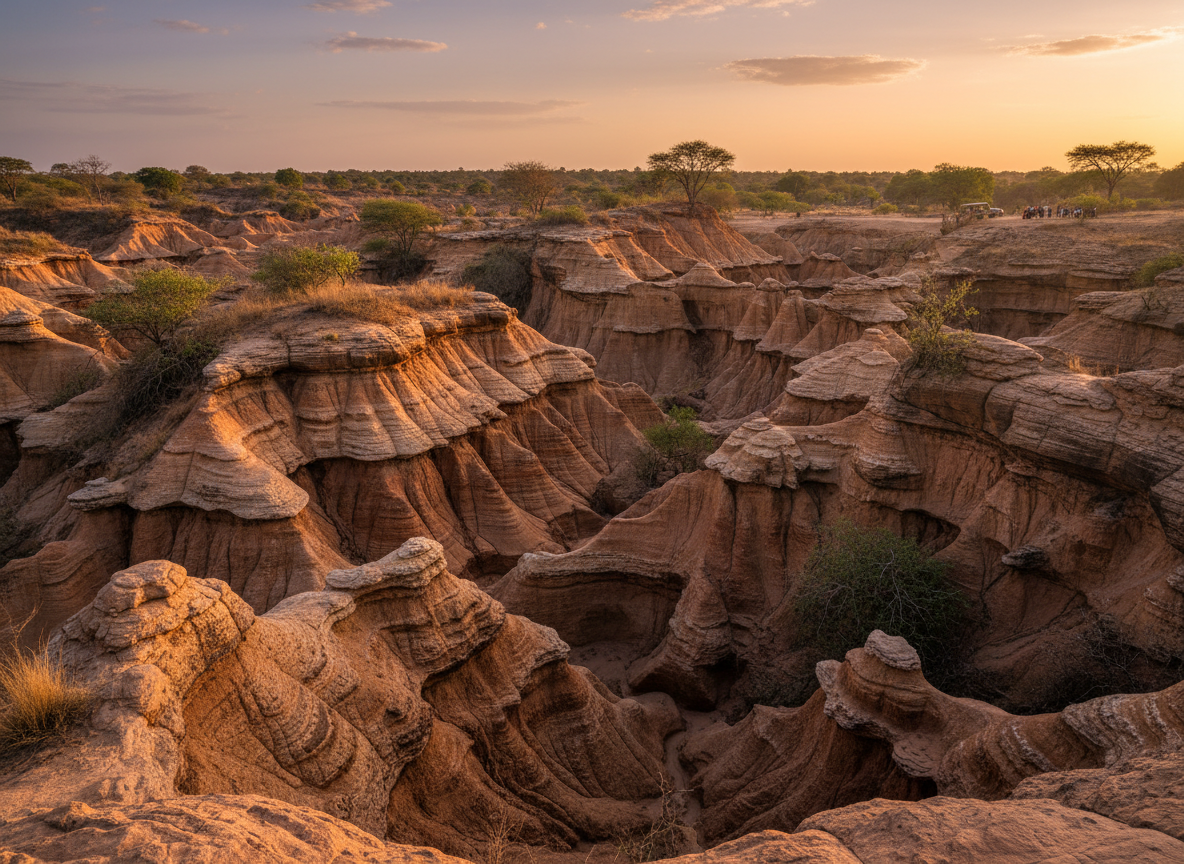
At first, the landscape feels almost too stark to understand. Dry earth. Jagged edges. Layers of sandstone cut into shapes that look more sculpted than natural. Then the light begins to shift, and the whole place changes character. Reds deepen. Gold turns to copper. Shadows stretch across the ridges. What looked harsh a few minutes earlier begins to feel strangely beautiful.
That is the real appeal of Marafa Hell’s Kitchen in Kenya. It is not a classic safari destination or a polished coastal attraction. It is a geological surprise, and one that feels even more dramatic because so many travelers do not expect to find it here.
What is Marafa Hell’s Kitchen?
Despite the name, Marafa Hell’s Kitchen is not a restaurant or a built attraction.
It is a natural sandstone gorge near the town of Marafa, inland from Malindi on Kenya’s coast. The site is also known as the Marafa Depression. Over time, erosion has carved the soft sandstone into a series of ridges, gullies, and layered formations that catch the light in remarkable ways.
The result is a landscape that feels almost theatrical.
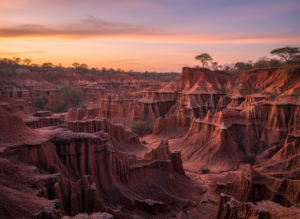
Depending on the hour, the colors can shift from pale cream to burnt orange, deep red, and dusty pink. That is why many visitors time their trip for late afternoon. The place is interesting in full daylight, but it becomes far more atmospheric as the sun drops lower.
Why the place feels so unusual
Part of what makes Marafa memorable is context.
If you are staying on the Kenya coast, your mind is usually tuned to beaches, palms, ocean light, and marine excursions. Marafa interrupts that picture completely. It feels dry, inland, and almost desert-like in mood.
That contrast gives the visit its power.
You leave behind the softness of the coast and arrive somewhere sharper, quieter, and more elemental. The landscape does not try to entertain you with wildlife or luxury. It works through shape, silence, and color.
There is also a local legend attached to the site, which adds another layer to the experience. Guides often share stories explaining how the canyon came to be, blending geology with oral tradition. Even if you come mainly for the scenery, those stories help the place feel rooted rather than simply photogenic.
What to expect during a visit
A visit to Marafa Hell’s Kitchen is usually straightforward, but it helps to arrive with the right expectations.
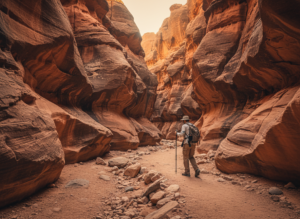
This is not a large, heavily developed attraction. The experience is relatively simple. You walk with a local guide, follow the paths down into parts of the canyon, stop at different viewpoints, and learn a little about the landscape and its history.
That simplicity is part of the charm.
The site does not need much staging. The formations do the work on their own. What matters most is timing, light, and the quality of the guide leading you through the area.
Late afternoon is generally the best time to go. This is when the colors become richer and the canyon begins to feel alive in a different way. Midday can be hot and visually flatter, especially if the sun is high and harsh.
Footwear matters more than some travelers expect. The ground can be uneven, dusty, and slightly slippery in places, so it is better to wear shoes with some grip rather than beach sandals.
Is it worth visiting?
Yes, but it depends on what kind of experience you are looking for.
If you want a polished attraction with lots of facilities and a full day of structured activity, Marafa may feel too simple. But if you enjoy unusual landscapes, quieter excursions, and places that feel slightly outside the usual tourist rhythm, it is worth the detour.
It works especially well for travelers staying in Malindi, Watamu, or nearby coastal areas who want a half-day or late-afternoon outing that offers something visually different from the beach.
It is also a good fit for photographers. The textures, shadows, and changing tones make the site especially rewarding when the light is right. You do not need wildlife for a place to feel dramatic. Sometimes rock and color are enough.
Who will enjoy Marafa most
Marafa Hell’s Kitchen in Kenya tends to appeal to travelers who are curious rather than checklist-driven.
It suits people who like seeing the less obvious side of a destination. It also works well for couples, small groups, and travelers who want to add one unusual inland stop to a coast itinerary.
Families can enjoy it too, especially if children are comfortable walking in warm conditions and are interested in landscapes rather than only beach activities. But it is best approached as a short, focused excursion rather than a full adventure day.
If your trip is built around safari or marine life, Marafa is not likely to become the headline experience. What it offers is something different: a pause, a shift in scenery, and a reminder that Kenya’s appeal is not limited to the images people already know.
How to combine it with a coast stay
One of the best things about Marafa is that it can fit easily into a broader coast itinerary.
If you are staying around Malindi or Watamu, it works well as a late-afternoon outing after a slower beach morning. It can also be paired with other nearby experiences, depending on how much driving you want in a day.
The key is not to overbuild it.
Marafa works best when it has room to feel atmospheric. If you squeeze it into an already crowded day, it can start to feel like a stop rather than an experience. Give it enough space for the light to change, for the guide to tell the story properly, and for the landscape to settle on you.
If you are planning a wider Kenya journey and want the coast section to include more than beaches alone, this is the kind of excursion that adds texture. And if you prefer not to piece those logistics together yourself, Trunktrails Safaris can help shape a smoother route that connects coast, excursions, and inland travel more thoughtfully.
Practical tips before you go
A few simple choices can make the visit better.
Go late in the day if possible. Bring water. Wear proper walking shoes. Expect heat, dust, and a relatively natural setting rather than a polished tourist site. Keep your camera ready, but also give yourself time to just stand still and watch the colors change.
That last part matters.
Marafa is not really a place to rush through. Its effect builds gradually. The longer you stay with it, the more the landscape begins to show its depth.
Final thoughts
Marafa Hell’s Kitchen in Kenya is worth visiting not because it is the biggest or most famous attraction on the coast, but because it feels unexpected.
It offers a different kind of beauty. Dry instead of tropical. Sculpted instead of soft. Quiet instead of busy.
For travelers willing to step away from the shoreline for a few hours, it can become one of the most memorable surprises of a coast itinerary.
Sometimes that is all a place needs to do.
Not overwhelm you.
Just stay with you.