Most river-crossing advice online reads the same: go in August, pick a camp near the water, wait. Evans Kimojino’s advice reads differently, because it comes from a logbook. He is a Mara-based guide and ground partner for the safari research site Hilmuks, and his public sighting record runs past 1,300 documented wildlife encounters, most of them tied to specific crossing points, dates, and herd behavior rather than general seasons. Touring Insights looked at what that record actually shows and how it can sharpen the timing decisions behind a Masai Mara trip.
Who Is Evans Kimojino?
Kimojino works the Masai Mara ecosystem as a full-time guide, spending peak migration months, roughly July through September, stationed at or near the river rather than driving a fixed daily circuit. Hilmuks credits him as its on-the-ground source for its Great Migration and river-crossing guides, using his notes to separate what actually happens at the water from what general migration calendars assume happens. That distinction matters, because the Mara River runs through a reserve where hundreds of vehicles can converge on a single crossing point within an hour of a sighting.
His value is not that he has seen more wildlife than any other guide. It is that he tracks it. A guide who logs which crossing point produced action on which date, across multiple seasons, builds a pattern library that a single visitor’s week-long trip cannot.
What “1,300+ Documented Sightings” Means for Trip Planning
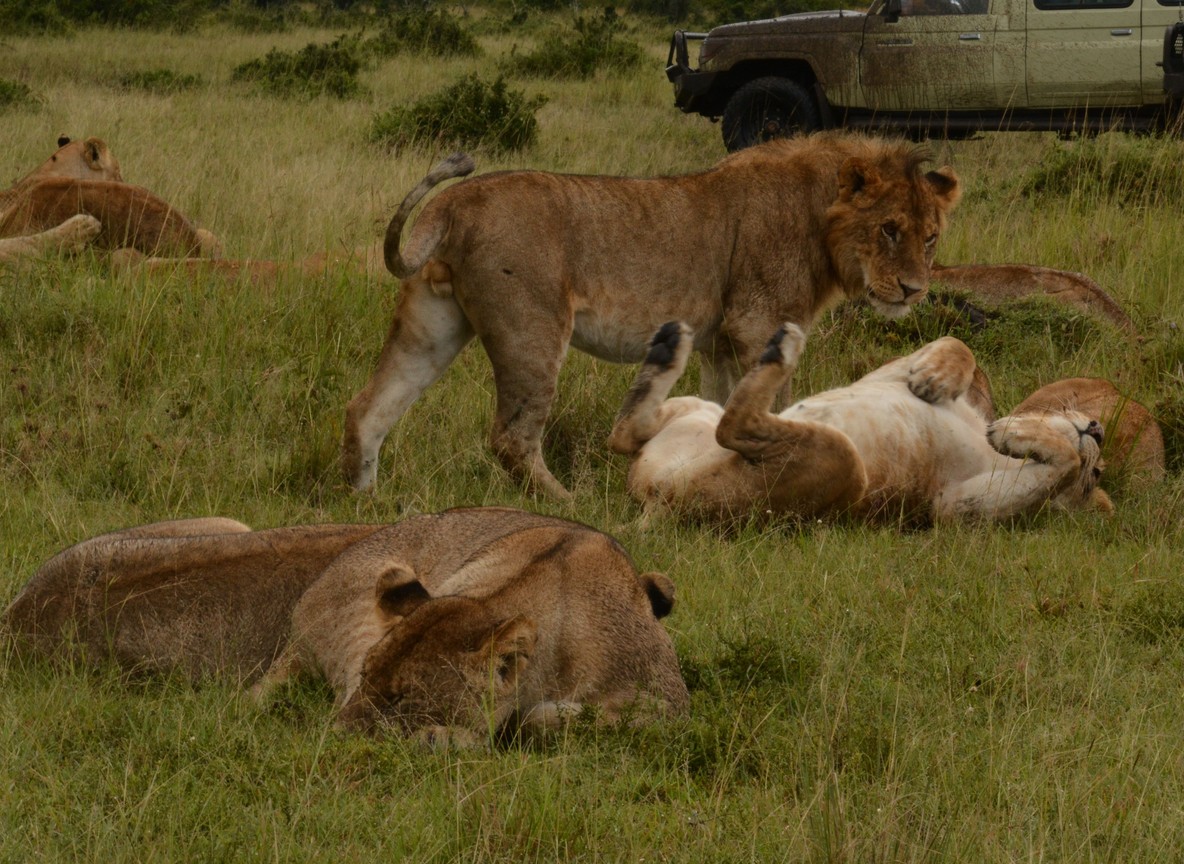
A documented sighting, in this context, is not a casual “we saw some wildebeest” note. It is a logged encounter tied to a place and a behavior: a crossing at Lookout Hill, a pride feeding near Paradise Plain, a herd stalling at the riverbank for three hours before finally moving. Over enough seasons, that log turns into something closer to a pattern map than a highlight reel.
For a visitor planning one Mara trip, that log answers a narrower and more useful question than “when is migration season.” It answers “which days in this window are actually worth being at the river instead of out on a general game drive.” Guides without that record are working from the same public migration calendars every visitor can already read.
Reading a Herd Before It Crosses: Kimojino’s Method
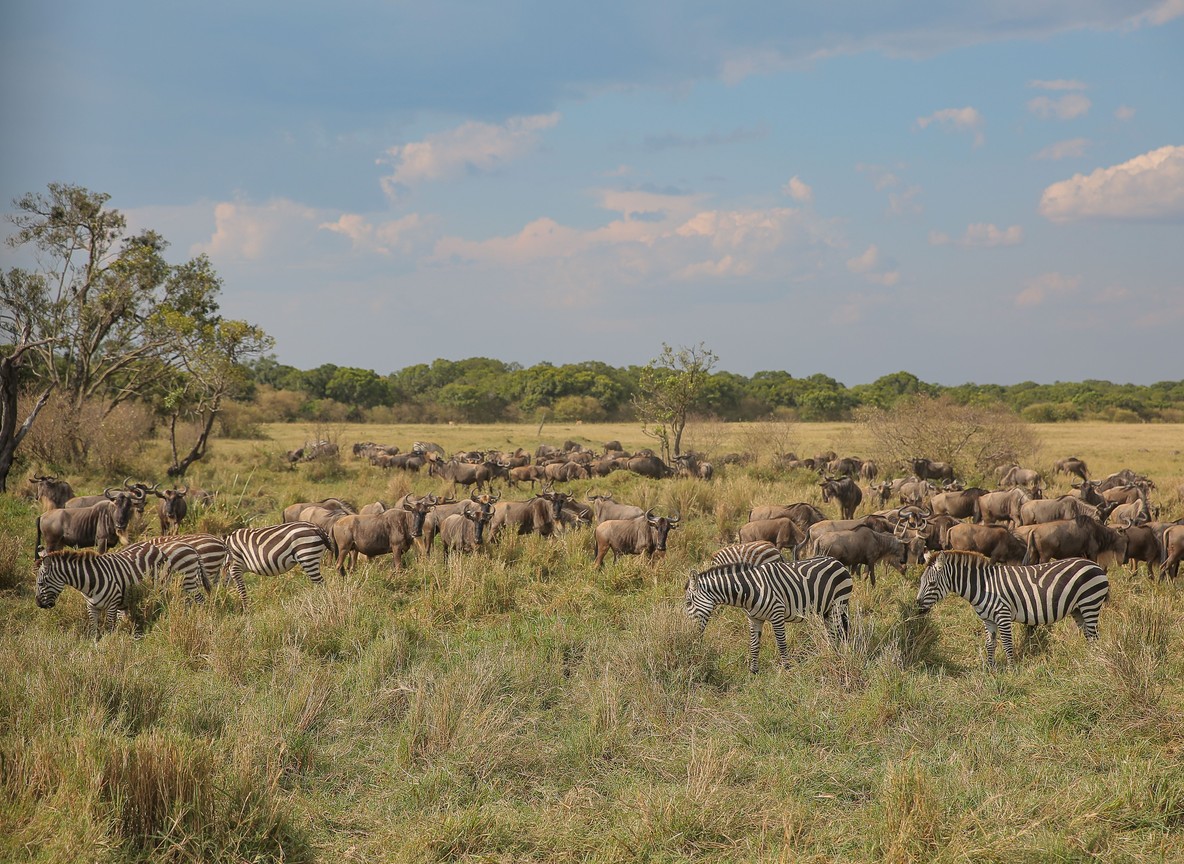
Kimojino’s crossing reads lean on herd behavior more than clock time. An agitated herd, bunching tight and moving with purpose toward the bank, signals a crossing is close. A calm herd grazing near the water can sit there for five hours, or stall until the next day, before anyone jumps in. The two states look similar to a first-time visitor watching from a vehicle. They are not.
He also separates drinking from crossing intent. When scout wildebeest reach the bank and lower their heads to drink, that is thirst, not a countdown. Scouts that drink typically retreat or loiter afterward rather than leading a crossing. Waiting for a drinking scout to trigger the herd is one of the more common reasons visitors sit at the wrong moment for hours.
The Three Rivers Wildebeest Cross Into Kenya
Herds moving north from Tanzania into the Masai Mara ecosystem cross three named rivers in sequence, not one. The Sand River comes first, followed by the Talek River, both shallow and rarely dramatic. Third is the Mara River, the one most trip itineraries are actually built around, since it is wider, faster, and holds the crocodile population that makes crossings look and feel dangerous on camera.
Visitors who plan a trip around “the river crossing” without knowing this sequence sometimes end up watching a quiet Sand River or Talek crossing and leave disappointed, unaware the main event is still ahead of them geographically.
Mara Triangle Crossings vs Main Reserve Crossings
The Mara River splits crossing activity across two management zones with different access rules and different named vantage points. Use the table below to compare the practical differences before booking a camp or picking a base.
| Detail | Mara Triangle (west) | Main Reserve, Narok side (east) |
|---|---|---|
| Managed by | Mara Conservancy (non-profit) | Narok County Government |
| Size | approx. 510 km2, about a third of the reserve | remaining approx. 1,000 km2 of the reserve |
| Named crossing points | Lookout Hill, Cul-de-Sac | Paradise Plain, Purungat Bridge (Crossing Point 5) |
| Entry fee (non-resident adult) | USD 100/day (Jan-Jun 2026), USD 200/day (Jul-Dec 2026) | Same fee structure, same reserve |
| Ticket validity | 12 hours (approx. 6am-6pm) | 12 hours (approx. 6am-6pm) |
| Typical crowd level at a crossing | Lower, fewer access roads | Higher, more camps feed into these points |
Kimojino’s logged crossings skew toward the Triangle’s Lookout Hill and Cul-de-Sac points, both known for a narrower channel that forces herds to bunch before jumping, which tends to produce a more concentrated and visible event than the wider approach at Purungat Bridge.
Fees, Flights, and Timing: Planning a Crossing-Season Trip
Getting to the river in time for a specific window takes more logistics than most first-time visitors expect. The figures below cover the core numbers for a Masai Mara base built around crossing season.
| Cost or logistics item | Indicative figure |
|---|---|
| Masai Mara entry, non-resident adult | USD 100/day (Jan-Jun 2026), USD 200/day (Jul-Dec 2026) |
| Masai Mara entry, child 9-17 | USD 50/day; under 8 free |
| Community conservancy entry (e.g. Nashulai) | approx. USD 60-80/day |
| Flight, Nairobi Wilson Airport to a Mara airstrip | approx. 40-48 minutes |
| Road transfer, Nairobi to the Masai Mara | approx. 270 km, 5-6 hours |
| Peak crossing window | roughly late July through September |
Confirm current park and conservancy fees with a partner operator before booking, since reserve pricing shifts by season and community conservancy rates vary by property.
Explorer Notes
Ask any Mara-based guide, not just Kimojino, whether a herd is agitated or calm before you settle in at a crossing point. That one question filters out a lot of wasted waiting time. If your itinerary allows it, split two or three days between the Mara Triangle and the main reserve’s Narok side rather than committing to one for a full stay. Crossing activity can shift between the two within the same week. Pack a long lens if photography matters to you. The narrower Triangle crossing points put vehicles closer to the water than the wider Purungat approach.
What to Read Next
- Deciding between the Mara Triangle and the main reserve for your whole trip, not just a single crossing day? See Mara Triangle vs Masai Mara Reserve for the full access and fee breakdown.
- Building an itinerary around the July-to-September window? Check Best Time for the Wildebeest Migration in Kenya before you lock in dates, since the mid-year rate change affects budget more than most travelers expect.
- Curious how a conservancy stay compares to reserve-only game drives during migration season? Read Community Conservancy vs National Reserve Safari for the access-rules difference.
FAQ
Who is Evans Kimojino? He is a Mara-based safari guide and ground partner for Hilmuks, credited with more than 1,300 documented wildlife sightings across multiple migration seasons, most tied to specific crossing points and dates.
How do I know if a wildebeest herd is about to cross the river? Look for agitation and tight bunching near the bank. A calm, grazing herd can wait five hours or longer. Scouts drinking at the water’s edge usually signal thirst, not an imminent crossing.
What is the difference between the Mara Triangle and the main Masai Mara Reserve? The Mara Triangle is a roughly 510 km2 western section managed by the non-profit Mara Conservancy, with narrower crossing points like Lookout Hill and Cul-de-Sac. Its Narok-side main reserve covers the rest, including Paradise Plain and Purungat Bridge.
Which rivers do wildebeest cross entering the Masai Mara from Tanzania? Three, in order: the Sand River, then the Talek River, both shallow, and finally the Mara River, which is wider, faster, and where most dramatic crossings happen.
When is the best time to see a Mara River crossing in 2026? Roughly late July through September, though exact timing shifts with rainfall. Masai Mara entry jumps from USD 100/day to USD 200/day on July 1, so budget for the higher rate during peak crossing months.
A guide’s logbook will not guarantee a crossing on the day you show up. No one can promise that. But knowing the river order, the behavioral signs, and the real difference between the Triangle and the main reserve puts you closer to the water at the right moment than a generic calendar ever will. Check the Tour Packages page for Masai Mara itineraries built around crossing season, or ask a partner operator to confirm current Mara Triangle and conservancy access before you lock in dates.
Further reading
- Maasai Mara Wildlife Conservancies Association
- African Wildlife Foundation
- Magical Kenya (Kenya Tourism Board)