A family of eight booking three tents at Sarova Mara Game Camp rarely pays eight identical rack rates. Most Kenyan camps quietly cut the price once a booking crosses six to eight paying guests. The discount rarely shows up as a headline “family rate,” though. Instead it appears as a waived single supplement, a free child bed, or a negotiated block rate. Reservations teams usually only offer these when a guest asks directly. Touring Insights breaks down where these savings come from, which camps build them into published rates, and what a large family should ask for before paying full price on every tent.
Group Discounts Exist, But They Are Not Advertised Like Airline Fares
Kenyan camps rarely publish a flat “10% off for 6 or more” discount. Savings for large families come from three separate sources instead. Children sharing a parent’s tent often get a reduced or waived rate. Groups booking three or more tents can negotiate a block rate. And splitting one shared vehicle and guide fee across more travelers lowers the per-person cost on its own.
A family of two adults and two teenagers pays a different total than the same four people booked inside a larger eight-person group. The bigger group usually saves more. That saving comes from volume negotiation with the camp’s reservations desk, not from any public discount code. Asking directly, in writing, before confirming a booking, is what actually gets it applied.
What Counts as a “Large Family” for Pricing Purposes
Most mid-range and luxury camps start treating a booking differently once it reaches six paying guests across two or more tents. Below that line, camps typically apply only their standard child rate. Above it, reservations teams gain more room to negotiate. A multi-tent group offers guaranteed occupancy, and that is easier to plan around than several small, separate bookings.
| Group Size | Typical Camp Response | Common Savings Mechanism |
|---|---|---|
| 2-4 guests, 1 tent | Standard rack rate | Child rate only, if applicable |
| 5-7 guests, 2 tents | Some flexibility on request | Waived single supplement, minor per-tent discount |
| 8-11 guests, 3 tents | Group rate often available | 5-10% block discount, complimentary vehicle upgrade |
| 12+ guests, 4+ tents | Dedicated group quote | 10-15% block discount, private vehicle fleet rate |
These figures are indicative ranges drawn from typical camp reservations practice, not a fixed published schedule. Every camp sets its own threshold. Confirming the exact cutoff before booking is worth the extra email.
Named Camps and How They Handle Family Groups

Sarova Mara Game Camp sits inside the Masai Mara National Reserve, about 270 km from Nairobi by road. It has 75 tents and publishes family configurations that sleep up to five. Guests aged 3 to 12 sharing a parent’s tent get a reduced child rate there. Ashnil Mara Camp, roughly 5 km from Sekenani Gate, follows a similar pattern. It will quote a block rate directly once a family books four or more tents for the same dates.
Sentrim Mara Camp sits on the reserve’s northern boundary near Oloolaimutia Gate. It markets itself toward budget-conscious family groups and drops its per-person rate once a booking passes eight guests. Emboo River Camp, a smaller eco-camp on the Talek River inside the reserve, caps out at a handful of tents. It will still bundle a private vehicle and guide across one extended family at a lower combined day rate than separate tent bookings. Ol Pejeta Bush Camp in Laikipia sits roughly a 3 to 4 hour drive north of Nairobi. It offers connecting family units and applies its group discount once guest numbers reach six.
Child Park Fees Are the Other Half of the Savings
Camp rates are only one part of a family safari bill. Kenya Wildlife Service and county reserve authorities also charge reduced fees for children. Across a group of eight or more, that adds up fast.
| Destination | Adult Non-Resident Fee | Child Fee (Age 3-17) | Notes |
|---|---|---|---|
| Amboseli National Park | USD 90/day | approx. USD 45/day, indicative | KWS Premium park tier |
| Tsavo East National Park | USD 80/day | approx. USD 40/day, indicative | KWS Wilderness A tier |
| Masai Mara National Reserve | USD 100-200/day (seasonal) | approx. half adult rate, indicative | Narok County reserve, not KWS |
| Lake Nakuru National Park | USD 60/day | approx. USD 35/day, indicative | KWS Wilderness B tier |
A family of two adults and four children visiting Amboseli for two days pays roughly USD 540 in park fees at these indicative rates. Six full adult fees would cost close to USD 1,080 over the same two days. Confirm the exact child fee schedule at the gate before travel. KWS and Narok County both review rates on their own separate schedules.
Family Tents vs Booking Multiple Standard Rooms
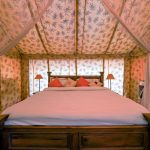
A large family often saves more by booking one or two large family tents than by reserving several standard rooms. Family tents at camps like Sarova Mara and Sentrim Mara typically sleep four to five guests with one shared bathroom. That cuts the per-person nightly cost compared with two separate double tents. The tradeoff is less privacy for teenagers or grandparents who want their own space.
Camps with interconnecting tents, a layout common at newer Mara properties, offer a middle ground. Two connected tents share a veranda but keep separate bathrooms. That gives a family a private compound feel without the full rack rate on both units. Ask specifically for interconnecting or family-configuration tents when booking. Do not just accept whatever the reservations system defaults to. That one question often reveals a lower blended rate than two unrelated standard bookings.
When Group Discounts Shrink or Disappear
Peak season changes the math considerably. Camps in the Masai Mara fill fast during the Great Migration months of July through September. They have far less incentive to discount a group booking then. A family planning a large trip during peak season should expect the block discount to shrink. Ten to fifteen percent in shoulder months can drop to closer to five percent, or vanish entirely if the camp is already near capacity.
Shoulder season gives families the most negotiating room. April, May, and November are the strongest months for this. Camps have more empty tents to fill then. A guaranteed eight-person, three-tent booking becomes genuinely attractive to a reservations manager chasing occupancy targets. Families with flexible travel dates should lead with that flexibility when requesting a group quote.
Explorer Notes
Reservations teams almost never volunteer a group rate on their own. A booking request has to state the total guest count and tent configuration upfront. Send one email listing every traveler’s age and the number of tents needed. Do not book tents separately and ask for a refund adjustment afterward.
Ask whether the vehicle and guide fee is charged per tent or split across the group’s daily game drives. Some camps quietly charge one flat vehicle fee per booking once a family fills three or more tents. That lowers the effective daily cost per person by a meaningful margin.
Confirm child age cutoffs directly with each camp. Do not assume one rule applies nationwide. One property’s “child” rate might stop at age 12. Another might extend a reduced rate through age 17. That four-year gap can change a family’s total bill by hundreds of dollars.
Frequently Asked Questions
At what group size do Kenyan safari camps start offering discounts? Most mid-range and luxury camps begin considering block discounts once a booking reaches six paying guests across two or more tents. Better rates typically start at eight guests and three tents.
Do children get free safaris in Kenya? Rarely fully free. Most camps discount children sharing a parent’s tent. KWS and county park authorities also charge roughly half the adult non-resident fee for children aged 3 to 17.
Is it cheaper to book one large family tent or several standard rooms? A single family tent sleeping four to five usually costs less per person than two separate standard tents. It offers less privacy, though, for older children or extended family members.
Which season offers the best group discounts for large families? Shoulder season months like April, May, and November give camps the most reason to discount large group bookings. July through September fills up fast with little need to negotiate.
Should I book each tent separately or as one group request? Book as one group request whenever possible. Reservations teams rarely apply retroactive discounts to bookings made as separate, unrelated reservations.
Pulling park fees, camp rates, and vehicle costs together across an eight-person family trip takes real spreadsheet work. Visit Touring Insights’ Tour Packages page to compare family-sized itineraries. Or ask a partner operator to price a multi-tent group quote directly against the camps named above.
What to Read Next
- Planning tent configurations for a mixed-age group? Read our family-friendly camps in Amboseli guide.
- Weighing a private conservancy against a national park for your group? See our private conservancy vs national park cost guide.
- Want a full packing and planning checklist before you book? Check our Kenya family safari packing list.
Further reading
- Kenya Wildlife Service
- Magical Kenya (Kenya Tourism Board)
- Maasai Mara Wildlife Conservancies Association
More safari planning resources
- Kenya family safari from SafariPure
- Kenya national parks map from Valley Safaris
- Best time to visit Kenya on Touring Insights
- Family safari collection on FindMySafari
Related guides: Amboseli for Couples vs Families: What Each Group Needs from the Park.