Can I See the Big Five in Tsavo? Best Viewing Tips
Can I see the Big Five in Tsavo? The honest answer is yes, with some caveats. Lion, leopard, elephant, Cape buffalo, and black rhinoceros all live within Tsavo East and Tsavo West, Kenya’s largest protected wildlife area. Seeing all five on one trip is possible, but it is not something any operator can promise. Some species show up on almost every game drive. Others take patience, luck, and a guide who knows the terrain.
This piece walks through what you can realistically expect, where each species tends to turn up, and how the timing of your visit changes your odds.
Can I See the Big Five in Tsavo?
Yes, Tsavo is home to lion, leopard, elephant, Cape buffalo, and black rhinoceros, so seeing all five is possible. It is not guaranteed on a short visit, however. Elephants, buffalo, and lions are generally more achievable, while leopards and black rhinos require extra time, skilled tracking, and favorable conditions.
Tsavo’s size works both for and against visitors. The combined park covers a huge stretch of semi-arid bush, so wildlife has room to spread out. That means fewer crowds around sightings compared with smaller reserves. It also means animals are not concentrated the way they can be in a place like the Maasai Mara. For how Tsavo compares with Amboseli for the Big Five, here is the short version. Amboseli’s smaller size and permanent swamps often make elephant and lion sightings a bit more concentrated. Tsavo trades some of that predictability for wilder, less crowded terrain.
Which Big Five Animals Are Easiest and Hardest to See in Tsavo?
Elephants and buffalo are usually the most reliable Big Five sightings in Tsavo, while lions are also regularly encountered near prey and water. Leopards are shy and favor dense cover or rocky ground, and black rhinos are the most difficult outside protected areas such as Tsavo West’s Ngulia Rhino Sanctuary.
Tsavo’s elephants are famous for their reddish color, a result of dust-bathing in the park’s red volcanic soil rather than a different subspecies. Herds are large and move regularly between the Galana River and the Yatta Plateau, so a multi-day stay usually turns up several sightings. Buffalo tend to travel in big herds near water and are seen almost as often as elephants.
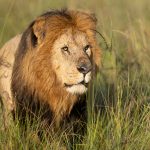
Lions in Tsavo have a local reputation. Some Tsavo males grow little or no mane, a trait linked to the heat and the local ecosystem rather than any separate species. They are still social predators that gather around water sources and prey, so drives near dams and rivers tend to be productive.
Leopards are the hardest of the visible predators to find anywhere in Kenya, and Tsavo is no exception. They favor thick riverine bush, rocky kopjes, and the cover of dusk and dawn. A sighting often comes down to a sharp-eyed guide spotting a tail or an ear rather than a clear view. Black rhinos are rarer still. Tsavo holds one of Kenya’s important rhino populations. Outside the fenced sanctuary in Tsavo West, sightings are infrequent and should never be treated as a sure thing.
Tsavo East or Tsavo West for the Big Five?
Choose Tsavo East for broad, drier landscapes, large red-elephant herds, and strong chances of seeing elephants, buffalo, and lions around Aruba Dam and the Galana River. Choose Tsavo West for varied volcanic scenery, Mzima Springs, and the best organized opportunity for black rhino sightings at Ngulia Rhino Sanctuary.
The two parks are separated by the main Nairobi to Mombasa road and feel quite different on the ground. Tsavo East is flatter and more open, which makes spotting animals at a distance easier and suits visitors who want long game drives across big skies. Tsavo West has more hills, lava flows, and permanent springs, which support denser vegetation and a wider variety of habitats in a smaller area. Many travelers combine both, and if you want a general orientation to the wider park system before choosing, the Tsavo safari guide is a useful starting point.
Where Can You See the Big Five in Tsavo?
In Tsavo East, focus on the Galana River, Aruba Dam, Mudanda Rock, and the open plains around Voi. In Tsavo West, try Mzima Springs, the Tsavo River, Ngulia Hills, and Ngulia Rhino Sanctuary. These places concentrate water, prey, or protective cover, but wildlife remains free-ranging and sightings cannot be guaranteed.
Aruba Dam draws elephant, buffalo, and lion during drier months, when the surrounding bush thins out and animals gather at the water’s edge. Mudanda Rock, a long outcrop overlooking a seasonal water source, offers a chance to watch elephant herds from above without disturbing them. In Tsavo West, Mzima Springs is one of the few places in Kenya where you can view hippos and fish from an underwater viewing chamber. It also draws buffalo and elephant to drink nearby. Ngulia Rhino Sanctuary is a fenced section of Tsavo West. It is the most dependable place in the wider park to look for black rhino, since it protects a monitored population from poaching pressure.
The table below gives an indicative sense of where the odds sit for each species. These are general patterns based on habitat and behavior, not fixed statistics, and actual sightings vary by season, luck, and time spent in the park.
| Big Five Species | Typical Sighting Odds (Indicative) | Best Areas | Best Season |
|---|---|---|---|
| Elephant | High | Galana River, Aruba Dam, Mzima Springs | June to October, January to March |
| Cape Buffalo | High | Water points across both parks | June to October, January to March |
| Lion | Moderate to High | Aruba Dam, Voi plains, Tsavo River | June to October |
| Leopard | Low | Ngulia Hills, riverine bush, rocky kopjes | Dry season, dawn and dusk drives |
| Black Rhino | Low outside sanctuary | Ngulia Rhino Sanctuary, Tsavo West | Year round within the sanctuary |
What Is the Best Time to See the Big Five in Tsavo?
The most predictable Big Five viewing is usually during the drier periods from June to October and January to March, when vegetation thins and animals gather near permanent water. The wetter months bring greener scenery, young animals, and birds, but wildlife may be more dispersed and thick vegetation can make tracking harder.
During the long rains, roughly March through May, and the shorter rains around November, Tsavo turns lush and green. It is a beautiful time to visit and a good period for birdwatching. Animals have more water sources to choose from and are not forced toward the main dams and rivers. If you want a broader sense of the best months for wildlife viewing in Kenya, the dry-season pattern holds across most Kenyan parks, not just Tsavo. For a closer look at how Tsavo’s own seasons shift sighting odds month by month, see the Tsavo season by season guide.
How Can You Improve Your Big Five Sightings?
Stay for at least two or three nights, combine Tsavo East and West when logistics allow, and take early morning and late afternoon drives when animals are most active. Use an experienced local guide, spend time near rivers and dams, carry binoculars, and allow extra patience for leopards and rhinos.
A single day drive gives you a snapshot. A longer stay gives your guide time to read fresh tracks, follow up on reports from other vehicles, and return to a promising spot at a better hour. Early starts matter because predators and elephants are often most active before the heat sets in. Packing the right gear also helps more than people expect. Neutral colors keep you less conspicuous on foot at lodges and during walking sections. Certain colors can attract tsetse flies in this part of Kenya, so it is worth knowing what to wear on a Kenya safari before you pack. If you are still building your kit list, the Kenya safari packing list covers the basics.
Why Does Rhino Conservation Matter for Big Five Viewing in Tsavo?
Black rhinos are endangered, so a sighting should be treated as a conservation privilege rather than a guarantee. Tsavo West’s Ngulia Rhino Sanctuary provides protected habitat and a more realistic opportunity to see them, while visitors should keep distance, remain in the vehicle, avoid pressure or noise, and follow ranger instructions.
The sanctuary exists because rhinos are especially vulnerable to poaching, and unprotected populations across Africa have suffered heavy losses over recent decades. Inside the fenced area, rangers monitor individual animals closely, which is part of why sightings there are more consistent than elsewhere in the park. Even so, a rhino sighting anywhere in Tsavo is worth treating with respect. Keeping a sensible distance and staying quiet gives the animal space and reduces stress, which matters for a species with so few individuals left. Travelers curious about how rhino protection works elsewhere in Kenya can compare notes with Ol Pejeta Conservancy, another key rhino stronghold with a different management model.
Frequently Asked Questions
Can I see all of the Big Five in Tsavo?
Yes, all five species occur in Tsavo, but seeing every one on a single trip is possible rather than guaranteed. Elephants, buffalo, and lions are generally easier to find. Leopards and black rhinos require more time, patience, and expert guiding.
Is Tsavo East or Tsavo West better for the Big Five?
Tsavo East is particularly strong for elephants, buffalo, and lions in open landscapes around areas such as Aruba Dam and the Galana River. Tsavo West offers more varied terrain and the strongest structured opportunity for black rhino sightings at Ngulia Rhino Sanctuary.
What is the best time to see the Big Five in Tsavo?
The dry seasons, especially June to October and January to March, usually offer the most predictable viewing because animals gather near water and vegetation is less dense. Wet season visits can still be rewarding, with greener scenery, abundant birds, and young animals.
Can you see rhinos in Tsavo?
Yes, black rhinos live in Tsavo, with the best organized opportunity found in Tsavo West’s Ngulia Rhino Sanctuary. Rhinos remain elusive, so even in the sanctuary a sighting should not be described as absolutely guaranteed.
Are leopards easy to see in Tsavo?
No. Leopards are among Tsavo’s hardest Big Five animals to spot because they are solitary, cautious, and often hidden in dense vegetation or rocky terrain. Early drives, patient observation, and a guide who knows local tracking patterns can improve the chances.
Planning Your Tsavo Trip
Tsavo rewards travelers who go in with realistic expectations and a bit of flexibility on timing. If you are ready to start comparing itineraries, it helps to browse packages and compare safari operators through sites like FindMySafari, Valley Safaris, or Trunktrails Safaris. You can weigh routes, lodge options, and the length of stay that gives you the best shot at all five.
More safari planning resources
- Tsavo East and West map from SafariPure
- Ol Pejeta Conservancy guide from Trunktrails Safaris
- Map of Tsavo from Valley Safaris
- Tsavo destination guide on FindMySafari