Planning a safari from Estonia brings up questions most guides never answer. How do you get from Tallinn to Nairobi? What does the park fee cost in euros, not just Kenyan shillings? And will the June to August holiday window in the Baltics line up with the best wildlife viewing?
This big five safari guide for Estonian speakers covers the animals, the parks, and the practical planning details that matter when flying out of Tallinn or Riga. The five species are the lion, leopard, elephant, African buffalo, and rhino. Kenya offers some of the best chances on the continent to see all of them in one trip, but the odds depend heavily on where you go and when.
What Does a Big Five Safari Guide for Estonian Speakers Cover?
This guide covers what the Big Five means, which parks give you the best chances, when to go, and what it costs in euros. First, some background on the term.
“Big Five” comes from colonial-era trophy hunting. It named the five most dangerous animals to hunt on foot: the lion, leopard, elephant, African buffalo, and rhino, prized because they could fight back.
Today the term means something different. Safari operators use it to market wildlife viewing, and travelers treat it as a checklist, though the animals do not live together and thrive in very different habitats.
For a modern safari, the Big Five are simply the five most iconic large mammals. Seeing them in the wild is memorable, and Kenya is one of the best places to try.
Which Animals Are in the Big Five in Kenya?
The Lion and How to See It
Lions live in prides of related females, their cubs, and a small number of males. A pride typically ranges from 5 to 15 individuals, though larger groups exist.
In Kenya, the Masai Mara is the strongest stronghold. The open grassland makes lions easier to spot than in thicker bush. Early morning and late afternoon are the best viewing times, since lions rest in the heat.
The Mara’s lion population is estimated at several hundred individuals, and it consistently offers some of the most reliable lion viewing in East Africa.
The Elephant and Its Herd Behavior
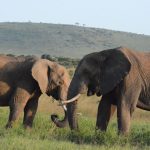
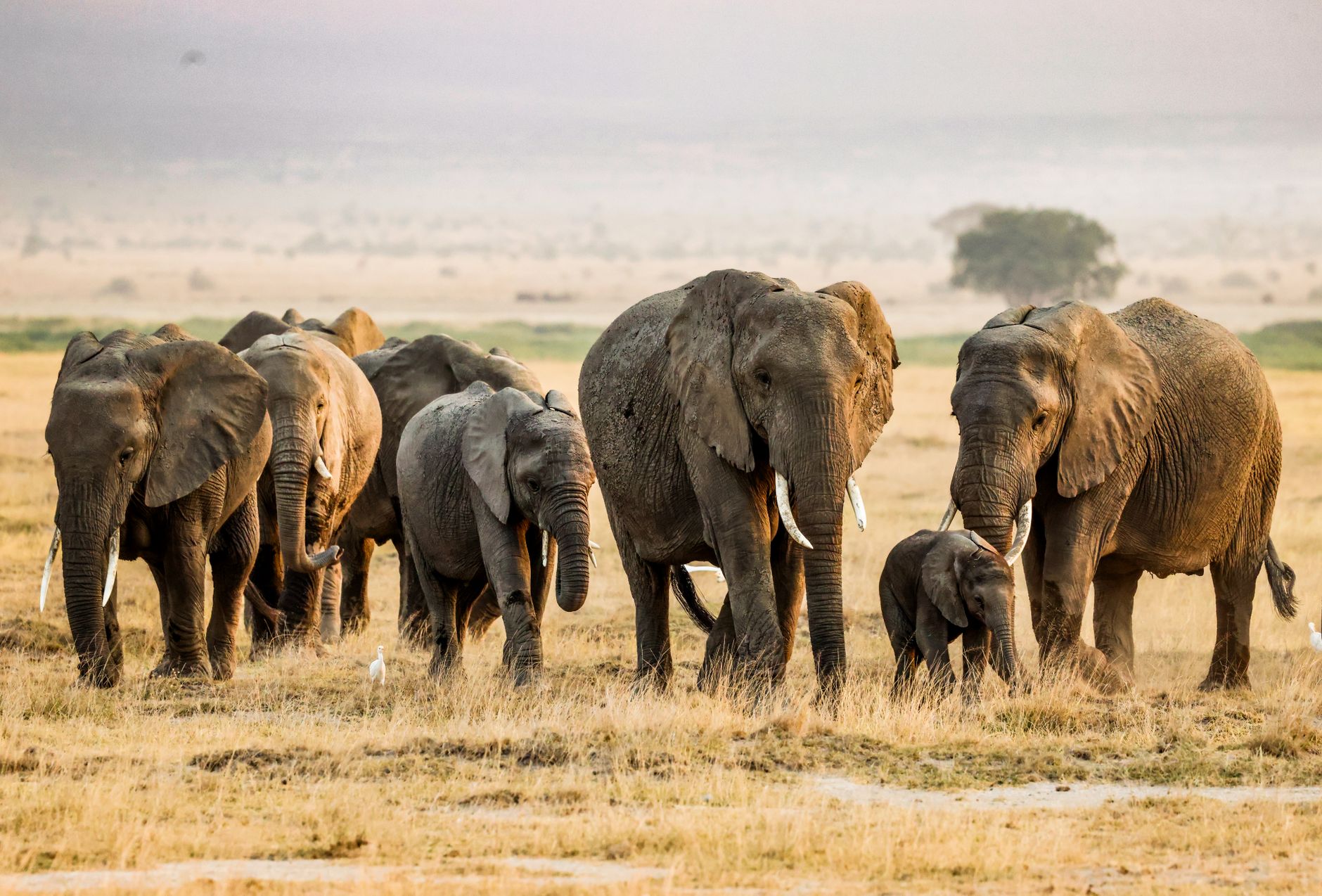
Elephants live in matriarchal family groups led by the oldest female, who passes down knowledge of water sources and migration routes. Adult males leave the herd at adolescence and travel alone or in small groups.
Amboseli National Park is famous for its elephants. It sits at the foot of Mount Kilimanjaro, and its herds, studied by researchers for decades, are habituated to vehicles, which makes for close and relaxed viewing.
A typical Amboseli family group numbers 8 to 15 animals. The park’s total elephant population is estimated at 1,000 to 2,000, depending on the season and the count.
The Leopard and Why It Is So Hard to Spot
Leopards are solitary, nocturnal, and masters of camouflage. They rest in trees during the day and hunt at night, so even experienced guides miss them regularly.
Your best chance in Kenya is the Masai Mara, particularly along the Talek and Mara rivers where dense riverine forest provides cover. Leopards also live in Samburu and Tsavo, but the Mara’s open woodland structure makes them slightly easier to find.
Treat a leopard sighting as a bonus, not an expectation. Many visitors spend a full week in Kenya without seeing one, and that is simply the reality of a secretive animal, not a failure of the guide or the park.
The African Buffalo and Its Reputation
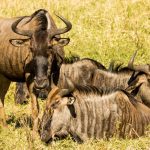
Buffalo are large and unpredictable. An adult bull can weigh more than 700 kilograms, and they live in herds that range from a few dozen to several hundred.
Buffalo are not endangered, and they are the most reliably seen of the Big Five. They graze in open areas throughout the day, so in the Mara, Amboseli, and Tsavo, you will likely see them within the first few game drives.
Buffalo have a reputation as one of the most unpredictable animals to encounter on foot, part of why hunters once ranked them among the toughest of the original Big Five. On safari you stay in the vehicle, which removes almost all risk, but your guide will still keep a respectful distance.
The Rhino and the Difference Between Black and White
Kenya holds two rhino species. The black rhino is critically endangered, with just over 1,000 individuals according to Kenya Wildlife Service figures. The white rhino, which is actually gray, is somewhat more numerous, though exact counts vary by source and both species remain rare enough that sightings are never guaranteed.
The difference is not color but mouth shape and behavior: white rhinos have wide, flat lips for grazing grass and are more social, while black rhinos have pointed, prehensile lips for browsing shrubs and twigs and are solitary.
Both are hard to see. Kenya’s best rhino viewing is in fenced sanctuaries like Ol Pejeta Conservancy and Lewa Wildlife Conservancy, where populations are protected and monitored.
Which Parks Should You Visit to See the Big Five?
No single park guarantees all five species, but two come close: the Masai Mara and Ol Pejeta Conservancy. Our Masai Mara travel guide covers the full picture, but the key point is this: the Mara delivers lions, leopards, elephants, and buffalo with relative ease. Rhinos are the gap, since only a handful of black rhinos live in the Mara Triangle and sightings are rare.
If you want rhinos, add Ol Pejeta. This private conservancy in Laikipia holds both black and white rhinos, including the last two northern white rhinos on Earth, though neither can reproduce naturally. It is one of the most reliable places on the continent to see black rhinos, using a fenced, monitored model where rangers track the animals daily.
A combined itinerary works well: three to four nights in the Masai Mara for the big cats, then two nights at Ol Pejeta for rhinos, adding Amboseli for elephants if you have the time. For more on the other parks, see our Amboseli safari guide, Samburu safari guide, and Tsavo safari guide.
What Is the Best Time of Year to See the Big Five in Kenya?
Kenya’s dry season runs from late June to October, the peak safari window: animals concentrate around water sources, vegetation thins out, and visibility improves.
For Estonian travelers, this creates a small problem. The Baltic summer holiday window is also June to August. July falls within the dry season, but you will share the parks with many other travelers. The Mara in August is crowded, especially during the wildebeest migration, and this is also when park fees peak, as covered below.
September and October offer similar viewing with fewer crowds, since the dry season and the migration continue.
The green season, from November to May, is cheaper and quieter, though animals spread out as water becomes plentiful and roads can get muddy.
For a deeper look at timing, our best time to visit Kenya guide breaks down the trade-offs month by month.
What Are the Odds of Seeing All Five in One Trip?
Honest answer: you can see all five in a week, but it is not guaranteed. Leopards and rhinos most often spoil the sweep. A realistic itinerary looks like this:
| Park | Nights | Likely sightings | Notes |
|---|---|---|---|
| Masai Mara | 3 to 4 | Lion, leopard, elephant, buffalo | Leopard possible but not guaranteed |
| Ol Pejeta | 1 to 2 | Rhino (black and white), buffalo | Best rhino odds in Kenya |
| Amboseli | 2 | Elephant, buffalo, lion | Optional addition |
With this plan, you have a strong chance of seeing all five, though the leopard stays uncertain: even in the Mara, some visitors see one and others do not, regardless of effort.
The alternative is to spend the entire trip in the Mara and accept that rhinos are unlikely. If the Big Five is your goal, though, the extra two nights at Ol Pejeta are worth it.
How Much Does a Big Five Safari Cost in Euros?
Safari prices vary by season, accommodation level, and park. Here are indicative per-person, per-night ranges for 2026.
| Accommodation level | Budget (EUR/night) | Mid-range (EUR/night) | Luxury (EUR/night) |
|---|---|---|---|
| Masai Mara camp | 150 to 250 | 250 to 450 | 450 to 900 |
| Ol Pejeta | 200 to 300 | 300 to 500 | 500 to 1,000 |
| Masai Mara park fee (per day) | 93 to 185 | 93 to 185 | 93 to 185 |
| Other parks and conservancies (per day) | 60 to 100 | 60 to 100 | 60 to 100 |
These figures include accommodation, meals, and game drives. Park fees are separate, paid directly to Kenya Wildlife Service or the county government. Masai Mara fees are seasonal: non-resident visitors pay USD 100 per day from January to June, rising to USD 200 per day from July to December, roughly 93 to 185 euros. Since most Estonian travelers visit in July or August, plan for the higher end.
As a planning rule, budget at least 150 to 250 euros per person per day for a comfortable safari. A full week, including international flights, typically lands between 2,000 and 4,000 euros per person.
For a full breakdown, see our Kenya safari cost guide.
How Do Estonian Travelers Get to Kenya?
There are no direct flights from Tallinn, Riga, or Vilnius to Nairobi. You will connect through a major hub:
- Via Doha on Qatar Airways
- Via Istanbul on Turkish Airlines
- Via Amsterdam on KLM
Flight time from Tallinn to Nairobi is roughly 10 to 12 hours plus the connection, and fares typically run 600 to 1,200 euros depending on the season. Budget a full travel day each way.
Once in Nairobi, you will fly to the airstrips near your parks on small aircraft, adding 150 to 300 euros per leg. Road transfers are cheaper but take much longer, often 5 to 6 hours from Nairobi to the Mara.
What Should You Pack for a Kenyan Safari?
The essentials are straightforward: light, neutral-colored clothing for game drives, a warm layer for early mornings, sunscreen, a hat, and insect repellent. Binoculars are essential for spotting wildlife at a distance.
For a complete list, our Kenya safari packing list covers everything in detail, including what to leave at home.
Is the Rhino Population Recovering in Kenya?
Kenya’s rhino numbers are climbing, but slowly. The black rhino population has grown from a low of around 300 in the 1980s to just over 1,000 today, a fragile recovery that depends on continued anti-poaching efforts.
Ol Pejeta and Lewa are the cornerstones of the recovery, using intensive monitoring, armed rangers, veterinary care, and community programs that reduce poaching incentives.
The last two northern white rhinos live at Ol Pejeta. Both are female, so the subspecies is functionally extinct. Scientists are attempting in vitro fertilization to save it, but no calves have been produced as of 2026.
How Do You Plan a Safari from Estonia?
Start by setting a realistic budget and travel window, then decide which parks match your priorities: Ol Pejeta if the Big Five is non-negotiable, or the Mara in August or September for the wildebeest migration.
Work with a licensed operator who can handle flights, transfers, and park bookings. Kenya requires an e-visa for most nationalities, and the application is straightforward online. Check with your doctor or a travel clinic about yellow fever vaccination requirements and malaria prevention well before you travel.
For a step-by-step approach, our planning your Kenya safari guide walks through the process from start to finish.
Ready to Compare Safari Operators?
The next step is comparing operators and packages. Browse packages from FindMySafari, Valley Safaris, or Trunktrails Safaris to find a trip that fits your budget and your Big Five checklist, and ask each operator about leopard sighting records and rhino viewing conditions before you commit.
More safari planning resources
- Masai Mara Big Five safari from SafariPure
- Ol Pejeta Conservancy guide from Trunktrails Safaris
- Best time to visit Kenya month-by-month map from Valley Safaris
- Big Five safari collection on FindMySafari
Related guides: Amboseli Elephant Research: How Five Decades of Field Science Protects the Herds, Amboseli in October: Late Dry Season, and Why It Still Works Well, &Beyond Bataleur Camp: Private Concession Safari in the Maasai Mara.