

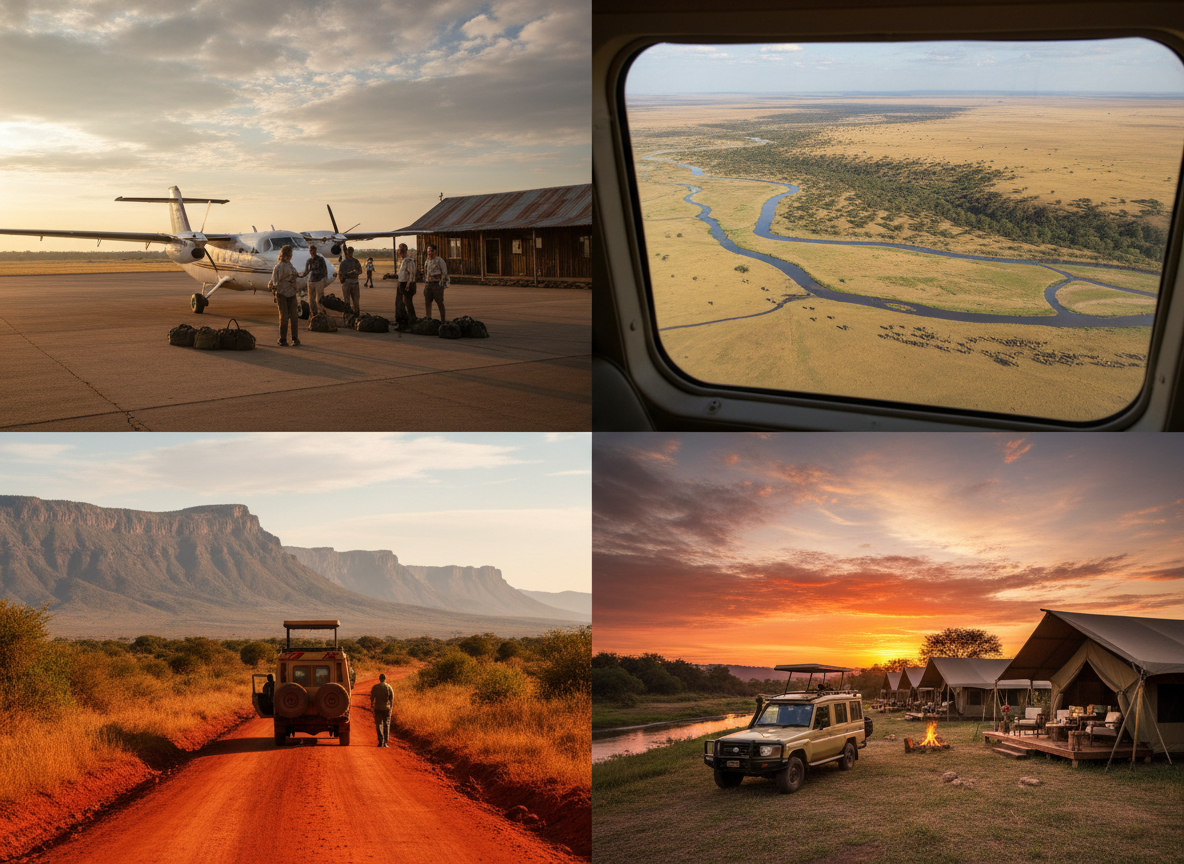
Fly in camp and drive in camp masai mara create very different safari moods. One shapes how you sleep, eat, and hear the bush after dark. The other changes how much privacy, polish, and pace you carry through the trip. That is the fly in camp vs drive in camp masai mara decision.
This is the call Trunktrails Safaris helps travellers make every week. We are Nairobi-based and Kenyan-owned. Our team knows which properties still feel right after the marketing photos stop. We match guests to camps that deliver on guiding, location, comfort, and value.
Sometimes the better fit is fly in camp. Sometimes it is drive in camp masai mara. Here is the honest fly in camp vs drive in camp masai mara comparison, the way we explain it on a planning call.
How Getting to the Masai Mara Works
By road: The Masai Mara is approximately 270 km from Nairobi, typically five to six hours by 4WD vehicle via the Narok route or the Mai Mahiu to Narok road. Road transfers are common for budget and mid-range safaris. Most drive-in camps are along the main reserve boundary: Sekenani Gate, Ololaimutia Gate, Talek Gate: or in the conservancies accessible from these routes.
By air: Scheduled bush flights from Wilson Airport in Nairobi take 45 to 60 minutes and land at one of several airstrips in the Mara ecosystem: Mara Serena, Ol Kiombo, Keekorok, Mara North, Olare Orok, or Angama. Charter flights can access smaller airstrips in remote conservancies.
Some camps: particularly in the more remote conservancies: are only practically accessible by air. Others are within road distance but commonly reached by bush flight to save time.
Fly-In Camps: Key Features
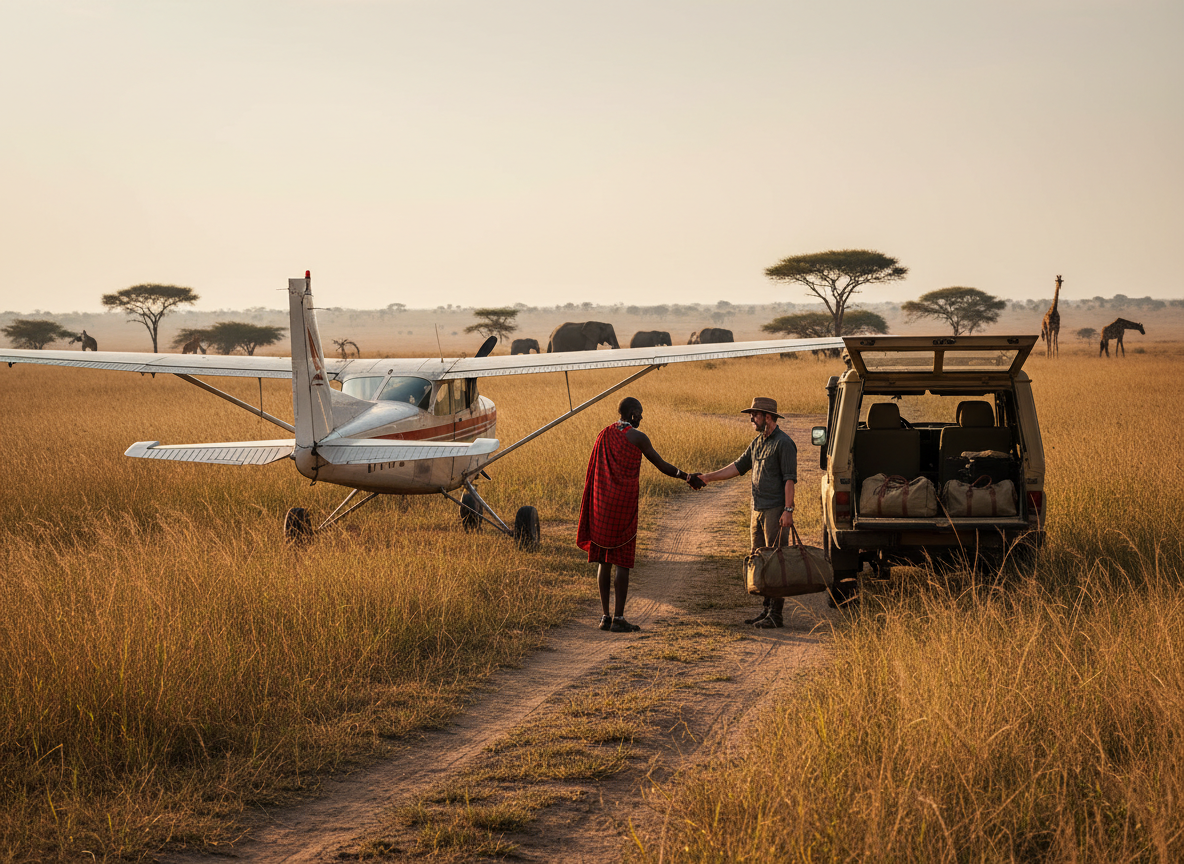
A masai mara fly in camp is typically one that:
- Is located in a remote conservancy far from the main road network
- Recommends or requires bush flight access due to its location
- Prioritises exclusivity: harder to reach means fewer guests overall
- Offers a sense of arrival: landing on a bush airstrip and being met by your camp vehicle is a genuinely memorable start to a safari
Advantages of fly-in camps:
- Save five to six hours of road travel each way
- Access to more remote, exclusive conservancy locations
- The aerial view of the Mara during the flight itself is extraordinary
- Maximum time in the bush relative to travel time
Disadvantages:
- Bush flights add significant cost: typically USD 150 to 350 per person each way on scheduled services, more on charters
- Weight limits on luggage (typically 15 kg soft bag maximum on bush flights)
- Schedule dependence: bush flights operate on fixed schedules and can be affected by weather
Examples of fly-in focused camps: Mara Plains Camp (Olare Motorogi), Angama Mara (Mara Triangle), Cottar’s 1920s (Olderkesi), Sand River Masai Mara (remote south), Ngare Serian (Mara North, rope-bridge access only).
Drive-In Camps: Key Features
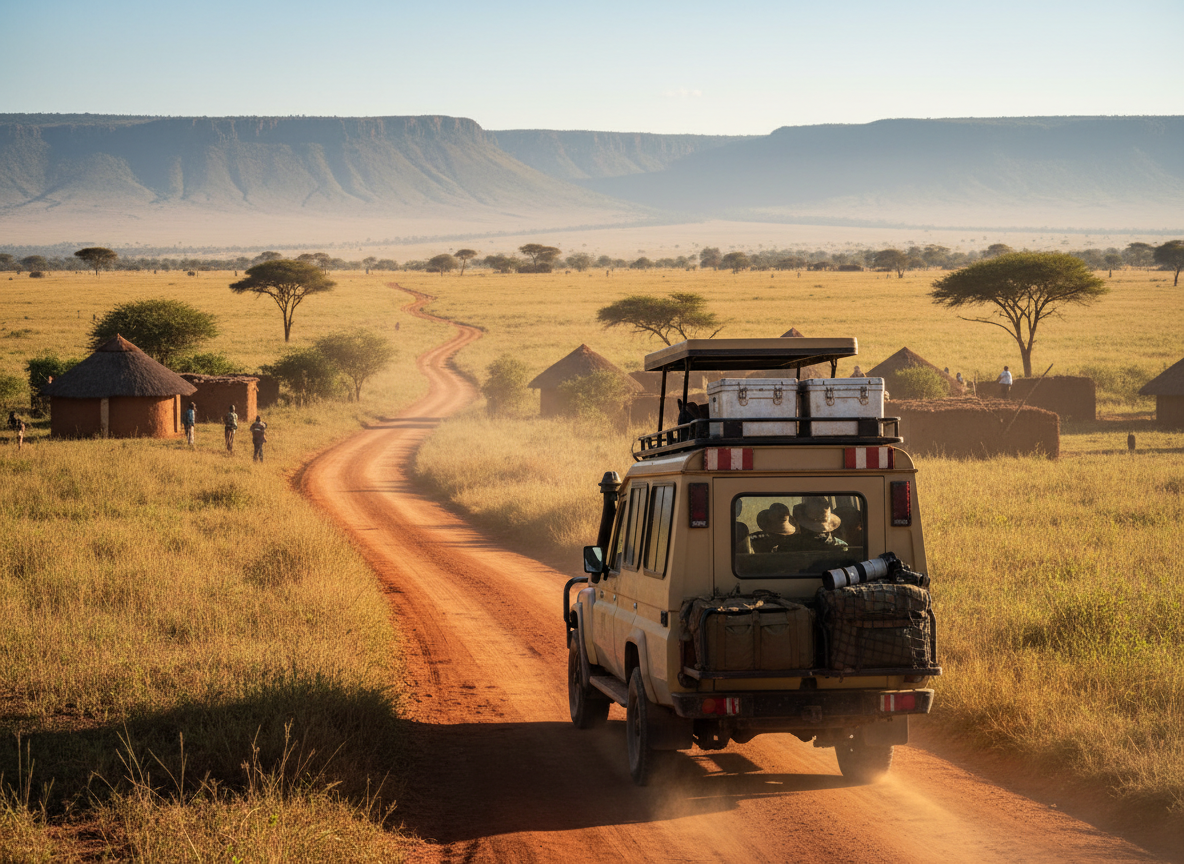
A masai mara drive in camp is one accessible by road, typically via Narok and the main reserve gates. These camps:
- Are accessible without a bush flight
- Range from budget campsites to luxury lodges along the reserve boundary
- Are most practical for travellers combining the Masai Mara with a road circuit (Naivasha, Lake Nakuru, Amboseli)
- Suit travellers with more luggage or who prefer not to fly on small bush aircraft
Advantages of drive-in camps:
- No bush flight cost: can save USD 300 to 700 per person for a couple on a return basis
- No luggage weight restrictions
- Road journey passes through the Rift Valley: scenic in its own right
- More flexibility on departure times and schedule changes
- Wider range of accommodation at all price points
Disadvantages:
- Five to six hours of road travel each way
- Road conditions during wet season can be challenging
- Limited access to the most remote conservancy camps
Examples of drive-in camps: Mara Serena Safari Lodge, Mara Sopa Lodge, Fig Tree Camp, Keekorok Lodge, Sarova Mara Game Camp, Basecamp Masai Mara.
Hybrid Approach: Fly In, Drive Out (or Vice Versa)
A practical and popular option is to fly into the Masai Mara and drive out (or drive in and fly out). This saves half the flight cost while still delivering the time-saving and arrival experience of the bush flight in one direction.
Trunktrails Safaris regularly designs fly-in/drive-out itineraries, particularly for multi-park circuits where the road journey between parks covers new ground rather than retracing the same route.
Key Differences: Fly-In vs Drive-In
| Factor | Fly-In Camp | Drive-In Camp |
| Transfer time | 45 to 60 minutes from Wilson Airport | 5 to 6 hours from Nairobi |
| Additional cost | USD 150 to 350 per person each way | Road transfer (lower cost) |
| Luggage limit | ~15 kg soft bag | No restriction |
| Camp location | Remote conservancies accessible | Reserve boundary and road-accessible areas |
| Arrival experience | Bush airstrip landing | Road arrival at camp |
| Exclusivity | Higher (remote camps) | Lower to moderate |
| Flexibility | Schedule-dependent | More flexible |
| Best for | Time-limited travellers, luxury seekers, remote camps | Budget/mid-range, road circuits, multi-day travellers |
Which Should You Choose
Choose a fly-in camp if:
- You are on a short trip (four to six days) and want maximum time in the bush
- Your preferred camp is in a remote conservancy accessible only by air
- The arrival experience of landing at a bush airstrip matters to you
- Budget allows for the additional flight cost
- Luggage restrictions are manageable with a soft safari bag
Choose a drive-in camp if:
- Budget is a significant consideration and flight costs are a stretch
- You are on a multi-park road circuit and the drive covers useful ground
- You have luggage requirements that exceed soft-bag limits
- You prefer the flexibility of road travel without flight schedule constraints
- Your camp of choice is in the main reserve boundary area
At Trunktrails Safaris, our tours and safaris team handles both fly-in and drive-in Masai Mara packages and can advise on the best combination for your specific itinerary, dates, and budget.
Ready to Plan Your Kenya Safari? Talk to Trunktrails Safaris
Trunktrails Safaris designs tailor-made tours and safaris for every traveller and every budget. From green-season adventures to private luxury camps, our tours and safaris are built by a Nairobi-based team that speaks to you directly, not through a call centre. Most WhatsApp enquiries about our Kenya tours and safaris get a reply from Trunktrails Safaris within the hour.