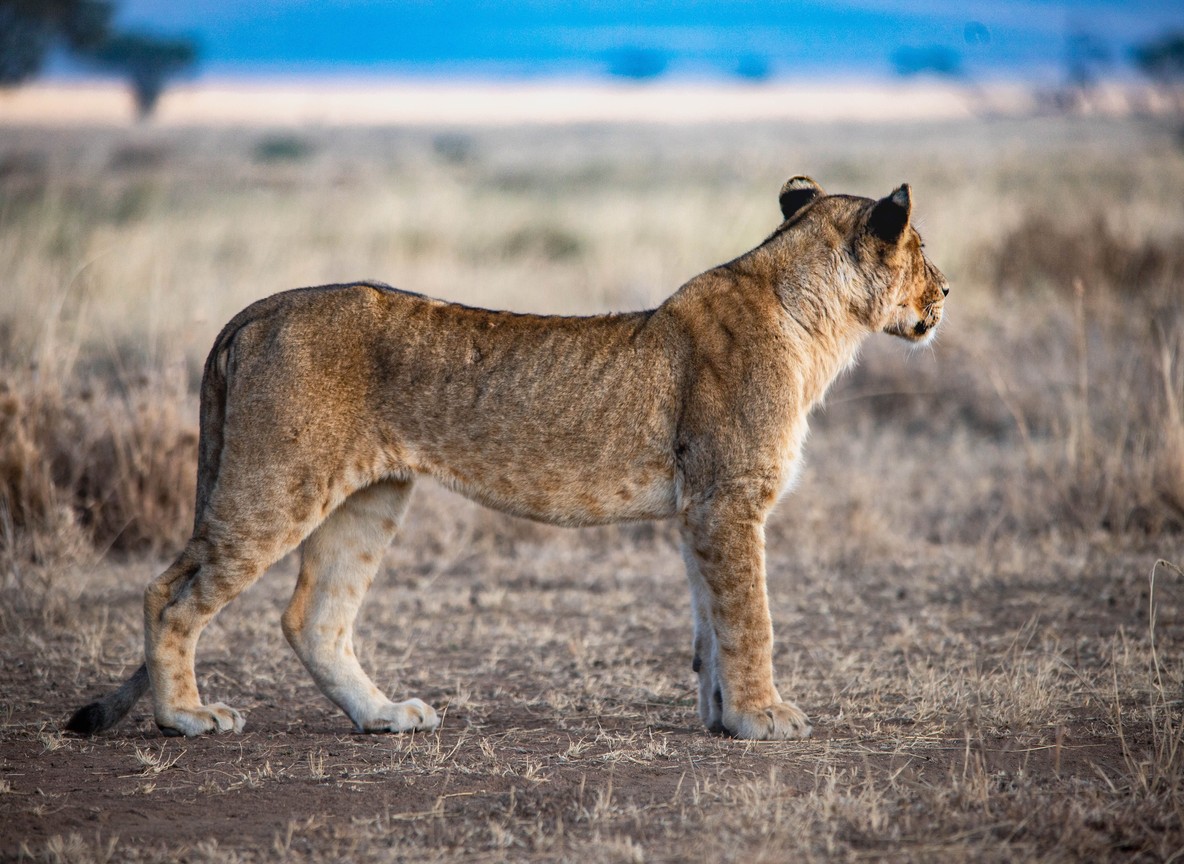
The Masai Mara is one of the few places where how you structure your time in the field directly changes what you are able to see. The choice between a full day vs split game drive is not merely a scheduling preference. It determines which wildlife windows you can access, how much ground you cover in a single outing, and how your body holds up across a multi-day stay.

This guide breaks both formats down honestly, with the timing logic, the trade-offs, and a practical view of which traveler each one serves best.
What a Full-Day Game Drive Looks Like
A full-day drive in the Masai Mara typically departs camp between 6:00 and 6:30 am and returns between 6:00 and 7:00 pm. That puts roughly 11 to 12 hours in the field with no midday return to camp.
Lunch is taken out in the bush. Guides prepare a packed picnic from a cool box carried in the vehicle, or set out a proper spread at a chosen scenic spot: a shaded riverbank, the base of a kopje, or beneath a wide acacia. The bush lunch is not simply a logistics solution. For many travelers it becomes one of the more grounding hours of the trip. The engine is off, the landscape extends in every direction, and the sounds of the reserve carry through without interruption.
In terms of range, a full-day structure gives a guide the transit time to cover ground that a split drive cannot. A circuit from the Sekenani area through the central plains, across to the Mara Triangle, and back via the Talek corridor takes most of the day. Without a midday return, that full range is achievable in a single outing.
What a Split Morning-Afternoon Drive Looks Like
The split format runs on a twice-daily schedule:
- Morning drive: 6:00 to 10:00 am, returning to camp for brunch
- Afternoon drive: 3:30 to 7:00 pm, returning to camp for dinner
The midday gap runs approximately five to six hours. That time can be used for rest, for a swim at camps with pools, for reading, or for watching wildlife from a camp veranda if the property sits in a wildlife-active corridor. Some travelers use this window for a supplementary activity: a hot air balloon flight, a Maasai village visit, or a spa treatment.
Total time in the field across both sessions is around six to seven hours.
Comparing Full Day vs Split Game Drive Side by Side
| Factor | Full-Day Drive | Split Morning and Afternoon |
|---|---|---|
| Total drive time | 11 to 12 hours | 6 to 7 hours |
| Ground covered | Maximum range | Moderate |
| Peak wildlife windows | Both captured | Both captured |
| Midday hours in field | Yes (low-activity period) | No (skipped) |
| Bush lunch | Included | Not included |
| Physical fatigue | Higher | Lower |
| Migration crossing strategy | Best option for extended waits | Limited by midday return |
| Flexibility for other activities | Limited | Good |
| Typical cost | Higher (full-day supplement applies) | Standard rate (included in most packages) |
When Each Format Makes Sense
Full-day drives: the conditions that justify them
Migration season in the Masai Mara runs from July through October. During this period, wildebeest herds cross the Mara River in unpredictable bursts that can take hours to develop. Herds approach the bank, stall, turn back, circle, and eventually commit. The timing is entirely on the herd’s terms, not the itinerary’s.
A split drive that returns to camp by 10:00 am can miss the late-morning crossing window entirely. Herds sometimes begin moving in earnest between 9:00 and 11:00 am, after the initial dawn hesitation. A full-day structure lets you hold position at a crossing site and wait out the action without being pulled back for brunch.
For anyone who has timed their trip specifically around the migration crossings, at least one full-day drive during migration season is worth both the added cost and the physical effort.
Short stays make an equally clear case. With only two or three nights in the reserve, a single full-day outing adds several hours of field time that a split structure cannot recover. For a first visit with no near-term return planned, that difference in total time matters.
Split drives: the default for most trips
Wildlife in the Masai Mara concentrates in two daily windows: dawn from 6:00 to about 9:00 am, and late afternoon from 4:00 to 6:30 pm. The stretch between roughly 10:00 am and 3:00 pm is the quietest period of the day. Big cats rest in shade, elephants stand still, and the savannah sits under direct midday sun. Temperatures in the reserve commonly reach 25 to 32 degrees Celsius during these hours, and an open-sided vehicle offers limited protection.
Staying in those conditions for four to five hours does not improve game-viewing. It mostly accumulates fatigue that carries into the afternoon drive, which is typically the session that delivers the most predator activity and the best light for photography.
For longer stays, for trips covering multiple reserves, and for travelers who want to pace their days rather than push through them, split drives are the sensible structure. Both peak activity windows are captured. The unproductive midday period is passed at camp instead.
The Bush Lunch Factor
The picnic experience included in a full-day drive is worth considering on its own terms. A well-positioned bush lunch stops the vehicle at a carefully chosen site, sets out a proper spread, and gives you an extended, unhurried pause inside the landscape.
Most travelers find it one of the more memorable stretches of a full-day outing. The engine is off. The view is open. The pace slows to something closer to the environment around you. Guides often select spots near a water source or along a game trail where there is a reasonable chance of wildlife movement even during the midday quiet.
It is not the same as a camp meal, and it is not meant to be. Its value is in where it happens, not what is served.
Explorer Notes
- If Mara River crossings are your primary target, book at least one full-day drive during the migration window. Confirm with your camp or guide which crossing sites they use and how early in the morning you can position at the bank.
- Full-day drives suit travelers who are physically accustomed to extended outdoor time. The midday stretch in an open vehicle is the most demanding part. A wide-brimmed hat, high-SPF sunscreen, and extra water are not optional.
- If you plan only one drive per day, the morning session from 6:00 to 10:00 am is the most productive single window in the Masai Mara. It captures dawn predator activity, cooler air, and better light than any other part of the day.
- A balloon flight pairs naturally with an afternoon drive. The flight runs in the early morning and typically concludes with a bush breakfast by mid-morning, returning you to camp at roughly the same time a morning drive would have ended. Pairing it with an afternoon drive captures a full day of field activity without overlap.
- On non-migration visits, most experienced guides default to split drives. The full-day format is a supplement for specific conditions, not the baseline for every trip.
Conclusion
The full day vs split game drive decision turns on what you are trying to see and how long you have to see it. A full-day structure is the right call during migration season and on short stays where total field time is the priority. A split format is the practical default for most other conditions: it captures both peak wildlife windows without the fatigue that comes from sitting out the hottest, quietest hours of the day.
Both formats can produce outstanding game-viewing. The distinction lies in positioning, range, and pacing rather than the quality of any single sighting.
Every trip described here can be tailored: dates, budget, camps, and pace built around you.
Get a Personalised Safari