

These options may appear in the same planning conversation, but they do not deliver the same safari. Wildlife style, road time, camp feel, and the kind of stories you bring home all shift with the choice. That is why elephant herds vs solitary bulls kenya matters.
Trunktrails Safaris helps travellers make this decision every week. We are Nairobi-based and Kenyan-owned. We weigh real drive times, wildlife strengths, camp standards, and what guests actually want from the trip, not brochure shortcuts. That makes the recommendation easier to trust.
Here is the honest elephant herds vs solitary bulls kenya comparison, the same way we break it down before a safari is booked.
Elephant Social Structure: The Basics
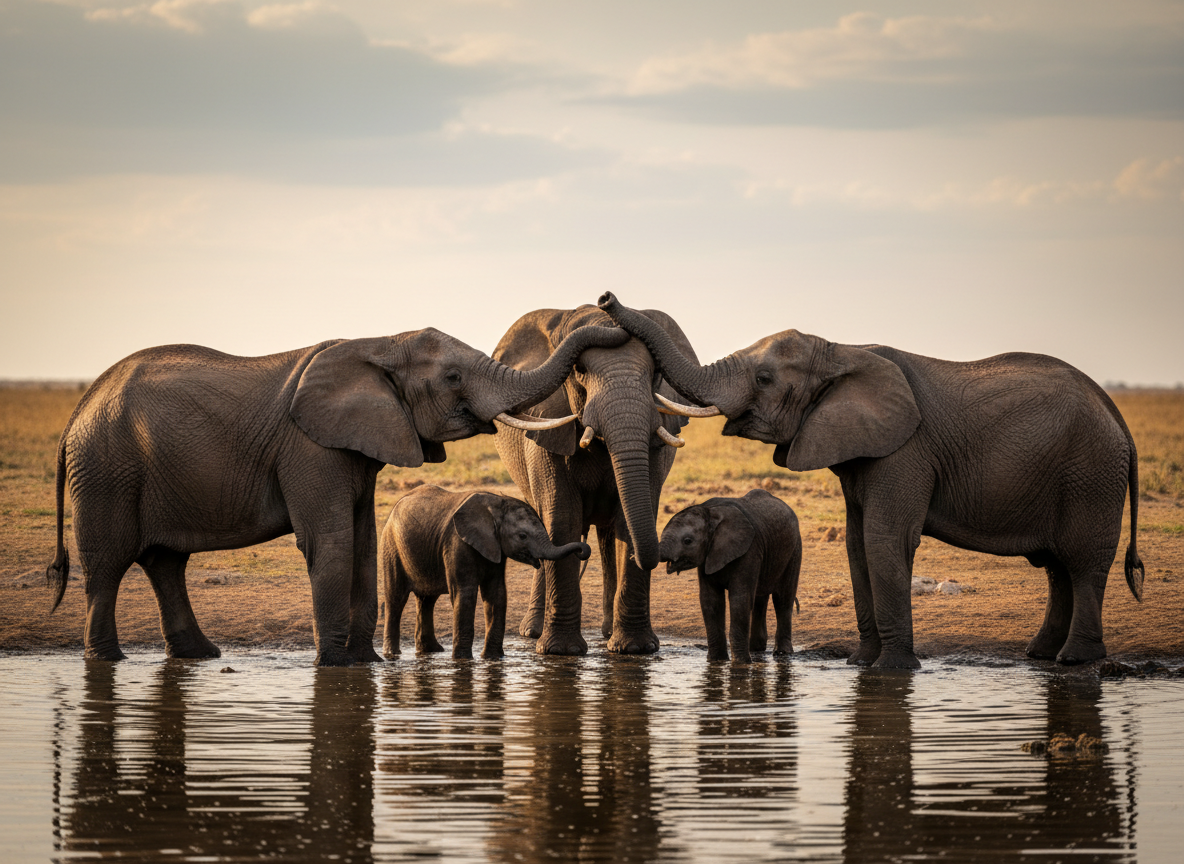
African elephants live in a matriarchal society. The fundamental social unit is the family herd: typically eight to fifteen individuals led by the oldest and most experienced female, called the matriarch. Family herds consist of:
- The matriarch (dominant female, oldest and largest female in the group)
- Her daughters and granddaughters
- Young calves of both sexes
- Juvenile males up to approximately 12 to 14 years of age
When two or more family herds are related and range the same area, they form a larger grouping called a “bond group.” When multiple bond groups meet at a water source or favourable grazing area, the resulting gathering can involve 50 to 200 or more individuals: a spectacular sight.
Kenya Elephant Family Herds: What to Look For
Watching kenya elephant family herds is one of the most socially rich wildlife experiences on a safari. Family groups display complex, highly readable social behaviour:
Calf interactions: Young calves are protected and guided by multiple adults. Watching a calf learning to use its trunk, being assisted across a stream, or nursing is one of the most endearing sequences in African wildlife observation.
Matriarch leadership: When the family moves, the matriarch leads. Her behaviour communicates the group’s direction, pace, and level of alert. If the matriarch becomes agitated, the entire family responds. Watching her process a novel stimulus: a strange vehicle, an unusual scent: is a lesson in elephant intelligence.
Greeting ceremonies: When two related families meet, the reunion involves trumpeting, touching, spinning, and vocalisation that clearly communicates genuine excitement. These elephant greetings are deeply affecting.
Defensive formations: When threatened, the adults form a circle with calves at the centre, facing outward. The matriarch moves toward the threat while the rest of the family clusters. This is the classic “elephant mock charge” scenario: recognising the difference between a mock charge (warning, ears spread, dust kicked) and a real charge (ears pinned, head low, accelerating) is a key guide skill.
Solitary Elephant Bulls: What to Look For

Adult male elephants leave the family group as they approach sexual maturity: typically between 12 and 15 years of age. They then live largely solitary lives or in loose bachelor groups, spending time with family groups only during periods of breeding.
Understanding solitary elephant bull kenya sightings:
Musth: Bulls cycle through a hormonal state called musth: a period of elevated testosterone that dramatically changes their behaviour. A bull in musth is identifiable by:
- Temporal gland secretion (a dark oily substance running down the side of the face from the temple)
- Dribbling urine (wet legs)
- More aggressive, unpredictable behaviour
- Highly determined movement toward females or away from competing males
A bull in musth is one of the most powerful and potentially dangerous animals on a Kenya safari. Experienced guides give a musth bull appropriate distance and respect.
The “Askari” (guard) relationship: Young bachelor bulls often associate with larger, older bulls in a relationship called the “askari” dynamic. The older bull tolerates the younger as a companion, and the young bull learns from observing the older bull’s movement and behaviour.
Feeding behaviour: Solitary bulls typically feed more aggressively and for longer periods than family groups: they are not managing calves and can be single-minded about finding the best food. Watching a large bull strip an acacia tree or dig for mineral salts is a powerful demonstration of raw physical capability.
Where to See Elephants in Kenya
Family herds: best locations:
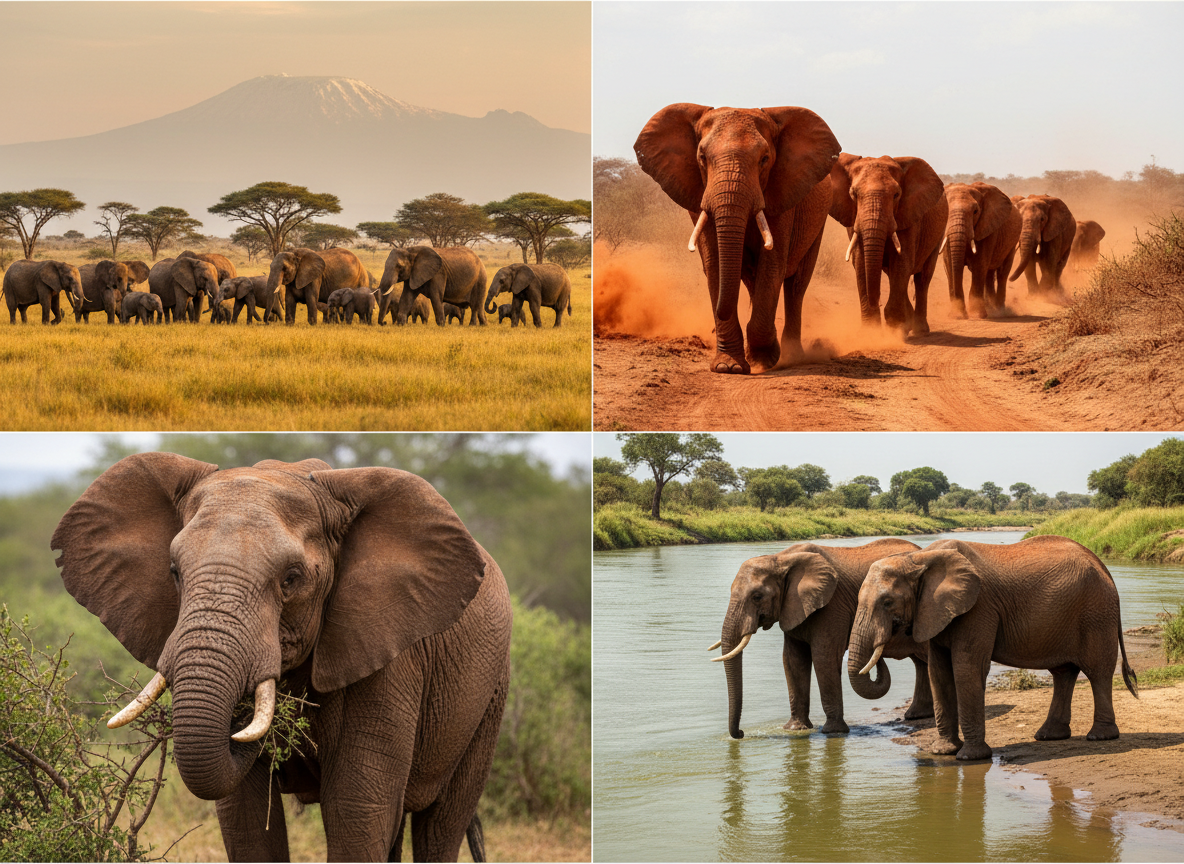
- Amboseli National Park: Kenya’s most famous elephant destination, with huge matriarchal herds against the Kilimanjaro backdrop. The Amboseli elephants are among the most studied in the world.
- Tsavo East: Very large herds: often 100+ animals: including the distinctive red-earth-coated elephants
- Samburu: Large herds congregating at the Ewaso Nyiro River
- Masai Mara: Year-round elephant sightings, particularly in the riverine forest zones
Solitary bulls: best locations:
- Amboseli (famous for large tusked bulls)
- Tsavo East (huge solitary bulls with distinctive red dust colouring)
- Laikipia (Ol Pejeta, Lewa: high quality elephant encounters)
- Samburu dry season (bulls at the river during dry months)
Key Differences: Family Herds vs Solitary Bulls
| Factor | Family Herd | Solitary Bull |
| Group size | 8 to 200+ (with bond groups) | 1 to 5 (bachelor groups possible) |
| Social behaviour | Complex, highly observable | Simpler, focused on feeding/movement |
| Calves present | Yes | No |
| Photography | Interaction, movement, calves | Large bull portraits, feeding close-ups |
| Danger level | Moderate (protective mothers) | Higher if in musth |
| Musth observable | No (females do not show musth) | Yes (observable from vehicle) |
| Availability | Year-round across parks | Year-round, more visible in dry season |
Which Is the Better Sighting
The honest answer: both. They offer fundamentally different experiences.
Family herd sightings are emotionally rich: the social interactions, the calves, and the matriarch’s leadership create a narrative you can follow for 30 to 45 minutes.
Solitary bull sightings offer close-encounter access to the most physically impressive elephant individuals: large, scarred, tusked bulls that are the archetypal image of the African elephant.
On a well-designed Masai Mara or Amboseli safari with Trunktrails Safaris, you will encounter both. Our guides know where to find each and how to read the behaviour of the specific individuals you encounter.
Ready to Plan Your Kenya Safari? Talk to Trunktrails Safaris
Trunktrails Safaris designs tailor-made tours and safaris for every traveller and every budget. From green-season adventures to private luxury camps, our tours and safaris are built by a Nairobi-based team that speaks to you directly, not through a call centre. Most WhatsApp enquiries about our Kenya tours and safaris get a reply from Trunktrails Safaris within the hour.