


There is something slightly surreal about leaving Diani Beach for safari.
You wake up near the Indian Ocean, with palms shifting in the morning air and the coast still half asleep. A few hours later, the scenery begins to change. The humid shoreline gives way to open road, dry country, scattered villages, and then that unmistakable feeling that safari country is getting closer.
A 3-day safari from Diani Beach to Tsavo East and West is one of the most practical and rewarding short trips in Kenya. It works especially well for travelers who want more than a beach holiday but do not have time for a longer circuit through several parks.
What makes this route special is not only convenience. It is contrast. In a short window, you move from coast to bush, from sea breeze to red dust, from lazy beach mornings to scanning the horizon for elephants.
Why this short safari works so well
Not every safari needs a week to feel meaningful.
For many travelers staying at the coast, three days is enough to step into a very different side of Kenya without making the trip feel rushed beyond reason. Tsavo East and Tsavo West complement each other well. One feels wider, drier, and more open. The other feels more varied, with volcanic features, springs, rocky outcrops, and a slightly different rhythm.
That contrast is what gives this itinerary its shape.
Tsavo East is often remembered for its scale. The land feels broad and exposed, and wildlife sightings can unfold against huge backdrops that make everything look even more dramatic. Tsavo West feels more textured. The terrain changes more often, and the experience can feel slightly more layered, especially for travelers who enjoy scenery as much as wildlife.
Together, they create a safari that feels fuller than the number of days suggests.
Day 1: Leaving Diani and entering Tsavo East
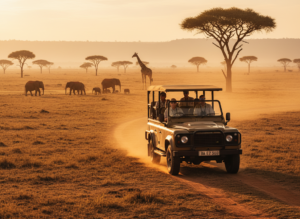
The journey usually starts early.
That early departure matters. It gives you enough time to leave the coast behind, make the road transfer, and still arrive with a real chance of seeing wildlife on your first game drive. There is a quiet excitement to this part of the trip. The day begins with logistics, but the mood changes the moment you pass into the park and start noticing the first signs of animal movement.
Tsavo East often makes a strong first impression.
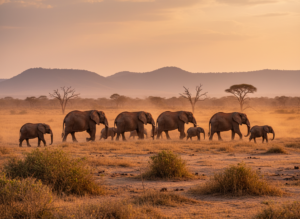
The park is known for its red soil, wide plains, and elephant herds dusted in rust-colored earth. Even before you settle into the rhythm of safari, the landscape starts doing a lot of the work. It feels raw, open, and honest.
Depending on the route and timing, your first afternoon may bring sightings of elephants, giraffes, zebras, antelope, buffalo, and, with luck, predators resting deeper in the bush. But even when the game drive is quiet, Tsavo East still gives you that feeling many travelers come for: space.
You notice how far the eye can travel. You notice the heat shimmering above the land. You notice how quickly the coast already feels far away.
Day 2: Crossing into Tsavo West
If Tsavo East introduces you to scale, Tsavo West changes the texture of the story.
This is often the day when the safari begins to feel more immersive. You are no longer arriving. You are in it. The road between the two parks becomes part of the experience, and the shift in scenery is one of the reasons this route works so well.
Tsavo West tends to feel greener in parts, more broken by hills and lava flows, and more visually varied. That variety can make game drives feel less predictable in a good way. One moment you are moving through open country. The next, you are near rocky ridges or passing areas shaped by older volcanic activity.
Mzima Springs is one of the best-known highlights here. After the dry drama of the road, the water feels almost improbable. Hippos drift below the surface. Crocodiles rest nearby. Birdlife gathers around the edges. It is a different kind of safari moment, quieter and more still, but memorable for exactly that reason.
This is also where many travelers begin to realize that Tsavo is not trying to imitate the Mara. It offers something else. Less theatrical, perhaps, but often more grounded. The beauty here is not always concentrated into one famous scene. It is spread across the journey.
Day 3: Morning game drive and return to Diani
The final morning usually starts early again.
There is something bittersweet about a last game drive on a short safari. By now, your eyes are sharper. You notice more. Tracks in the road. Movement in the distance. The shape of an animal before the guide even points it out.
That is often the irony of a 3-day safari from Diani Beach to Tsavo East and West. Just as your safari instincts begin to settle in, it is time to head back.
Still, that does not make the trip too short to matter. In many cases, it makes the experience more concentrated. Travelers return to the coast carrying a completely different memory of Kenya than the one they had a few days earlier.
The beach is still there when you return. But now it sits beside something else in your mind: red elephants, dry plains, acacia silhouettes, and the strange pleasure of waking before dawn to go looking for life in the bush.
What kind of traveler this itinerary suits
This route is ideal for travelers who want a safari without rebuilding their entire holiday around it.
It works well for couples staying in Diani, honeymooners who want a bush-and-beach combination, families with limited time, and first-time Kenya visitors who want to experience wildlife without committing to a longer inland journey.
It is also a smart option for travelers who are curious about safari but unsure whether they want a more extended trip. Three days gives you enough to feel the atmosphere, understand the rhythm, and decide whether you want to come back for something longer later.
That said, expectations matter.
This is not the itinerary for travelers who want a slow, deeply layered safari with multiple nights in one camp and long stretches of unstructured time. It is a compact route. The reward is efficiency and contrast, not total immersion.
Planning tips before you book
The quality of a short safari depends heavily on timing, routing, and logistics.
Because the trip is compact, small decisions matter more. Early departures, smart lodge placement, and realistic transfer planning can shape whether the safari feels smooth or squeezed. This is where working with an operator who understands both the coast and the parks can make a real difference.
Trunktrails Safaris can be especially useful here if you want the route tailored around your beach stay, comfort level, and wildlife priorities rather than booked as a generic add-on.
It also helps to think clearly about what you want from the experience. If your priority is seeing a lot in a short time, this route delivers. If your priority is a slower, more secluded safari, you may want to treat this as an introduction rather than the final version of your Kenya safari.
Final thoughts
A 3-day safari from Diani Beach to Tsavo East and West works because it gives you a real shift in atmosphere without demanding too much time.
It is not only convenient. It is emotionally satisfying. You leave the coast, step into a harsher and wilder landscape, and return with the sense that you have seen another face of the country.
For many travelers, that contrast becomes one of the most memorable parts of the whole trip.
Kenya has a way of doing that. It does not always ask for a long time to leave a mark. Sometimes three days is enough.