Most visitors assume Kenya Wildlife Service runs every corner of the Maasai Mara. It does not. The western third of the reserve, known as the Mara Triangle, is managed by a private, not-for-profit company under contract to Narok County. That contract has run for 25 years, and in 2026 it hit a deadline that has not yet been resolved. Touring Insights breaks down who is actually in charge, what the money pays for, and why the answer matters if you are booking a Mara Triangle safari this year.
Who Manages the Mara Triangle Today
The Mara Triangle is managed by the Mara Conservancy, a not-for-profit management company, not a government department. Mara Conservancy took over day-to-day operations on June 12, 2001, after local leaders grew alarmed at mismanagement, poor road upkeep, and revenue leakage under the previous county-run system.
Under its management contract, Mara Conservancy handles nearly everything inside the Triangle’s 510 km2 boundary: ranger patrols and anti-poaching security, road grading, campsite and gate maintenance, and the collection of every visitor’s conservation fee. Narok County Government, as the land’s public authority, remains the legal owner and the party Mara Conservancy answers to.
This split matters for travelers because it means two different management styles operate inside one reserve. Book a stay on the Triangle side and your fees, road quality, and vehicle rules run through Mara Conservancy’s system. Cross the Mara River to the reserve’s eastern sectors and Narok County runs things directly, with its own staff and its own enforcement pace.
How a 25-Year Arrangement Was Built in Three Stages
The current setup did not happen in one signing. It grew through three separate agreements, each renewing on different terms.
| Period | Length | Counterparty | What Changed |
|---|---|---|---|
| 2001-2006 | 5 years | Trans Mara County Council | Initial handover, signed May 25, 2001 |
| 2006-2016 | 10 years | Narok County Council | First long-term renewal |
| 2016-2026 | 10 years | Narok County Government | Devolution-era update, revenue-share revised |
Add the three periods together and Mara Conservancy has been managing the Triangle for 25 years as of June 2026, the anniversary behind the “25-year” framing you will see in local coverage. This is not one contract that has lasted 25 years. Three separate agreements ran back to back, with no gap in management since 2001.
Kenya’s 2013 devolution reform changed the counterparty’s name partway through, from Trans Mara County Council and later Narok County Council, to today’s Narok County Government. The switch was administrative, not a change of hands. Mara Conservancy kept running the Triangle without interruption while the government structure above it was reorganized nationwide.
Where Your Conservation Fee Actually Goes
Every dollar paid at the gate gets split three ways under the current agreement. Understanding the split explains why the Triangle looks better maintained than some other Mara sectors.
| Recipient | Share | Role |
|---|---|---|
| Narok County Government | 55% | Public revenue, county-wide services |
| Mara Conservancy | 36% | Rangers, roads, fence lines, direct operations |
| KAPS (Kenya Airport Parking Services) | 7.5% | Independent ticketing and revenue collection |
KAPS runs the electronic ticketing system at Purungat Bridge, Oloololo Gate, and Serena Airstrip, a step introduced specifically to reduce the cash leakage that triggered the 2001 handover in the first place. Reformers designed the split so no single party controls the money end to end.
The 2026 Renewal Standoff
The 2016-2026 agreement expired on June 30, 2026. As of Mara Conservancy’s own June 2026 monthly report, no new contract has been signed. Mara Conservancy has written to Narok County confirming it wants to keep managing the Triangle, but only if certain terms change, and the county has not yet responded with signed terms.
This is not a story about the Triangle closing or changing hands overnight. Management contracts of this kind typically continue operating under existing terms while renewal talks proceed, and rangers, gates, and lodges were all functioning normally through mid-2026. But it is an open question worth watching if you are planning a trip more than a few months out, since fee levels or access rules could shift once new terms are signed.
Mara Conservancy’s public reporting frames the ask as continuity with adjustments, not a break from the current model. The organization wants to keep its core role in security, roads, and gate operations. It is asking to update specific financial and operational terms that have not kept pace with 10 years of inflation and visitor growth. Neither side has published a hard deadline for a new signature, which is why the story remains open rather than resolved.
Mara Triangle vs the Rest of Maasai Mara National Reserve
The management split creates real differences a visitor will notice on the ground.
| Factor | Mara Triangle | Rest of Maasai Mara Reserve |
|---|---|---|
| Managed by | Mara Conservancy (not-for-profit) | Narok County directly |
| Area | 510 km2 | Approx. 1,000 km2 (remaining reserve) |
| Vehicle density rules | Strictly enforced, off-road driving banned | Enforcement varies by sector |
| Main access points | Oloololo Gate, Purungat Bridge, New Mara Bridge | Sekenani, Talek, Sand River gates |
| High-season fee (per adult, per day) | USD 200 (Jul-Dec) | Similarly priced, county-set |
| Green-season fee (per adult, per day) | USD 100 (Jan-Jun) | Varies by county schedule |
Travelers researching a Mara Triangle vs Masai Mara reserve comparison usually land on one deciding factor: enforcement. Fewer vehicles per sighting and a hard ban on off-road driving are policy choices Mara Conservancy can make because it runs its own ranger force.
Road maintenance is the other visible gap. Mara Conservancy grades and drains its own network on a set schedule, funded directly from its 36% fee share. Roads on the reserve’s other side depend on county budget cycles, so surface quality can vary more from one season to the next.
Getting There: Distances, Airstrips, and Gates
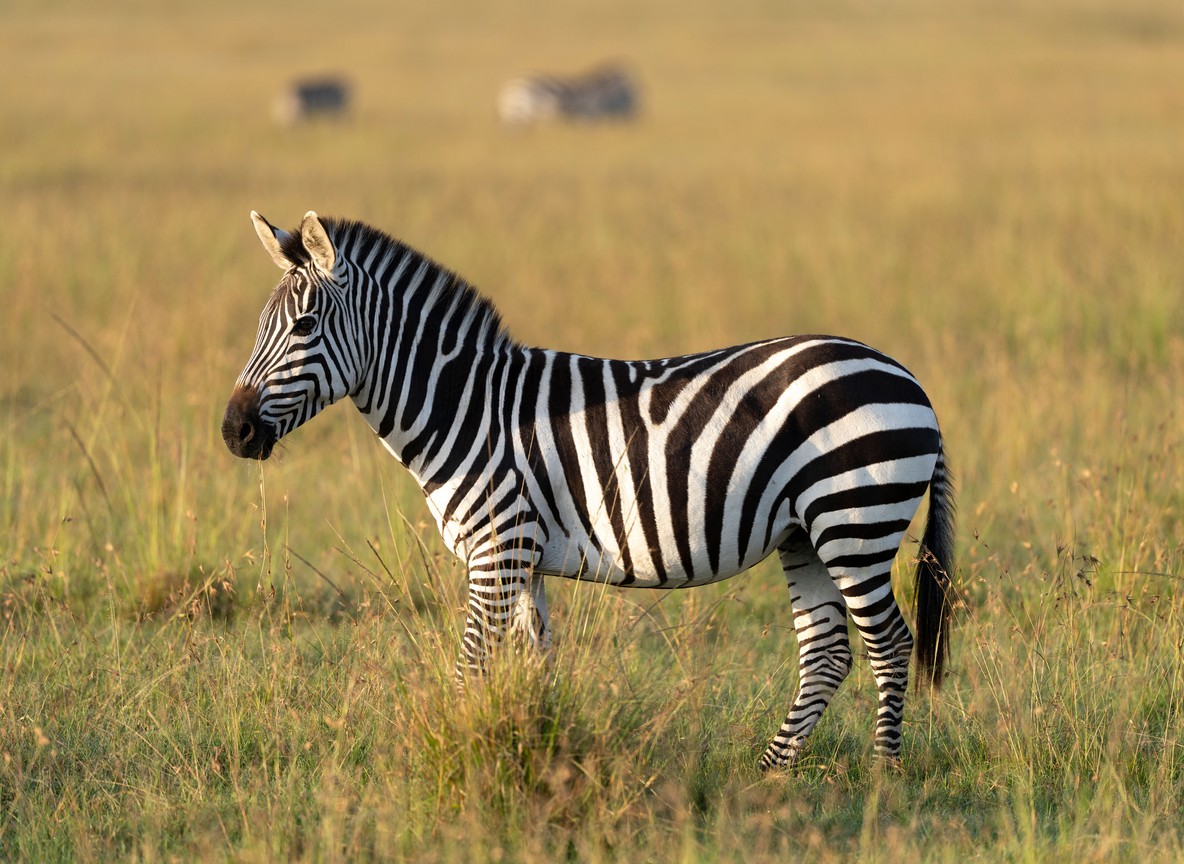
The Triangle sits on the reserve’s western edge, bordered by the Oloololo Escarpment to the northwest, the Mara River to the east, and the Tanzania border to the southwest.
| Route | Distance / Time |
|---|---|
| Nairobi to Oloololo Gate (road) | Approx. 270 km, 5.5-6 hour drive |
| Nairobi to Serena Airstrip (flight) | Approx. 45 minutes |
| Oloololo Gate to Mara Serena Safari Lodge | Approx. 20 km |
| Purungat Bridge to Angama Mara | Approx. 15 km |
Camps and lodges sitting inside or bordering the Triangle include Angama Mara on the escarpment rim and Mara Serena Safari Lodge on a ridge above the river. Kicheche Mara Camp and Wilderness Mara, the rebuilt former Little Governor’s Camp, sit closer to the river crossings. All four fall under Mara Conservancy jurisdiction for fees and vehicle rules, whatever their own brand does on top.
Explorer Notes
Ask any driver-guide who has worked both sides of the river and they will tell you the same thing: fewer vehicles at a Triangle crossing point is not luck, it is enforcement. Mara Conservancy caps vehicle numbers at major Mara River crossing points and radios rangers to break up pileups, something that does not happen consistently on the reserve’s Sekenani or Talek side.
Pay your conservation fee before you arrive if possible. KAPS runs a prepaid electronic system, and gate staff at Oloololo can be slow processing cash or card payments during peak wildebeest migration weeks (July through September). A driver-guide who books ahead saves the group real time at the gate.
If the 2026 renewal drags into your travel dates, ask your operator directly whether fee levels have changed. Reputable Mara Triangle lodges track the Narok County situation closely, since a fee change affects their own package pricing within days of taking effect.
Guides also point out a quieter benefit of the Triangle’s setup: radio discipline. Because one organization runs every ranger vehicle in the sector, sightings get shared and crowds get managed on a single channel. On the reserve’s other side, multiple camps and county rangers coordinate less tightly, so word of a big cat sighting can bring more vehicles before anyone steps in to cap the number.
FAQ: Who Manages the Mara Triangle
Is the Mara Triangle part of Kenya Wildlife Service? No. Kenya Wildlife Service manages national parks. The Mara Triangle is part of the Maasai Mara National Reserve, a county-owned reserve, and its western third is run by the Mara Conservancy under contract to Narok County.
Why is it called a 25-year agreement if the current contract is only 10 years? Because Mara Conservancy’s management has run continuously since June 12, 2001, through three separate agreements: 5 years, then 10, then 10. Add them up and you get 25 years of unbroken management, not one 25-year contract.
Does the 2026 renewal delay affect visitors right now? Not directly, as of Mara Conservancy’s June 2026 report. Gates, rangers, and lodges continue operating under existing terms while both sides negotiate. Confirm current fees with your operator close to your travel date.
Is the Mara Triangle more expensive than the rest of the Maasai Mara? Fees are broadly similar and set on the same high-season and green-season schedule. The difference shows up in enforcement and vehicle density, not in the daily rate.
Can I visit the Mara Triangle on a day trip from the rest of the reserve? Yes, via Purungat Bridge or the New Mara Bridge, but most operators recommend basing at least one night on the Triangle side to avoid long river-crossing drive times during peak season.
If you are weighing a Mara Triangle stay against the rest of the reserve, our Tour Packages page lists current options across both sides of the river. A recommended operator listed there can confirm live fee terms before you book.