Planning a safari from Haiti or the Haitian diaspora brings up questions that generic guides never answer. This TouringInsights Kenya safari planning for Haitian Creole speakers guide covers visas, flight routes, and finding an operator who can communicate in French. Almost no guide in Kenya speaks Haitian Creole. It also covers the usual essentials of timing, budget, and which parks to choose. We wrote it for first-time safari planners who want honest, practical information, not hype.
Why does TouringInsights Kenya safari planning for Haitian Creole speakers start with language?
The honest answer is that you will not find a safari guide in Kenya who speaks Haitian Creole. Kenya has dozens of ethnic languages, and guides typically speak English and Swahili. Some also speak French, German, Spanish, or Italian, but Haitian Creole is essentially absent, so plan accordingly.
The good news is that French is widely spoken among Kenyan guides who work with visitors from Francophone Africa and Europe. In the Masai Mara, Amboseli, and other major parks, you can request a French-speaking guide when you book. TouringInsights can arrange this with your operator before you arrive, but do not assume it will happen on the spot, so ask for it in writing.
Conversational French is enough for a safari. Guides use clear language to explain animal behavior and park rules, not complex vocabulary. If you prefer written materials, ask for a French guidebook or a printed daily schedule, since many lodges also have French menus. A French-English wildlife glossary helps too. A lion is “lion” in French, but a warthog is “phacochere.”
What visa and eTA do Haitian passport holders need for Kenya?
Kenya uses an electronic travel authorization, or eTA, for most visitors. This is not a visa you get at the airport. Haitian citizens are not on the visa-exempt list, so you must apply online before you fly.
The application asks for your passport details, travel dates, accommodation, a return ticket, and proof of funds. It is not instant, so apply at least two weeks before departure, and do not book non-refundable flights until your eTA is approved.
The Kenyan eTA carries an application fee, often cited around $30. This changes over time, so confirm the exact amount and any portal service charge on the official Kenya eTA website before you apply.
Your passport must be valid for at least six months from your arrival date, with at least two blank pages. Renew it first if it is close to expiring, since the eTA is tied to your passport number.
What is the best time of year to visit Kenya for a safari?
Kenya has two rainy seasons and two dry seasons. The dry months from late June to October are the classic safari window. Wildlife concentrates around water sources, and low grass makes animals easier to spot. This is also when the wildebeest migration is in the Masai Mara, so expect higher prices, more visitors, and the highest park fees.
The short rains come in November and December. The long rains arrive in March, April, and May, when many lodges close because roads turn muddy. For lower prices and fewer crowds, consider January and February. The weather is mostly dry, the calving season attracts predators, and Masai Mara fees are lower in this window too.
Birdwatchers should aim for November to April, when migratory birds are present. Photographers get better light in the dry season. Budget travelers can consider the wet months outside April and May, if their lodge stays open, though afternoon showers are common.
How many days do you need for a first Kenya safari?
A first Kenya safari needs at least five full days on safari, not counting travel days. This gives you time in two different ecosystems. Try three days in the Masai Mara and two in a second park like Amboseli or Lake Nakuru. That is enough for multiple game drives without feeling rushed.
With seven days, add a third destination or more time in the Mara. The conservancies bordering the Mara are excellent for walking safaris and night drives. These activities are not allowed inside the national reserve itself. A seven-day trip also allows a rest day between long drives.
Travel days eat into your safari time. From Nairobi to the Masai Mara, the drive takes about five to six hours. A short flight takes about 45 minutes but costs more. Do not try to cover too many parks in one trip, or you will spend more time in the car than watching animals.
How much does a Kenya safari cost per day?
A realistic daily budget depends on your style. Budget safaris with camping or basic lodges run $150 to $250 per person per day. Mid-range tented camps run $300 to $500. Luxury safaris with private guides start around $700 and can go much higher.
These figures include park fees, accommodation, meals, and game drives in a shared vehicle, but not flights, tips, or drinks. Park fees vary more than many first-time planners expect. The table below shows non-resident adult fees by park or conservancy, as an indicative guide rather than a fixed quote.
| Park or conservancy | Managed by | Non-resident adult fee (indicative) |
|---|---|---|
| Masai Mara National Reserve | Narok County | $100/day, Jan to Jun; $200/day, Jul to Dec |
| Amboseli National Park | Kenya Wildlife Service | $90/adult/day (flat rate) |
| Lake Nakuru National Park | Kenya Wildlife Service | $90/adult/day (flat rate) |
| Ol Pejeta Conservancy | Private conservancy | Set by the conservancy, check current rate |
The Masai Mara is administered by Narok County, not Kenya Wildlife Service. The county’s rate roughly doubles during the July to December migration season compared with January through June. Amboseli and Lake Nakuru are Kenya Wildlife Service parks, and both currently charge a flat $90 per adult per day for non-residents. Confirm the current rate on the KWS website before you budget, since fees do change over time. For the Masai Mara, check with your operator or Narok County directly, since KWS does not set that fee. Conservancies like Ol Pejeta set their own rates too, so check the conservancy’s website before you budget.
The biggest variable beyond park fees is the lodge or camp. Some “all-inclusive” rates cover park fees and all meals, others do not, so read the fine print before you book.
Which parks and conservancies should you prioritize?
For a first visit, start with the Masai Mara. It is Kenya’s most famous park, with high wildlife density and open grasslands that make spotting easier. It is also your best chance to see the Big Five. The Mara also has private conservancies bordering the reserve for night drives and walking safaris. Read our Masai Mara travel guide for details on camps and drives.
Amboseli is the second essential stop if you want elephants. The park sits below Mount Kilimanjaro. Herds of elephants are easy to find around the swampy areas, and it is also reliable for lions and cheetahs. See our Amboseli safari guide for practical advice on seasonal access.
Lake Nakuru is a smaller park, excellent for flamingos and rhinos. Flamingo numbers vary with the lake level, but the rhino sanctuary is consistent, with both black and white rhinos. It is a good half-day stop between Nairobi and the Mara. Our Lake Nakuru guide covers the best routes.
Ol Pejeta Conservancy is a strong choice if you want to support conservation. It is home to the last two northern white rhinos on Earth, a large population of black rhinos, and a chimpanzee sanctuary. It is easy to visit from Nanyuki or on the way to Samburu. Check our Ol Pejeta conservancy guide for camp options.
When does the wildebeest migration reach the Masai Mara?
The wildebeest migration is a continuous movement of herds across the Serengeti and the Masai Mara, not a single event. Herds usually arrive in the Mara from late July and stay through October. The famous river crossings happen when herds cross the Mara River, and they are unpredictable, depending on rainfall.
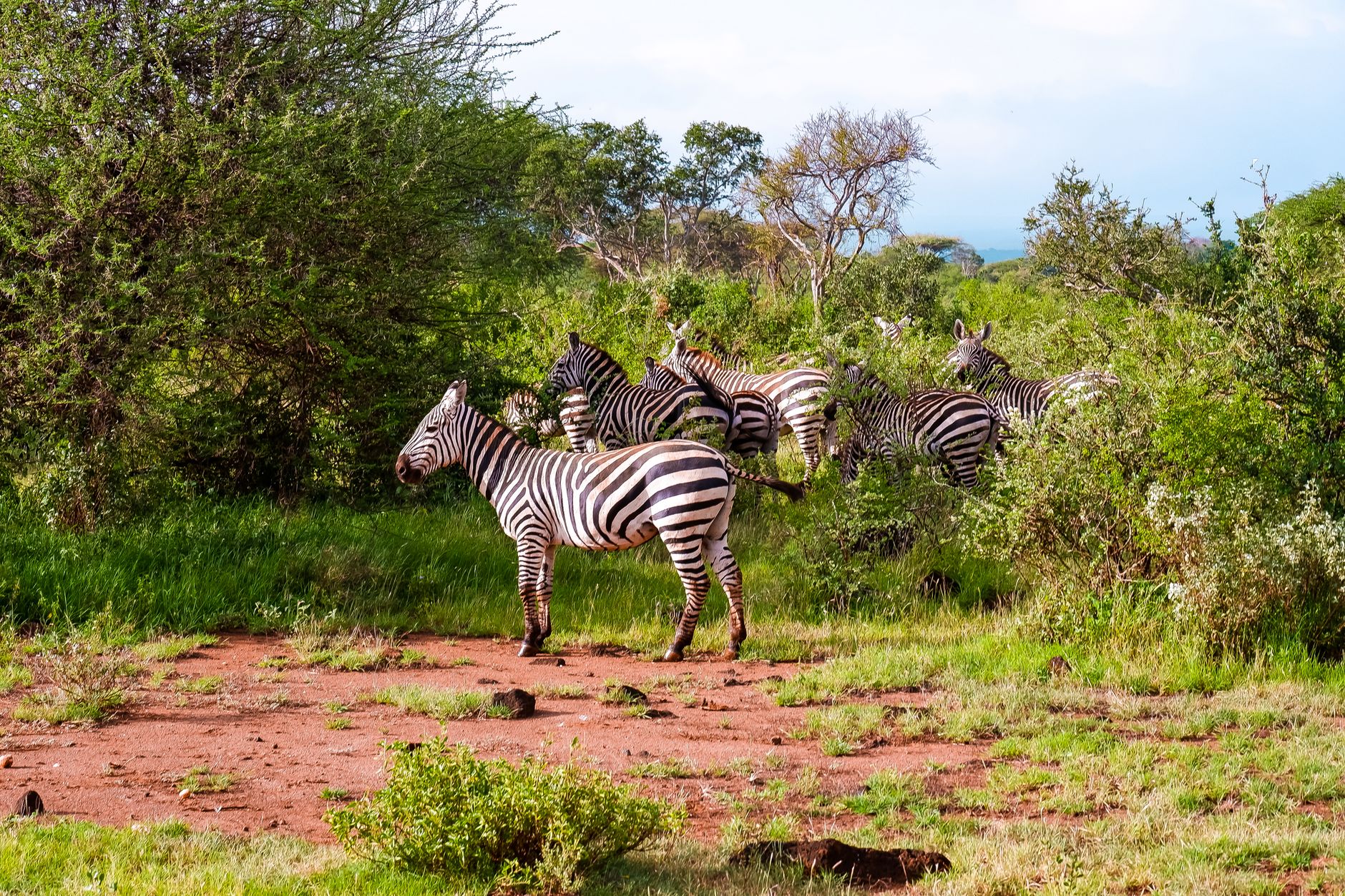
If your only goal is to see a river crossing, plan for August or September, the peak months for crossings, though there is no guarantee. This window also falls inside the higher Masai Mara fee period, so budget for that alongside the crowds. Even without a crossing, the sheer volume of wildebeest and zebra is impressive.
In July and October, herds are often in the Mara but less concentrated, and crossings are still possible. In November, herds start moving south again. To avoid the biggest crowds, consider late June or early November. You might see the tail end of the migration with fewer vehicles, and June still falls in the lower fee period. Read our best time to visit Masai Mara guide for more.
How do you get to Kenya from Haiti or the Haitian diaspora?
There are no direct flights from Haiti to Kenya, so you will connect through a major hub such as Miami, New York, or Montreal. Delta and Ethiopian Airlines fly from US hubs to Nairobi. United does not operate its own flights to Nairobi, but it sells connecting itineraries through partner airlines. Air France flies nonstop from Paris, and Kenya Airways connects through several European and African cities.
The fastest routing for most Haitian travelers is Port-au-Prince to Miami, then Miami to Nairobi on Ethiopian Airlines or Delta. Total travel time runs around 18 to 22 hours including the layover. From Montreal, Kenya Airways requires at least one stop, often through a European or African hub, with a total journey near a day. From Paris, Air France offers a nonstop flight, often the easiest option for French speakers.
You may need a transit visa or eTA for the United States if you connect there. Rules differ by nationality and change often, so confirm the details for your specific routing before you book.
Is Kenya safe for travelers who do not speak fluent English?
Kenya is generally safe for tourists who take normal precautions. The safari parks are well managed, and your guide handles all logistics. Your lack of English is not a safety issue, since your guide and lodge staff will communicate in French if you request it.
The bigger risk is getting lost or scammed in Nairobi. Use official taxi apps like Uber or Bolt. Do not accept rides from strangers at the airport, and keep your passport and money in a safe. These are common-sense rules that apply in any large city.
If you want extra reassurance, book a private safari with a dedicated guide, so you always have someone who speaks French. Group tours are cheaper, but the guide may switch between languages.
How do you choose a reliable safari operator?
A reliable operator answers your questions clearly and puts everything in writing. Look for a detailed itinerary with park names, lodge names, and daily activities, not vague phrases like “safari to Masai Mara.” Ask for the exact lodge or camp, and if they cannot name it, keep looking.
Check if the operator belongs to the Kenya Association of Tour Operators, which filters out many informal operators. Ask for references from recent clients, especially French speakers.
Read your contract for what is included. Park fees, tips, drinks, and flights are often separate, and a written confirmation should state the total cost and payment schedule. A standard deposit is 20 to 30 percent, with the balance due 30 to 60 days before travel. Be cautious if an operator asks for full payment immediately.
Where can you find more safari planning resources?
Our sample Kenya safari itineraries show what a reasonable week looks like. The structure works just as well for Creole speakers since it is language-neutral. Use the links below to compare safari operators and browse packages before you book, from the migration itself to side-by-side pricing.
- Masai Mara Great Migration guide from Trunktrails Safaris
- Interactive Maasai Mara map from Valley Safaris
- Compare Kenya safari packages on FindMySafari
- Kenya wildlife tours from Trunktrails Safaris
More safari planning resources
- Masai Mara Great Migration guide from Trunktrails Safaris
- Interactive Maasai Mara map from Valley Safaris
- Masai Mara destination guide on FindMySafari
- Kenya wildlife tours from Trunktrails Safaris
Related guides: Kenya Safari Packing and Health Tips for Kazakh Speakers.