Planning a safari in Kenya is exciting, but sorting through sample kenya safari itineraries for spanish speakers can feel overwhelming. You want real details, not just a list of park names: how many days are enough, what each park offers, and whether you will find guides who speak your language.
This guide gives you three workable itineraries covering 5, 7, and 10 days, each realistic with honest notes on travel time, wildlife, and costs.
What Do Sample Kenya Safari Itineraries for Spanish Speakers Look Like?
The short answer is at least 5 days, enough time to see two very different parks without rushing. Most first time visitors choose 7 days, the sweet spot with three parks and enough game drives to feel satisfied.
A 10 day safari adds a fourth destination, a slower pace, or a beach ending, a popular combo for Spanish travelers coming from Europe or Latin America.
More days mean more options, but you do not need two weeks to see lions, elephants, and giraffes. A well planned week delivers the core experience.
What Is a Realistic 5 Day Kenya Safari Itinerary?
This plan covers two parks with distinct characters: two nights in Amboseli and two nights in the Masai Mara. It is tight but doable.
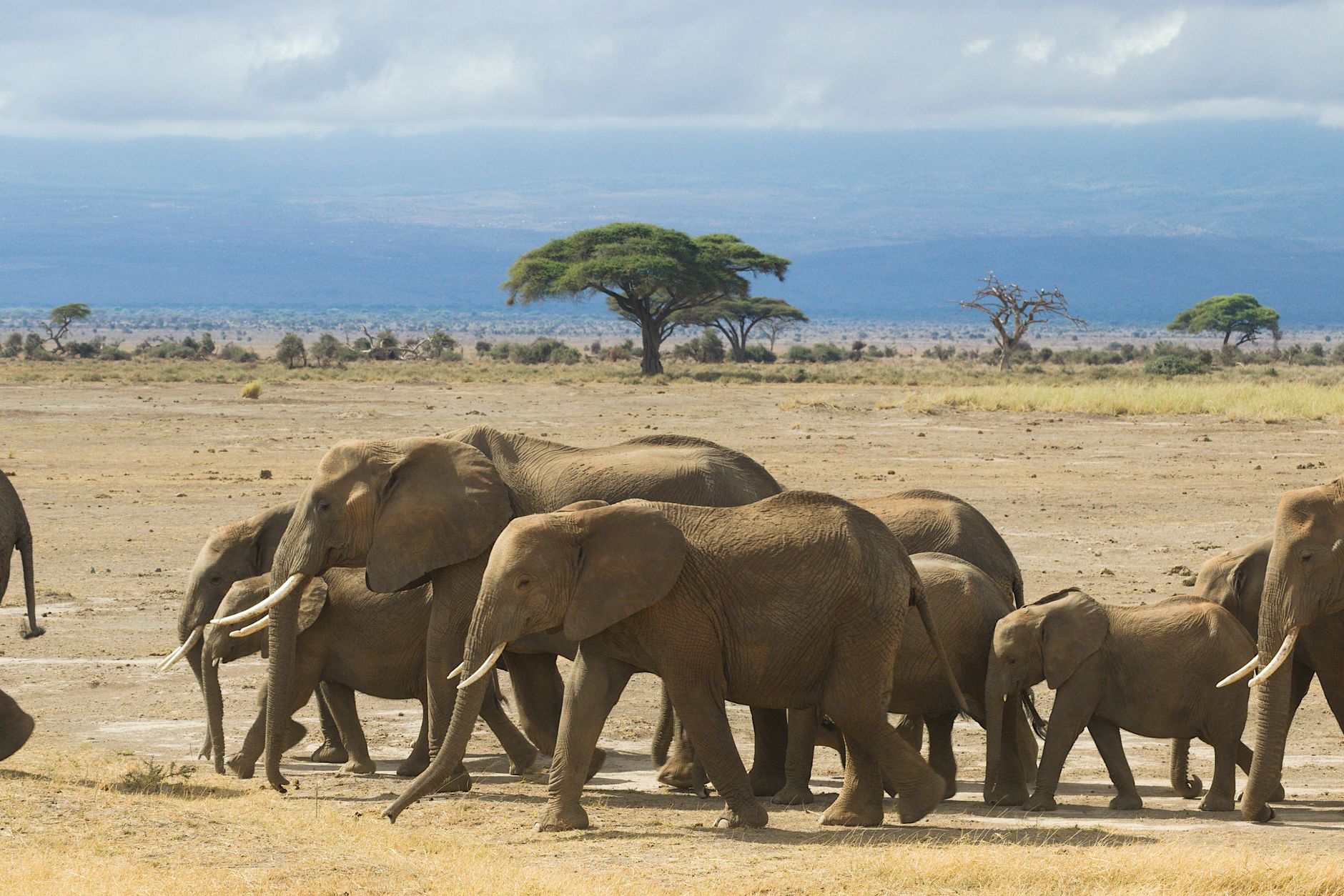
Days 1 to 2: Amboseli Land in Nairobi and take a short morning flight to Amboseli, about 45 minutes. Amboseli is known for its elephant herds and views of Mount Kilimanjaro, with swamps that draw big wildlife concentrations even under clouds. Day two brings a full day of game drives around the marsh areas and Observation Hill, tracking lions and cheetahs. Our Amboseli safari guide covers the park in more depth.
Days 3 to 4: Masai Mara Fly to the Mara, a short hop of 60 to 75 minutes. The Mara has the highest density of big cats in Kenya, and lions are almost guaranteed. Spend day four out early and back late, watching the Mara River where crocodiles wait for migrating herds. From July to October the wildebeest crossing is the main event; outside that window, resident wildlife still delivers.
Day 5: Fly back to Nairobi Take one last morning game drive, then fly back for an evening international flight or an overnight stay.
This plan suits travelers with limited time who still want two iconic parks. Use flights between parks, not long road transfers.
What Is a Better 7 Day Kenya Safari Itinerary?
If you have a week, this is the classic route, adding Samburu for three completely different ecosystems: the dry north, the swamps of Amboseli, and the grassy Mara.
Days 1 to 2: Samburu National Reserve Fly north from Nairobi to this dry, rugged reserve, home to species you will not see elsewhere, like the reticulated giraffe, Grevy’s zebra, and the Somali ostrich. Game drives here feel wilder and less crowded than the southern parks. For more on how many days to spend here, see our Samburu safari guide.
Days 3 to 4: Amboseli National Park Fly south to Amboseli for elephant watching. The swamps near Observation Hill are reliable for herds, with good chances for lions and cheetahs, and Kilimanjaro views best at sunrise and sunset.
Days 5 to 7: Masai Mara, including a conservancy Fly to the Mara for your final three nights. Spend at least one full day in a private conservancy like Mara North or Naboisho, where stricter visitor limits mean fewer vehicles, plus night drives not allowed in the main reserve. For help choosing where to stay, compare camps and lodges in the Masai Mara.
This route covers most of the Big Five: lions, elephants, buffalo, and leopards are all realistic in these three parks. Rhinos are the exception, since none has a reliable rhino population; add Lake Nakuru if seeing one matters to you, as shown below.
How Should You Spend 10 Days on Safari in Kenya?
With 10 days, you can slow down and add Lake Nakuru plus a beach extension for a full safari experience and time to relax by the Indian Ocean.
Days 1 to 2: Lake Nakuru National Park Start with a short 2 to 3 hour drive from Nairobi. The park is known for flamingos, though numbers vary with water levels, and for its rhino sanctuary, with good chances of seeing both black and white rhinos.
Days 3 to 4: Masai Mara Drive from Nakuru to the Mara, about 5 hours, and spend two nights in the reserve or a conservancy. Focus on big cats and, if it is migration season, river crossings.
Days 5 to 6: Amboseli Fly from the Mara to Amboseli. Two nights here give you a full day of elephant photography, and an early morning drive is best for mountain views.
Days 7 to 8: Fly to Diani Beach Fly from Amboseli, via Nairobi, to Mombasa, then transfer to Diani for white sand, warm water, and a fitting reward after a busy safari. Snorkeling, dhow trips, and simple beach days are the options. Our Diani beach guide has more detail.
Days 9 to 10: Beach time and depart Relax for two full days, then fly back for your international flight.
This plan is balanced, offering variety without burnout. Flying between the Mara and Amboseli saves a full day of driving.
What Are the Key Parks and Reserves in These Itineraries?
Here is a quick comparison to help you decide which parks fit your interests.
| Park or Reserve | Best For | Wildlife Highlights | Time Needed |
|---|---|---|---|
| Masai Mara | Big cats, migration, open plains | Lions, cheetahs, leopards, wildebeest, elephants | 3 nights minimum |
| Amboseli | Elephants, Kilimanjaro views, wetlands | Elephants, buffalo, hippos, lions | 2 nights |
| Samburu | Dry country, rare species, fewer crowds | Reticulated giraffe, Grevy’s zebra, Somali ostrich | 2 nights |
| Lake Nakuru | Rhinos, flamingos, birdlife | Black and white rhinos, lions, waterbirds | 1 to 2 nights |
| Tsavo East and West | Huge landscapes, red elephants, less touristy | Elephants, lions, and the Yatta Plateau | 2 nights, if time allows |
The Mara gives you density, Amboseli gives you elephants and mountain views, Samburu gives you uniqueness, and Nakuru gives you rhinos.
When Is the Best Time to See the Great Migration?
The Great Migration is not a single event. It is a continuous movement of wildebeest and zebra between Tanzania and Kenya, and the timing shifts each year.
| Months | What Happens | Where to See It |
|---|---|---|
| July to October | Herds are in the Masai Mara, crossing the Mara River | Mara River, mainly in the reserve |
| November to December | Herds move south back to Tanzania | Northern Serengeti, just across the border |
| January to June | Calving season and grazing in the Serengeti | Southern and western Serengeti |
If river crossings are your priority, plan for August or September, though these months are also the busiest and most expensive. For fewer vehicles, consider June or October, when herds are still present but crowds are thinner. For a full month by month breakdown, see our guide to the best time to visit the Masai Mara. The rest of the year, the Mara still has resident wildebeest and zebra, just not the full migration, with lower prices and easier bookings.
Do I Need a Visa or eTA to Enter Kenya?
Yes. Since January 2024, Kenya uses an electronic travel authorization, or eTA, which you apply for online before you fly. The cost is around $34 per person, a fixed fee set by the Kenyan government.
You also need a passport valid for at least 6 months. The eTA process takes a few days, so apply at least a week ahead, using the official Kenyan government portal, not a third party site.
What Vaccines or Malaria Medication Do I Need?
Visit a travel health clinic 4 to 6 weeks before your trip. You will likely need the yellow fever vaccine if you come from a country with yellow fever risk, plus common recommendations like hepatitis A and typhoid.
Malaria is present in most safari areas below 2,500 meters, including the Masai Mara, Amboseli, and Samburu. Your doctor will prescribe a prophylaxis such as Malarone or Doxycycline. Bring insect repellent with DEET; most camps provide mosquito nets.
Can I Find Spanish Speaking Guides in Kenya?
Yes, but request them early. Most quality operators have a small number of Spanish speaking guides on staff, so book at least 2 to 3 months ahead.
Spanish speaking guides are certified and trained the same way as English guides. They know animal behavior and local ecology just as well; the difference is language.
When you contact an operator, ask directly whether a Spanish speaking guide is available for your dates. Our Kenya safari planning guide for Spanish speakers has more tips on booking.
How Do You Get Between Parks: Fly or Drive?
This depends on your budget and time. Flying saves days: a domestic flight between parks takes 45 to 90 minutes and leaves more time for game drives. This is the best option for 5 and 7 day trips.
Driving is cheaper, and you share a vehicle with your guide. Roads are mostly tarmac between Nairobi, Nakuru, and Amboseli, but the road into the Mara is rough and can take 5 to 6 hours, so a 7 day safari with full road transfers will feel rushed.
Most 10 day itineraries mix both, flying the long legs and driving the short ones.
How Much Does a Kenya Safari Cost Per Day?
Safari pricing varies a lot, mostly with camp level and whether you fly or drive. Here are indicative ranges per person per day.
| Camp Tier | Mid Range | Luxury | High End |
|---|---|---|---|
| Per person, per day | $350 to $600 | $600 to $1,200 | $1,200 and up |
This includes full board, game drives, park fees, and usually a shared vehicle with a guide. Flights between parks cost extra, often $150 to $300 per leg. Our Kenya safari cost guide breaks these numbers down.
Park fees are separate, and not all parks set them the same way. The Kenya Wildlife Service sets non resident fees for national parks such as Amboseli and Lake Nakuru, but the Masai Mara National Reserve is managed by the Narok County Government, which sets its own schedule. As of 2026, Masai Mara fees run about $100 per adult per day from January through June, and jump to about $200 per day from July through December, the peak migration season. Amboseli fees are lower, closer to the Mara’s low season rate, and Samburu runs slightly less than Amboseli. Your operator will include these in the quote, so ask for a full breakdown.
What Should You Pack for a Safari?
Keep it simple: light, neutral colored clothing, long sleeves and pants for evening, a warm layer for early morning drives in July and August, comfortable walking shoes, a hat, sunglasses, sunscreen, and insect repellent.
A DSLR or mirrorless camera with a zoom lens from 100mm to 400mm works well; bring extra batteries and memory cards, plus binoculars to spot animals at a distance. Our Kenya safari packing list goes into more detail.
Are Spanish Only Travelers at a Disadvantage?
Not if you plan ahead. English is the main safari language in Kenya, but Spanish speaking operators are easy to find.
The bigger challenge is your guide’s accent and wildlife vocabulary. A good Spanish speaking guide knows the difference between an impala and a gazelle in both languages. If you are not fluent in English, do not settle for a basic English guide, since clear communication matters on a trip like this.
Ready to Compare Operators?
Now that you have a clear picture of your itinerary options, compare several operators side by side, ask about Spanish speaking guides, and request a detailed cost breakdown.
You can browse packages and compare safari operators at FindMySafari, Valley Safaris, or Trunktrails Safaris. Take your time, ask questions, and choose the itinerary that fits your travel style and budget.