Most Kenya safari parks compete for the same headline animals. Saiwa Swamp National Park does not bother. It was gazetted in 1974 for one reason: to protect the sitatunga, a shy swamp-dwelling antelope with splayed hooves built for walking on floating vegetation. Nowhere else in Kenya offers a realistic chance of seeing one in the wild. This guide covers why the swamp is the only reliable sitatunga spot, what it costs to visit, and how it fits into a western Kenya itinerary built around Kitale and Mount Elgon.
What Makes Saiwa Swamp Different From Every Other Kenya Park
Saiwa Swamp covers roughly 2.9 km², making it Kenya’s smallest gazetted national park by a wide margin. There are no vehicle tracks. Visitors walk in on foot along a network of raised boardwalks and a dirt nature trail that loops around the papyrus and reed swamp at the park’s center. Three wooden observation towers rise above the tree line, letting visitors scan the swamp from height without disturbing the animals below. That walking-only design is exactly what makes sitatunga sightings possible. The antelope avoids open ground and vehicle noise, but it tolerates quiet foot traffic on a fixed boardwalk it has grown used to over decades.
The Sitatunga: Kenya’s Most Overlooked Antelope
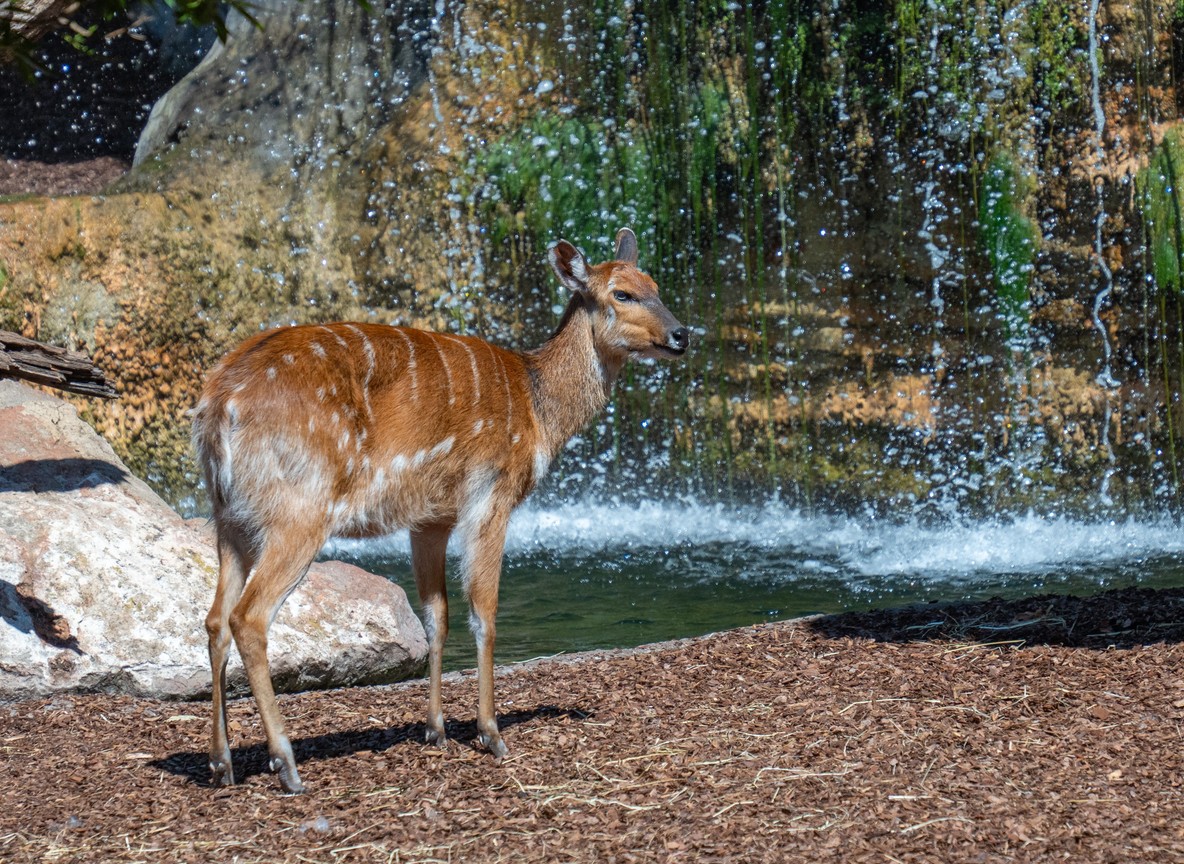
A sitatunga looks like a cross between a bushbuck and a small deer, with a shaggy, water-resistant coat. Its hooves splay wide to spread its weight on mud and floating mats of vegetation. It swims well and can submerge almost completely, leaving only its nostrils above water, when it senses danger. Males are dark brown-grey with faint white markings; females are lighter red-brown. Saiwa Swamp’s population is small, generally estimated at a few dozen animals, so a sighting is a matter of patience rather than certainty. Early morning and late afternoon, when the swamp is quiet and the light is low, give the best odds from the towers.
Getting to Saiwa Swamp
The park sits about 18 km north of Kitale town along the Kitale-Kapenguria road (C645), in Trans Nzoia County. There is no scheduled commercial flight route into Kitale Airport for tourists, so the practical way in is by road, either self-drive or with a private driver-guide arranged from Kitale or Eldoret. The table below lines up Saiwa Swamp against three other Kenya parks known for a single rare antelope species. Travelers chasing sitatunga sightings often ask how it compares to Ruma, Shimba Hills, and Mount Elgon on distance, size, and cost.
Saiwa Swamp vs Other Rare-Antelope Parks in Kenya
| Park | Signature antelope | Size | Drive from Nairobi | Entry fee, non-resident adult (indicative) |
|---|---|---|---|---|
| Saiwa Swamp National Park | Sitatunga | ~2.9 km² | ~380 km, 7-8 hrs via Eldoret and Kitale | $20-25/day, walking only |
| Ruma National Park | Roan antelope | ~120 km² | ~440 km, 7-8 hrs via Kisumu or Homa Bay | $20-25/day |
| Shimba Hills National Reserve | Sable antelope | ~192 km² | ~450 km, 6-7 hrs via Mombasa, or fly to Ukunda | $25-30/day |
| Mount Elgon National Park | Bongo (rare, low density) | ~169 km² | ~430 km, 8 hrs via Kitale | $25-30/day |
Treat every fee above as an indicative planning range. KWS rates change and vary by season, so confirm the current figure on the Kenya Wildlife Service site or with a Kitale-based operator before budgeting a trip.
What Else Lives Alongside the Sitatunga
Saiwa Swamp punches above its size for other wildlife too. De Brazza’s monkey, identifiable by its white beard and orange brow band, lives in the riverine forest fringing the swamp and is found in very few other Kenya locations. The park also holds blue monkeys, black-and-white colobus, bushbuck, and a resident population of otters that fishermen occasionally spot along the Sino River, which feeds the swamp. Birders come for a different reason. The park’s mix of swamp, forest, and grassland edge supports well over 370 recorded bird species, including the elusive blue-headed bee-eater and several kingfisher species that hunt from the boardwalk railings.
Best Time to Visit and What to Bring
Dry seasons, January to March and June to September, give the clearest views from the towers and drier boardwalk footing. Wet months bring more insects and slicker walkways, though the swamp itself looks its greenest then. Bring binoculars; sitatunga sightings are usually distant and brief, and a scope helps more than a camera zoom for the first spot. Closed walking shoes matter here more than at drive-in parks, since the entire visit is on foot. A two-hour loop covers the main boardwalk and two of the three towers; allow closer to three hours if birding along the way. Insect repellent is worth packing too, since the swamp edge holds mosquitoes even in the dry months.
Where to Stay Near Saiwa Swamp
There is no lodge or campsite inside the park itself, so most visitors base themselves in Kitale, about 25 minutes by road. The Sirikwa Hotel, a long-running mid-range property in the town center, is the most common pick for travelers combining Saiwa Swamp with a Kitale Museum stop or a Mount Elgon drive the next day. Kitale Club, an old colonial-era country club with a handful of guest rooms and grounds open to visitors, is a quieter alternative a short drive from the town center. Travelers pushing on toward Mount Elgon National Park sometimes skip Kitale altogether. They book Mount Elgon Lodge, a colonial-era timber lodge on the mountain’s lower slopes, and use it as a base for both parks over two days. None of these properties sit inside Saiwa Swamp, so budget the 18-25 km transfer into the day’s plan rather than expecting gate-side accommodation.
Building a Western Kenya Route Around the Sitatunga
Saiwa Swamp rarely works as a standalone destination given the distance from Nairobi, so most visitors fold it into a wider western Kenya loop. The common pairing is Kitale, Mount Elgon National Park, and Kakamega Forest, Kenya’s only true rainforest reserve and a separate primate and birding destination roughly 90 km south of Kitale. A traveler flying into Eldoret and driving the loop can realistically cover Saiwa Swamp, a Mount Elgon caves-and-waterfalls day, and a Kakamega Forest night walk inside four or five days. That is a slower pace than a Maasai Mara or Amboseli circuit, and the region rewards it. The region sees far fewer visitors than Kenya’s headline parks, so road conditions and signage are more variable. A local driver-guide familiar with the Kitale-Kapenguria and Kitale-Kakamega roads is worth arranging in advance, rather than self-driving on a first visit.
Explorer Notes
Arrive at the swamp before 8 a.m. if sitatunga is the priority. Staff at the gate consistently say the antelope moves to cover as foot traffic picks up mid-morning, and the towers fill with school groups by 10 a.m. on weekdays during term time. The middle observation tower, reached about 25 minutes into the main loop, sits closest to the open water channel where sitatunga tend to feed. It is worth spending extra time there instead of rushing the full circuit. Ask the KWS ranger at the gate which tower had the most recent sighting; they track this informally and will point you in the right direction. There is no lodge inside the park. Kitale town, about 25 minutes away, has the nearest hotel options. Combining Saiwa Swamp with a Mount Elgon National Park stop on the same trip makes the long drive from Nairobi worth the mileage.
Frequently Asked Questions
Is Saiwa Swamp the only place to see a sitatunga in Kenya? Yes. It is the only Kenya national park gazetted specifically for the species, and sightings elsewhere in the country are effectively unrecorded. Sitatunga also live in parts of Uganda and Zambia’s wetlands, but within Kenya, Saiwa Swamp is the reliable option.
Can you drive through Saiwa Swamp National Park? No. There are no vehicle roads inside the park boundary. All visits are on foot via the boardwalk and nature trail, which is part of why the sitatunga population has held on here.
How long does a visit take? Most visitors spend two to three hours covering the main loop and at least two of the three observation towers. It works well as a half-day stop rather than a full-day itinerary item.
Is Saiwa Swamp safe to walk without a guide? The boardwalk is well maintained and the trail is easy to follow, so self-guided walking is common. A KWS ranger or local guide improves the odds of a sitatunga sighting and adds context on the birdlife, and costs relatively little for a two-hour walk.
What is the closest town for accommodation? Kitale, about 18 km south, has the nearest hotels and guesthouses. It also gives access to the Kitale Museum and the Mount Elgon gate, making it a practical base for a wider western Kenya loop.
Saiwa Swamp is not a park that anchors a big-name safari itinerary, and it does not try to be one. It rewards travelers who already have Mount Elgon, Kakamega Forest, or a western Kenya route on the map and want one genuinely rare species added to the list. If a western Kenya extension is on your radar, check Touring Insights’ Tour Packages page for operators running Kitale and Mount Elgon routes. A partner planner can also slot Saiwa Swamp into an existing itinerary on request.
Further reading
More safari planning resources
- Kenya national parks map from SafariPure
- Kenya national parks map from Valley Safaris
- Best time to visit Kenya on Touring Insights
- Compare Kenya safari packages on FindMySafari
Related guides: The Tree-Climbing Lions of Ishasha: One of Only Two Places on Earth to See Them.