A common question before any safari is simple: how much camera gear do you actually need? The honest answer depends on your budget, not your ambition. A $500 kit can produce shots you will be proud of. A $5,000 kit gets you closer to what you see in magazines. Both are valid choices for different travelers.
Touring Insights built these four kit lists from what real reach, weight, and dust protection actually require on a game drive. Treat every price below as an indicative range. Camera prices shift often, so check current listings before you buy.
Why Camera Choice Matters More on Safari Than Anywhere Else
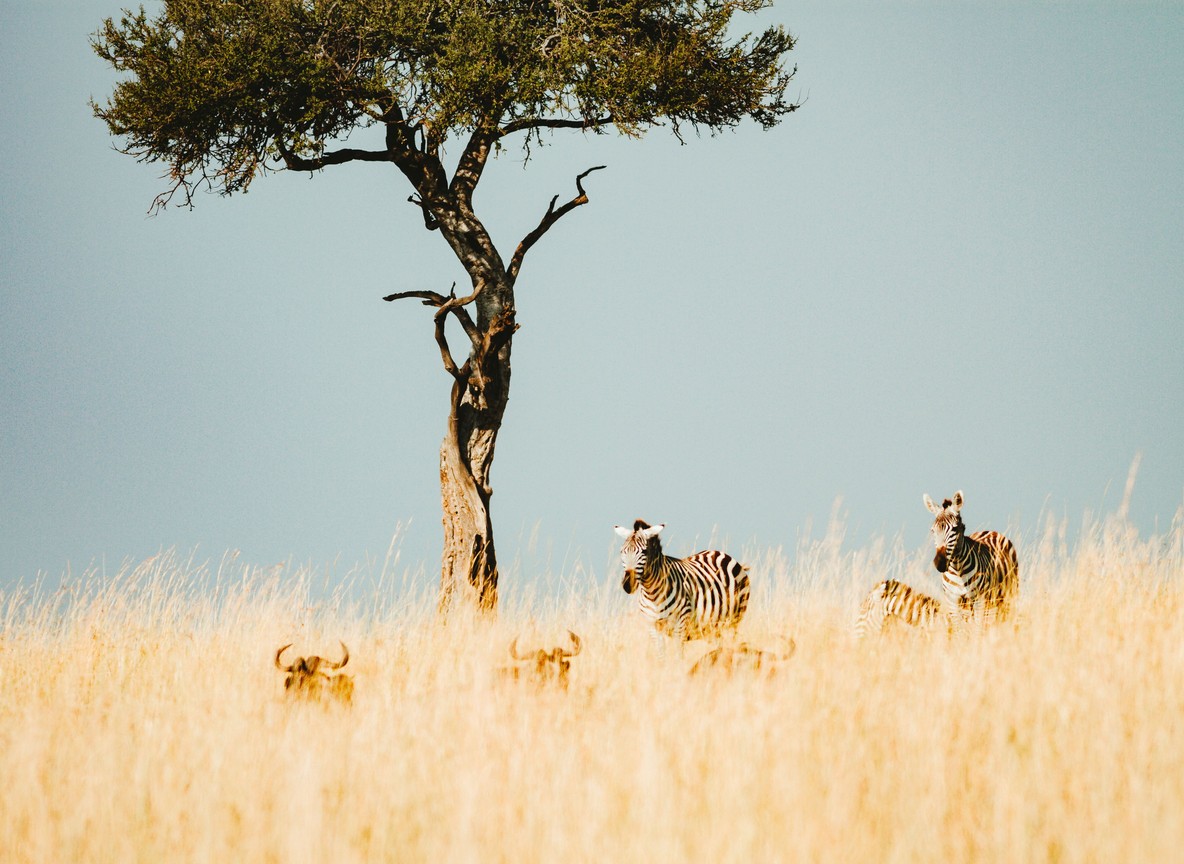
Wildlife rarely lets you get close. Rangers and guides keep vehicles at a respectful distance from animals, often 20 to 30 meters even for calm subjects like grazing zebra. A predator sighting can be much farther away. Without enough lens reach, your photos show a small, distant shape rather than a sharp animal portrait.
Dust is the second challenge. Game drive tracks in the Maasai Mara and Amboseli throw fine red dust into the air for hours at a time. Gear without weather sealing struggles after a few days. Heat and vibration from rough roads add further strain that budget cameras handle differently than pro bodies.
Safari Camera Gear at a Glance
| Item | Detail (indicative, confirm before your trip) |
|---|---|
| Minimum useful lens reach | 300mm equivalent for full-body wildlife shots |
| Comfortable lens reach | 400-600mm for tight portraits and birds |
| Typical light aircraft baggage limit | 15 kg total, soft-sided bags only (Safarilink, AirKenya routes to Mara and Amboseli airstrips) |
| Maasai Mara National Reserve size | approx. 1,510 km2 |
| Amboseli National Park size | approx. 392 km2 |
| Typical vehicle-to-wildlife distance | approx. 20-30 meters on a standard game drive |
| Nairobi to Maasai Mara (road) | approx. 270 km, 5-6 hours via Narok |
| Nairobi (Wilson Airport) to Mara airstrips | approx. 45 minutes by air |
The $500 Starter Kit
At this budget, a used enthusiast DSLR body paired with a superzoom lens is the smart move over buying new. Look for a body from two or three generations back, sold with low shutter count, and a 150-600mm third-party zoom bought used. This combination gets you real reach without the price of a first-party lens.
A bridge camera with a built-in zoom, such as models offering 600mm equivalent reach in a single fixed lens, is the other strong option here. It trades some image quality for simplicity and far less weight to carry. For a first safari, that trade is often worth it.
Round out this kit with two spare batteries, a 128GB memory card, and a simple rain cover. Skip the tripod. Most safari shooting happens handheld from a moving vehicle, and a tripod rarely comes out of the bag.
The $1,500 Enthusiast Kit
This is where most repeat safari travelers land. A current-generation crop-sensor mirrorless body, bought new or lightly used, paired with a 100-400mm zoom lens gives sharp results across most sightings. The crop sensor works in your favor here. It effectively extends your reach without the weight of a longer full-frame lens.
Add a second, wider lens in the 18-55mm or similar range for camp scenes, group shots, and landscapes. Most travelers underestimate how often the wide shot matters until they are back home reviewing photos.
Budget for a beanbag instead of a tripod. It rests directly on the vehicle window frame and stabilizes a lens far better than a tripod ever could from a moving Land Cruiser.
The $3,000 Photographer’s Kit
At this level, a full-frame mirrorless body with strong autofocus tracking and a fast burst rate becomes realistic, paired with a 100-400mm or 200-600mm lens. Full-frame sensors perform noticeably better in the low light common at dawn game drives, which is when predators are most active.
A second body is worth considering here rather than a second lens. Swapping lenses mid-sighting in dusty conditions risks sensor contamination, and a missed shot while you swap glass is a missed shot for good. Many photographers at this tier carry one body with the telephoto attached and a compact second body with a wide lens ready.
Weather sealing on both the body and lens stops being optional at this price point. Confirm it before you buy, since not every model in this range includes it.
The $5,000 Pro-Leaning Kit
This budget supports a flagship or near-flagship full-frame body with a fast, wide-aperture telephoto, plus a zoom for flexibility. Think an f/4 or f/5.6 prime in the 400mm or 500mm range. The prime lens delivers sharper results and better low-light performance than any zoom at the same focal length. That edge shows clearly in early morning or backlit shots.
At this tier, weight becomes a real planning factor, not an afterthought. A 500mm prime alone can weigh 3 kg or more, and that is before the body, second lens, and accessories. Check the airline baggage limit early, since the 15 kg light aircraft allowance covers everything you carry, including clothing.
Comparing the Four Tiers
| Budget | Body Type | Primary Lens | Approx. Reach | Approx. Kit Weight |
|---|---|---|---|---|
| $500 | Used enthusiast DSLR or bridge camera | 150-600mm (used) or built-in zoom | 300-600mm equivalent | 1.5-2.5 kg |
| $1,500 | Crop-sensor mirrorless | 100-400mm zoom | 400-600mm equivalent | 2-3 kg |
| $3,000 | Full-frame mirrorless, weather-sealed | 100-400mm or 200-600mm zoom | 400-600mm | 3-4 kg |
| $5,000 | Flagship or near-flagship full-frame | 400mm or 500mm prime + zoom | 400-500mm at wide aperture | 4.5-6 kg |
Airline Baggage Limits Shape Every Kit Decision
Most Mara and Amboseli safaris include at least one leg on a light aircraft. These flights connect grass or gravel airstrips like Keekorok, Ol Kiombo, and Musiara. These aircraft enforce a strict 15 kg total baggage allowance per passenger. Bags must be soft-sided too, not hard camera cases, since they need to fit small cargo holds.
That limit covers everything, not just camera gear. A photographer flying with a 6 kg camera kit has roughly 9 kg left for clothing and everything else. Wearing your heaviest layer onto the aircraft is a common workaround. So is carrying the camera body around your neck rather than in the baggage weight.
What Matters More Than the Price Tag
Reach, autofocus speed, and burst rate matter more for wildlife results than sensor resolution. A 24-megapixel body with a sharp 500mm lens will consistently outperform a 45-megapixel body paired with a 200mm lens on safari. If you must choose where to spend, spend on the lens first.
Image stabilization matters almost as much, since most shooting happens handheld from a vehicle with the engine running. Look for in-body stabilization or an optically stabilized lens at every budget tier, including the $500 kit.
Explorer Notes
A few things we have picked up from travelers and guides in the field. First, pack a rocket blower and a handful of microfiber cloths, not one cloth. Dust at Sekenani Gate and Oloolaimutia Gate settles on gear within minutes of an open window, and a single dirty cloth just smears it around. Second, ask your driver-guide before the drive whether they can position the vehicle for backlit or side-lit shots at sunrise. Good guides do this without being asked, but it never hurts to say photography is a priority for your group. Third, charge everything overnight through your camp’s main powerhouse if it has one, since some tented camps run on solar power that dims after dark. Finally, a plastic zip-top bag large enough for your whole camera works better than a dedicated rain cover during a sudden Mara downpour. It is cheaper, and you likely already have one.
What to Read Next
- Choosing between camera systems? Read our DSLR vs mirrorless vs smartphone safari photography guide.
- Planning where to shoot? See our Masai Mara wildlife photography guide.
- Timing your trip around the herds? Check our wildebeest migration photography safari guide.
FAQ
Do I need a full-frame camera for a safari? No. A crop-sensor mirrorless or DSLR paired with a long lens works well for most travelers, and the crop sensor even adds effective reach.
What is the minimum lens length for safari photography? Aim for at least 300mm equivalent. Under that, most wildlife will appear small in the frame from typical vehicle distances.
Are camera drones allowed on safari? Generally no. Most Kenyan and Tanzanian parks and conservancies restrict or ban drone use without a special permit, so check with your operator before packing one.
How much should I budget for camera insurance? Many travel insurance policies cap gear coverage low. A separate gear policy or rider is worth pricing separately if your kit exceeds $1,500.
Will camp staff charge my batteries and cards for me? Most camps offer charging at a central point or in-room outlets on a schedule. Bring enough batteries to cover a full day, since charging windows can be limited at remote tented camps.
Matching your kit to your budget is one decision among many before departure. Visit our Tour Packages page to see camps and routes suited to photographers, or ask a partner operator which vehicles and window setups work best for your gear.