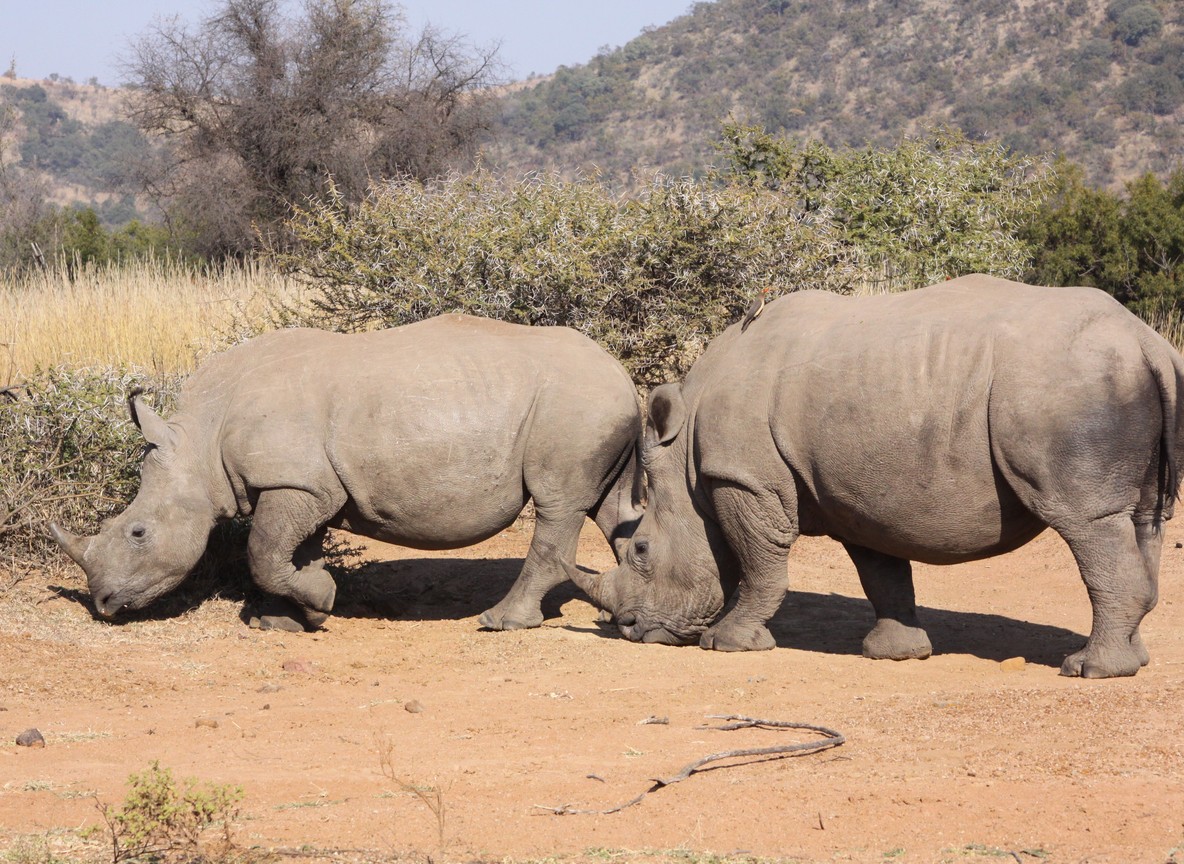
Kenya lost dozens of rhinos to poachers a decade ago, and Ol Pejeta Conservancy was not spared. Three rhinos were killed there in 2017. Since that year, not one more has fallen to poaching on the property. The conservancy holds the largest black rhino population in East Africa. That streak is now closing in on nine years. Touring Insights looked at what actually changed after 2017. The answer is less about luck and more about a system that keeps getting harder to beat.
Ol Pejeta’s Zero-Poaching Record, By the Numbers
The record is easiest to understand next to the numbers behind it. Ol Pejeta is not a small reserve trying to protect a handful of animals. The conservancy is fully fenced, covering 364 km2 in Laikipia County. It holds more than 140 black rhino and a growing southern white rhino population. Najin and Fatu, the last two northern white rhinos on Earth, live here too.
| Metric | Figure |
|---|---|
| Conservancy size | ~364 km2 (90,000 acres), fully fenced |
| Black rhino population | 140+ (largest in East Africa) |
| Distance from Nairobi | ~200 km, 3-3.5 hr drive or ~45 min flight to Nanyuki |
| Last confirmed rhino poaching incident | 2017 |
| Years since, as of 2026 | approaching 9 |
| Ranger force | 150+ across the conservancy |
| Non-resident adult entry fee | $90-100/day (indicative, confirm before travel) |
A fenced perimeter this size does not defend itself. Defending it takes a ranger force and a technology layer. Neighbors also need a reason to protect what is on the other side of the wire.
What Happened in 2017, and What Changed After
The 2017 killings landed at a moment when poaching pressure across northern Kenya was already high. Rhino horn demand in parts of Asia was driving that pressure. Ol Pejeta’s management response was not a single fix. It was a rebuild of the security model, from patrol routines up to command structure. A technology upgrade came with it, giving rangers real-time visibility instead of relying on radio calls and guesswork.
Save the Rhino International has supported Ol Pejeta’s rhino programs for years. It points to sustained investment as the difference maker, rather than any single tactic. Consistency mattered more than any one innovation. Ol Pejeta kept funding the security budget at a high level even after the immediate crisis passed. That sustained commitment is the part many conservancies struggle to maintain.
The Ranger Force Behind the Fence
More than 150 rangers work across Ol Pejeta today. They split between foot patrols, vehicle units, and a K9 unit built around tracking and detector dogs. Armed National Police Reservists work alongside conservancy rangers. That partnership gives the security operation legal arrest powers most private ranger teams do not have on their own.
Ranger patrols run around the clock, not just during daylight hours when visitors are on game drives. Night is when most poaching attempts historically happened. Overnight coverage now closes the window that used to be easiest to exploit. Dog teams can pick up a scent trail within minutes of a fence breach. That cuts response time from hours to a much narrower margin.
EarthRanger and the Technology Layer
Ol Pejeta runs its security operation through EarthRanger, a platform built specifically for protected-area management. It pulls in data from rhino tracking collars, ranger GPS units, and perimeter cameras. Vehicle positions feed into the same live operational map.
That single view lets a control room spot an anomaly right away. It might be an unexpected vehicle near the fence, a stalled collar, or a camera trigger at 2am. Rangers can then route the nearest patrol before the situation escalates. Ol Pejeta has described the platform as central to its 2026 conservation technology push. The system is expanding beyond rhino security into broader wildlife monitoring across the property.
Community Partnerships: Security Beyond the Fence Line
A fence only works if the people living next to it are not the ones cutting holes in it. Ol Pejeta has built a long-running relationship with neighboring Laikipia communities. That relationship runs through employment, a livestock market program, and revenue sharing tied to tourism.
Local intelligence is often what stops a poaching attempt before it starts. Community members who benefit from the conservancy’s presence have little incentive to shelter poaching networks passing through. Every credible tip from a herder or elder is worth more than another camera on the fence. This is the layer that is hardest to copy and slowest to build. That difficulty is also why it is hardest to reverse once trust is established.
Dehorning and Rhino Monitoring
Dehorning is one more layer in the strategy, not a replacement for rangers or technology. Removing the horn reduces the payoff for a poacher willing to risk an armed confrontation. It does not eliminate risk entirely, though, since a stub still carries some value on the black market.
Every rhino on Ol Pejeta is individually monitored and tracked by ear-notch patterns. Dedicated rhino-monitoring teams check each animal on a regular schedule. That level of individual tracking means a missing rhino gets noticed within hours, not days. This speed matters as much as any fence or patrol.
How Ol Pejeta Compares to Other Kenyan Rhino Sanctuaries
Ol Pejeta is not the only fenced rhino stronghold in northern Kenya. Lewa Wildlife Conservancy, roughly 90 km northeast near Isiolo, runs a similar fenced-and-guarded model. It has posted its own multi-year stretches without a poaching loss. Both conservancies share intelligence and, in some years, rangers and equipment. A poaching network does not respect a conservancy boundary.
The shared lesson from both properties is that scale and consistency beat any single security gadget. A rhino sanctuary can have a strong fence but a thin ranger budget. It can also have strong funding one year and cuts the next. Either gap tends to get exploited eventually.
Planning a Visit: Getting to Ol Pejeta and What It Costs
Most visitors reach Ol Pejeta from Nairobi. The road route runs roughly 200 km, 3 to 3.5 hours via Nanyuki. A scheduled light aircraft into one of the conservancy’s airstrips takes about 45 minutes instead. Nanyuki itself sits on the equator and works as a convenient overnight stop before or after a visit.
Camps inside the conservancy, including Sweetwaters and several tented options, build in rhino tracking and K9 demonstrations. These fit into the regular game drive schedule. Non-resident adult entry runs an indicative $90-100 per day, on top of camp rates. Confirm the current figure with your camp or the conservancy before booking.
Explorer Notes
Ask your guide in advance whether a K9 demonstration is scheduled during your stay. Handlers rotate between training and active duty, so it is not guaranteed every day. Camps often need to request it the day before rather than on arrival. If a demonstration is cancelled, that usually means the unit is doing live security work, not a service failure.
Night drives inside Ol Pejeta feel noticeably calmer than in unfenced reserves. The electrified perimeter and constant ranger presence remove a layer of uncertainty. Rangers who grew up on land bordering the conservancy are often the richest source of context on a game drive. That beats questions about weapons or tactics. A short conversation about their community usually reveals more about why the zero-poaching record has held than any statistic can.
What to Read Next
- Ol Pejeta Conservancy: The Complete Rhino Sanctuary Guide
- Ol Pejeta vs Lewa Conservancy: Which Rhino Sanctuary Fits Your Trip?
- Where to Stay at Ol Pejeta: Camps and Lodges Compared
FAQ
Has Ol Pejeta really had zero rhino poaching incidents since 2017? Yes. The last confirmed rhino poaching loss on the conservancy was in 2017. Ol Pejeta and partner organizations, including Save the Rhino International, have documented the streak. It now extends to nearly nine years as of 2026.
Why does Ol Pejeta have more rhinos than other Kenyan parks? Ol Pejeta is fully fenced. That lets managers control rhino density and security more tightly than an open reserve like the Masai Mara. It also began actively relocating and breeding rhinos decades ago. That effort built the population that makes it East Africa’s largest black rhino sanctuary today.
What is EarthRanger and how does it help stop poaching? EarthRanger is a wildlife protection software platform. It combines tracking collar data, ranger patrol positions, and camera and sensor alerts into one live map. This lets a control room detect unusual activity and dispatch the nearest ranger team quickly.
Is it safe to visit Ol Pejeta because of the anti-poaching security? Yes. The security operation is built around protecting wildlife from poachers, not restricting visitors. Tourists join guided game drives and rhino tracking excursions with rangers. The fenced perimeter and armed patrols make the conservancy one of the more tightly controlled wildlife areas in Kenya.
Do other Kenyan conservancies have similar zero-poaching records? Lewa Wildlife Conservancy, near Ol Pejeta in Laikipia, has posted its own extended stretches without a poaching loss. It uses a comparable fenced, ranger-heavy model. Both conservancies periodically share intelligence, since poaching networks often operate across several properties.
For a next step, browse Touring Insights’ Tour Packages page. It lists partner operators running rhino-tracking itineraries into Ol Pejeta and neighboring Laikipia conservancies.