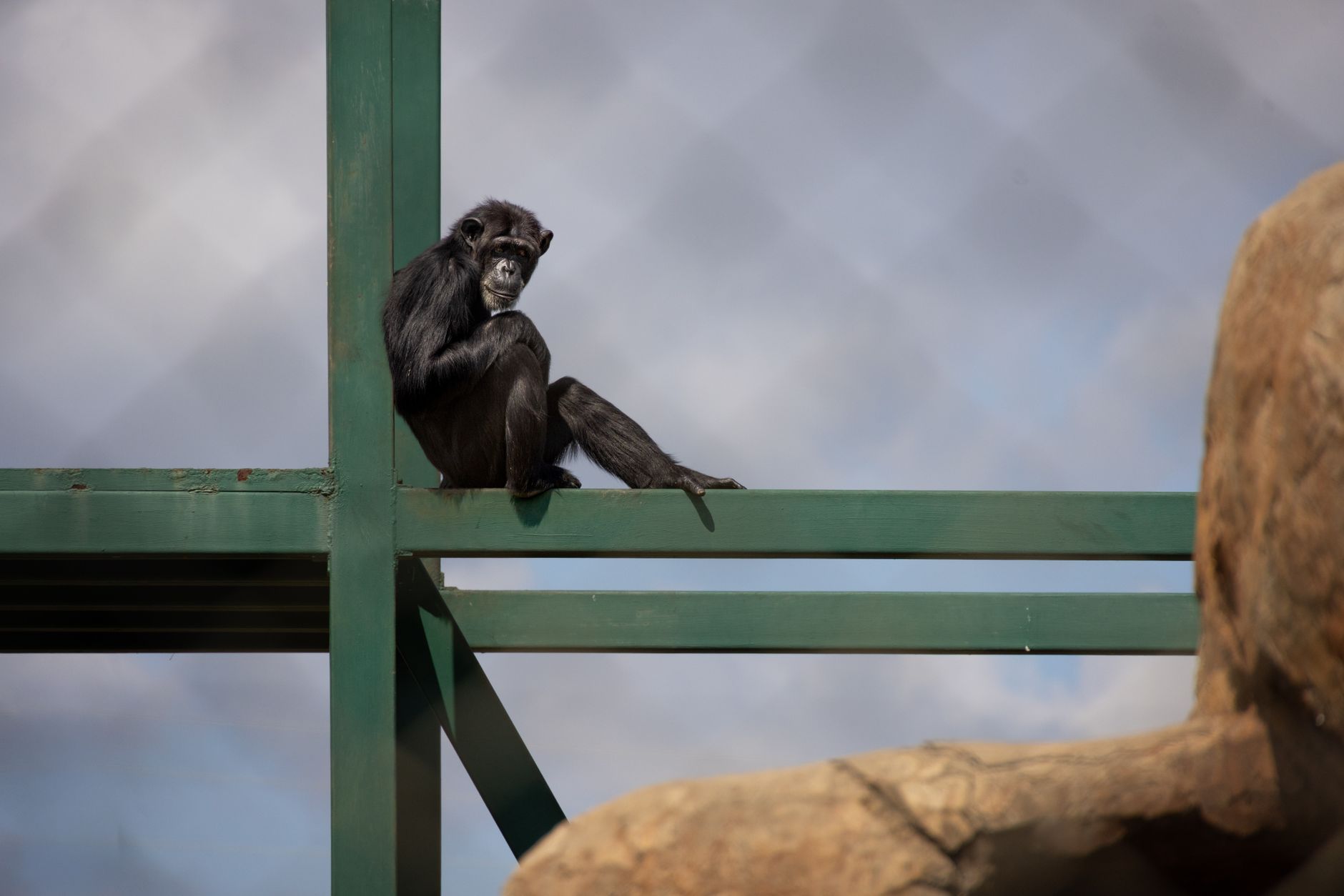
Ol Pejeta safari can I see chimpanzees? The short answer is yes. Sweetwaters Chimpanzee Sanctuary, inside Ol Pejeta Conservancy, shelters chimpanzees that needed a safe home. You can watch them from secure platforms and learn their rescue stories. What you will not do is see chimpanzees roaming free like the lions or elephants on a normal game drive.
This distinction surprises many first-time visitors. A classic Kenya safari list includes lions, leopards, elephants, buffalo, and rhinos. Chimpanzees are not native to Kenya. In fact, no wild chimpanzee population lives in the country. The Sweetwaters residents came from elsewhere, often after being rescued from trafficking, abuse, or unsuitable captivity. They live in large, semi-natural enclosures, cared for by keepers, because they cannot be released into a landscape where their species does not belong.
Ol Pejeta safari: can I see chimpanzees?
Yes. You can see chimpanzees at Sweetwaters Chimpanzee Sanctuary, which sits inside Ol Pejeta Conservancy near Nanyuki. It is Kenya’s only established chimpanzee sanctuary and forms part of a normal Ol Pejeta visit. Viewing takes place from secure public areas rather than during a wild game drive.
For safari planners, this makes the answer straightforward. You do not need to add a remote rainforest destination to your Kenya itinerary. The chimpanzees are one of several reasons this Laikipia conservancy stands apart from a standard big-five park. If you are weighing your options, our comparison of Ol Pejeta versus Masai Mara for wildlife explains how the two experiences differ.
The viewing style is more like a wildlife sanctuary visit than a traditional game drive. You arrive at a designated area, follow keeper instructions, and watch from a raised platform. The chimps might be grooming, playing, or resting in the trees. The encounter is real, but it is managed and controlled.
Are Ol Pejeta’s chimpanzees wild or rescued?
Ol Pejeta’s chimpanzees are rescued animals, not a wild Kenyan population. They came from situations including trafficking, abuse, unsuitable captivity, and conflict. Chimpanzees are not native to Kenya, so they cannot safely be released into the wild. Instead, they receive lifelong care in large, semi-natural enclosures.
The rescue history shapes everything you see at Sweetwaters. Many of the chimpanzees arrived as orphans or survivors of the illegal pet trade. Others came from cramped zoos or entertainment facilities. Their enclosures are designed to feel as natural as possible, with trees, grass, climbing structures, and space to move. But keepers still manage their diet, health, and social groups.
This also affects your expectations. A rescued chimpanzee sanctuary is not the same as spotting a wild troop in Uganda or Tanzania. The animals do not range freely across the landscape. Instead, you learn about individual rescue stories and the careful work of giving each chimp a stable life. That is the heart of the experience.
Where is Sweetwaters Chimpanzee Sanctuary?
Sweetwaters Chimpanzee Sanctuary is located within Ol Pejeta Conservancy in Laikipia County, near Nanyuki in central Kenya. Visitors enter through an authorised Ol Pejeta gate, then follow the conservancy’s directions to the sanctuary. Raised platforms and viewing areas overlook secure chimpanzee enclosures beside the Ewaso Nyiro River.
Ol Pejeta sits on the equator, west of Mount Kenya, and is a common stop on northern Kenya safari routes. Many itineraries combine a visit to Sweetwaters with a game drive in the same conservancy. Because the sanctuary runs its own visiting sessions, you should decide whether to go in the morning or the afternoon before you plan the rest of your day.
For a full picture of the conservancy’s wildlife, landscapes, and lodging options, browse our Ol Pejeta Conservancy guide. It will help you understand how the chimpanzee visit fits into a wider safari.
What are the chimpanzee sanctuary opening hours?
Sweetwaters typically runs a morning viewing session and a separate afternoon session, with a break in the middle of the day when the sanctuary is closed to visitors. Exact opening and closing times can shift by season, so confirm the current schedule with Ol Pejeta or your safari operator before you plan the rest of your day. These sessions differ from Ol Pejeta’s main gate hours, so a game-drive ticket alone does not guarantee sanctuary access at any time you like.
The midday closure gives the animals a period of quiet. It also means you should not expect to walk in during the break and see chimpanzees. Most visitors either arrive for the late morning session or come back for the afternoon session.
| Planning detail | What you need to know |
|---|---|
| Sanctuary visiting sessions | Morning session and afternoon session, with a midday closure between them; confirm exact times with Ol Pejeta before you travel |
| Main conservancy gate hours | Usually 6:00 a.m. to 6:00 p.m.; confirm at booking |
| Standard Sweetwaters access | Included in Ol Pejeta entry; indicative non-resident day range $95 to $120 per adult, check current official rates |
| Premium chimpanzee experiences | Separate paid activity; advance booking required |
Is chimpanzee viewing included in Ol Pejeta entry?
Standard access to Sweetwaters Chimpanzee Sanctuary is included in the applicable Ol Pejeta Conservancy entry fee, so ordinary viewing normally does not require a second attraction ticket. Special keeper-led or behind-the-scenes experiences are separate paid activities and generally need advance booking, with current prices and availability best confirmed before travel.
In practical terms, you pay once to enter the conservancy. Your driver or guide will then take you to the sanctuary at the right time. There is no extra ticket window at the chimpanzee viewing platform. The main cost consideration is the Ol Pejeta entry tariff, which varies by resident status, age, vehicle type, and the season.
If you are planning a full trip budget, our Kenya safari cost guide explains how park and conservancy fees sit alongside flights, camps, and guides. That context helps you compare quotes without surprises.
What can you do at the Sweetwaters Chimpanzee Sanctuary?
Most visitors observe chimpanzees from protected viewing platforms and learn how rescued animals are cared for. Depending on availability, you may also book a behind-the-scenes or keeper-led experience. These involve conservation interpretation, individual rescue stories, feeding preparation, or enrichment work, and they do not allow visitors to enter the enclosures or handle the animals.
A typical visit starts when a keeper or guide points out the main family groups. You may hear pant-hoots before you see any movement. Chimpanzees use loud calls to communicate, and the sound carries across the river. Bring binoculars or a telephoto lens, because the viewing can be at a distance.
Behind-the-scenes experiences are for travelers who want more than a quick look. They give you time with the keepers and a chance to understand how enrichment puzzles, feeding routines, and social introductions work. These sessions still respect the animals’ space. No visitor enters the enclosure or touches a chimpanzee.
If you are also planning time in the dry northern parks, our Samburu safari photography tips include lens and light advice that transfers well to Ol Pejeta.
What are the chimpanzee viewing rules and ethical expectations?
Visitors must keep a secure distance, follow keeper instructions, and never touch, feed, or attempt to interact physically with the chimpanzees. Strict hygiene and behaviour rules protect animals that are vulnerable to human diseases and reduce stress. Treat the visit as a conservation and welfare experience, not a close-contact animal encounter.
The rules are not there to limit your fun. Chimpanzees share many of the same disease vulnerabilities as humans, and a simple cold can become serious for an already rescued animal. Keepers may ask you to wear a mask, stay behind a rope, or keep your voice down. Follow those instructions without argument.
Ethical viewing also means adjusting your expectations. The chimpanzees are not performers. They may not appear during your exact window, or they may stay hidden in the shade. That is normal. The sanctuary exists for the animals, not for a guaranteed photo opportunity. When you watch with patience, you see behavior that feels far more meaningful than a staged encounter.
What do visitors ask about seeing chimpanzees at Ol Pejeta?
Most visitor questions come down to access, cost, and interaction. You can see the chimpanzees, they are rescued animals, the sanctuary is inside Ol Pejeta, standard access is included in entry, and physical interaction is not allowed. The answers below give the most direct version.
Can you see chimpanzees at Ol Pejeta?
Yes. Visitors can see chimpanzees at Sweetwaters Chimpanzee Sanctuary inside Ol Pejeta Conservancy. The sanctuary is Kenya’s only established facility with a resident chimpanzee population, and standard access is generally included in the conservancy entry fee.
Are there wild chimpanzees in Kenya?
No. Chimpanzees are not native to Kenya, so the animals at Sweetwaters are rescued individuals living in protected, semi-natural enclosures. The sanctuary provides lifelong care rather than offering a wild-chimpanzee viewing experience.
Is Sweetwaters Chimpanzee Sanctuary included in Ol Pejeta entry?
Yes, ordinary access to Sweetwaters is included in the applicable Ol Pejeta Conservancy entrance fee. Premium options such as behind-the-scenes chimpanzee experiences are separate activities and may require advance booking.
What time is the chimpanzee sanctuary open at Ol Pejeta?
The sanctuary runs a morning viewing session and an afternoon viewing session, with a midday closure in between. Exact times can vary, so check the current schedule with Ol Pejeta or your operator before you go.
Can you interact with the chimpanzees at Sweetwaters?
No. Visitors cannot touch, feed, hold, or enter the chimpanzees’ enclosures. Viewing is conducted from secure areas, while keeper-led experiences focus on conservation, care routines, and rescue stories rather than physical contact.
How do you choose an Ol Pejeta safari package?
A good way to plan an Ol Pejeta safari is to pick a package that pairs the conservancy with a northern Kenya route. Sweetwaters pairs naturally with Samburu, Laikipia, and other stops on the same circuit. Before you commit, check the sanctuary sessions and confirm which days your driver or camp has set aside for the visit. You can also compare Kenya safari destinations such as Tsavo and Samburu to see which combination fits your time and budget.
Where can you find more safari planning resources?
- Kenya national parks map from SafariPure
- Ol Pejeta Conservancy guide from Trunktrails Safaris
- Ol Pejeta and Sweetwaters safari package from Valley Safaris
- Compare Kenya safari packages on FindMySafari
How do you compare safari operators before booking?
When you are ready to look at packages, browse options on FindMySafari, Valley Safaris, or Trunktrails Safaris. Comparing safari operators side by side helps you verify itineraries, entry fees, and camp styles before you book.