Mount Kenya stands at 5,199 metres above sea level and commands the skyline of central Kenya. Africa’s second-highest peak and a UNESCO World Heritage Site, it offers a combination of high-altitude trekking, diverse wildlife, and authentic safari experiences that most travellers arriving in Nairobi never consider.
Whether you are planning to summit Point Lenana, track elephants through montane forest, or use Nanyuki as a base for Ol Pejeta Conservancy, this guide covers the practical detail you need to plan a central Kenya trip that goes beyond the standard southern circuit.
Why Mount Kenya National Park Deserves More Attention
Mount Kenya is not just a mountain — it is a complete ecosystem. The park rises from savannah grassland through bamboo forest, afroalpine moorland, and glacial peaks. Thirteen distinct altitude zones create habitats that support different wildlife communities as you ascend.
Kenya Wildlife Service manages 882 square kilometres of protected mountain wilderness within the national park boundary. The park has UNESCO World Heritage Status, reflecting both its outstanding natural beauty and its ecological value — a rare designation for a mountain in East Africa.
For travellers who have already done Amboseli and the Masai Mara, Mount Kenya offers something categorically different: genuine solitude at altitude, unscripted wildlife encounters, and a landscape that changes completely every 500 metres of elevation gain.
Mount Kenya Trekking Routes
Three main routes lead trekkers toward the summit zone. Each has a distinct character.
Sirimon Route (Northwest)
The Sirimon route is the recommended starting point for first-time Mount Kenya trekkers. It enters from the northwest, above Nanyuki, and gains altitude gradually through moorlands with giant lobelias and groundsels.
Key features:
- Gradual altitude gain for better acclimatisation
- Strong wildlife sightings in the lower forest zone, including buffalo and elephant
- Old Moses Camp at 3,300 metres as the first night’s accommodation
- Duration: 4-5 days to Point Lenana and back
- Difficulty: Moderate
Chogoria Route (East)
Many trekkers consider the Chogoria route the most beautiful approach on the mountain. It enters from the east through lush bamboo forest before opening into dramatic glacial valleys.
Key features:
- Gorges Valley — one of the most spectacular glacial landscapes in Africa
- Lake Michaelson in a natural amphitheatre below the peaks
- Diverse vegetation zones from rainforest to alpine desert
- Duration: 5-6 days
- Difficulty: Moderate to challenging
Naro Moru Route (West)
The fastest route to Point Lenana, but the steepest and least scenic. The Vertical Bog section is exactly what it sounds like and can be challenging in wet conditions.
- Duration: 3-4 days
- Difficulty: Challenging
- Best for experienced trekkers with strict time constraints
Recommended combination: Ascending via Sirimon and descending via Chogoria gives the best of both routes — gradual acclimatisation going up and the finest mountain scenery coming down.
Wildlife in Mount Kenya National Park
Many visitors come for the peaks. The national park’s biodiversity is an equally compelling reason to visit.
Large mammals by altitude zone:
In the forest and bamboo zones (2,000-3,500 metres):
- Forest elephants roaming the lower slopes, particularly in the bamboo zone
- Cape buffalo herds at the forest edge and moorland transition
- Bongo antelope — a rare and prized sighting in dense forest areas
- Black and white colobus monkeys in the forest canopy
- Leopard (present throughout but seldom seen)
Above the tree line (3,500+ metres):
- Rock hyrax at high camp areas
- Eland on the high moorland
- Unique high-altitude bird species including the scarlet-tufted malachite sunbird
Birdlife: The park records over 130 species. Key species include the alpine chat, augur buzzard, lammergeier (bearded vulture), and Jackson’s francolin. The best wildlife viewing in the lower zones happens in the early morning and late afternoon.
Nanyuki: Gateway to the Mountain
Nanyuki sits on the equator at 1,949 metres, approximately 200 kilometres north of Nairobi (3-4 hours by road, or 45 minutes by light aircraft from Wilson Airport). It is the primary base for Mount Kenya expeditions approaching from the northwest.
The town has grown from a colonial-era ranching centre into a functional adventure hub with good accommodation, gear shops, cafes, and easy access to the mountain gates. Its altitude makes it useful for acclimatisation — arriving the day before your trek begins and sleeping at 1,949 metres is a gentle introduction to the altitude gain ahead.
Notable in and around Nanyuki:
- The equator line markers — the town straddles the equator and the demonstrations of the Coriolis effect (water draining in opposite directions on either side) are a genuine curiosity
- Trout Tree Restaurant, in an actual fig tree above a working trout pond
- Good coffee shops for final planning sessions and gear checks
- Nanyuki Airfield, a busy military and civilian strip that adds an unexpected sound dimension to the town
Ol Pejeta Conservancy: The Day Trip Option from Nanyuki
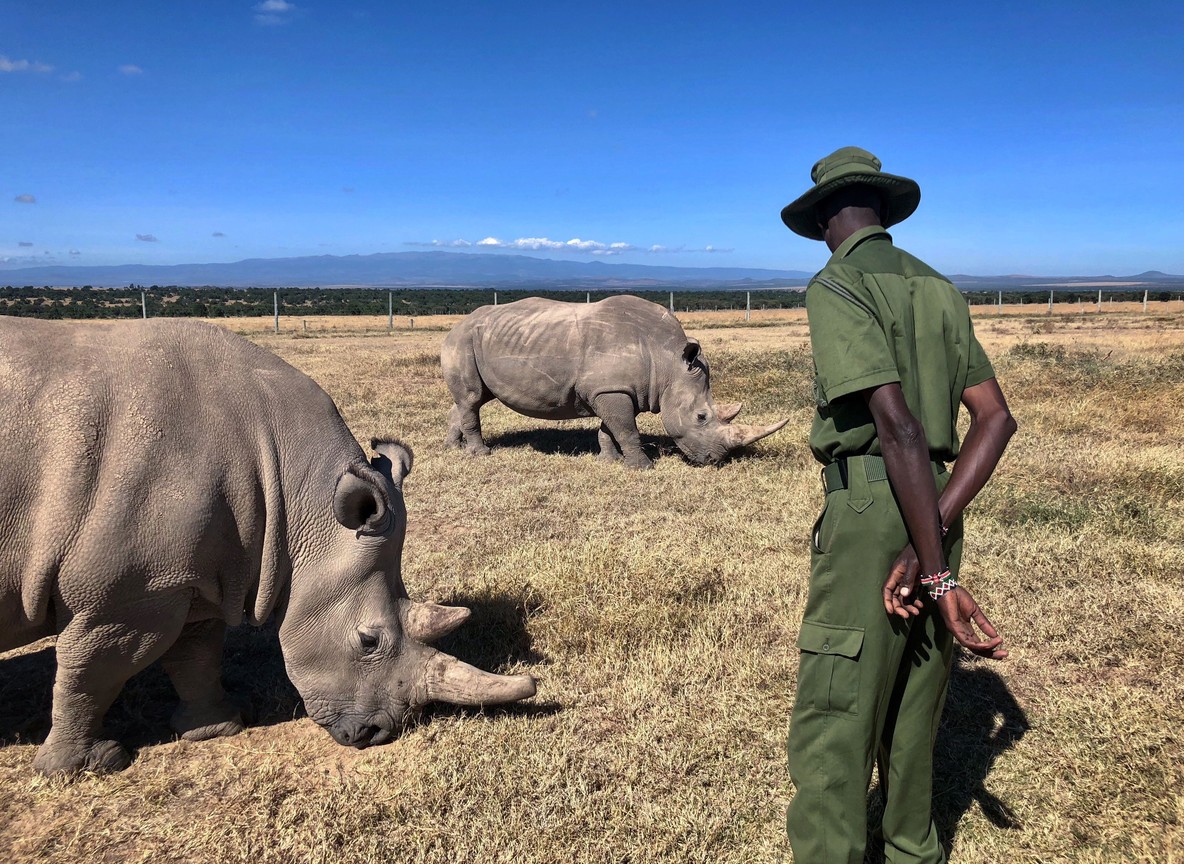
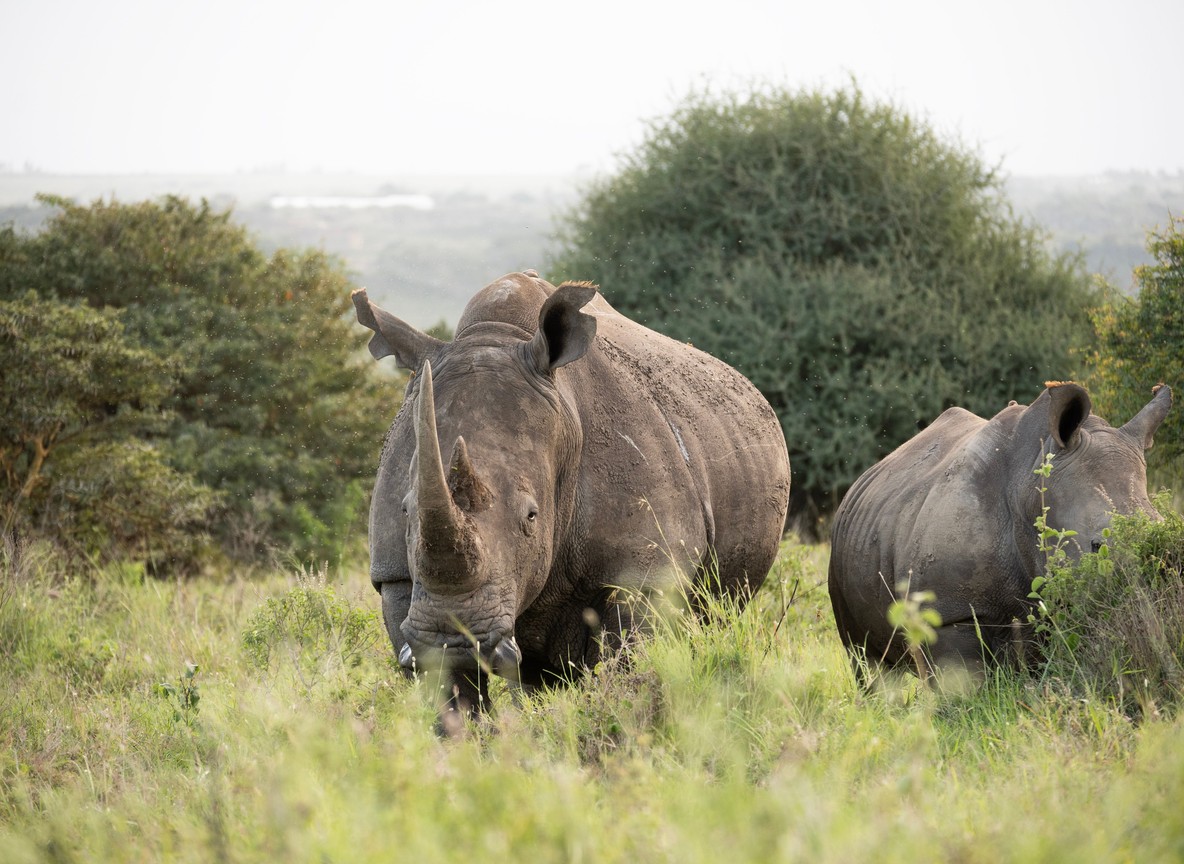
Ol Pejeta Conservancy is 25 kilometres from Nanyuki and is among the best single additions you can make to a Mount Kenya itinerary. It is East Africa’s largest black rhino sanctuary and holds one of the most complete Big Five ecosystems in Kenya, with the specific distinction of also being home to the last two northern white rhinos on Earth.
What Ol Pejeta offers:
- Reliable black and white rhino sightings
- The Sweetwaters Chimpanzee Sanctuary, housing rescued chimps — an unusual Kenya wildlife experience
- Full Big Five including lion, leopard, elephant, and buffalo
- Night game drives (available at certain camps within the conservancy)
- Mount Kenya visible in the background on clear days — a distinctive photographic backdrop for wildlife images
A full-day Ol Pejeta visit typically includes morning and afternoon game drives. The conservancy covers 360 square kilometres, enough to fill a day comfortably. For travellers who want rhino without routing to Laikipia or the northern parks, Ol Pejeta from Nanyuki is a logical solution.
Accommodation Options
Near Nanyuki and the lower mountain:
Luxury tier:
- Fairmont Mount Kenya Safari Club — a historic resort at 1,978 metres with golf course, animal orphanage, and strong mountain views. One of Kenya’s classic colonial-era properties.
- Serena Mountain Lodge — built above a waterhole inside the national park, offering wildlife viewing from rooms.
Mid-range:
- Mountain Rock Lodge — comfortable banda-style accommodation near Naro Moru Gate, popular with trekking groups.
- Nanyuki Sportsman’s Arms — colonial-era hotel in central Nanyuki, reliable and characterful.
On the mountain (KWS mountain huts):
- Old Moses Camp (3,300m) — first night on Sirimon route
- Shipton’s Camp (4,200m) — high-altitude base on the Sirimon route
- Mackinder’s Camp (4,200m) — alternative high camp on the Naro Moru approach
Best Time to Visit
Mount Kenya can be trekked year-round. Two dry seasons offer the most reliable conditions.
January to February: The short dry season. Clear skies, good visibility, and cold nights above 4,000 metres. Fewer trekkers than the July-September window.
June to October: The main dry season. Most stable weather, best for combining with wildlife viewing in surrounding reserves. July and August are the coldest months at altitude — below zero at High Camp is standard.
Long rains (March to May): Trails muddy, cloud cover common, but fewer trekkers and dramatically lush vegetation in the forest zones.
Short rains (November to December): Brief afternoon showers typical. Some of the most dramatic cloud photography of the year. Not the recommended primary window but not impossible.
The best months overall: January-February or July-September.
Practical Considerations
Fitness requirement: Point Lenana (4,985m) requires good cardiovascular fitness but no technical climbing skills. The main challenge is altitude, not terrain difficulty. Regular hiking with a loaded pack in the months before the climb is the most useful preparation.
Guides are mandatory: Kenya Wildlife Service requires all trekkers to use a registered guide. This is not bureaucracy — guides carry safety equipment, monitor health at altitude, and carry detailed knowledge of current route conditions.
What to bring: Waterproof outer layer, warm insulation layer (down or synthetic), thermal base layers, gloves and hat rated for below-zero temperatures at night, headlamp for the 2:30 am summit departure, trekking poles, and a sleeping bag rated to at least -5°C.
Summit night logistics: Most trekkers leave High Camp between 2:00 and 3:00 am to reach Point Lenana at sunrise. The approach involves steep scree and some scrambling in darkness. A good headlamp, warm clothing, and a guide who knows the route in the dark are the three things that distinguish a successful summit from a turned-back attempt.
Combining Mount Kenya With a Safari
Mount Kenya sits within easy range of several major safari destinations:
- Ol Pejeta Conservancy (25km): The most logical immediate addition
- Samburu National Reserve (4-5 hours north): The natural northern Kenya wildlife complement
- Masai Mara (5-6 hours south): The most popular longer combination for travellers who want mountain trekking and migration wildlife in a single trip
- Laikipia Plateau (via Nanyuki, 1-2 hours): Lewa Wildlife Conservancy, Borana, and other conservancies all within reach
A ten to twelve day itinerary combining Mount Kenya (5 days) with the Masai Mara (3 days) and a night in Nairobi at each end covers the core Kenya experience across its full vertical range — from 4,985 metres at dawn on Point Lenana to game drives at 1,500 metres in the Mara.
If this guide has you ready to travel, a safari specialist can handle the route, camps, and logistics end to end.
Want to Book a Tour With Us?