Governors’ Camp publishes a quarterly account of what actually happened on the ground in the Masai Mara, month by month rainfall, named animal sightings, and how the landscape shifted. The April-June 2026 report is a useful planning tool, not just a nature diary. It shows exactly how fast the reserve dried out this year and which animals moved first.
Touring Insights breaks down what that data means if you are still choosing dates for a 2026 or 2027 trip.
What Governors’ Camp’s Q2 2026 Report Actually Tracked
The report covers April, May, and June 2026 across the camps clustered near Musiara Marsh and Bilashaka, in the northern Masai Mara National Reserve. It logs daily rainfall, temperature patterns, and confirmed wildlife sightings from guides working the reserve every day.
That ground-level detail matters because it captures things a seasonal average cannot. A single wet week in late April, for example, can delay the grass from browning on schedule. Guides on site catch that shift in real time, weeks before broader forecasts adjust.
Rainfall by Month: April, May, and June 2026
The headline finding is a steep, steady drop in rainfall across the quarter. April closed out the long rains with real volume. By June, the reserve had turned dry enough for the golden-grass conditions safari travelers associate with peak game viewing.
| Month | Rainfall Recorded | Notes |
|---|---|---|
| April 2026 | approx. 140mm | Showers Apr 4-6; heavier rain Apr 25-30, including 40mm on Apr 28 |
| May 2026 | approx. 21mm | Unusually dry for May; grass began drying out mid-month |
| June 2026 | approx. 9.4mm | Near-dry month; landscape had turned pale gold by month’s end |
That is a roughly 93 percent drop in rainfall from April to June. Few quarters show a transition this clean. It explains why guides described the shift from Green Season to dry grassland as unusually fast this year.
How the Landscape Changed: Green Season to Golden Grass
April’s rain kept the Reserve lush, with tall green grass covering Topi Plains and Paradise Plains. As May’s dry spell set in, that grass began drying out and thinning. By late June, the report describes the plains as pale yellow, the visual marker guides watch for before major herd movement begins.
This matters for photography and game viewing alike. Thinner, shorter grass in June and July makes it easier to spot predators at rest, since long green cover from April would otherwise hide them. Travelers chasing sightings over scenery should lean toward the drier end of the quarter.
Wildlife Highlights: Marsh Pride Cubs, the Topi Boys, and a Mini Migration
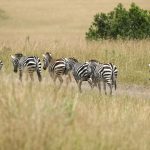
Before the main wildebeest herds arrived, thousands of zebras began moving south from the northern conservancies. Some may have come from as far as the Loita Plains, spreading across Topi Plains, Paradise Plains, and the forest edge near the camps. Guides describe it as a mini migration, a preview of the bigger herds still weeks out.
The resident Marsh Pride had an eventful quarter. Kaleo’s two cubs, born October 2025, were named Musiara and Olonyori. Despite a mild mange case in May, both were fully integrated into the pride by June at eight months old. Lioness Kito gave birth to a single cub in mid-May, which did not survive past May 31. Lola, visibly pregnant in late May, went on to give birth to three healthy cubs.
The Topi Boys coalition, seven males named Ukingo, Djodjo, Vuli, Kiongozi, Moja Moja, Nzuri, and Otipo, held territory through the quarter. Oleku, a male born in April 2021, returned to the Mara Triangle. He was spotted feeding on a wildebeest carcass east of Salt Lick. Guides also recorded a newborn giraffe at Double Crossing in May, its amniotic sac still visible. Grey Crowned Cranes, a species classified as Endangered, were seen successfully rearing chicks nearby.
What the Report Signals for Migration Timing
Zebra movement ahead of the wildebeest is one of the more reliable early indicators guides use each year. Their presence at Topi Plains and Paradise Plains in Q2 2026 lines up with a normal, on-schedule build toward the Great Migration‘s later stages.
| Q2 2026 Stage | What the Report Showed | What It Signals |
|---|---|---|
| April (Green Season) | 140mm rain, lush grass | Peak birthing and predator activity, fewer crowds |
| May (transition) | 21mm rain, grass drying | Cub and calf sightings continue, roads firming up |
| June (early dry season) | 9.4mm rain, golden grass | Zebra mini migration begins, game viewing opens up |
| July onward (forecast) | Not yet in this report | Wildebeest herds typically follow the zebra pattern north |
Travelers who want newborn wildlife and green scenery should target April or early May. Those chasing open sightlines and the start of major herd movement should look at late June through July instead.
Getting to the Mara: Distances, Flights, and Fees
Whichever window this report points you toward, the logistics of reaching the reserve stay consistent year to year.
| Detail | Figure |
|---|---|
| Maasai Mara National Reserve size | approx. 1,510 km2 |
| Nairobi (Wilson Airport) to Mara Serena or Musiara airstrips | approx. 45-min scheduled flight |
| Nairobi to Mara by road (via Narok) | approx. 270 km, 5-6 hrs drive |
| Non-resident adult reserve entry fee | approx. USD 100 / 24 hrs (2026 gazetted rate, indicative) |
| Main gates | Oloololo, Talek, Sekenani, Sand River |
| Key airstrips near Musiara area | Musiara, Mara Serena, Ol Kiombo |
Camps around Musiara Marsh and Bilashaka, where this report was compiled, sit close to Ol Kiombo and Musiara airstrips. That keeps transfer times under an hour from touchdown to camp. It matters most on short trips, where every hour is better spent in a vehicle than on a transfer road.
How to Use This Report to Time Your Trip
A single quarter of data is not a forecast. But it is a strong signal of how this specific year is tracking against the ten-year pattern guides use to plan game drives. The fast April-to-June rainfall drop in 2026 suggests grass will thin out early, which typically pulls forward the window for open, easy sightings.
If your dates are flexible, watch for camps releasing updated monthly reports through July and August. A slow start to zebra movement would suggest a delay. Continued early activity, like the pattern this report shows, points toward an on-time or slightly early migration season.
Explorer Notes
Guides who compile these quarterly reports watch small details tourists often miss. A mild mange case on a cub, like Kaleo’s two in May 2026, is common. It usually clears without treatment and is not typically a reason to worry about a pride’s health. Ask your guide for the latest pride update each morning. Prides shift territory within days. The report you read before booking may already be a few weeks out of date by the time you arrive.
Zebra concentrations at Topi Plains and Paradise Plains are worth building a morning drive around in June and July. They are calmer around vehicles than wildebeest and easier to approach for photography, and predators often follow them closely. Pack a wide-to-medium zoom lens for these sightings rather than the long lens you would want for a river crossing.
Frequently Asked Questions
What did Governors’ Camp’s Q2 2026 safari report cover? It tracked rainfall, temperature, and wildlife sightings across April, May, and June 2026 in the northern Masai Mara, near Musiara Marsh and Bilashaka.
How much rain fell in the Masai Mara in Q2 2026? April recorded approximately 140mm, May approximately 21mm, and June approximately 9.4mm, a steady and fast decline through the quarter.
Does zebra movement in June predict the Great Migration’s timing? Guides treat early zebra movement toward Topi Plains and Paradise Plains as a reliable early signal, though wildebeest still follow their own rainfall-driven schedule further north.
Is April or June a better month to visit based on this report? April suits travelers who want lush scenery and newborn wildlife. June suits those who prioritize open sightlines and the start of dry-season game viewing.
Where were the camps that produced this report located? Near Musiara Marsh and Bilashaka in the northern Maasai Mara National Reserve, close to the Musiara and Ol Kiombo airstrips.
If the drying pattern in this report matches the window you are planning around, the next step is matching it to camp availability near Musiara or the Mara Triangle. Visit our Tour Packages page or check dates with a partner operator directly, since northern Mara camps fill quickly once dry-season sightings pick up.
What to Read Next
- Timing a crossing specifically? Read our Mara River crossing forecast 2026.
- Wondering how camp rates shift with the season? See our Masai Mara migration season camp availability guide.
- Need the entry fee breakdown before you book? Check our Masai Mara reserve entry fees guide.
Further reading
More safari planning resources
- Best time to visit Kenya month-by-month map from Valley Safaris
- Mara River crossing guide on Touring Insights
- Great Migration safari collection on FindMySafari
- Wildebeest migration route map from Valley Safaris
Related guides: Masai Mara Wildlife Report: What Sightings Looked Like April-June 2026.