A Kenya safari how to prevent dehydration plan is more than a bottle in the seat pocket. It depends on dawn schedules, safe refills, dusty roads, walking days, and your own health limits. The plan below works across the Masai Mara, Amboseli, Tsavo, Laikipia, and the cooler central highlands. These are practical safari hydration tips, not extreme rules.
Kenya Safari How to Prevent Dehydration: The Daily Plan
- Start before sunrise. Most game drives leave while it is still cool, and the first stop may not come for hours. Drink a glass of water when you wake and another before you climb into the vehicle. A practical daily target for most adults is 2 to 3 litres of total fluids, spread from breakfast to dinner. Adjust for heat, walking, altitude, and any medical advice. If a clinician has told you to limit fluids, follow that limit.
- Ask about safe water at every new camp. Sealed bottled water is the standard safe choice in Kenya. Lodges and camps often use purified water from dispensers or reusable bottles, so ask at check-in. If they do not confirm the tap is drinkable, use bottled or treated water for drinking and for brushing teeth. Ask about ice too. The rule for safe drinking water in Kenya is simple: sealed bottle or confirmed purified source.
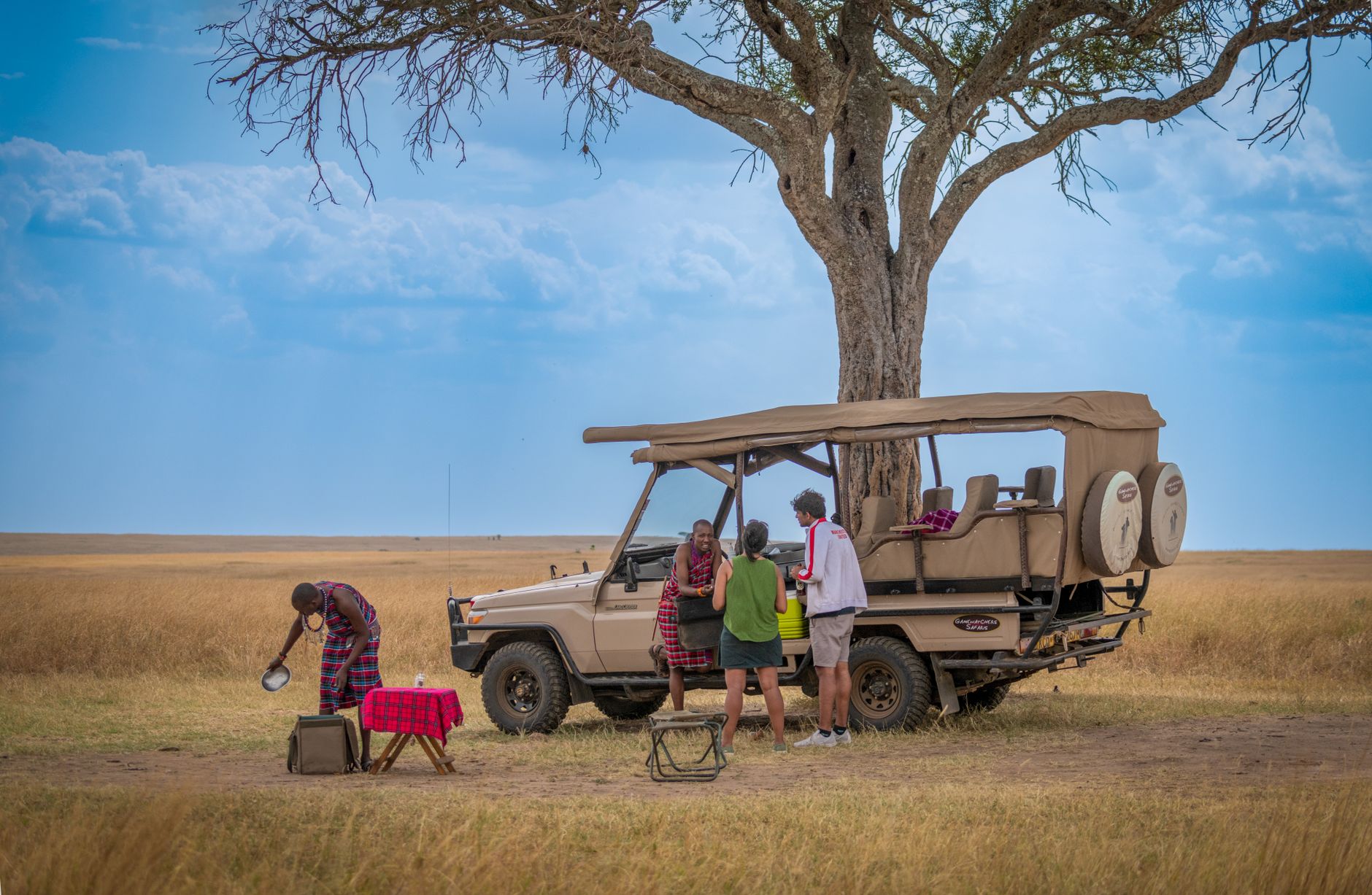
- Refill before you drive, and keep the bottle within reach. Camp dispensers are an easy source of clean water. Fill a bottle at breakfast, fill a second before lunch, and ask where the spare water lives in the vehicle. Water on game drives should never sit in a bag you cannot reach. If you are self-driving, check the Kenya safari vehicle safety checklist first, because breakdowns add heat and water risk.
- Pack a small hydration kit. Your kit should contain a leak-proof bottle, oral rehydration salts, sunscreen, lip balm, a hat, and any personal medicines. Oral rehydration salts help after diarrhoea, vomiting, or heavy sweating. They are not a substitute for water and should be used according to the packet directions. If you have heart or kidney disease, ask a doctor before using them.
- Sip by the clock, not by thirst. Dry savanna air can hide fluid loss because sweat evaporates fast. You may not feel thirsty until you are already behind. Take a small sip every 15 to 20 minutes during a drive. Dark urine is an early prompt to drink more, not a signal to wait.
- Limit alcohol and heavy caffeine until the heat of the day passes. A sundowner beer or gin and tonic is part of safari tradition, but alcohol makes dehydration easier. Strong coffee and very sweet soda can fill your stomach without doing the same job as water. Drink a glass of water alongside any alcoholic drink, and switch back to water before the next drive.
How Your Safari Region Changes the Hydration Plan
- Masai Mara and the Rift Valley parks. Open plains heat up quickly once the sun is high. The vehicle gives shade, but formal restrooms are few. Ask the driver for a comfort stop before you enter a wildlife viewing area, and refill at camp for the afternoon drive. In strict parks such as Lake Nakuru, stopping rules can limit your choices. Read the Lake Nakuru safari park rules before you arrive so you know what to expect.
- Amboseli and Tsavo. Dust and dry heat can make you less aware of fluid loss. In Amboseli, keep your bottle filled and your hat on; the air can be dusty even on clear days. In Tsavo, drive distances are long, so take more water than one drive requires. A filled bottle kept in the shade stays cooler than one in direct sun.
- Laikipia and the central highlands. Cooler temperatures do not cancel the need for water. Walks at altitude around Laikipia and Mount Kenya can dry you through faster breathing, especially in the morning. Keep your normal daily fluid routine and add one extra cup before a strenuous walk.
Dehydration Symptoms and Heat Exhaustion on Safari
- Know the early signals. Thirst, dry mouth, headache, tiredness, dizziness, dark urine, and nausea are early dehydration symptoms. If they appear, stop activity, move into shade, tell your guide, and take small sips of safe water. You do not need to finish the whole bottle at once. Slowing down and cooling off are the first response.
- Treat urgent signs as emergencies. Confusion, fainting, severe weakness, inability to drink, or symptoms that get worse can point to serious heat exhaustion on safari. Do not try to manage this alone in the vehicle. Alert the guide, get the person into shade, and seek medical help. Bookmark the Kenya safari emergency contacts page and keep it on your phone.
Walking Safaris and Active Days
- Carry water on your body, not in the vehicle. Walking safaris are the easiest place to fall behind on fluids. Start with a full bottle in a comfortable daypack, and drink small amounts at every pause. Ask the guide about the route length and water access before you start. If you feel cramps, dizziness, headache, nausea, or unusual fatigue, say so and shorten the route. No walk is worth a health scare.
Hydration Advice for Older Travellers
- Plan around bathroom access. Retirees often worry about comfort stops, and that worry can make them drink less. Tell the guide at the start of each day that you may need a short-notice stop. Experienced drivers will build that into the route. Use the restroom before you leave camp, not only at the gate. The more comfortable you are with the plan, the easier it is to keep sipping water.
- Follow your medical plan, not someone else’s. Heart, kidney, or liver disease, diabetes, and prescribed fluid limits change the right water target. Ask a clinician before travel whether 2 to 3 litres is safe for you. Keep medicines in your day bag, not in checked luggage. If a morning medication changes your fluid needs, carry that note with your travel documents.
- In heat, think small and early. On a hot afternoon, a shorter drive with shade and water beats a long one with no shade. This is where a Kenya safari how to prevent dehydration plan becomes personal. If you feel too hot, ask for an early return to camp and continue fluids once you are out of the sun.
Compare Operators That Fit Your Pace
Your hydration plan is easier when the camp and vehicle match your needs. When comparing operators, ask how many people share the vehicle, whether walking is optional, how often the driver offers water, and what happens if you need a comfort stop. Browse packages on FindMySafari, Valley Safaris, or Trunktrails Safaris to compare operators side by side. Choose one that answers those questions fully before you pay.
More safari planning resources
- Kenya safari packages from SafariPure
- Kenya wildlife tours from Trunktrails Safaris
- Nairobi to Maasai Mara route guide from Valley Safaris
- Amboseli destination guide on FindMySafari