Lake Nakuru is a compact, fenced national park in Kenya’s Rift Valley, known for rhinos, buffalo and rich bird life. Many first-time visitors think the lake nakuru safari park rules are just background noise. They are not. A missed rule can cost you viewing time or create a tense moment near a rhino. This article turns the official-sounding list into 15 clear rules and explains why each one matters.
What Are the 15 Lake Nakuru Safari Park Rules?
The 15 Lake Nakuru park rules that matter most cover gate hours, entry bookings, identification and speed. They also cover marked roads, off-road driving, staying in the vehicle and wildlife distance. The rest cover feeding, litter, noise, picnic points, photography, swimming and exit before closing. Most are national park norms. A few are shaped by the fenced rhino habitat and the alkaline lake.
| # | Area | What to know |
|---|---|---|
| 1 | Gate hours | The park generally opens at 6:00 AM and closes at 6:00 PM. |
| 2 | Entry booking | Arrange entry fees and park authorization before you arrive. |
| 3 | Identification | Carry ID that matches the booking. |
| 4 | Speed limit | The maximum speed is 40 km/h. |
| 5 | Roads | Stay on marked roads and tracks. |
| 6 | Off-road driving | Not allowed. |
| 7 | Staying in the vehicle | Stay inside except at approved areas. |
| 8 | Wildlife distance | Keep at least 20 metres from wildlife. |
| 9 | Feeding animals | Do not feed animals. |
| 10 | Rubbish and plastic | Carry all waste out and avoid prohibited single-use plastics. |
| 11 | Noise | Keep voices and music low. |
| 12 | Picnic and viewpoints | Use only approved stops. |
| 13 | Photography | Photograph quietly and do not lure or chase animals. |
| 14 | Natural objects | Do not pick plants, stones or feathers. |
| 15 | Swimming and drinking | Do not swim in or drink the lake water. |
Keep that checklist in mind as you read the practical notes below.
What Are Lake Nakuru National Park Opening Hours and Entry Rules?
Lake Nakuru National Park generally opens at 6:00 AM and closes at 6:00 PM. Arrange park entry before arrival through official channels and carry ID that matches the booking. Day visitors must leave before closing unless they are staying at an approved lodge or campsite under ranger instructions.
The most common mistake is arriving without a confirmed entry arrangement. Payment procedures can differ between self-drive cars and organised visits. Do not assume you can sort everything at the gate. Check your operator’s instructions or the official reservation channel used by Kenya Wildlife Service before you leave your hotel. For a broader look at logistics and highlights beyond the rules, see our Lake Nakuru guide.
Overnight guests follow different rules. Movement after dark is limited to approved accommodation. If you are staying inside the park, ask the property and park staff exactly when you can drive and where you can go.
What Is the Lake Nakuru Speed Limit and What Else Matters on the Road?
The maximum speed inside Lake Nakuru National Park is 40 km/h. Slow down near wildlife, corners and other vehicles. Stay on marked roads and tracks, leave extra space for rhinos and buffalo, and do not speed to a sighting simply because another vehicle has stopped. Road rules protect animals and people.
Forty kilometres an hour feels slow, and that is intentional. Rhinos and buffalo often stand near or on the road at first light. A slow vehicle has time to stop. A fast one does not.
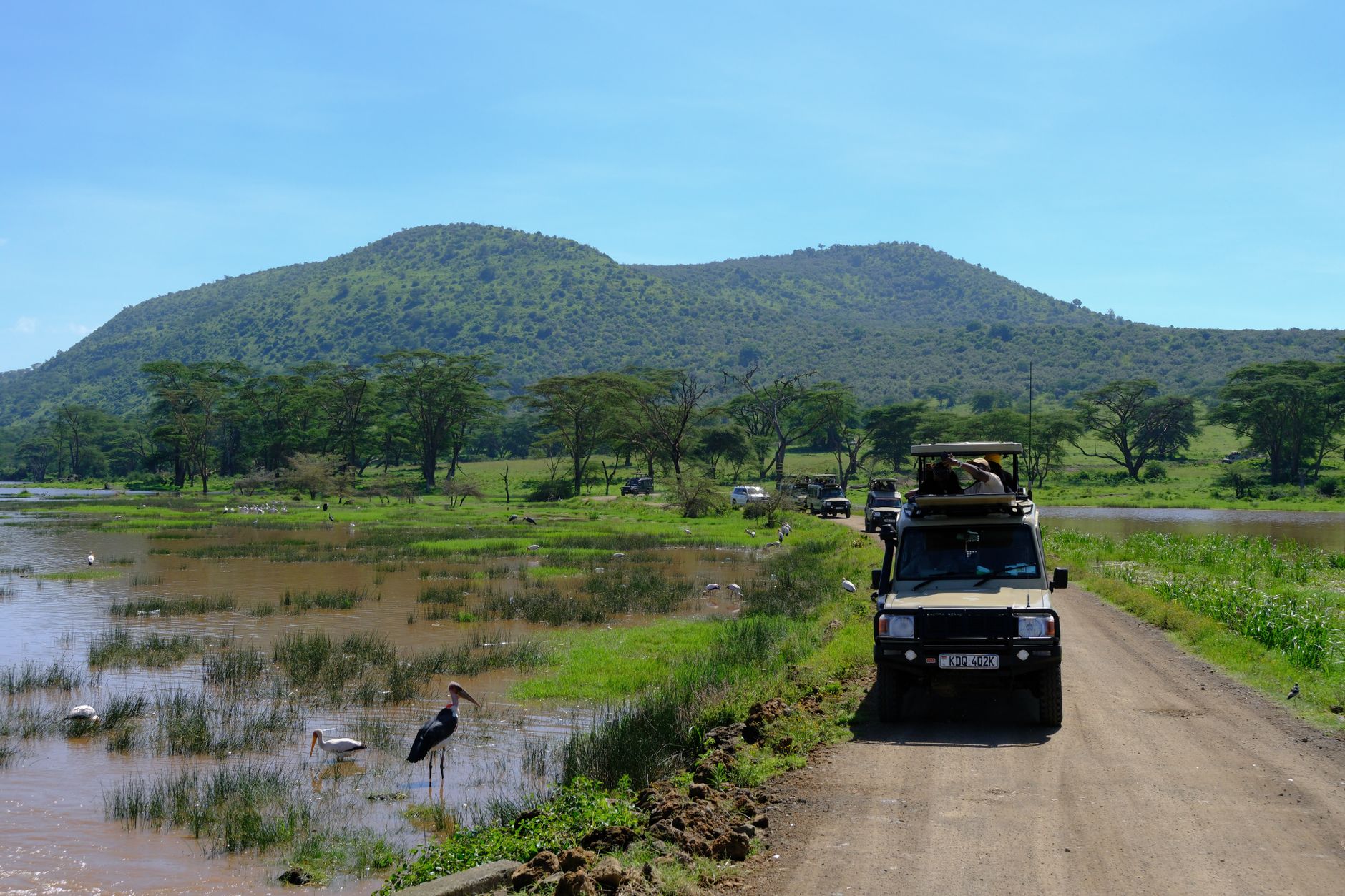
When a line of vehicles gathers at a sighting, expect more cars to arrive quickly, since guides often radio each other about rhino or lion sightings. The best response is patience. Pull in behind the group, switch off the engine and wait your turn for a clear view.
Can You Drive Off-Road in Lake Nakuru?
No. Off-road driving is not permitted in Lake Nakuru. It is against the road rules because it damages grass and soil, disturbs ground-nesting birds and can cause a dangerous close encounter with rhino or buffalo. Stay on the designated track even if a better photo angle is tempting.
The damage is not temporary. Broken tracks and eroded edges stay visible for a long time, and animals gradually avoid areas with heavy vehicle traffic. If the person driving you suggests leaving the road for a photo, ask for a better spot instead.
Wet weather makes this rule more important. Lake Nakuru’s clay tracks can become slippery after rain. A shortcut that looks harmless may be deep mud or a hidden ditch. Turn around when you are unsure, and never create a new track to avoid a puddle.
Can You Get Out of the Vehicle at Lake Nakuru?
Only at designated viewpoints, picnic sites or other areas approved by park staff. During ordinary game viewing, stay inside the vehicle and keep at least 20 metres from wildlife. Ask the driver or a ranger before opening a door, because animals can approach a parked car without warning.
Rhino and buffalo, two of the Big Five species found at Lake Nakuru, will often stand their ground rather than move for a vehicle. For more on spotting all five species in Kenya, see our Big Five guide.
Not every open space is an official stop. If the vehicle has pulled over, that does not mean you may step outside. Wait for the driver or guide to confirm the area is clear. Children should know before the drive starts that doors stay closed until an adult says otherwise.
At approved viewpoints, stay together and do not walk far from the vehicle. Baboons and other primates move quickly, and the shoreline can look solid when it is not.
Can You Feed Animals at Lake Nakuru National Park?
Do not feed wildlife, leave food scraps or discard rubbish anywhere in the park. Keep wrappers, bottles and tissues secured and avoid prohibited single-use plastics. Keep voices and music low, and never use food to attract an animal for a photograph. Litter and handouts both cause harm.
Feeding animals is not a harmless act. At Lake Nakuru, baboons learn quickly. A visitor who offers food teaches them to approach vehicles, and that habit turns into raiding cars or stealing bags. Once that happens, wildlife managers may have to control or move the animal.
You may still want snacks for a half-day drive. Sealed snacks are normally fine to bring. Keep them in a bag or backpack, not on the seat beside you, and eat only at an approved stop.
Can You Swim in Lake Nakuru?
Swimming is not permitted, and visitors should not drink the lake water. Lake Nakuru is alkaline, so carry bottled or filtered drinking water. Follow signs and ranger instructions around the shoreline, and photograph only from approved areas without picking plants, stones or feathers.
Photography follows the same logic as every other rule. You can photograph wildlife quietly from the vehicle, but do not use food, bird sounds or engine noise to attract or move animals. If you photograph people, including guides, rangers or local workers, ask permission first. Leave natural objects where they are.
Is Lake Nakuru National Park Safe for Self-Drive?
Self-driving at Lake Nakuru is possible if you keep to the 40 km/h limit and designated tracks. A guide helps you find rhinos calmly, read animal behaviour and avoid wet-season mud. If this is your first Kenyan safari, a guide lowers the stress of navigation and wildlife etiquette.
Self-drive suits people who already drive in Kenya and who are comfortable staying calm around large animals. A guide is useful when you want extra eyes on the road, help with gate procedures and a better sense of daily animal movements. Costs vary between the two options, so it helps to check typical price ranges before you decide. See our Kenya safari cost guide for a fuller breakdown.
Here is a practical comparison for the average visitor.
| Consideration | Self-drive | Guide or operator |
|---|---|---|
| Gate admin | You handle booking, ID and timing | Usually handled for you |
| Finding rhinos | Possible but slower | Local knowledge and radio updates help |
| Wet-season roads | More risk | Guides know which tracks are open |
| Family attention | Driver must watch road and animals | Driver focuses while guide scans |
If you decide a guide is worth it, be selective about who you ride with. Ask about licensing, Kenya Wildlife Service certification and experience with rhino sightings before you book a seat.
For a quick half-day visit with clear weather, self-drive can work well. For a family trip, a first safari or any day after heavy rain, a guide is often the better choice. Lake Nakuru is compact, but it is not predictable. To compare Kenya safari packages that include guiding, self-drive permits or both, browse packages from FindMySafari, Valley Safaris, or Trunktrails Safaris.
Where Can You Find More Safari Planning Resources?
These sister-site guides cover park maps, nearby lodges and gear so you can plan the rest of your trip.
- Kenya national parks map from SafariPure
- Lake Nakuru safari guide from Trunktrails Safaris
- Rift Valley lakes map from Valley Safaris
- Camera advice for your first safari, on FindMySafari