Comfort on a Kenya safari starts before you leave the gate. The number of travelers in your vehicle decides how close you sit to the window, how much space you have for a camera, and how easily you can stand to scan the savanna. Kenya safari group size comfort is the quiet factor behind many great game drives. It deserves more thought than the name of your camp.
What Determines Kenya Safari Group Size Comfort?
Kenya safari group size comfort is shaped by passenger ceiling, seat layout, roof design, guide decisions, road quality, and the animal behavior you want to watch. It is not just the number of people in the vehicle. Comfort comes from how those people share windows, space, and time at each sighting.
You will spend long hours in that vehicle. A full day in the Maasai Mara can leave you tired if you fold your knees sideways for hours. Kenya safari group size comfort is about making space for your body, your gear, and your patience.
Rules differ by park and conservancy. Public roads in the Mara allow many vehicles at a sighting. Private conservancies like Ol Kinyei and Naboisho limit vehicle numbers and allow off-road driving. That contrast affects how a larger group feels. A crowded vehicle feels worse when you wait in a line of cars. The same group might feel fine in a quiet conservancy.
What Is the Most Comfortable Kenya Safari Group Size?
Four to six travelers per safari vehicle is usually the most comfortable Kenya arrangement. It keeps every passenger close to a window, leaves useful elbow and camera space, and spreads vehicle costs without creating a crowded viewing platform. Couples and photographers may prefer private use, while budget travelers can accept six to seven passengers to lower the overall Kenya safari cost.
Still, the best size depends on who you travel with. A family of five can fill one vehicle with room to spare. Two couples with separate shot lists might feel better in an exclusive vehicle. In Amboseli, elephants often appear close to the road, and a smaller group makes it easier to shift side to side. Once you know the region, spend time choosing the best Amboseli safari area before you worry about seating. The camp location can change how many game drives you take.
The table below gives a rough sense of how group size plays out in a typical Kenya safari. These are general guidelines, not a contract. Ask each operator for the exact vehicle layout.
| Travelers | Typical setup | Comfort notes |
|---|---|---|
| 1 to 2 | Private Land Cruiser | Full control of timing and seating; highest cost per person |
| 3 to 4 | Shared or private vehicle | Good space, often lower cost than private |
| 4 to 6 | The usual sweet spot for shared Kenya safaris | Window access, elbow room, balanced price |
| 7 to 8 | Budget shared Land Cruiser or safari van | More people per row, possible limited sightlines |
| 9 or more | Usually split into two vehicles | More vehicles needed to protect viewing comfort |
How Many People Fit in a Kenya Safari Vehicle?
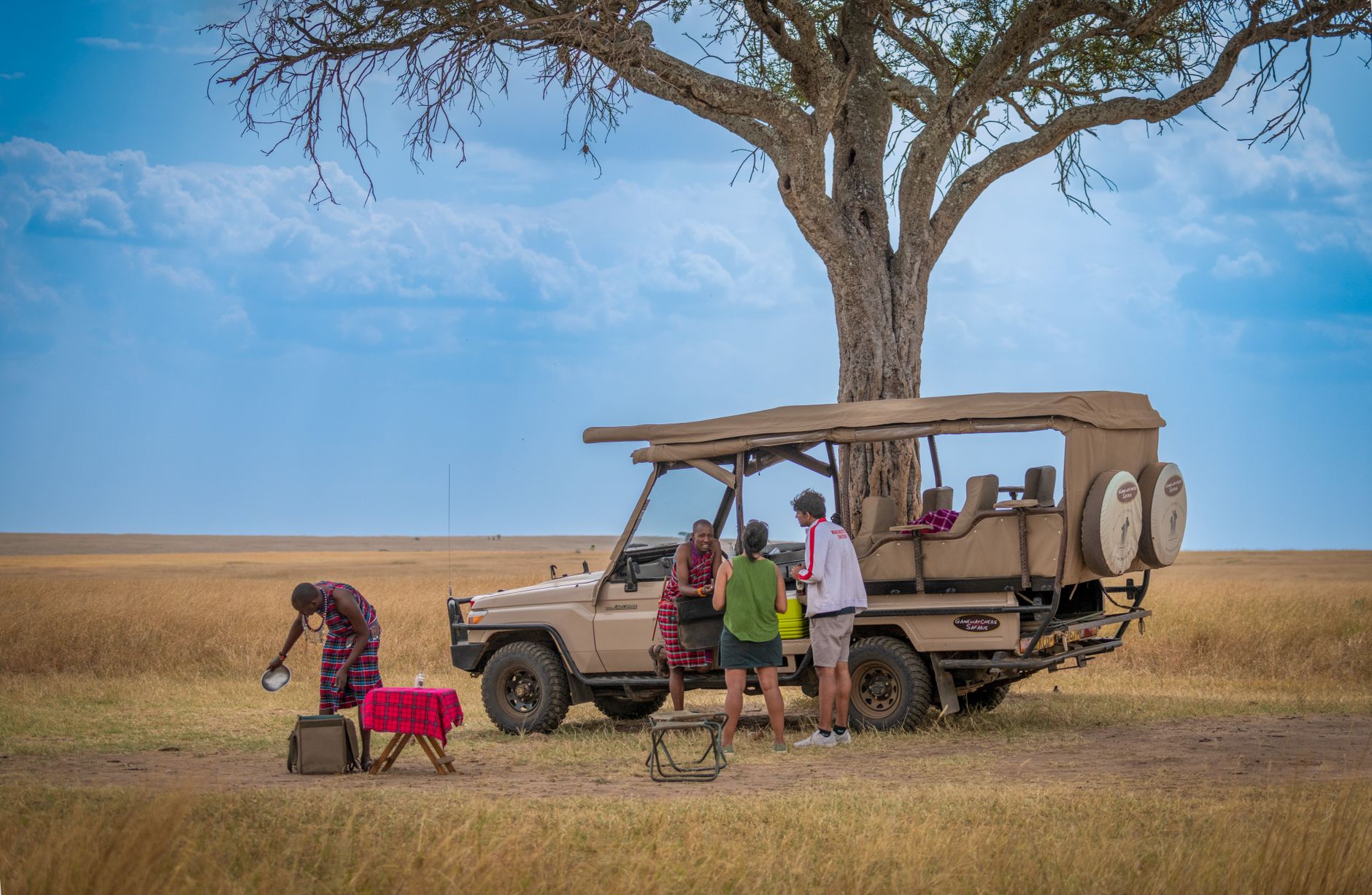
A Kenya safari Land Cruiser commonly carries six or seven guests plus the driver-guide, although extended vehicles may physically hold eight or nine. Physical capacity is not the same as comfort. The last row may restrict sightlines, and a front passenger seat can have a different view. Confirm the operator’s actual passenger limit before booking.
This is where the phrase small group safari Kenya can mislead. Some operators call a full vehicle of eight a small group. Ask for the maximum passenger count and the seating plan. Pay special attention to Kenya safari Land Cruiser capacity. A six person limit may mean one traveler per window. A seven person limit often puts one guest in a middle position that changes the game drive.
Shared Safari or Private Safari: Which Is More Comfortable?
A private vehicle provides the most comfort because your party controls the departure time, stops, seating, and wildlife-viewing pace. A shared safari costs less and can still be comfortable when capped at four to six travelers. But you must accept other guests’ schedules, photography preferences, and tolerance for early starts or long sightings.
If your budget allows, think about a private safari vehicle Kenya for at least part of the trip. Private use is valuable on long transfer days and in parks where you want to dig deep into one behavior, like hunting or mating. Travelers who take a specialized route often mention private guide benefits in Tsavo when they describe their favorite sighting. With a guide focused only on your group, the vehicle becomes a mobile studio rather than a bus.
How Does Group Size Affect Wildlife Viewing?
Smaller groups improve wildlife viewing mainly by giving each person a clearer sightline, more room to use the pop-up roof, and less competition during sudden sightings. The difference is most noticeable when a leopard is hidden in cover or a lion is close to the vehicle. It also shows when guests need time to photograph behavior rather than simply identify an animal.
A leopard sighting in the Masai Mara is a good test. With four people, everyone can take a turn at the roof hatch without stress. With seven, the side closest to the leopard stays focused while the far side watches the heads in front of them. The same logic applies in conservancies. Naboisho and Ol Kinyei have fewer vehicles and allow off-road tracking, but that does not replace personal space. If you travel as two people, joining a six person shared vehicle still means four strangers share the roof hatch.
What Group Size Works Best for Families, Couples, and Photographers?
Families of four to six usually fit comfortably in one private Land Cruiser, while couples often gain the most flexibility from booking an exclusive vehicle. Serious photographers should consider two to four travelers or private use. Lens space, rapid seat changes, quiet observation, and longer stops matter more than the lowest daily rate.
Families with young children often need unscheduled stops. A private vehicle turns a bathroom break into a non-event. Couples who join shared trips save money but lose the freedom to linger over a cheetah or return early for sundowners. Photographers, more than any other traveler, should ask if the roof section opens fully above their row and whether there is a beanbag mount.
When Does a Large Safari Group Need Multiple Vehicles?
Groups larger than six or seven should usually be divided between vehicles rather than packed into one. A 12-person group needs at least two vehicles for comfortable viewing. Larger parties should coordinate radio communication and departure plans so both vehicles can follow wildlife without creating a crowded scene.
Operators can seat more than six in a single vehicle, but the extra passengers pay for it in sightlines. If you bring a school group, a club, or an extended family, book two vehicles from the start. Set a meeting point and agree on radio discipline. If your trip includes Lake Nakuru, remember that vehicle movement is tightly controlled. Review the Lake Nakuru safari park rules before you arrive with a convoy.
What Do Travelers Ask About Kenya Safari Group Size?
What is the best group size for a Kenya safari?
Four to six travelers per vehicle is generally the best all-round group size in Kenya. It balances window access, personal space, guide interaction, flexibility, and cost. Choose a private vehicle for maximum control or accept six to seven passengers when price matters most.
How many people share a safari vehicle in Kenya?
Most shared Kenya safaris carry about five to seven travelers plus a driver-guide in a Land Cruiser or safari van. Some budget operators fill vehicles more heavily, so ask for the maximum passenger count rather than relying on the phrase small group.
Do all passengers get a window seat on a Kenya safari?
Not always. A standard vehicle may provide rear window seats for most passengers but place one guest in front or leave limited sightlines in an extended rear row. Confirm the vehicle layout, passenger cap, and window-seat policy before paying.
Is a private safari better than a group safari in Kenya?
A private safari is better for travelers who value flexible timing, photography, quiet game viewing, or a specific pace. A shared safari is better for lowering the per-person cost and meeting other travelers, especially when the operator limits the vehicle to four to six guests.
Are Kenya group safaris crowded?
They can be crowded when operators fill a vehicle beyond its comfortable viewing capacity, even if every passenger technically has a seat. A capped group of four to six is usually more comfortable, while groups of eight or more are better split between two vehicles.
Ready to Compare Kenya Safari Operators?
Compare operators and browse packages at FindMySafari to see which companies show their passenger limits clearly. A simple question, asked before you pay, can save you six uncomfortable days.
Where Can You Find More Safari Planning Resources?
- Kenya safari packages from SafariPure
- Kenya wildlife tours from Trunktrails Safaris
- Rift Valley lakes map from Valley Safaris
- Private vs shared safari, which to choose, on FindMySafari