A Kenya safari sits closer to Turkey than most travelers expect. But the planning questions still pile up fast: visas, flight routing, food, and money you have never handled before. None of it is complicated once you know the shape of it. Touring Insights put together this guide for Turkish travelers weighing a first Kenya trip. It covers the practical questions that come up before the wildlife questions ever do.
Do Turkish Travelers Need a Visa for Kenya?
Yes. Turkish passport holders need an electronic travel authorization (eTA) to enter Kenya. You apply online before departure through the official Kenya eTA portal. Kenya moved to this eTA system in 2024, replacing the older visa-on-arrival and e-visa processes. The application asks for passport details, travel dates, and accommodation information, and approval usually arrives within a few business days. Expect a fee in the USD 30 to 35 range. This changes from time to time, so confirm the current amount on the official portal before you pay. Apply at least two weeks ahead of travel. Airlines can deny boarding without an approved eTA. Fixing a rejected application from inside Kenya is far harder than fixing it from home.
Flight Routes and Travel Time from Istanbul to Nairobi
Turkish Airlines runs a direct flight between Istanbul and Nairobi. That makes Turkey one of the more convenient departure points for a Kenya safari, compared with much of Europe. Flight time on the direct route runs roughly 6 to 7 hours. The straight-line distance is about 4,800 km. Kenya sits in East Africa Time (UTC+3), and Turkey runs on Turkey Time (UTC+3). The two countries share the same clock for most of the year. That means zero jet lag on arrival, a genuine advantage over long-haul routes from East Asia or the Americas.
Best Time of Year for a Kenya Safari From Turkey
Kenya’s dry seasons run roughly January to March and June to October. These months give the clearest game viewing and the easiest driving on unpaved park roads. July through September lines up with the wildebeest migration crossing into the Masai Mara from Tanzania. That is also Kenya’s peak season, with its highest park fees. Turkish school holidays cluster around July and August, plus a shorter break around late December. That overlaps with the peak window. Travelers with flexible schedules can look at February or September. Both months stay dry, and both run quieter and less expensive than the August rush.
Language on Safari: What to Expect
English and Swahili are Kenya’s official languages. English is the working language of the safari industry. Lodges, guides, and park staff all operate in it day to day. Turkish-speaking guides exist but are not standard on every trip, especially outside peak season or on smaller group departures. If a Turkish-speaking guide matters to your trip, say so clearly when you request a quote. Do not assume it by default. Operators such as Trunktrails Safaris list Turkish-speaking guide options for private departures. It is worth asking about directly rather than guessing at availability. A translation app with an offline Turkish-English pack is a reasonable backup. It helps for markets, restaurants, and casual conversation away from the vehicle.
Food and Meal Times in Kenya
Lodges and camps on the main safari circuit run a fairly Western meal structure. Expect an early breakfast before the morning game drive, a midday lunch, and a plated dinner. Grilled meat features heavily. Nyama choma, Kenyan-style grilled meat served with sides, will feel familiar to travelers used to Turkish kebab culture. Ugali, a stiff cornmeal dish, is the other staple you will see on set menus and at some lodge dinners. Spice levels run mild by most standards. Travelers who enjoy heat should plan to add their own chili sauce rather than find it built into the dish. Halal food is not standard at every lodge. Travelers who require it should confirm directly with the operator before booking. Bottled or filtered water is standard at camps; tap water is not recommended for drinking anywhere on the safari circuit.
Money, Costs and Tipping
Kenya’s currency is the Kenyan shilling (KES). US dollars are widely accepted for park fees, lodge bills, and tips, though shillings work better for small local purchases. Bring newer US bills. Some vendors and banks refuse notes printed before 2013 or ones with tears or heavy wear. Turkish lira is not accepted or easily exchanged in Kenya. Convert to US dollars or euros before departure rather than carrying lira. Tipping is expected and not built into quoted rates. A common guideline is USD 15 to 20 per day for a driver-guide. Camp staff run USD 10 to 15 per day per couple. Exact norms vary by operator. Credit cards work at larger lodges but not at smaller camps or roadside stops. Carry enough cash for the trip’s cash-only moments.
Where to Go: Top Parks for a First Kenya Safari
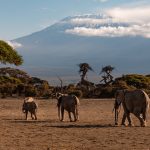
Most first-time itineraries build around two or three parks rather than one. A common pairing mixes a big-cat and migration destination with an elephant-and-mountain destination. The table below covers the most-visited options with real distances and current entry fees.
| Park | Distance from Nairobi | Drive Time | Non-Resident Daily Fee (2026, indicative) |
|---|---|---|---|
| Masai Mara National Reserve | approx. 270 km | 5-6 hrs (or approx. 45 min by air to Keekorok, Musiara, or Ol Kiombo airstrips) | USD 100/day (Jan-Jun), USD 200/day (Jul-Dec); child 9-17 USD 50 |
| Amboseli National Park | approx. 240 km | 4-5 hrs (or approx. 45 min by air) | USD 90/day |
| Lake Nakuru National Park | approx. 160 km | 2.5-3 hrs | USD 90/day |
| Tsavo East / Tsavo West | approx. 250-330 km | 4-6 hrs | USD 80/day |
Masai Mara fees run highest in the July-to-December peak, when the migration is in the reserve. Gate fees also change without much notice on both circuits. Confirm the current rate through your operator before finalizing a budget.
Packing and Culture Notes for Turkish Travelers
Pack in neutral colors (khaki, olive, tan) for game drives. Bright colors and white can spook wildlife or draw insects. Layers matter more than most travelers expect. Mornings on the Mara plains can sit near 10°C, while midday sun pushes well past 25°C. That is a wider swing than most Turkish coastal cities see day to day. Sunscreen, a hat, and insect repellent are non-negotiable. Most camps also enforce a strict weight limit, often around 15 kg, for small-plane transfers between parks. Kenyan social norms lean warm and conversational, not unlike Turkish hospitality customs. A greeting before a request is standard. Kenyans generally appreciate visitors who ask questions about local culture rather than staying quiet out of politeness. Photographing local people without asking first is considered rude in most communities, safari staff included.
Explorer Notes
A few details rarely make it into general Kenya guides but matter specifically for Turkish travelers. First, pack a physical adapter. Kenya uses UK-style Type G plugs at 240V, close to Turkey’s 220-230V but a different plug shape. A standard Turkish Type C or F plug will not fit without one. Second, Turkish Airlines flies direct into Nairobi, but its baggage allowance does not match safari-circuit weight limits. Check both before booking connecting light-aircraft transfers, since excess baggage fees on bush flights add up fast. Third, ask your operator in advance whether your driver-guide has worked with Turkish guests before. Guides who have hosted Turkish travelers regularly tend to know which stops, pacing, and meal adjustments actually matter. That smooths a trip more than any packing list can.
What to Read Next
- Applying for your eTA first? See our Kenya eTA and e-visa guide for safari travelers.
- Still choosing dates? Read our best time to visit Masai Mara month-by-month guide.
- Deciding between parks? Check our Masai Mara vs Amboseli guide.
FAQ
Do Turkish citizens need a visa to visit Kenya? Yes. Turkish passport holders need an approved eTA before travel. Apply online through Kenya’s official eTA portal, typically a few business days ahead of the trip.
How long is the flight from Istanbul to Nairobi? Turkish Airlines operates a direct route, with flight time running roughly 6 to 7 hours depending on winds and routing.
Is English enough to get by on a Kenya safari? Yes, for the safari circuit itself. English is the working language of lodges, guides, and parks. Turkish-speaking guides are available through some operators but should be requested in advance, not assumed.
What is the best month for Turkish travelers to visit Kenya? July through September brings the migration and peak pricing, overlapping with Turkish summer holidays. February and September offer similarly dry weather with smaller crowds and lower park fees.
Is Kenyan food difficult for Turkish travelers? Not usually. Grilled meat is common at lodges and will feel familiar to anyone used to Turkish kebab dishes. Spice levels run mild. Bring or ask for chili sauce if you prefer more heat, and confirm halal options directly with your operator.
Ready to turn these details into an actual itinerary? Check the Tour Packages page for current Kenya safari options and operator listings. Some include Turkish-speaking guide availability on request.