A guide says your camp sits in a conservancy, not the reserve. That single sentence changes almost everything about your safari day. It affects what time you can drive and whether you can leave the track. The rules also decide how many other vehicles you will see and who actually owns the land under your wheels. Most first-time visitors hear “conservancy” and “national reserve” used almost interchangeably in marketing copy. They arrive confused about why one camp allows night drives and the next does not.
Touring Insights built this guide to break down the real structural difference between a national reserve and a conservancy. It uses the Masai Mara ecosystem as the clearest example. Then it shows how the same split plays out elsewhere in the country. The goal is planning literacy. Understand the two models before you compare camps, and the rest of your booking decisions get much easier.
Who Owns and Runs a National Reserve
A national reserve in Kenya is public land. County government, or a county-appointed authority, manages it, not the national Kenya Wildlife Service. The Narok County Government manages the Masai Mara National Reserve, Kenya’s most visited wildlife area. A separate body, the Mara Triangle Management, runs its western Mara Triangle section, under contract to Trans Mara County.
Because a reserve is government land, its rules apply uniformly to every visitor and every operator. Regulation, not an individual camp, sets gate hours, vehicle limits per sighting, and where you can drive. You enter through a fixed gate, such as Sekenani, Talek, Oloolaimutia, or Musiara. The same entry ticket rules apply whether you arrive with a budget group tour or a private guide.
Who Owns and Runs a Conservancy
A conservancy is different in structure from the ground up. Most Mara conservancies, including Naboisho, Ol Kinyei, Mara North, and Olare Motorogi, sit on land owned by Maasai families. Landowners lease that land to a consortium of camps. Camps pay landowners a monthly land-lease fee in exchange for exclusive or semi-exclusive access. In return, landowners agree to remove livestock and cap the number of tourism beds per acre.
This lease structure is why conservancies can enforce stricter, camp-specific rules than a public reserve. A conservancy management committee sets its own vehicle-per-sighting limits, drive hours, and guest caps. That committee is made up of landowner representatives and camp operators. The same private or community lease model runs elsewhere in Kenya too. Ol Pejeta Conservancy in Laikipia follows it, as do the Lewa and Loisaba conservancies. So do the Amboseli-area community conservancies such as Kimana and Selenkay.
Access Rules: What You Can and Cannot Do
This is where travelers feel the difference most directly. National reserves restrict game drives to daylight hours only. They ban off-road driving except in a handful of specific circumstances. Reserve rules also rule out walking safaris and bush dining inside the boundary.
Conservancies typically allow all three. Standard conservancy activities include night game drives with a spotlight and controlled off-road driving. Guides use the latter to follow a hunt or a den of cubs. Guided walking safaris, bush breakfasts, and sundowners away from a vehicle are common too. Vehicle caps at a sighting are also stricter in most conservancies, often five vehicles or fewer. Reserve sightings, by contrast, can draw fifteen or more vehicles during peak migration weeks.
Entry Fees: Reserve vs Conservancy Compared
Fees differ by season, park, and conservancy. They are the single most common source of confusion for first-time visitors. The table below uses current published rates rather than average estimates. A stale figure from an old blog post can throw off an entire budget.
| Area | Fee Type | Non-Resident Adult Rate | Notes |
|---|---|---|---|
| Masai Mara National Reserve | Daily entry | \$100/day (Jan-Jun), \$200/day (Jul-Dec) | Child 9-17: \$50. Under 8 free. Ticket valid roughly 6am-6pm (about 12 hours) |
| Mara Triangle (reserve, western section) | Daily entry | Same as Masai Mara National Reserve | Separately managed by Mara Triangle Management |
| Nashulai Conservancy | Conservancy fee | Indicative \$60-80/day | Community-run conservancy, lower fee bracket than premium Mara conservancies |
| Naboisho, Ol Kinyei, Mara North, Olare Motorogi Conservancies | Conservancy fee | Indicative \$70-100 per person, per night | Bundled into camp rate at most properties, not always itemized separately |
| Amboseli National Park | Daily entry | \$90/day | KWS park, not a county reserve |
| Chyulu Hills National Park | Daily entry | \$40/day | KWS park bordering Amboseli ecosystem |
County authority sets and publishes reserve fees, which change on a fixed schedule. Conservancy fees work differently. Each conservancy’s own management committee sets its rate, so fees vary more. Camps often fold that fee into the nightly rate instead of billing it as a separate line item. Always ask your camp directly whether the conservancy fee is included or additional before you compare two quotes.
Crowding and Wildlife Density on the Ground
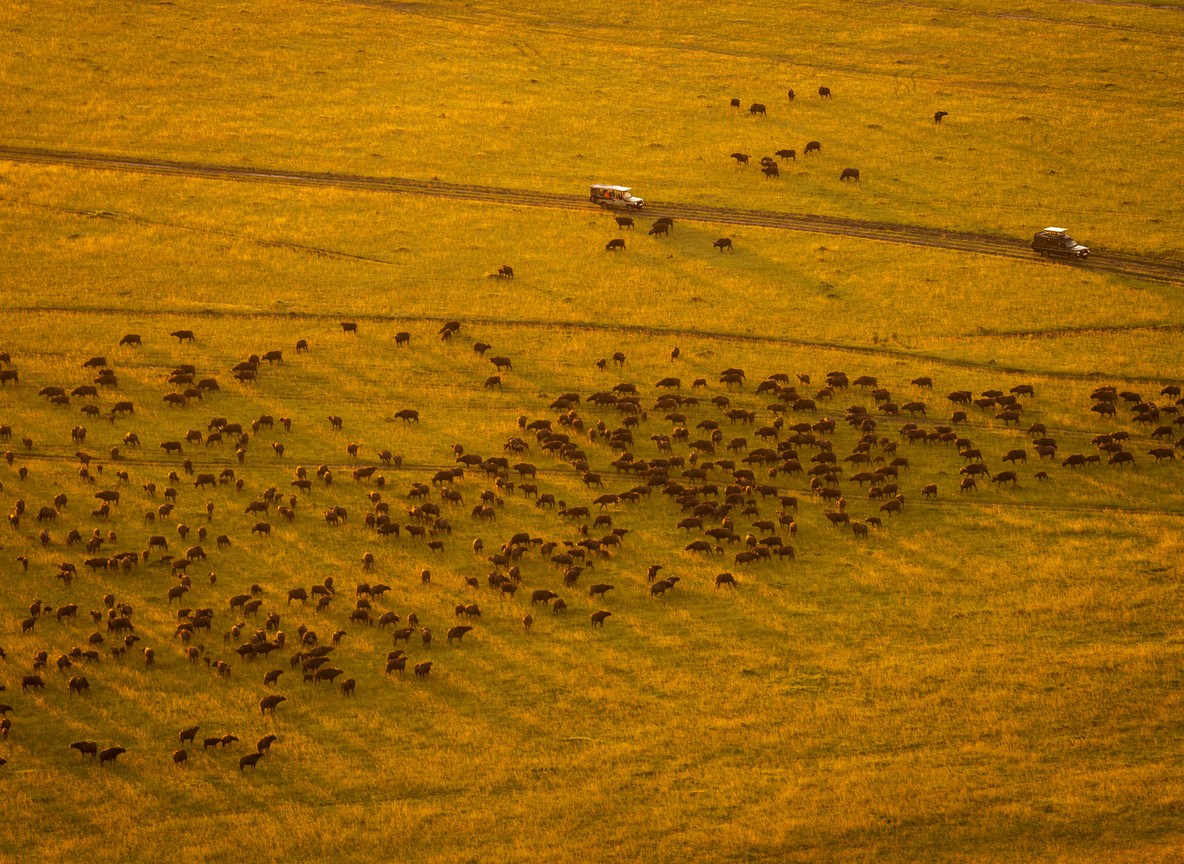
The vehicle cap difference shows up fastest during the July-to-October wildebeest migration. A river crossing inside the national reserve can draw a wall of vehicles, three or four rows deep. The same crossing viewed from a conservancy vantage usually means your vehicle and one or two others. A conservancy sighting of resident predators plays out the same way.
Wildlife density itself is not necessarily higher in a conservancy. It is the exposure that changes. Fewer vehicles per animal, guided walking access, and night drives combine to produce a slower, more immersive style of viewing. That is why conservancies command a premium rate over reserve-only itineraries.
Beyond the Mara: The Same Split Elsewhere in Kenya
The reserve-versus-conservancy divide is not unique to the Mara ecosystem. Amboseli National Park is a KWS-run national park bordered by community conservancies like Kimana and Selenkay. The same night-drive and walking-safari freedoms apply outside the park’s public boundary. In Laikipia, north of Mount Kenya, Ol Pejeta Conservancy and Lewa Wildlife Conservancy operate as private, for-profit conservation land. Both hold their own entry structures, distinct from any adjoining KWS park.
Tsavo East and Tsavo West National Parks charge \$80/day non-resident entry. Both follow the same public-land model as the Mara reserve: fixed hours, no off-road driving, no night drives. Understanding this one national-versus-private distinction helps too. Once you grasp it, you can read almost any Kenya safari itinerary and know what activities are actually available. That holds true regardless of which park or conservancy is named.
Which One Should You Choose?
Neither model is objectively better; they suit different priorities. Pick a reserve-based camp if your main goal is witnessing the migration river crossings. The crossing points sit inside reserve boundaries, which limits conservancy access to them. Choose a conservancy-based camp instead if you want night drives and walking safaris. Lower vehicle density and a slower daily pace come with it.
Many repeat visitors split a trip between both. A typical pattern is two or three nights in a conservancy for the walking safaris and quiet game drives. Two or three nights in a reserve-bordering camp follow, timed to migration season for the crossings. Ask your operator whether your chosen camps have same-day access rights into the reserve. Many conservancy camps do, which lets you enjoy both models without changing accommodation.
Explorer Notes
A few details that only become clear once you are on the ground. First, ask your camp exactly which gate and access road it uses. A conservancy camp near Talek Gate can reach the reserve in twenty minutes. One near Naboisho’s northern boundary may take over an hour. Second, guides enforce conservancy vehicle caps by radio protocol, not signage. A camp with a strong local reputation tends to respect the cap even when a sighting gets busy. Third, night drives require a spotlight permit specific to that conservancy. Confirm your camp actually holds one rather than assuming every conservancy stay includes them. Finally, check whether your camp bills the conservancy fee per stay or per night. A five-night stay at a per-night rate adds up fast. Some smaller conservancies still charge a flat per-stay fee instead.
What to Read Next
- Curious how conservancy camps compare to classic reserve lodges for a honeymoon trip? Read our Masai Mara honeymoon safari guide.
- Want the full breakdown of reserve entry pricing by season? See our Masai Mara park fees guide.
- Planning a Laikipia detour to a private conservancy? Check our Ol Pejeta Conservancy guide.
FAQ
Is a conservancy inside or outside the Masai Mara National Reserve? Conservancies sit outside the official reserve boundary, on adjoining land leased from Maasai landowners. Many border the reserve directly and offer same-day access into it.
Can I do a night game drive in the Masai Mara National Reserve itself? No. Night drives are prohibited inside the national reserve. They are only available in conservancies that hold a spotlight permit.
Are conservancy fees always separate from the camp rate? Not always. Some camps bundle the conservancy fee into the nightly rate, while others itemize it separately. Ask your camp directly before comparing quotes.
Do conservancies have the same wildlife as the national reserve? Yes. Wildlife moves freely between reserve and conservancy land since there are no internal fences. The difference is viewing conditions, not animal populations.
Which is better for a first-time safari, a reserve or a conservancy? Neither is universally better. Reserves suit travelers focused on migration river crossings; conservancies suit those who want night drives, walking safaris, and fewer vehicles per sighting.
Understanding this one distinction changes how you read every camp listing and itinerary you compare next. Visit the Tour Packages page to see itineraries that combine both models. Or ask a partner operator which conservancy-reserve pairing fits the dates you have in mind.