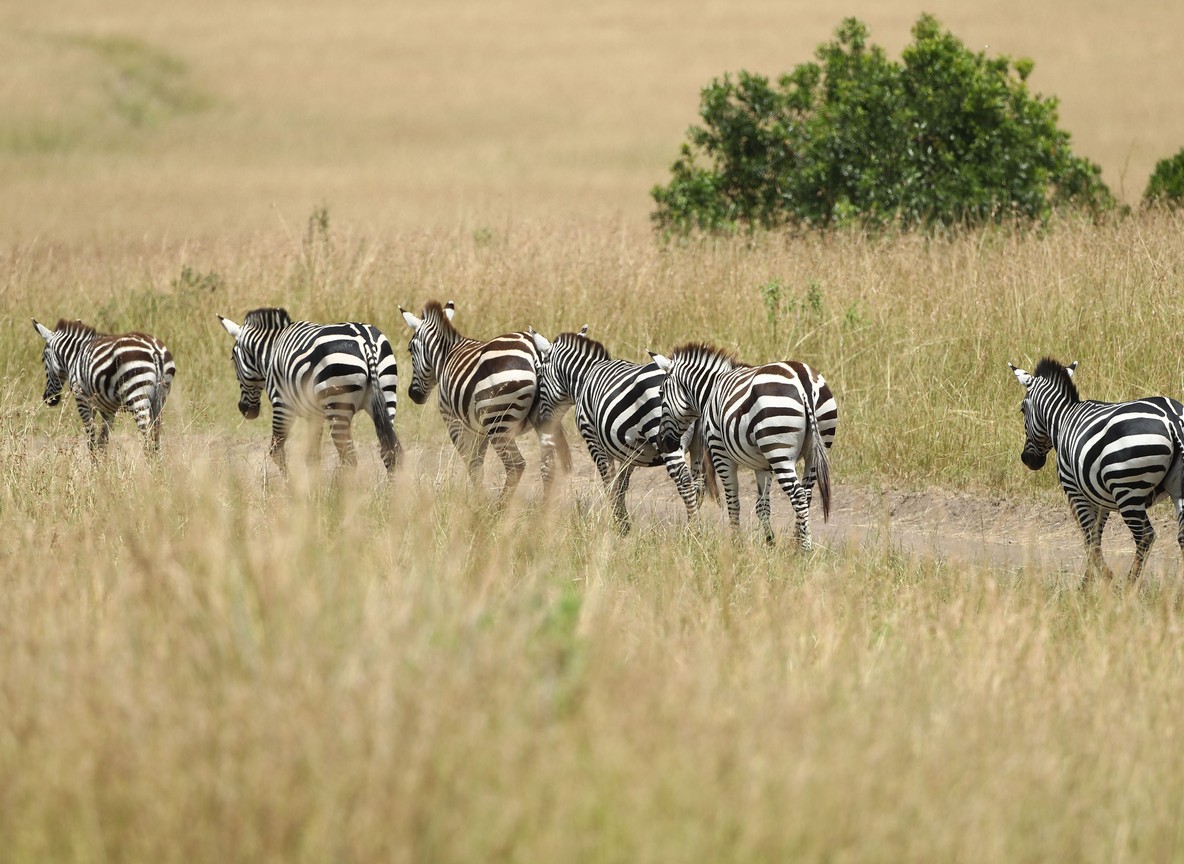
Kenya’s safari market is not getting more expensive across the board. It is splitting into two distinct tiers, and the middle ground is thinning out. Camps at the budget end are holding or even trimming rates to fill beds. Camps at the top end are pushing past $4,000 per person per night. Touring Insights looked at where the money is actually going in 2026, and what that split means for how you should plan and book your trip.
This is not a story about safaris getting pricier everywhere. It is a story about two different products aimed at two different travelers, with less overlap between them than there was five years ago.
Why Kenya’s Safari Market Is Bifurcating in 2026
Kenya recorded roughly 2.7 million international visitors in 2025, alongside about 5.2 million domestic trips, and the Ministry of Tourism has set a target of 5 million domestic visitors by 2027. That domestic growth matters here. Domestic and regional travelers overwhelmingly book budget and mid-range camps, while long-haul international visitors, particularly from the US and Europe, increasingly book the top tier.
Two customer bases with different budgets and different expectations are now pulling camp operators in opposite directions. Operators serving domestic and value-conscious travelers keep prices flat and cut costs elsewhere. Operators chasing high-net-worth international guests keep adding private plunge pools, dedicated guides, and fly-in-only access, and price accordingly.
The result is a market with a deep budget end, a thin and shrinking mid-range, and a fast-growing luxury tier at the top.
The Four Price Tiers, With Real Numbers
Indicative per-person rates below are 2026 planning ranges, not fixed prices. Confirm current rates directly with each camp or a partner operator before booking.
| Tier | Typical rate (per person/night, all-inclusive) | What’s included | Example setting |
|---|---|---|---|
| Mobile camping / budget | approx. $250-350 | Shared canvas tents, set meals, shared game drive vehicle | Public reserve campsites, Mara Triangle fringe |
| Mid-range camp | approx. $600-950 | En-suite tented rooms, full board, shared game drives | Talek and Sekenani areas, Masai Mara National Reserve |
| Luxury fly-in | approx. $1,500-3,000 | Private vehicle option, airstrip transfers, high staff ratio | Mara North Conservancy, Naboisho Conservancy |
| Ultra-luxury | $4,000+ | Private butler, exclusive-use suites, bespoke experiences | Mara Triangle-adjacent private conservancies |
What’s Disappearing From the Middle
The mid-range tier is where the squeeze is most visible. Five years ago, a solid en-suite tented camp with shared game drives sold for $400-600 per person per night. In 2026, that same style of camp is increasingly priced closer to $700-950, pushed up by rising conservancy fees, fuel costs, and staff wages, without adding the private-vehicle extras that justify luxury pricing.
Some formerly mid-range camps have responded by repositioning upward, adding private guiding and smaller footprints to justify a luxury price. Others have gone the other direction, stripping back to a simpler, budget-camping model to compete on price. Fewer camps are choosing to stay exactly where they were.
If you are planning around a $500-700 per person nightly budget in 2026, expect a narrower shortlist of camps than you would have found in 2021, and expect to book earlier to catch the camps still holding that band.
Budget Safari: Where the Value Actually Is
Budget does not mean a bad safari. It means a shared vehicle, a simpler tent or room, and a set menu instead of a chef-led one. The wildlife viewing itself, especially inside the Masai Mara National Reserve, is largely the same whether your tent cost $250 or $2,500 a night, since animals do not check room rates.
Public campsites inside the Mara Triangle and around the Sekenani and Talek gates offer the cheapest legal camping option, usually $30-50 per person per night for the site fee alone, before a mobile camping operator’s package rate. Reserve conservation fees still apply on top: the Masai Mara National Reserve charges $80-100 per person per day depending on the specific gate and county authority.
Fly from Nairobi’s Wilson Airport to a shared-use airstrip like Keekorok to cut the 5-6 hour, 240-270 km road transfer down to about 45 minutes, which matters more on a tight budget trip since it frees up a full travel day.
Luxury Safari: Where the Money Actually Goes
At the top of the market, price buys access and exclusivity more than it buys better sightings. Private conservancies bordering the Masai Mara, such as Mara North Conservancy and Naboisho Conservancy, cap vehicle density and guest numbers by contract. Camps here, including Angama Mara on the Oloololo Escarpment and Mahali Mzuri in Motorogi Conservancy, typically run under 20 rooms total.
That low density is the actual product. A private vehicle means you set your own schedule instead of a shared group’s. Off-road driving, permitted in most conservancies but restricted in the national reserve itself, gets you closer to a sighting without a queue of other vehicles. Night game drives, banned inside the reserve, are allowed on many conservancy leases.
Conservancy bed-night fees, usually $80-150 per person per night on top of the room rate, fund the same wildlife corridors that keep the reserve’s ecosystem intact, so the premium is not purely cosmetic.
Comparing the Two Trips Side by Side
| Factor | Budget mobile camping | Luxury fly-in |
|---|---|---|
| Typical group vehicle | Shared, 6-7 guests | Private, 1 party per vehicle |
| Road transfer Nairobi to Mara | 5-6 hrs / 240-270 km by road | Skipped; 45-min flight from Wilson Airport |
| Night drives | Not permitted in most areas | Permitted on many conservancy leases |
| Typical room count per camp | 20-40+ | Under 20 |
| Reserve/conservancy fee | $80-100 pp/day (reserve) | $80-150 pp/night (conservancy, added to reserve fee) |
How to Pick the Right Tier for Your Trip
Match the tier to what you actually want from the days, not just the nights. A first-time visitor mainly chasing the Big Five inside the national reserve gets nearly identical sightings at the budget and luxury ends, since both use the same reserve roads and gates. The difference shows up in comfort, crowding at sightings, and how early you have to wake up to beat other vehicles.
A returning visitor who has already seen the headline wildlife often gets more value from the luxury tier’s private conservancies, where guides can go off-road, track a specific pride, or stay out past the reserve’s game-drive hours. That kind of flexibility is the actual product luxury pricing buys, not a better camp bed.
Mixing tiers across one trip works well and is increasingly common. Spend 2-3 nights in a budget or mid-range camp inside the reserve for the volume of wildlife, then finish with 2 nights in a conservancy camp for the quieter, private-vehicle experience, without paying luxury rates for the entire stay.
Explorer Notes
Ask directly whether a camp’s advertised rate includes conservancy bed-night fees or adds them separately at checkout. Some mid-range camps quote a headline rate that looks competitive with luxury camps, then add $80-150 per person per night in fees once you book, closing the gap you thought existed.
Check vehicle-sharing policy before booking a mid-range camp, not just room type. Some camps sell “en-suite luxury” rooms but still run shared game drive vehicles with unrelated guests, which is a budget-tier experience wearing a luxury room rate.
If your dates fall during the July-October migration season, book mobile camping sites at least 4-6 months out. Budget campsites inside the Mara Triangle sell out early because there are only a handful of legal public sites, unlike the luxury tier where new conservancy camps keep adding capacity.
Frequently Asked Questions
Is a budget safari in Kenya actually worse for wildlife viewing? No. Inside the Masai Mara National Reserve, budget and luxury vehicles use the same roads and see the same animals. The difference is comfort, crowding at popular sightings, and whether you share a vehicle with other guests.
Why is the mid-range tier shrinking in 2026? Rising fuel, staffing, and conservancy fee costs pushed mid-range camp rates up without adding the private-vehicle extras that justify luxury pricing, so some camps moved up-market while others repositioned as budget camping.
Do luxury camps guarantee better wildlife sightings than budget camps? Not directly. What luxury pricing guarantees is a private vehicle, flexible timing, and access to conservancy land with lower vehicle density, which often improves the quality of a sighting even if the raw number of animals seen is similar.
Can I mix budget and luxury camps on one Kenya trip? Yes, and it is increasingly common. A typical split is 2-3 nights in a reserve-adjacent mid-range or budget camp, then 2 nights in a private conservancy camp to finish the trip.
How far ahead should I book a budget mobile camping site in the Masai Mara? Plan for 4-6 months ahead for July-October migration season dates, since legal public campsites inside the Mara Triangle are limited in number and fill early.
Ready to figure out which tier fits your dates and budget? Visit our Tour Packages page, or reach out to a partner operator directly for a current quote across both ends of the market before you commit.
What to Read Next
- Comparing named camps side by side? See our budget camp vs luxury lodge in Amboseli guide.
- Planning costs for a specific region? Read our northern Kenya safari cost guide.
- Want a broader money-planning walkthrough? Check our Kenya safari money guide.