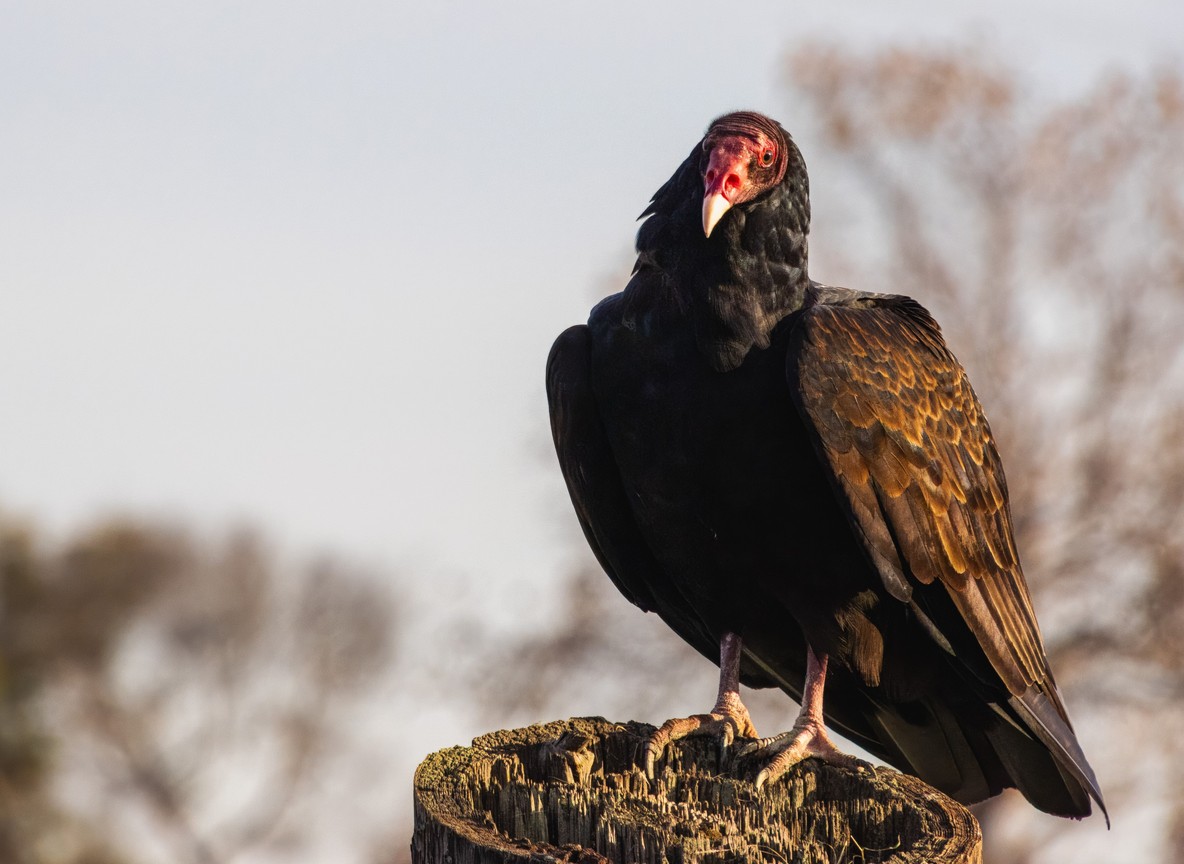
A guide at Cottar’s 1920s Camp reads a sky full of vultures the way most people read a map. Fewer birds circling this year than five years ago is not a small detail to him. It is a warning sign for the whole ecosystem. Cottar’s Safaris has partnered with the Kenya Bird of Prey Trust (KBoPT) on a raptor conservation project based in Olderkesi Conservancy, the private reserve the camp leases from the local Maasai community on the Mara’s southeast border. Touring Insights explains what the project does, why raptor numbers matter to your safari, and how to see the work firsthand.
Why a Safari Camp Built a Raptor Project
Cottar’s 1920s Camp sits inside Olderkesi Conservancy, the only camp permitted there, on land the Cottar family leases directly from Maasai landowners. The conservancy borders the Masai Mara National Reserve to the north and sits near the Tanzania line close to the Serengeti to the south. That location puts guests near some of the highest densities of eagles, vultures, and other birds of prey left in East Africa. A 2025 BBC Wildlife Magazine feature followed writer Mike Unwin through a week at Cottar’s, tracking monitored nests with head guide Doug Nagi and the KBoPT field team. The piece reported that raptor populations across Kenya have collapsed, citing research showing steep declines across most species over four decades. That backdrop is why Cottar’s built a dedicated raptor programme rather than treating birds of prey as a minor sighting on a game drive.
The Numbers Behind the Decline
Kenya’s raptors struggle most outside protected reserves. Long-term surveys cited by raptor researchers found that most of the country’s raptor species have declined by at least three-quarters over roughly 40 years, with sharper losses on community and farmland outside reserve boundaries. Poisoning drives most of that loss. A herder poisons a carcass to kill a lion or hyena blamed for taking livestock, and every vulture that feeds on it dies within minutes. Poachers use the same tactic to silence the vultures that would otherwise draw rangers to an illegal elephant or rhino kill. Habitat loss and power line collisions add further pressure, especially as fencing and cultivation spread across the wider Mara ecosystem.
What the Raptor Project Actually Does
Cottar’s funds and hosts a half-day Raptor Adventure Centre experience, run in partnership with KBoPT and open to guests year-round. A portion of the fee goes directly to the trust’s field budget. Guests join the KBoPT team and a Cottar’s guide to visit active nest sites, watch tagging and rehabilitation work, and learn how researchers track individual eagles and vultures by satellite. The programme covers species guests are likely to see on a normal game drive too, including martial eagles, bateleurs, and several vulture species that nest or roost in the conservancy’s riverine trees. It runs as a genuine field visit rather than a staged photo stop, so timing depends on what the KBoPT team is actively monitoring that week.
Beyond the guest-facing visit, the partnership funds routine work that rarely gets seen by anyone outside the field team. That includes fitting satellite tags to track individual birds, checking known nests for breeding success each season, and responding quickly when a poisoning incident is reported nearby. Revenue from guest stays and the Raptor Adventure Centre fee helps cover that ongoing work, which is a large part of why Cottar’s frames the programme as conservation funding first and a guest activity second.
Raptors You Might See Around Olderkesi and the Mara
| Species | IUCN status | Typical Olderkesi/Mara habitat | Why it matters |
|---|---|---|---|
| Ruppell’s vulture | Critically Endangered | Thermals over open plains | Clears carcasses fast, limits disease spread |
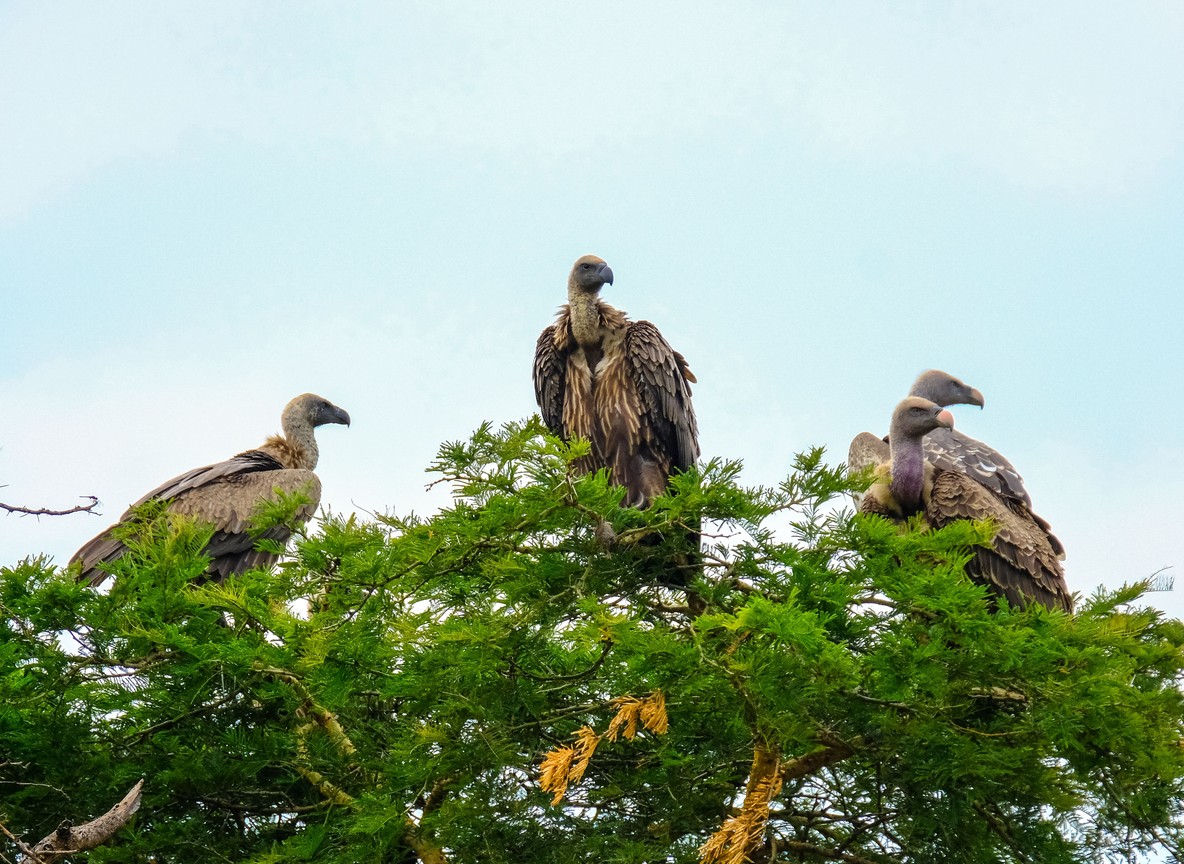
| White-backed vulture | Critically Endangered | Riverine trees, kill sites | Most numerous vulture on a typical drive |
| White-headed vulture | Critically Endangered | Woodland edges | Solitary nester, sensitive to disturbance |
| Lappet-faced vulture | Endangered | Open plains, usually alone | Strong enough to open tough carcass hide |
| Martial eagle | Endangered | Tall riverine trees near water | Africa’s largest eagle, apex bird predator |
| Bateleur | Endangered | Low soaring over savanna | Distinctive tailless flight, easy to identify |
| Tawny eagle | Vulnerable | Open grassland | Common at kill sites alongside vultures |
Who Is the Kenya Bird of Prey Trust
KBoPT is a Kenyan nonprofit focused on rescuing, rehabilitating, and releasing injured eagles, owls, and vultures, alongside long-term field research on wild populations. Its teams run rehabilitation facilities and field monitoring work across several Kenyan ecosystems, not just the Mara, and they partner with multiple conservancies and camps for funding and access. The Olderkesi partnership with Cottar’s gives the trust a dedicated field base on the Mara’s southeast edge, close to a stretch of the ecosystem that sees far fewer researchers and tourists than the reserve’s central and western sections. That relative quiet is part of what makes Olderkesi useful for undisturbed nest monitoring.
Why This Matters Beyond a Good Photo
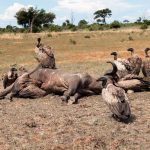
Vultures do the ecosystem’s clean-up work. A group of white-backed vultures can strip a carcass in under an hour, faster than jackals or hyenas working alone, and that speed limits how long disease lingers at a kill site. Guides also use circling vultures as a genuine tracking tool. A tight, low kettle of birds dropping toward one spot usually means a fresh kill nearby, often with lions or hyenas still feeding. Fewer vultures means guides find fewer sightings this way, so the decline is not an abstract conservation talking point. It changes what you actually see on a game drive.
Getting to Cottar’s 1920s Camp and Olderkesi Conservancy
| Detail | Figure |
|---|---|
| Location | Olderkesi Conservancy, southeast Mara border, near the Tanzania/Serengeti line |
| Masai Mara National Reserve size | approx. 1,510 km2 |
| Olderkesi Conservancy size | approx. 30-80 km2 (sources vary; one of the smallest Mara conservancies) |
| Distance from Nairobi by road | approx. 270 km |
| Nairobi to camp drive time | approx. 5 hours |
| Flight time, Nairobi Wilson to Cottar’s Airstrip | approx. 35-45 minutes |
| Drive from Cottar’s Airstrip to camp | approx. 15 minutes |
| Alternative airstrip | Keekorok (approx. 1.5-hour drive to camp) |
| Raptor Adventure Centre visit | half-day, guests only, indicative add-on fee applies |
Fees for the Raptor Adventure Centre visit are set by Cottar’s and KBoPT directly and shift with season, so confirm the current rate when you book. The conservancy fee that funds Olderkesi’s rangers and habitat protection is bundled into most Cottar’s stay rates rather than charged separately. That is worth asking about when you compare camp rates across the wider Mara.
Explorer Notes
Ask for a guide briefed on the raptor programme specifically when you book, since not every guide runs the KBoPT nest visits on the same day. Midday sun over open ground often gives the best window for spotting large kettles of vultures riding thermals, so a game drive does not need to start at dawn to catch raptor activity. Martial eagles and bateleurs favor the tall riverine trees along the seasonal watercourses that cut through Olderkesi, and a nest tends to get reused season after season if the tree stays undisturbed. Bring binoculars in the 8×42 range, since raptors often perch well before a vehicle can get close enough for a clear look with the naked eye. If you want to see tagging or rehabilitation work firsthand, ask well ahead of your stay, since the KBoPT field schedule depends on which birds are due for a health check that week.
What to Read Next
- Best Time to Visit Masai Mara: A Month-by-Month Guide
- Birding in Kenya: A Safari Guide
- Cottar’s 1920s Safari Camp, Olderkesi Conservancy
FAQ
What is Cottar’s Raptor Project? It is a partnership between Cottar’s Safaris and the Kenya Bird of Prey Trust based in Olderkesi Conservancy. The programme funds field research and offers guests a half-day Raptor Adventure Centre visit to see nest monitoring and rehabilitation work firsthand.
Why are Kenya’s raptors declining? Poisoning is the leading cause, both retaliatory poisoning aimed at predators and deliberate poisoning of poached carcasses to kill the vultures that would expose them. Habitat loss and power line collisions add further pressure outside protected areas.
Can any safari guest visit the Raptor Adventure Centre? Yes. Guests staying at Cottar’s 1920s Camp can book the half-day experience directly through the camp, though it depends on the KBoPT field team’s active monitoring schedule that week.
Do vultures really help guides find lion sightings? Yes. Guides read circling and descending vultures as a signal of a fresh kill nearby, often with predators still feeding, which makes bird activity a genuine tracking tool on a game drive.
How do I get to Cottar’s 1920s Camp? Fly into Cottar’s private airstrip, about 35 to 45 minutes from Nairobi Wilson Airport, then drive roughly 15 minutes to camp. By road, the trip from Nairobi takes about 5 hours.
A raptor-rich sky over Olderkesi is a working sign that the conservancy’s approach is paying off, not just a striking photo. Check the Tour Packages page for Mara itineraries that route through conservancy-based camps like Cottar’s, and ask your operator directly whether a stay includes a raptor project visit.