The misconception that a Kenya safari requires peak physical fitness stops real travellers from having extraordinary experiences. It should not. Kenya has camps with accessible room infrastructure, vehicles that can be adapted for wheelchair users, and parks where the terrain supports full game viewing without any compromise on the wildlife quality.
This guide covers what is genuinely achievable, what requires advance planning, and the specific questions to ask when building an accessible Kenya itinerary.
Understanding Different Mobility Needs
“Accessible safari” covers a wide range of requirements. A visitor using a full manual wheelchair has completely different needs from someone with limited walking capacity who can transfer from a seat. A client recovering from surgery requires different camp infrastructure from someone managing a long-term progressive mobility condition. An elderly traveller who manages well on even ground but cannot handle steps needs different facilities from a full-time wheelchair user.
| Mobility Category | Typical Needs |
|---|---|
| Wheelchair user (full time) | Ramped paths, roll-in shower or shower bench, wide doorways, adapted vehicle with swing-arm transfer seat |
| Limited mobility with walking aid | Minimal steps, handrails, firm ground paths, step assistance for vehicle boarding |
| Reduced stamina or elderly traveller | Lower-activity scheduling, air-conditioned transfers, camps with medical access, pacing flexibility |
The most important element of accessible safari planning is a specific, honest conversation before booking. Camp selection, vehicle specification, and activity scheduling all depend on understanding your actual mobility situation — not a general category.
Vehicle Adaptations for Accessible Safari
Standard Kenya safari vehicles are elevated Land Cruisers or Land Rovers with pop-top roofs for standing game viewing. For guests with mobility limitations, several adaptations are available:
Swing-arm transfer seat: A hinged seat that folds out from the vehicle door, allowing a wheelchair user to transfer to the vehicle seat without standing. The wheelchair stows in the back or on a roof rack.
Step platforms: Removable platforms that reduce the height of the step from ground to vehicle floor. These assist guests who can step up with support but cannot manage the standard 60-centimetre vehicle step height.
Reclining position: For guests who cannot maintain an upright seated position for extended drives, adjustable recline and additional cushioning can be arranged on request.
Private vehicle booking: Travelling in a private vehicle (rather than sharing with other guests) provides significantly more interior space, flexible positioning, and the ability to stop and reposition without group pressure. This is the standard recommendation for accessible safari guests.
Vehicle adaptations require 30 to 60 days advance notice depending on the modification. This is not a last-minute arrangement — it should be the first conversation in any accessible safari planning process.
The Most Accessible Parks by Terrain
The terrain of a national park directly affects what a mobility-limited visitor can experience from a vehicle.
Amboseli National Park
Amboseli is the strongest recommendation for accessible safari visitors, particularly for first-timers. The park sits on flat alluvial plains at the base of Kilimanjaro. Tracks are compacted clay and laterite, relatively smooth, and wide enough for vehicles to navigate without off-road detours. All of Amboseli’s core wildlife — elephant herds, wildebeest, zebra, cheetah — is visible from established tracks without leaving the vehicle.
The Kilimanjaro backdrop means a guest who spends the entire trip in a vehicle has access to one of Kenya’s most iconic photographic experiences. For accessible safari guests, Amboseli removes most of the terrain uncertainty that complicates other parks.
Samburu National Reserve
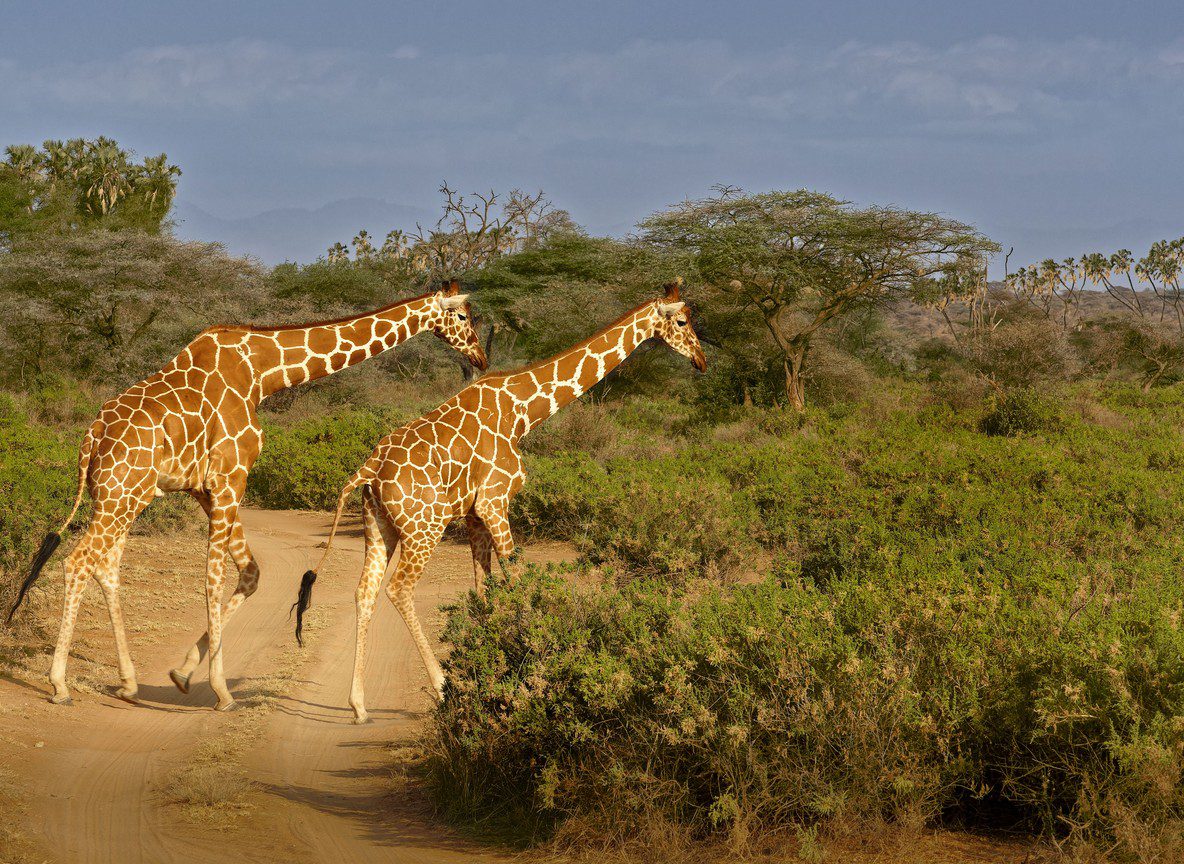
The core game-viewing area along the Ewaso Nyiro River is accessible for most mobility categories. The riverbank tracks are well-maintained, flat, and produce consistently strong wildlife sightings: Samburu Special Five species (Grevy’s zebra, reticulated giraffe, gerenuk, Somali ostrich, beisa oryx) are reliably seen from these tracks. Some wildlife-rich hill areas in the reserve require rougher tracks that are not appropriate for modified vehicles.
Lake Nakuru National Park
Tarmac access roads and a relatively accessible lake circuit make Nakuru manageable. Flamingo viewing does not require leaving the vehicle. The terrain is more varied than Amboseli but manageable for most mobility categories.
Masai Mara National Reserve
Conditions vary. The core tracks in the Mara Triangle and along the Mara River are well-used and relatively firm in dry conditions. The challenge is seasonal: July to September peak-season tracks can be wet and degraded, and the reserve’s larger area means some wildlife areas require rougher driving. Mara accessibility should be assessed for each visitor’s specific situation and travel timing.
Accessible Camps and Lodges
Most luxury tented camps in Kenya are built on uneven terrain with wooden boardwalks, steps between tent levels, and no adapted bathroom facilities. However, a number of lodge-style properties have built accessible room infrastructure.
| Camp / Lodge | Park | Accessible Features |
|---|---|---|
| Ol Tukai Lodge | Amboseli | Ground-floor accessible rooms, ramped paths, adapted bathrooms |
| Kibo Safari Camp | Amboseli | Firm ground paths, accessible tent platforms |
| Fairmont Mount Kenya Safari Club | Laikipia | Full hotel infrastructure, adapted rooms, elevator in main building |
| Governors’ Camp | Masai Mara | Ground-floor units, river-view accessible positioning |
| Samburu Intrepids | Samburu | Ground-level accessible tents with firm path connections |
This list reflects documented features as of 2026. Accessibility features change with renovation cycles, and availability of specific accessible rooms should be verified directly with each property before confirming a booking.
Game Drive Pacing for Accessible Visitors
Standard Kenya game drives run three to four hours in the morning and two to three hours in the afternoon. For visitors with reduced stamina or those for whom prolonged sitting is uncomfortable, modified drive schedules are manageable:
- Shorter morning drives of two hours followed by an extended camp rest
- Single daily drive rather than morning and afternoon
- Additional vehicle stops at scenic viewpoints for stretching and repositioning
- Private vehicle stops on demand without group timing pressure
Wildlife viewing does not require constant vehicle movement. Positioning the vehicle at an active waterhole, a pride of lion on a kill, or an elephant waterhole crossing and waiting produces equally strong sightings with less driving than a circuit route.
Medical Planning for Accessible Safari
Remote safari camps are not hospitals. The standard of medical access across Kenya’s parks varies from basic first aid to airstrip access for emergency evacuation.
Flying Doctors membership (AMREF): Emergency evacuation by air throughout Kenya, approximately USD 25 per year per person. This is standard advice for all safari guests and particularly important for elderly travellers and those with pre-existing conditions.
Camp-to-airstrip distance: Ask specifically about the driving time from your camp to the nearest emergency-capable airstrip. Amboseli’s Oltukai airstrip is five minutes from the main lodges. Some remote northern Kenya camps are 45 minutes from any airstrip.
Medications and equipment: Most safari camps have limited pharmacy access. Carry all prescription medications for the full trip duration plus a three-day emergency supply.
Planning Your Accessible Kenya Safari
The practical conclusion from all of this is straightforward: an accessible Kenya safari is achievable, and the wildlife quality available to mobility-limited visitors is the same as for any other guest. The adaptation is in the logistics, not in the experience.
For the destination-specific planning on Amboseli — the most accessible major Kenya park — the Tourinsights Amboseli guide covers terrain, camps, and wildlife conditions in full. For Samburu, the Tourinsights Samburu guide covers the Special Five and riverbank accessibility in detail.
Have questions about this itinerary or destination? Get answers from a safari specialist before you commit.
Inquire More