

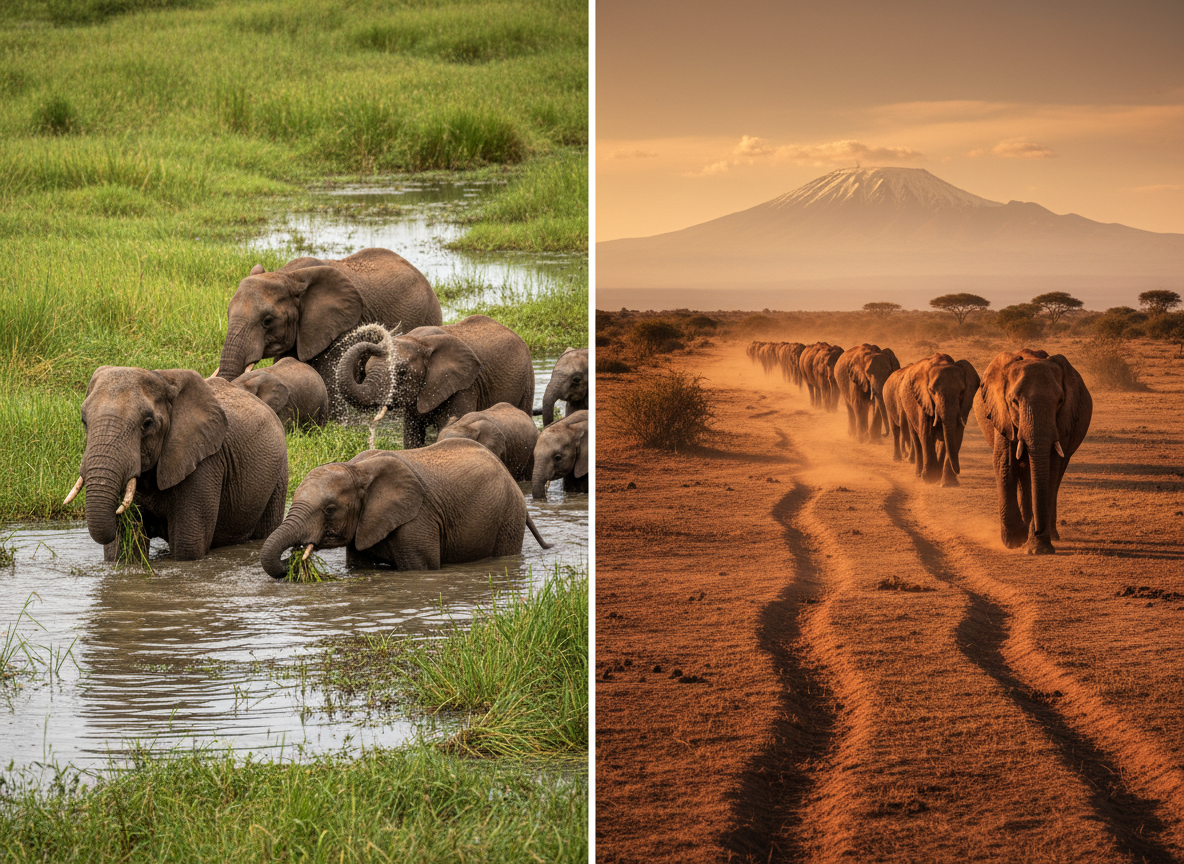
Where to see elephants in Amboseli is one of the easiest planning questions to answer in broad terms and one of the hardest to answer in a shallow way. The simple answer is “near the swamps.” The better answer is that elephant viewing in Amboseli depends on how the swamps, open plains, and daily movement patterns connect.
The ecosystem guidance from Amboseli.org identifies Longinye and Ol Tukai swamps as critical habitats fed by underground water from Kilimanjaro. These wetland zones support elephants through dry periods and help explain why Amboseli remains so dependable for elephant sightings. The wider park landscape of grasslands, swamps, and lakebed edges then creates the movement routes that make elephant viewing feel so dynamic.
That means the right question is not only where elephants are. It is where they are likely to be feeding, moving, or crossing in the conditions you are driving through.
The Short Answer
The best places to see elephants in Amboseli are usually:
- around the swamps
- along wetland edges
- on open plains close to feeding or movement corridors
- in the early morning and late afternoon when activity feels most readable
If the guest wants consistent elephant viewing, the guide should usually build around:
- swamp access
- early starts
- a camp or lodge with efficient park entry
That is the practical backbone of elephant safari planning in Amboseli.
Why the Swamps Matter So Much
The swamps are the heart of elephant reliability in Amboseli.
Why:
- they hold water and green forage through dry periods
- they attract repeated elephant movement
- they create some of the park’s most consistent wildlife viewing zones
Amboseli’s elephant reputation is tied directly to these wetland systems. Without them, the park would still have elephants. With them, it becomes one of Kenya’s most dependable elephant destinations.
Ol Tukai and Nearby Wetland Zones
The Ol Tukai area is one of the best-known elephant zones in the park.
Why:
- it is closely tied to wetland habitat
- the area is associated with iconic elephant viewing and photography
- the landscape often gives strong visual separation between herds and background
This is one reason Ol Tukai Lodge and the surrounding zone appear so often in elephant-focused planning. Even if you are not staying there, the area remains important for elephant game drives.
Longinye and Other Swamp Edges
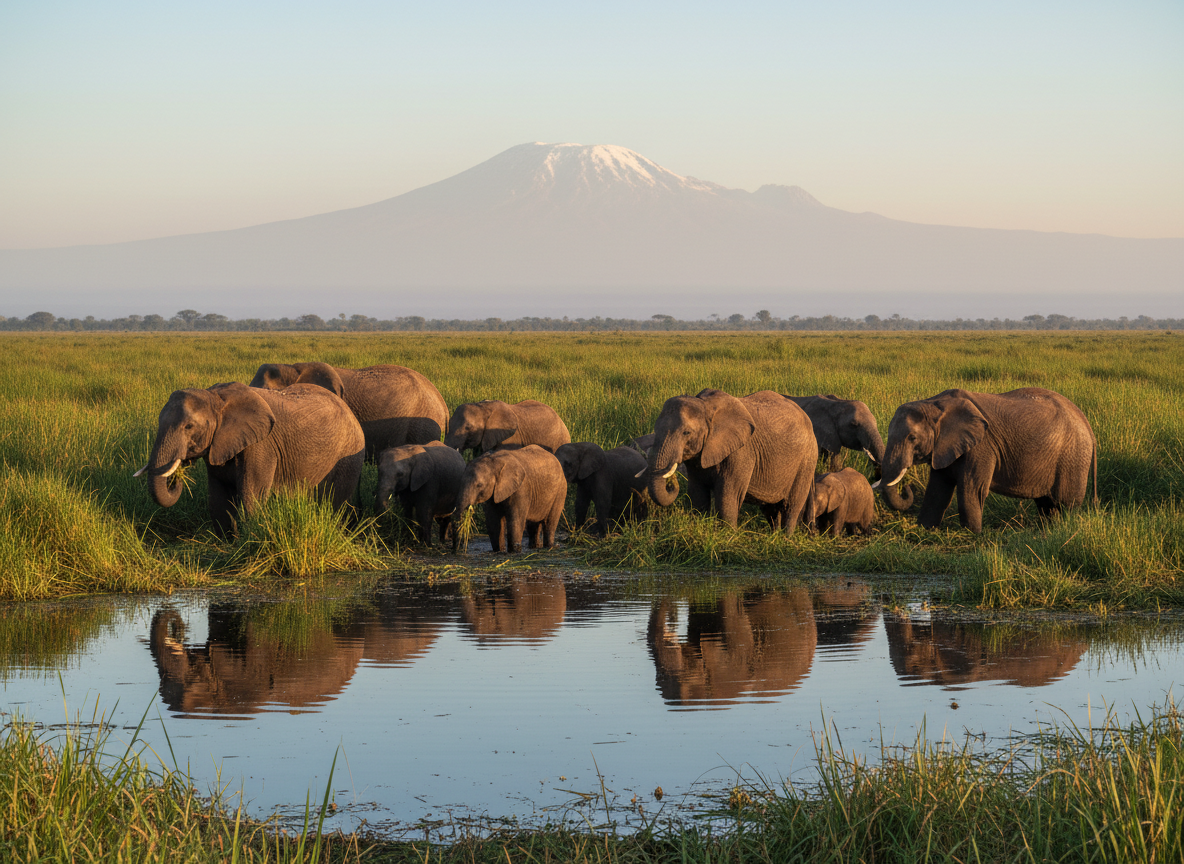
The wider swamp system matters, not only one named lodge area.
Why swamp edges are so useful:
- elephants come to feed and cool off
- family groups can remain in view for longer periods
- the contrast between green swamps and open dusty plains helps guides read movement
For travellers on elephant-first tours and safaris, swamp circuits are often where the day begins to feel productive very quickly.
Open Plains: Why They Matter Too
A lot of travellers think only about the wetland itself. But the open plains are part of the elephant story too.
Why:
- elephants move between richer feeding areas and open country
- the plains often create the classic photographic approach lines
- large groups can be easier to appreciate when you see them traveling, not only standing in vegetation
This is also where Amboseli’s photography style becomes special. Elephants in motion on open ground often produce the images people remember most.
Best Time of Day to See Elephants
The best time is usually:
- early morning
- late afternoon
Why:
- temperatures are lower
- animal movement is often more readable
- photography is better
- Kilimanjaro may join the scene at dawn
Midday can still produce sightings, especially around wetland zones, but the emotional quality of the sighting is often best at the edges of the day.
Dry Season vs Greener Season for Elephant Locations
Dry-season elephant viewing often feels more concentrated because permanent water matters more.
Greener-season elephant viewing can feel:
- more spread out
- more atmospheric
- richer in scenery
This means:
- dry season often wins on efficiency
- greener periods can still win on mood
Trunktrails Safaris plans elephant routes differently depending on season, but the swamps remain the central logic either way.
Which Parts of the Park Work Best for Photographers
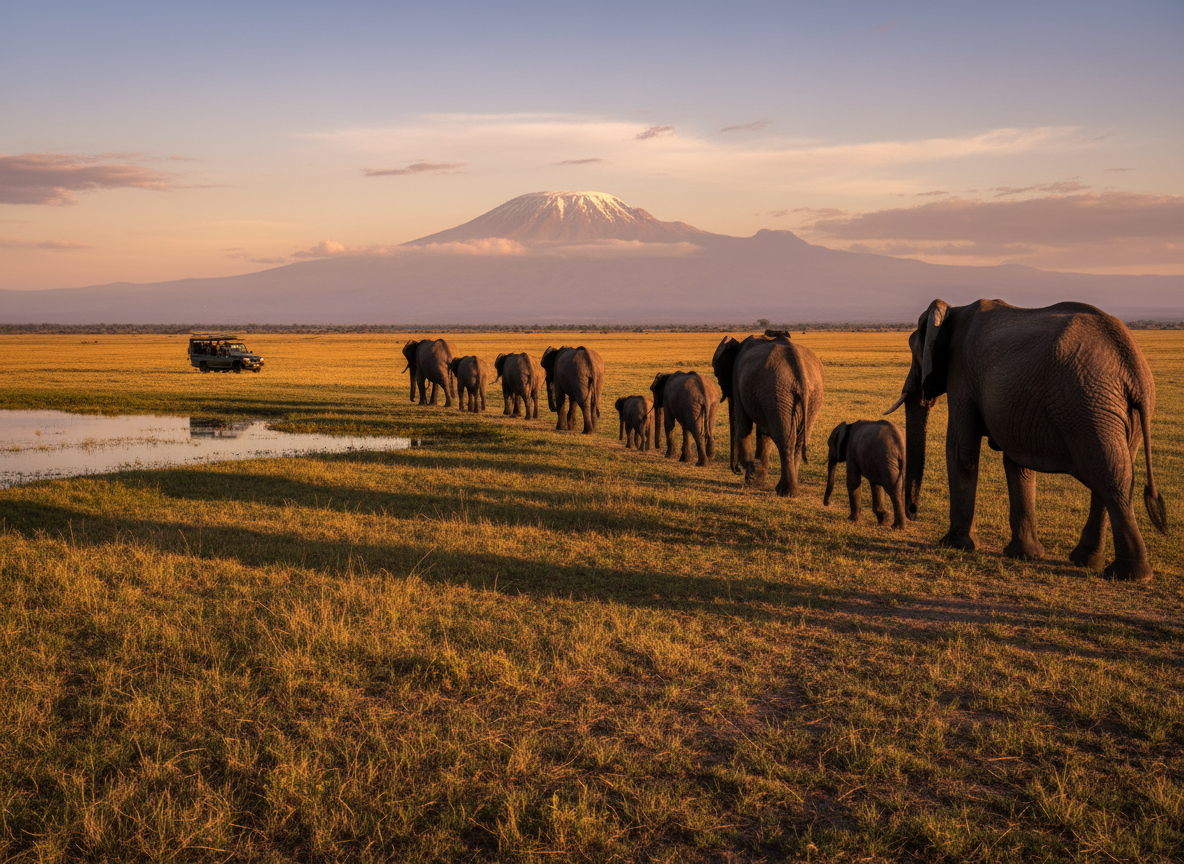
For photography, the best elephant areas are usually those that combine:
- open approach lines
- enough space between the vehicle and herd
- background potential
- low-angle light
That is why the same zones often repeat in photo planning:
- swamp edges
- Ol Tukai area
- open plains with mountain potential
This is not because those are the only good places. It is because they repeatedly produce the best visual structure.
Can You See Elephants Near Camp Too-
Sometimes yes, especially in certain conservancy-side or park-edge stays.
Properties such as Tawi Lodge specifically describe elephants moving close to camp, but travellers should still think of the game drive as the main elephant-viewing platform.
The value of near-camp sightings is that they extend the feeling of being in elephant country. They do not replace time in the park.
How Many Drives Do You Need for Good Elephant Sightings-
In Amboseli, even a short safari can produce very satisfying elephant viewing.
For most travellers:
- 2 nights is enough for a strong introduction
- 3 nights is better for photographers and repeated mountain attempts
Because elephants are a core Amboseli strength, the question is less “will I see elephants-” and more “how much time do I want to spend seeing them well-”
Best Safari Structure for Seeing Elephants Well
The strongest structure usually includes:
- early departure from camp
- first focus on wetland and swamp zones
- flexible movement into open plains
- another later drive if the itinerary allows
This is why Trunktrails Safaris treats elephant viewing as a route-and-timing exercise, not just a species checklist
Common Mistake Travellers Make
The biggest mistake is expecting one named spot to guarantee the perfect elephant experience every day.
The better approach is:
- know the core habitats
- drive at the right times
- let the guide adjust between wetlands and open ground
That is how elephant-focused tours and safaris stay productive.
Quick Guide: Where to See Elephants in Amboseli
| Area Type | Why It Works |
| Swamps | Reliable water and forage |
| Wetland edges | Strong feeding and movement visibility |
| Ol Tukai area | Classic elephant-viewing identity |
| Open plains | Great movement views and photography |
| Early morning circuits | Best timing for activity and light |
The Trunktrails View
At Trunktrails Safaris, our elephant viewing logic in Amboseli usually starts with:
- swamp access
- early light
- flexible driving around wetland and plain transitions
That is why Amboseli feels so rewarding. The elephant story is visible if the safari is structured well.
Final Decision Rule
If you want the best elephant viewing in Amboseli, build your game drives around:
- swamps
- open plains near those swamps
- dawn and late-afternoon timing
That gives you the highest chance of turning a simple sighting into a truly memorable elephant safari.
Ready to Plan Your Kenya Safari- Talk to Trunktrails Safaris
Trunktrails Safaris designs tailor-made tours and safaris for every traveller and every budget. If you want to know where to see elephants in Amboseli, we can match the right lodge, route, and safari timing to the kind of elephant viewing and photography you want most.