

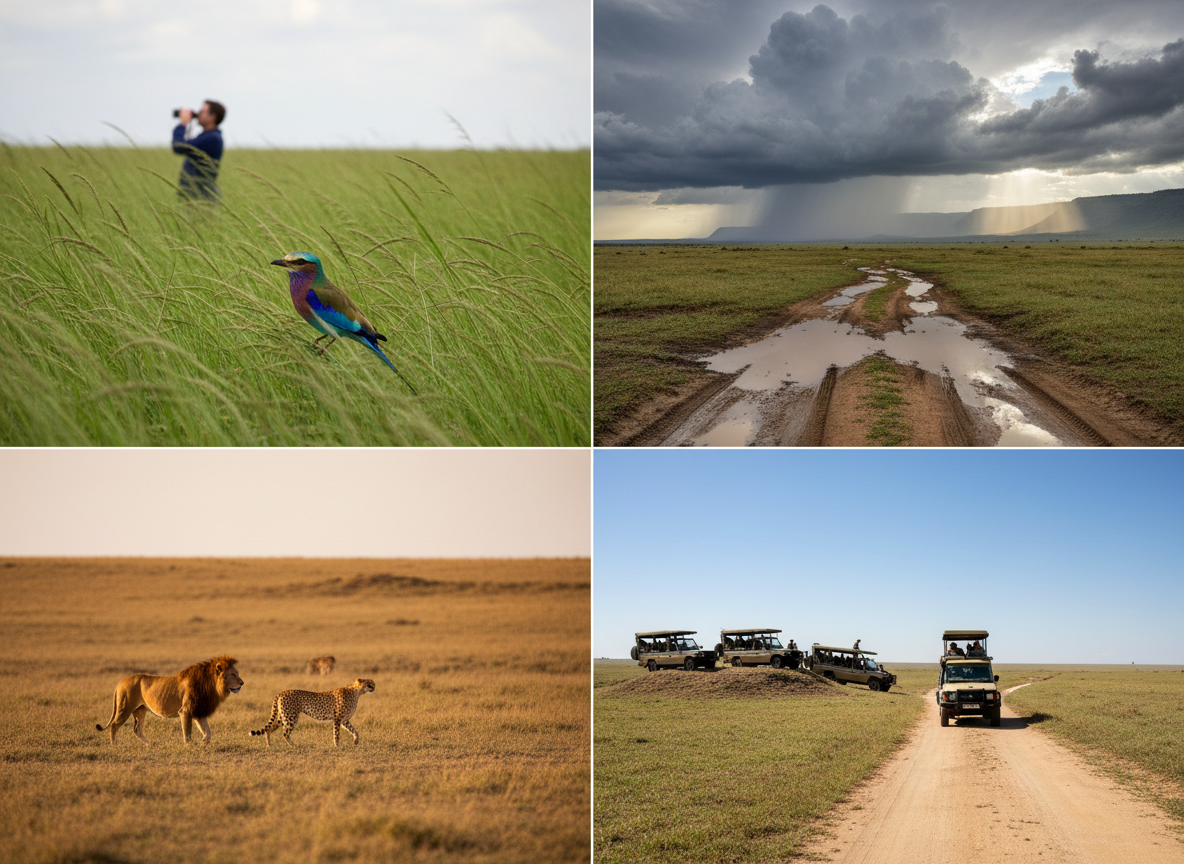
Green season and dry season safari masai mara can deliver two completely different safaris in the same destination. Light changes, grass height shifts, crowds move, and wildlife behavior follows the season. Pick the wrong window for your goal and the trip feels mismatched. That is the green season vs dry season safari masai mara decision.
This is where Trunktrails Safaris adds real value. We are Nairobi-based and Kenyan-owned. We plan around migration windows, rain patterns, school-holiday pressure, and the practical feel of each month, not generic best-time lists. That gives clients dates that suit the experience they actually want.
Here is the honest green season vs dry season safari masai mara comparison, the same one we use when shaping a client’s travel window.
When Is the Masai Mara Dry Season
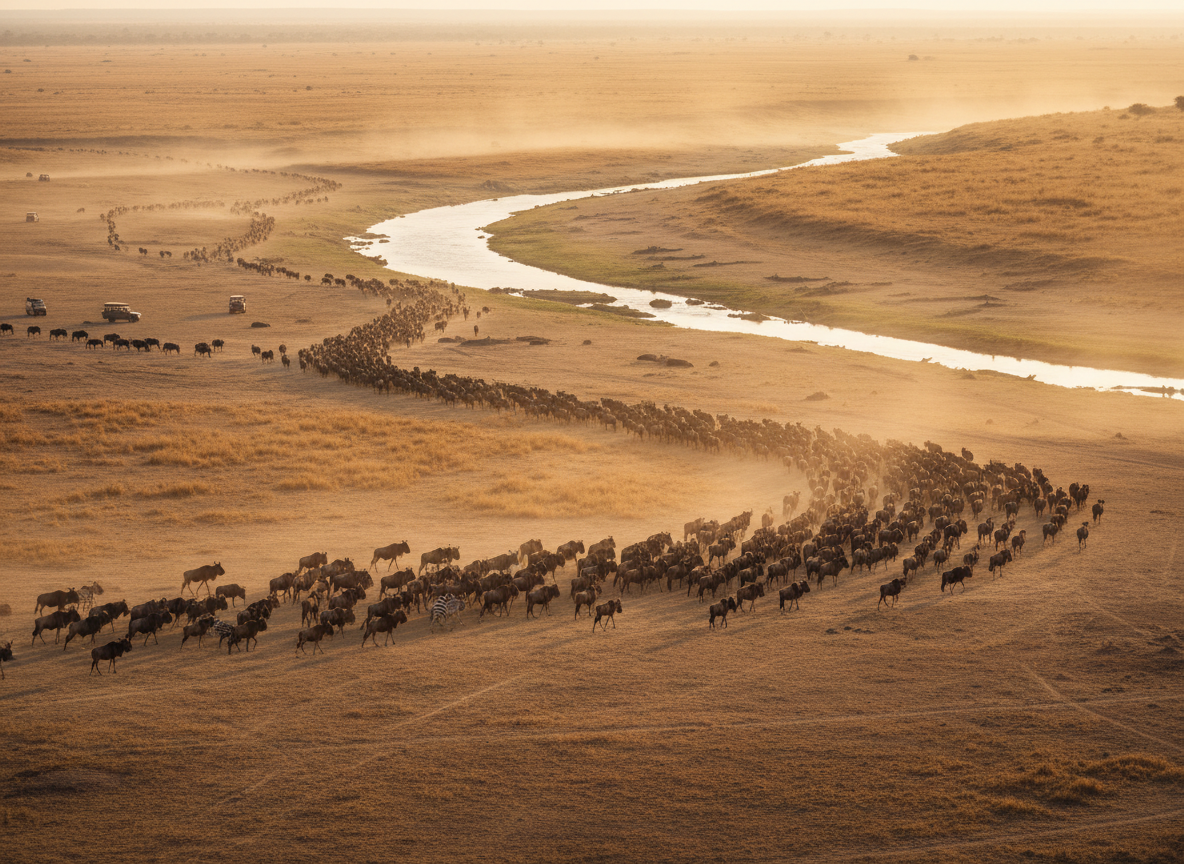
The masai mara dry season wildlife viewing windows run across two distinct periods:
Long dry season: June through October. This is the main dry season, coinciding with the Great Migration arrival in Kenya and the peak of the wildebeest river crossings. The landscape is golden and open. Grass is short and sparse. Wildlife concentrates around water sources.
Short dry season: January through March. A second dry window follows the November-December short rains. Conditions are warm, clear, and excellent – similar to the long dry season but without the migration or the peak-season crowds.
When Is the Masai Mara Green Season
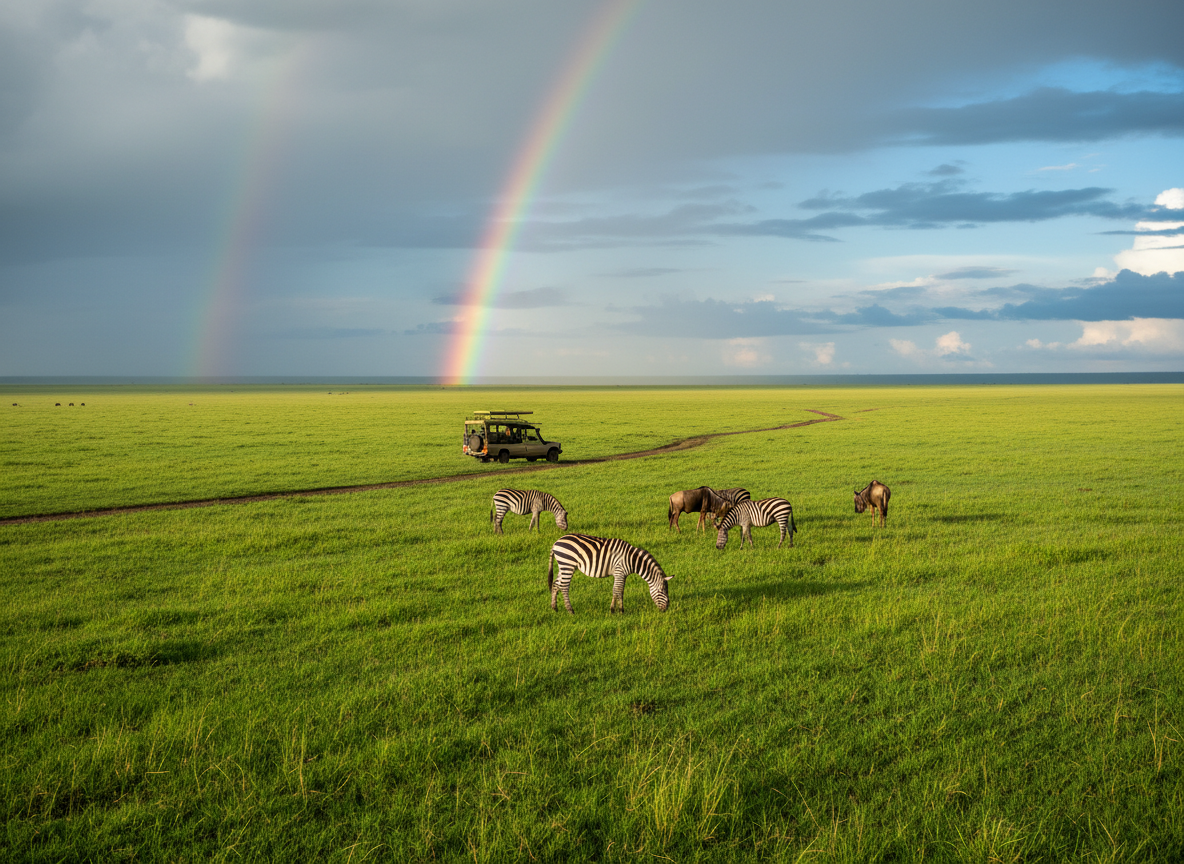
The masai mara green season (also called the low season or shoulder season) covers:
Long rains: April through May. Kenya’s main rainy season. Heavy, often prolonged afternoon and evening rains transform the Masai Mara from gold to vivid green. This is the quietest visitor period.
Short rains: November. Brief afternoon showers after the October dry season end. The landscape greens quickly. Visitor numbers drop, prices fall, and conditions remain surprisingly driveable.
The masai mara rainy season safari is most challenging in April and May (long rains) – genuinely wet, with road conditions that require high-clearance 4×4 vehicles and a flexible attitude. November’s short rains are much milder and rarely disruptive.
Green Season Masai Mara – Wildlife and Conditions
The masai mara green season wildlife story is one that many first-time visitors underestimate.
What the green season delivers:
- Resident wildlife (lions, leopards, cheetahs, elephants) are all present year-round
- Newborn prey animals during the short rains (November) and immediately after – calves, fawns, and lambs draw intense predator activity
- Birdwatching peaks in the wet season – migratory birds arrive, breeding plumage is displayed, and the species count increases significantly
- The landscape is dramatically green and photogenic – very different from the golden-grass dry season Masai Mara
- Waterfalls appear on the Siria Escarpment and seasonal pools attract unexpected wildlife concentrations
The challenge of the masai mara wet season pros:
Wildlife is dispersed across the lush landscape rather than concentrated at water sources. Finding predators in long, green grass requires more patience and experienced guides. Some tracks become impassable for standard vehicles after heavy overnight rains.
Photography in the green season:
The masai mara green season landscape is visually dramatic in a way the dry season is not. Storm clouds building over the escarpment, sunbeams through clearing showers, vivid emerald plains against dark skies – these are genuinely beautiful photography conditions that professional landscape photographers seek out specifically.
Dry Season Masai Mara – Wildlife and Conditions
What the masai mara dry season wildlife delivers:
- Short grass means predator visibility is at its absolute best – a cheetah or lion can be spotted from 500 metres
- Wildlife concentrates at the Mara and Talek rivers, creating reliable game viewing zones
- Great Migration present July-October with Mara River crossings
- Road conditions are at their most reliable – firm, fast, accessible
- Dawn and dusk game drives deliver golden-hour light on open golden plains
The trade-off of dry season:
Peak season (July-October) brings peak visitor numbers. Popular crossing sites and major predator sightings attract large vehicle concentrations. Accommodation rates are at their annual highest. Advance booking lead times of 6-12 months are required for premium camps.
Kenya Green Season vs Dry Season – Side-by-Side
| Factor | Green Season (Nov, Apr-May) | Dry Season (Jun-Oct, Jan-Mar) |
| Grass height | Tall and lush | Short and open |
| Wildlife visibility | Lower (hidden in grass) | Higher (open plains) |
| Great Migration | No (Nov) / No (Apr-May) | Yes (Jul-Oct) |
| Birdwatching | Peak – migratory species | Good – residents only |
| Predator sightings | Good – newborn prey active | Excellent – maximum visibility |
| Road conditions | Challenging (Apr-May) / Good (Nov) | Excellent |
| Crowds | Very low | High (Jul-Oct) / Moderate (Jan-Mar) |
| Accommodation cost | Lowest of year | Highest (Jul-Oct) / Moderate (Jan-Mar) |
| Landscape photography | Vivid green, dramatic skies | Golden, open, dust haze in peak |
| Balloon safari | Available | Available |
Masai Mara Green Season Worth It – The Honest Assessment
Is masai mara good in the green season The direct answer: yes, with specific expectations.
For the right traveller, the masai mara low season safari in November is genuinely outstanding. Wildlife is excellent, the landscape is at its most beautiful, prices are their lowest, and you will have game drive tracks largely to yourself. November is the best-kept secret in Masai Mara safari planning.
April and May are different. Heavy rains, road challenges, and genuine logistics difficulty make April-May the most complex months to visit. The rewards – extraordinary green landscapes, very low costs, few other vehicles – are real. But this requires a flexible approach and experienced operator support.
The masai mara green season pros and cons ultimately depend on what you prioritise: convenience and wildlife concentration (dry season) or value, intimacy, and landscape beauty (green season).
Best Season Masai Mara Safari – Who Each Suits
Choose dry season (June-October) if:
- The Great Migration and Mara River crossings are why you are going
- Maximum wildlife visibility and predator sightings are the priority
- First-time safari visitor who wants the most reliable, concentrated wildlife experience
- Comfortable with peak-season pricing and advance booking lead times
Choose dry season (January-March) if:
- You want dry season conditions without peak-season crowds or pricing
- Big cat sightings in short grass are the focus
- Budget flexibility matters and you want value without compromising conditions
Choose green season (November) if:
- Budget is an important factor
- You prefer empty game drive tracks over concentrated wildlife viewing
- Landscape photography motivates you
- Birdwatching is a significant interest
Avoid (for most travellers):
April-May unless you are a dedicated wildlife photographer who specifically wants the dramatic wet season landscape and is fully flexible on logistics.
Ready to Plan Your Kenya Safari? Talk to Trunktrails Safaris
Trunktrails Safaris designs tailor-made tours and safaris for every traveller and every budget. From green-season adventures to private luxury camps, our tours and safaris are built by a Nairobi-based team that speaks to you directly, not through a call centre. Most WhatsApp enquiries about our Kenya tours and safaris get a reply from Trunktrails Safaris within the hour.