

Dawn and dusk wildlife masai mara may happen in the same landscape, but they reward very different kinds of traveller. One favors patience, detail, or specialist interest. The other suits a broader safari rhythm. That is the dawn vs dusk wildlife masai mara choice.
This is where Trunktrails Safaris helps clients avoid the wrong fit. We are Nairobi-based and Kenyan-owned. Our guides know when a specialist activity genuinely adds depth and when it is just a glossy add-on. That matters if you want the safari to feel right, not merely busy.
Here is the honest dawn vs dusk wildlife masai mara comparison, with the strengths, limits, and best-fit traveller for each side.
Quick Comparison: Dawn vs Dusk Wildlife Activity
| Factor | Dawn (5:30am to 7:30am) | Dusk (5:00pm to 6:30pm) |
| Light Quality | Soft orange and pink; long shadows | Golden hour; warm amber; backlit drama |
| Temperature | Cool to cold (15 to 18°C); fresh | Warm (25 to 30°C); comfortable |
| Predator Activity | Lions and leopards returning from night hunts | Predators beginning evening hunting |
| Cheetah Activity | High: early morning sprint hunts | Moderate: late afternoon activity |
| Herbivore Behavior | Dispersing from night gathering points; grazing begins | Moving toward water; more alert |
| Hippo Activity | Returning to water from night grazing | Entering water for the night |
| Bird Activity | Peak dawn chorus; raptors soaring as thermals build | Nightjars, owls begin; egrets returning to roosts |
| Photography Light | Exceptional: low, warm, directional | Exceptional: golden hour warmth and drama |
| Kill Probability | High: cats have been hunting through the night | Moderate: evening hunts beginning |
| Atmosphere | Still, cool, ethereal | Warm, buzzing, electric |
Dawn in the Masai Mara
The First Light
A Masai Mara dawn drive begins before 6am: vehicles departing camp in darkness to position at key wildlife areas as the sun lifts over the eastern horizon. The temperature is cool, sometimes cold enough to require a fleece and a blanket on the open vehicle. The sky transitions from deep blue to a spectrum of orange, pink, and violet before the sun clears the distant treeline.
This is the most dramatic light of the day for photography. Low, horizontal, warm: the light at dawn transforms the ochre savannah into a landscape that appears painted. Silhouettes of giraffe, wildebeest, and acacia are perfectly defined against the brightening horizon.
What You Encounter at Dawn
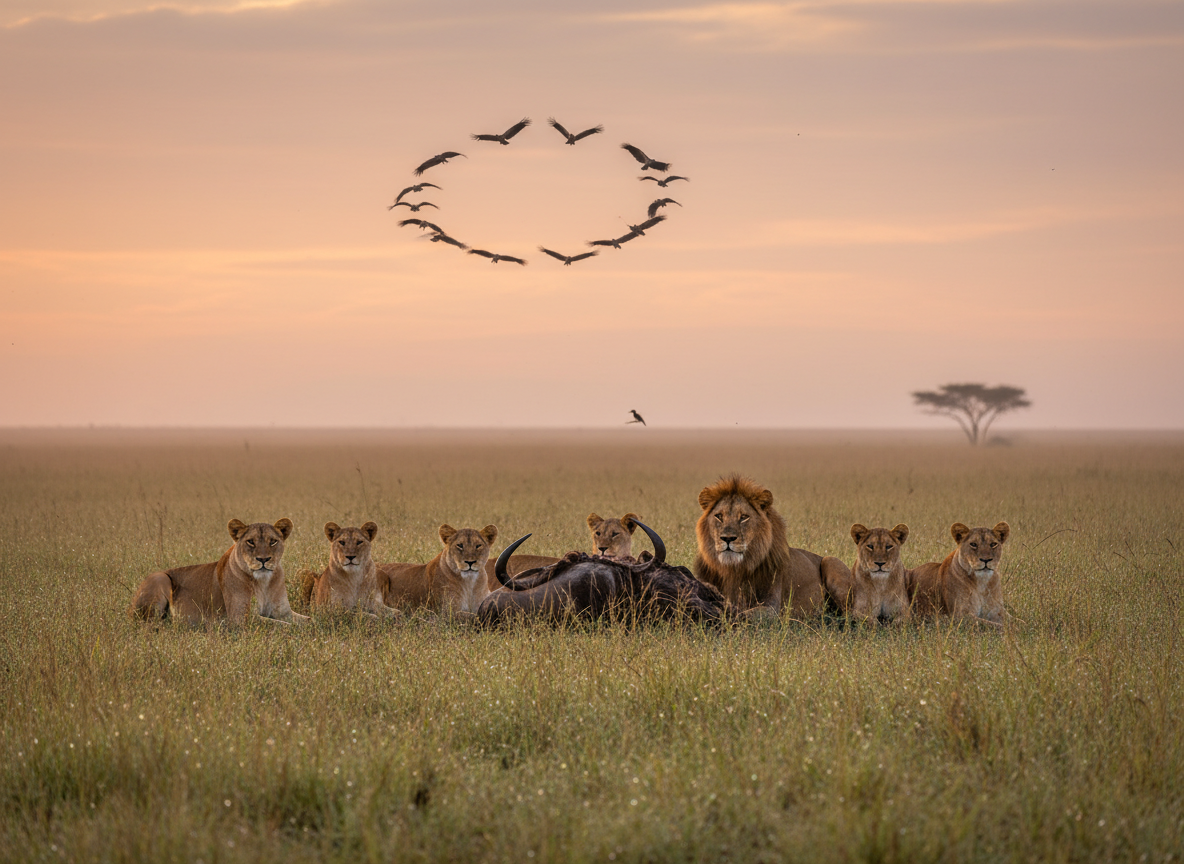
Returning predators: Lions and leopards hunt primarily at night and into the early morning hours. By first light, they are often still at a kill, resting with a full belly, or walking back to their resting area. Dawn is the period when you are most likely to find lions with blood on their muzzles, vultures beginning their first descending circles above a carcass, or a leopard making a last-minute drag of a kill up into a tree before the heat of day.
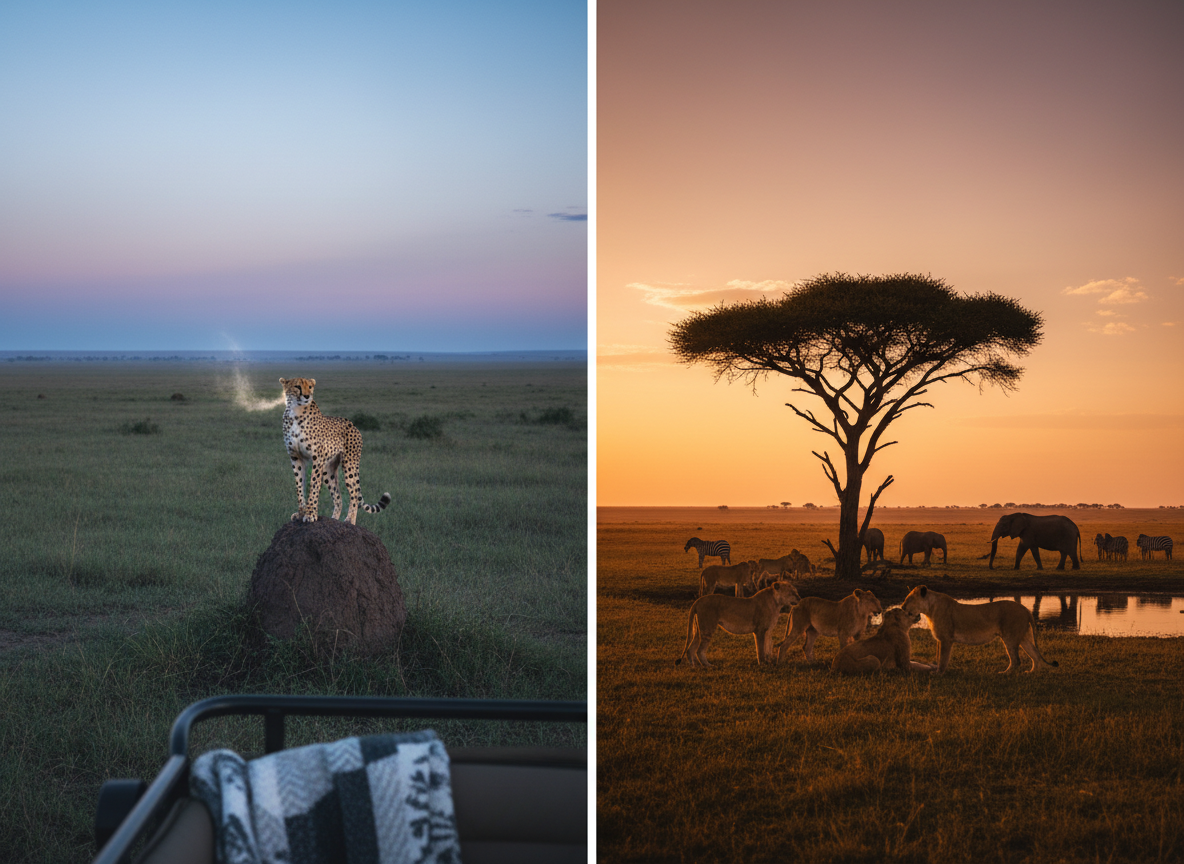
Active cheetahs: Cheetahs are primarily diurnal: they hunt in the early morning when the temperature is low enough to sustain a sprint and when the light is bright enough to see prey at distance. Dawn is prime cheetah hunting time. A cheetah scanning the plains from a termite mound at 6:30am is actively in hunting mode.
Hippos returning: Hippos spend the night grazing in open grassland areas, returning to the safety of water before full daylight. Dawn drives near the Mara River or luggas often encounter groups of hippos trotting back in single file: a remarkable sight for its incongruity.
The dawn chorus: Kenya’s 1,100+ bird species are most active at first light. The dawn chorus in the Masai Mara is extraordinary: hornbills, rollers, bee-eaters, eagles, and dozens of species calling simultaneously before the heat silences them into shade.
Dusk in the Masai Mara
The Golden Hour
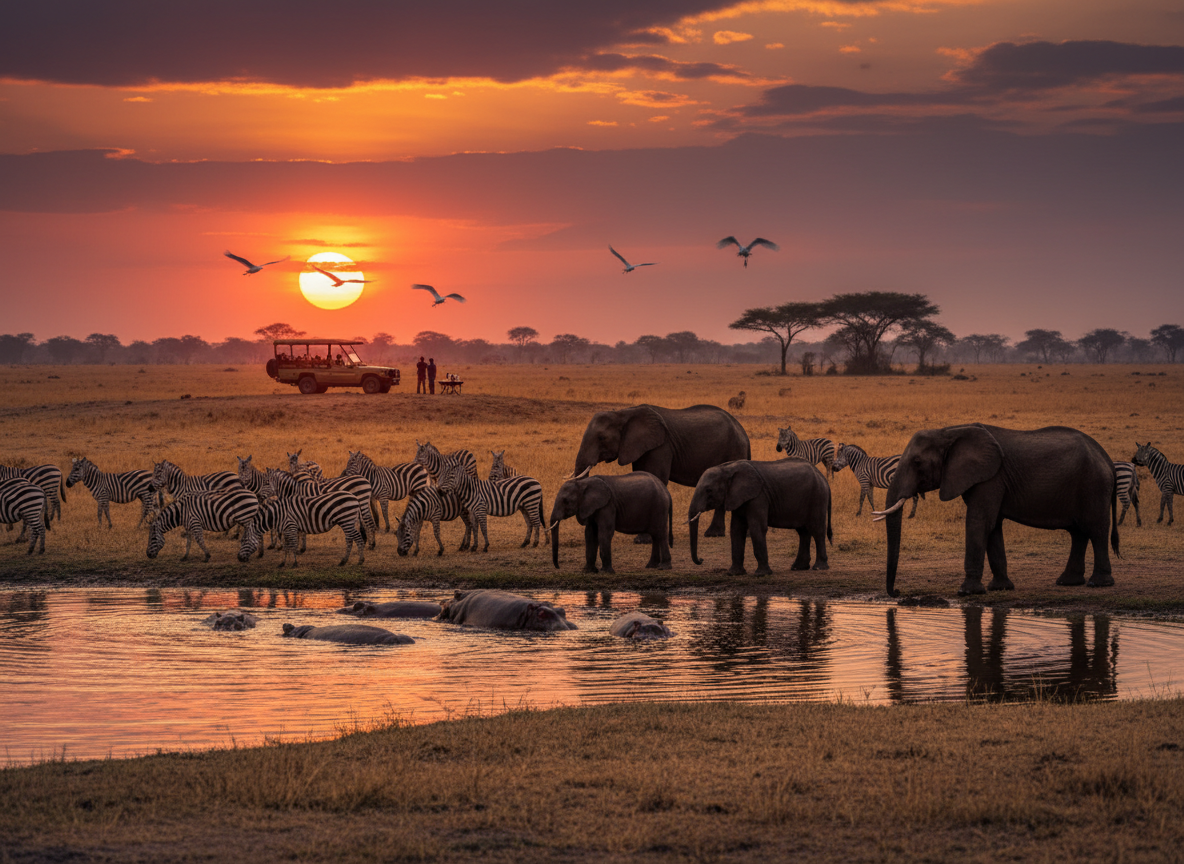
Afternoon game drives typically depart at 4pm to 4:30pm and reach peak activity at the golden hour: the 60 minutes before sunset when the light turns warm amber and the landscape glows. This is the second great photographic window of the day, with the added drama of the sky itself becoming a canvas of color as the sun descends.
Dusk is warmer and more comfortable than dawn for most travelers. The energy of the ecosystem at dusk feels different: more electric, more anticipatory. Animals sense the shift toward night.
What You Encounter at Dusk
Herbivores at water: Elephants, buffalo, zebra, and wildebeest move toward permanent water sources in the late afternoon. At dusk, the Mara River crossing points, hippo pools, and lugga channels see concentrated herbivore activity: drinking, bathing, and the social interactions that happen at water.
Predators waking: Lions that have spent the heat of the day in shade begin stretching, grooming, and socializing as the temperature drops at dusk. Cubs play at the feet of resting adults. Males mark territory boundaries. By 5:30pm, the hunting orientation begins. A lion sitting upright, scanning the plains, is within 30 minutes of a potential hunt.
Evening birdlife: As the sun sets, nocturnal species begin activating: nightjars, owls, and thick-knees become visible. Egrets and herons move in long white columns back to communal roosting trees. Storks and pelicans descend to riverside positions. Bird life at dusk has a completely different character from the dawn chorus: quieter, more purposeful, more dramatic in silhouette.
Sundowner opportunity: The dusk game drive traditionally ends with a sundowner stop: vehicles parked at a high point, travelers emerging for a drink while the sun sets over the Mara. This is one of the most iconic and emotionally resonant moments of a Kenya safari experience.
Which Is Better for Photography
Both periods are exceptional but produce different results:
- Dawn: Cooler, cleaner air; less atmospheric haze; the first kill-site light is extraordinary for drama; long shadows ideal for texturing the landscape
- Dusk: Warmer color temperature; backlit acacia silhouettes; the golden hour quality that makes portrait work glow; sky colors at sunset can be spectacular
Most serious wildlife photographers rate the dawn light marginally higher for predator and action photography, and the dusk light higher for landscape and atmosphere.
Which Should You Prioritize
Both periods are essential to a complete Masai Mara experience. No single game drive produces everything: the full safari story emerges from alternating dawn and dusk drives across multiple days, each revealing a different chapter of the ecosystem’s daily rhythm.
If you can only choose one for a single day:
- Choose dawn if you are prioritizing predator encounters, cheetah hunts, or photography in the finest morning light
- Choose dusk if you want the social warmth of a sundowner, the golden hour atmosphere, and herbivore water-point activity
In practice, a standard 5-night Masai Mara safari includes both morning and afternoon drives daily: giving you 10 drive windows across the visit. Each day’s dawn and dusk reveals something different.
Ready to Plan Your Kenya Safari? Talk to Trunktrails Safaris
Trunktrails Safaris designs tailor-made tours and safaris for every traveller and every budget. From green-season adventures to private luxury camps, our tours and safaris are built by a Nairobi-based team that speaks to you directly, not through a call centre. Most WhatsApp enquiries about our Kenya tours and safaris get a reply from Trunktrails Safaris within the hour.