

These options may appear in the same planning conversation, but they do not deliver the same safari. Wildlife style, road time, camp feel, and the kind of stories you bring home all shift with the choice. That is why community conservancy vs national reserve safari kenya matters.
Trunktrails Safaris helps travellers make this decision every week. We are Nairobi-based and Kenyan-owned. We weigh real drive times, wildlife strengths, camp standards, and what guests actually want from the trip, not brochure shortcuts. That makes the recommendation easier to trust.
Here is the honest community conservancy vs national reserve safari kenya comparison, the same way we break it down before a safari is booked.
Quick Comparison: Community Conservancy vs National Reserve
| Factor | Community Conservancy | National Reserve |
| Management | Community-owned; managed by a trust | Government (county council) managed |
| Revenue Distribution | Directly to Maasai landowners and community | To county government budget |
| Bed Cap | Strict low-bed policies per km² | No equivalent restriction |
| Guest Density | Very low: 1 to 6 camps per conservancy | Higher: many camps across the reserve |
| Game Drive Access | Off-road allowed; more flexible routing | On-road only in most reserve zones |
| Night Game Drives | Allowed | Not allowed in the national reserve |
| Walking Safaris | Allowed with armed ranger | Generally not allowed |
| Park Fees | Conservancy fee paid to community | Masai Mara National Reserve entry fee |
| Camp Quality | Often premium: conservancies attract high-end investment | Ranges from budget to luxury |
| Conservation Model | Wildlife as livelihood; Maasai as stewards | Fortress conservation model |
| Best For | Conservation-focused travelers; luxury experience | First-time visitors; budget range; wide access |
How Community Conservancies Work
The Conservancy Model Explained
Community conservancies in the Masai Mara ecosystem operate on a lease model. A safari camp company (or community trust) negotiates with individual Maasai landowners to lease their land for wildlife-friendly use: no cattle grazing, no settlement, and management designed to maintain habitat for the animals that move through.
In return, the landowner receives a per-acre annual lease fee, paid monthly. This payment is the financial foundation of the conservancy model. It makes wildlife economically valuable to the Maasai community: incentivizing protection rather than conversion to agriculture or livestock expansion.
On top of the lease payments, most conservancies charge a conservancy fee per guest per night (typically $40 to $120 USD), which goes into a community fund for education, healthcare, and infrastructure within the Maasai villages bordering the conservancy.
What Conservancy Fees Actually Fund
When you pay a conservancy fee as part of your camp rate, that money funds:
- Monthly lease payments to individual Maasai landowners (per-acre basis)
- Community school construction and teacher salaries
- Healthcare clinic support and medical supply
- Water infrastructure in Maasai villages
- Anti-poaching ranger salaries and training
- Scholarships for Maasai children to attend secondary school
This is a fundamentally different model from the national reserve fee structure, where park fees enter the county government budget with less transparency about how they are distributed.
The Safari Experience Difference
Community Conservancy Experience
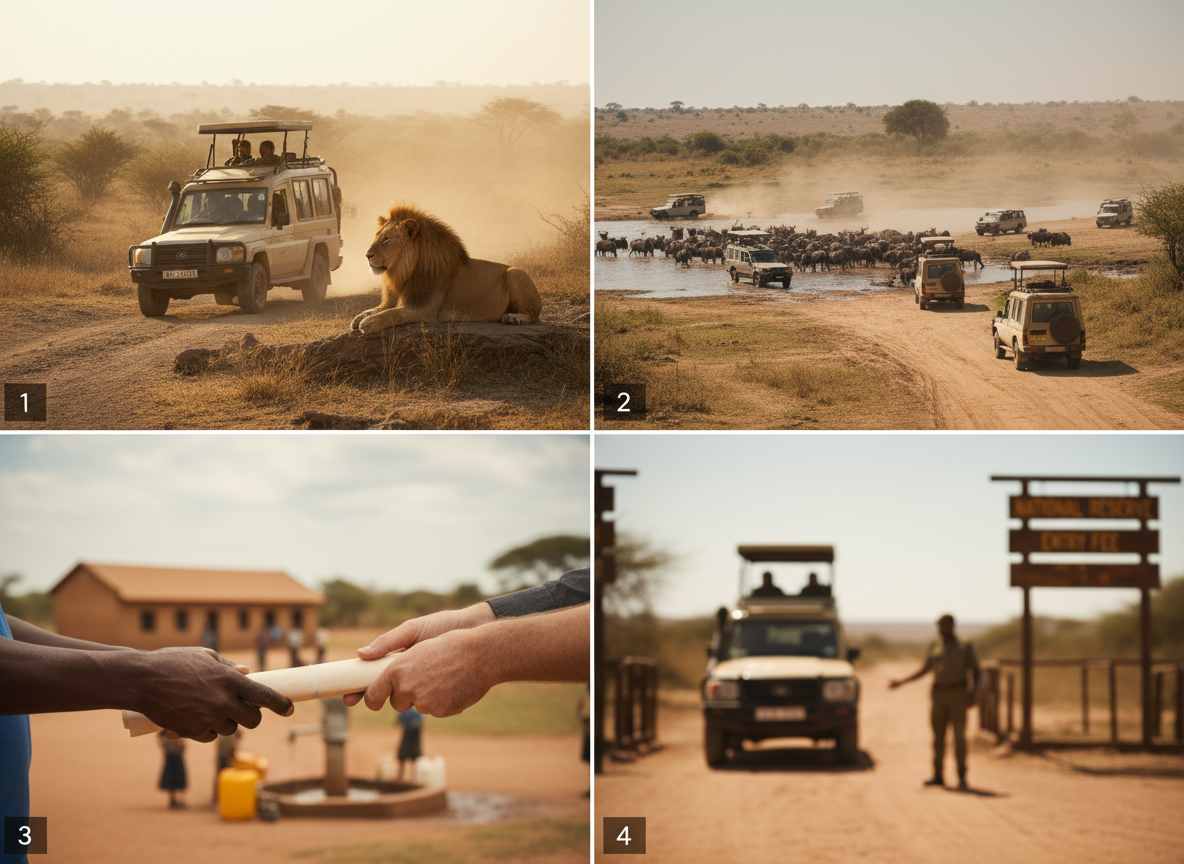
Because conservancies operate with strict bed-cap policies: limiting the number of guests allowed per square kilometer: the on-ground experience is dramatically less crowded than the main reserve during peak season. Where the Masai Mara National Reserve may have 40 to 80 vehicles converging on a major lion sighting, a conservancy with 3 to 4 permitted camps may have 3 to 5 vehicles at the same type of event.
Additional activities available only in conservancies:
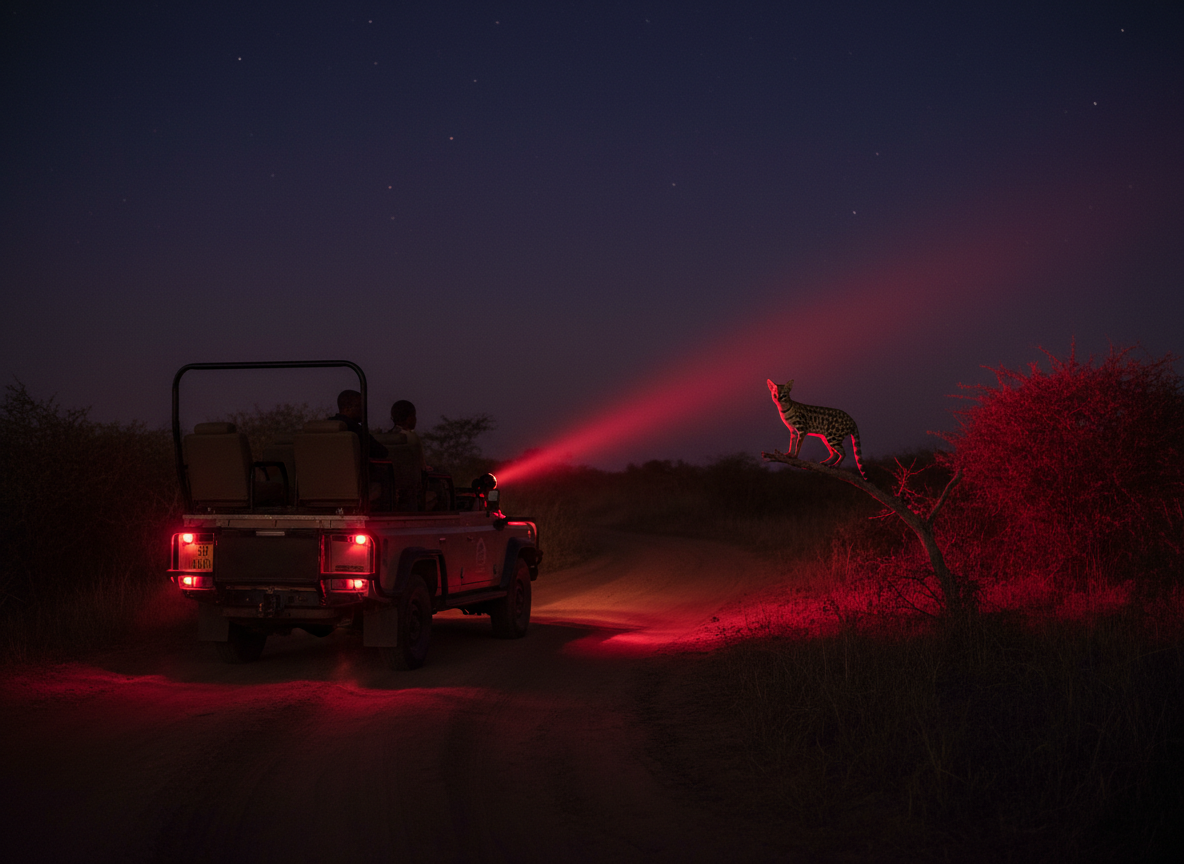
- Night game drives: After the main reserve gates close at 6pm, conservancy vehicles can continue into darkness with red-light spotlights: revealing genets, civets, aardwolves, and hunting cats in their nocturnal element
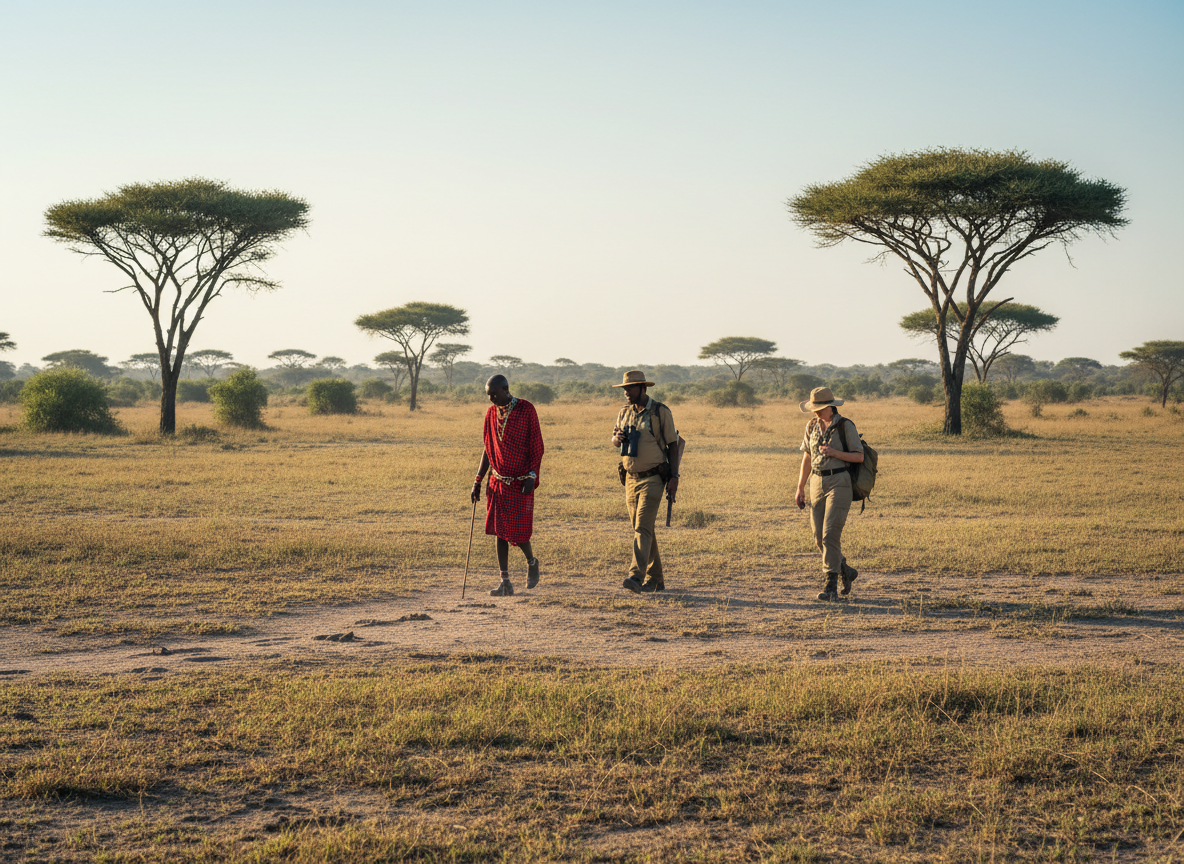
- Walking safaris: An armed ranger leads small groups on foot through the conservancy ecosystem: tracking, birding, and an encounter with the bush from ground level
- Off-road game drive access: Vehicles can leave tracks to approach wildlife directly: critical for optimal photography positioning and for accessing terrain that reserve vehicles cannot
National Reserve Experience
The Masai Mara National Reserve provides the most iconic and accessible Big Five safari experience in Kenya. It is the location of the Mara River: the stage for wildebeest river crossings: and the most famous lion territories in East Africa. The reserve is accessible from a wide range of camps at a wide range of budget points.
The trade-off is density. In peak season, the reserve is genuinely busy. Popular sighting areas can attract large numbers of vehicles. The wildlife experience is real, but the solitude is limited.
Conservation Impact: Which Does More Good
The community conservancy model is widely regarded by conservation economists and wildlife biologists as one of the most effective land protection mechanisms in East Africa. By making wildlife economically competitive with agriculture, conservancies have dramatically expanded the wildlife range of the greater Masai Mara ecosystem beyond the national reserve boundary.
When Maasai families receive meaningful monthly income from wildlife lease fees, they have a direct financial incentive to protect the animals on their land from poaching, to avoid converting habitat to maize fields, and to maintain movement corridors between reserve areas.
For travelers who care about the conservation impact of their safari spend, a conservancy-based Kenya safari puts your money in the most direct possible relationship with the wildlife you come to see.
Which Should You Choose
Choose a Community Conservancy Safari If You:
- Want the most exclusive, low-density game viewing in the Masai Mara ecosystem
- Want access to night drives, walking safaris, and off-road game drive access
- Care about where your safari fees go and want direct community conservation impact
- Are willing to pay a premium for the conservancy bed cap and exclusive experience
- Are celebrating a special occasion that benefits from total exclusivity
Choose the National Reserve If You:
- Are visiting the Masai Mara for the first time and want the iconic core experience
- Are on a budget that conservancy premiums put out of reach
- Are visiting primarily for the Mara River wildebeest crossings (both reserve and conservancy access these)
- Want a broader range of camp and accommodation price points available
Many travelers combine both: staying nights in a conservancy camp for the exclusive experience and early morning drive position, while spending some game drive time inside the reserve for the Mara River and wider wildlife coverage.
Ready to Plan Your Kenya Safari? Talk to Trunktrails Safaris
Trunktrails Safaris designs tailor-made tours and safaris for every traveller and every budget. From green-season adventures to private luxury camps, our tours and safaris are built by a Nairobi-based team that speaks to you directly, not through a call centre. Most WhatsApp enquiries about our Kenya tours and safaris get a reply from Trunktrails Safaris within the hour.
KATO Member | TRA Licensed | Native Kenyan Owned | Conservation First | 24/7 Support