

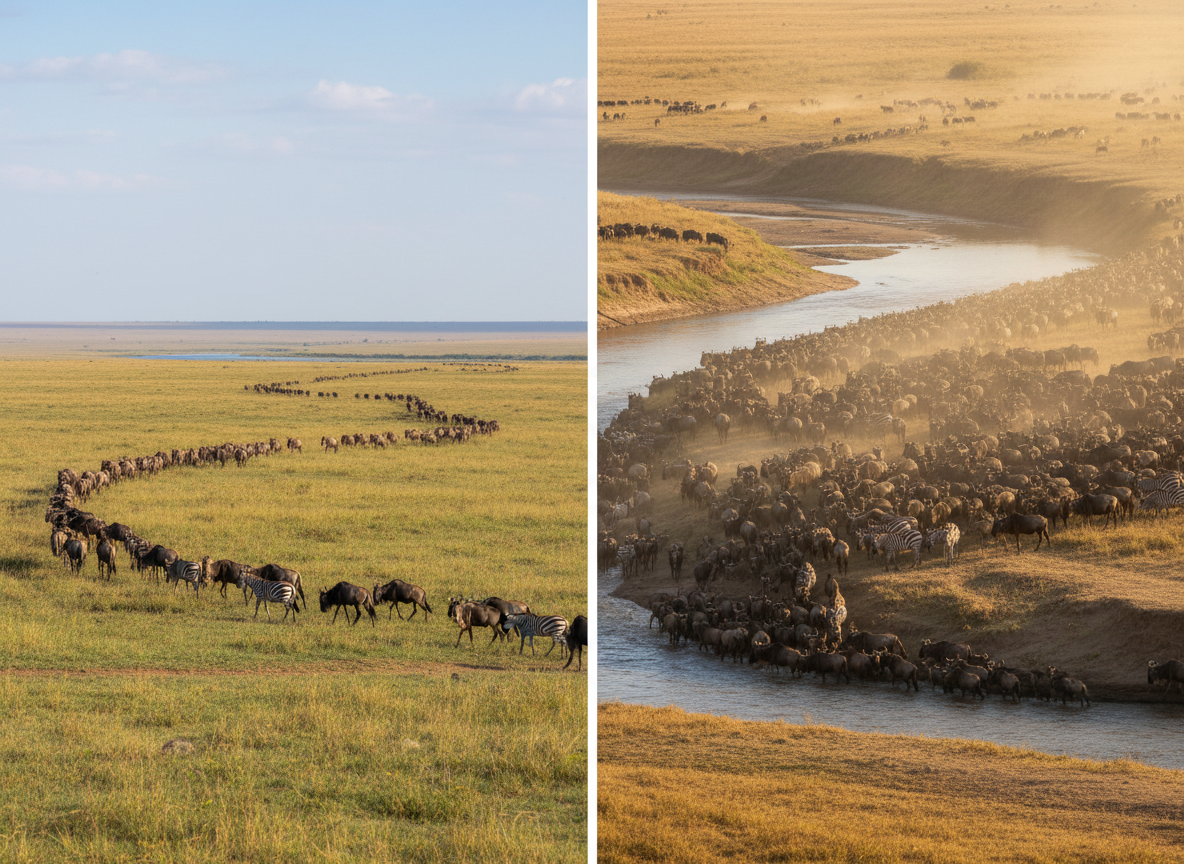
Masai mara july and august can deliver two completely different safaris in the same destination. Light changes, grass height shifts, crowds move, and wildlife behavior follows the season. Pick the wrong window for your goal and the trip feels mismatched. That is the masai mara july vs august decision.
This is where Trunktrails Safaris adds real value. We are Nairobi-based and Kenyan-owned. We plan around migration windows, rain patterns, school-holiday pressure, and the practical feel of each month, not generic best-time lists. That gives clients dates that suit the experience they actually want.
Here is the honest masai mara july vs august comparison, the same one we use when shaping a client’s travel window.
Masai Mara in July – What Happens
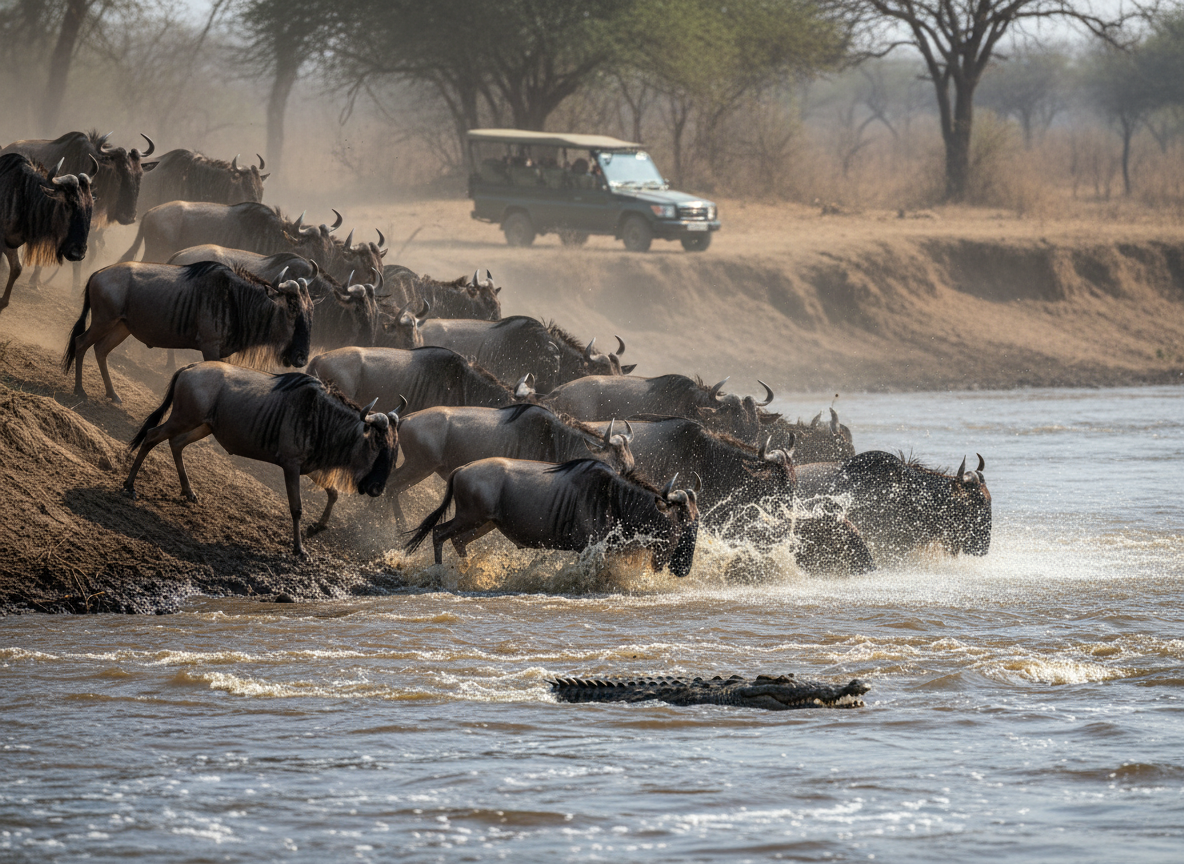
The masai mara in july migration experience is about arrival and anticipation.
The first wildebeest herds typically cross from Tanzania into Kenya in late June or early July. By mid-July, significant herds are usually in the Masai Mara. By late July, the full migration is underway.
July characteristics:
- Herds arriving and building throughout the month
- Early Mara River crossings begin – sometimes as early as mid-July
- The first crossings of the season are often the most dramatic and chaotic
- Visitor numbers are high but slightly below August peak
- Weather: Dry season – clear skies, cool mornings (14–16°C), warm days (24–28°C)
- Roads are firm and well-maintained
- Accommodation rates are at peak season levels (July–October)
What makes July special:
The masai mara july river crossings have a particular quality that August lacks: unpredictability. The herds are arriving, crossing patterns are not yet established, and every morning drive carries the possibility of witnessing the first major crossing of the season. For safari visitors who want to feel the build of the migration rather than its peak, July has a different kind of excitement.
The resident wildlife is also superb in July – the dry conditions bring animals to the Mara River and water sources, and predator activity is excellent even before the full wildebeest herds arrive.
Masai Mara in August – What Happens
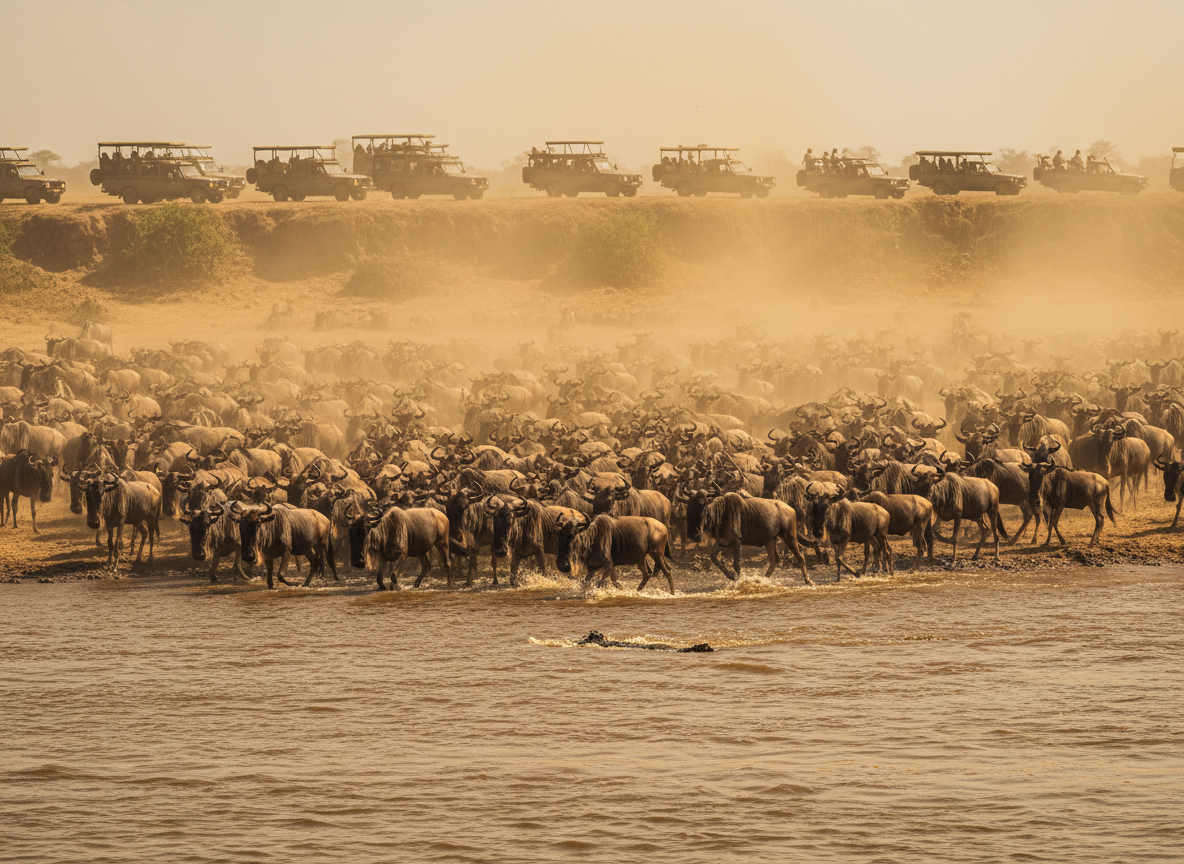
The masai mara in august migration is peak season at full intensity.
By August, the wildebeest herds are massed throughout the Masai Mara ecosystem. Crossings happen regularly – sometimes multiple per day at different crossing points. The sheer biomass of animals on the Masai Mara plains in August is almost impossible to describe. The grasslands turn black with moving herds. The Mara River banks hold thousands of wildebeest waiting, pushing, retreating.
August characteristics:
- Maximum herd density across the Masai Mara plains
- Most frequent and multiple daily Mara River crossings
- Highest visitor numbers of the year
- Vehicle concentrations at crossing sites can reach 40–60+ vehicles
- Weather: Dry season continues – clear skies, dust increasing on well-used tracks
- Accommodation rates at absolute annual peak
- Advance booking lead times: 6–12 months for preferred properties
What makes August special:
The masai mara august river crossings are the defining moment. The frequency of crossings in August is higher than any other month. You can realistically witness multiple crossings in a single day. Crocodile encounters are at their most dramatic. The predator activity around the herds – lion prides hunting, cheetah families, spotted hyenas – is at annual maximum.
Masai Mara July vs August – Direct Comparison
| Factor | July | August |
| Herd density | Building – partial to full herds | Maximum – full herds across Mara |
| Mara River crossings | Beginning – first crossings of season | Peak – most frequent, multiple daily |
| Crowd and vehicles | High | Highest of year |
| Accommodation cost | Peak (July–October pricing) | Peak (slight premium over July at some properties) |
| Booking lead time needed | 6–9 months | 6–12 months (top properties fill first) |
| Weather | Clear, dry, cool mornings | Clear, dry, dusty tracks |
| Photography conditions | Good – less dust | Good – heat haze possible midday |
| Resident wildlife | Excellent | Excellent |
| Atmosphere | Building anticipation | Full spectacle |
Great Migration July vs August Masai Mara – The Wildlife Probability Question
The most important practical question: which month gives you a higher probability of witnessing an actual Mara River crossing?
August wins on crossing frequency.
The masai mara in august migration has peak crossing density. Herds are massed on both sides of the river. Guides who spend every day tracking crossing sites report that August consistently produces more crossings than July. If you are allocating limited travel days and a Mara River crossing is the primary goal, August is the statistically stronger month.
July wins on crossing quality.
The first crossings of the season – which typically occur in July – have a rawness that later-season crossings lack. Guides report that the initial July crossings are often longer, wilder, and more chaotic as the herds cross unfamiliar ground for the first time. Once crossing patterns are established by August, the events become more predictable but also more vehicle-dense.
Masai Mara July or August – Who Each Month Suits
Choose July if:
- You want to be in the Masai Mara before the absolute crowd peak of August
- The building excitement of migration arrival appeals to you
- You prefer slightly lower vehicle density at sightings
- Booking flexibility in early peak season gives you more camp choices
- You want excellent resident wildlife plus early migration activity combined
Choose August if:
- Maximum herd density and crossing frequency is the priority
- The full spectacle of the Great Migration at peak is why you are going
- You have booked (well in advance) and secured your preferred property
- The raw scale of wildlife biomass on the Mara plains is the defining goal
Cannot decide? Consider a July–August crossing trip:
Some Trunktrails Safaris clients book 7–10 nights spanning both July and August – catching the early crossings in the last week of July and the peak crossings in early August. This is the ideal approach for travellers who can commit the time.
Masai Mara July Weather vs August Weather
Both months are dry season in the Masai Mara. The weather is not a significant differentiator.
- July: Slightly cooler mornings (13–16°C) and clear air with lower dust than August. Afternoons warm (24–27°C). Cool, clear conditions.
- August: Similar temperatures but more vehicle traffic on game drive tracks creates dust on dry roads. Photography from vehicle can be affected by dust haze from other vehicles at sightings.
The masai mara july weather vs august weather difference is minor. Both are excellent safari weather. If anything, July’s slightly cleaner air is a marginal photography advantage.
Plan Your July or August Masai Mara Safari with Trunktrails Safaris
Whether you are leaning toward masai mara july or august, Trunktrails Safaris tours and safaris team can match you to the right camp, right zone, and right activity schedule for your chosen month.
Both months are extraordinary. The difference is in scale and pace – and we will help you understand exactly what to expect for the specific week you are travelling.
Ready to Plan Your Kenya Safari? Talk to Trunktrails Safaris
Trunktrails Safaris designs tailor-made tours and safaris for every traveller and every budget. From green-season adventures to private luxury camps, our tours and safaris are built by a Nairobi-based team that speaks to you directly, not through a call centre. Most WhatsApp enquiries about our Kenya tours and safaris get a reply from Trunktrails Safaris within the hour.
WhatsApp: +254 113 208888
Email: info@trunktrailssafaris.com
Website: https://trunktrailssafaris.com
KATO Member | TRA Licensed | Native Kenyan Owned | Conservation First | 24/7 Support