

The single question Trunktrails Safaris hears more than any other: “When should I go to the Masai Mara?”
It is a fair question. The Masai Mara weather changes significantly across the year: and those changes directly affect wildlife viewing, game drive conditions, camp prices, and crowd levels. The best time to visit Masai Mara is not the same for every traveller. It depends on what you want to see, what you are willing to pay, and how much rain you can handle.
This guide breaks down Masai Mara weather month by month: with honest, practical information about what each period means for your Kenya safari. No vague seasonality charts. Just what you need to plan well.
The Masai Mara National Reserve sits at 1,500 to 1,900 metres above sea level. That altitude makes Masai Mara weather significantly cooler than Kenya’s coast. The Masai Mara climate follows two rainy seasons and two dry seasons annually:
- Long rains: March to May (heaviest rain, wettest months)
- First dry season: June to October (best game drive conditions, Great Migration peak)
- Short rains: November to December (lighter, more predictable rain)
- Second dry season: January to February (excellent wildlife viewing, lower prices)
Masai Mara Weather in January
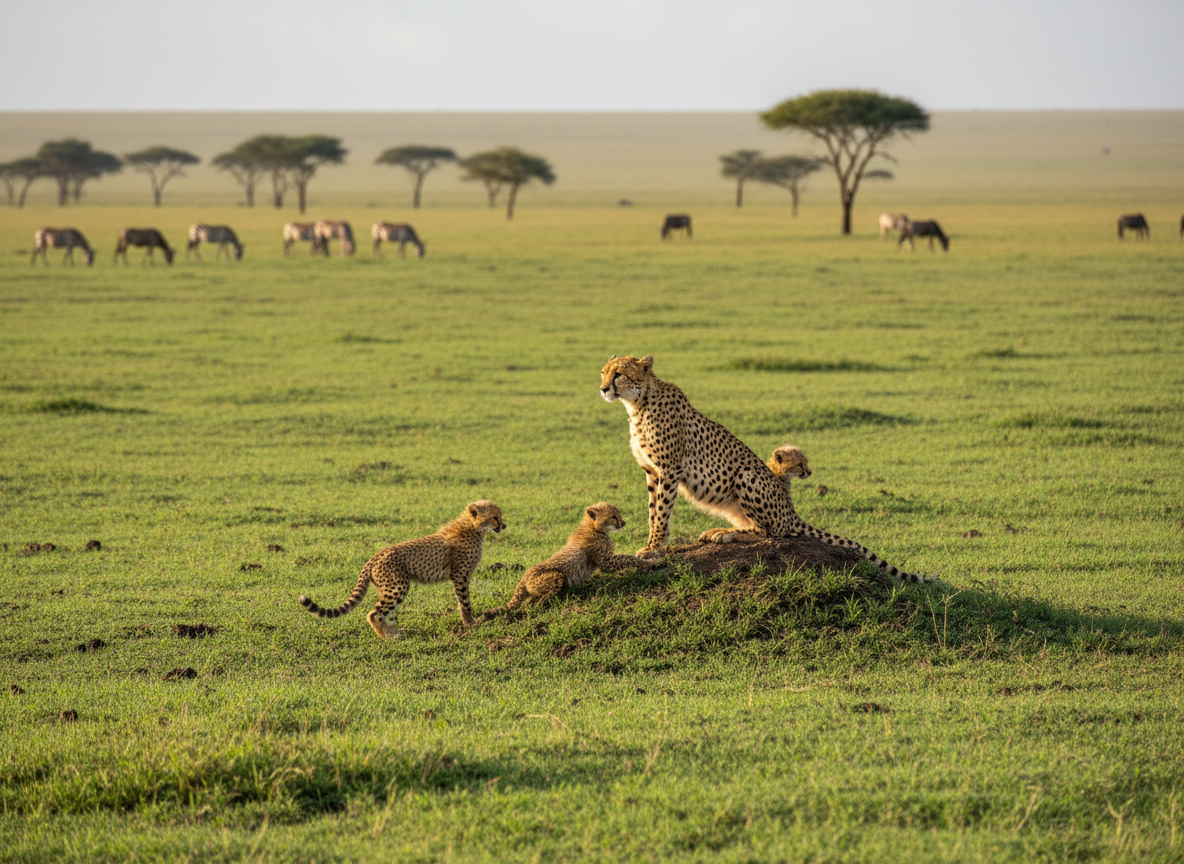
Masai Mara weather in January is warm, dry, and one of the most underrated months in the Kenya safari calendar. January sits in the short dry season: the landscape is still green from the November and December short rains, but game drive tracks have firmed up and conditions are comfortable.
January temperatures in Masai Mara:
- Daytime: 28°C to 30°C (82°F to 86°F)
- Mornings and evenings: 14°C to 17°C (57°F to 63°F)
- Rainfall: Very low: brief afternoon showers possible but rare
Weather in masai mara in january marks the start of the wildebeest birthing season. Thousands of wildebeest and zebra calves drop on the southern plains, drawing lion prides, cheetah families, and leopards into concentrated predator activity that rivals anything the Great Migration months deliver. Masai mara weather january is warm enough for comfortable game drives but cool enough in the early morning for the pre-dawn start to feel genuinely refreshing.
Weather in masai mara kenya in january is particularly prized by photographers: golden dry-season light, excellent big cat sightings, and no peak-season vehicle competition at sightings.
January safari conditions: Firm tracks, good visibility through short post-rain grass, excellent big cat sightings, competitive accommodation rates.
Weather in Masai Mara in February
Weather in Masai Mara in February continues the warm dry season with almost identical conditions to January. February is consistently one of the clearest and most comfortable months in the Masai Mara weather calendar.
February temperatures in Masai Mara:
- Daytime: 25°C to 30°C (77°F to 86°F)
- Mornings: 14°C to 16°C (57°F to 61°F)
- Rainfall: Minimal: clear skies most days
Masai Mara weather in February is particularly good for cheetah sightings. The dry-season grass is short, plains are open, and cheetahs are highly visible scanning for prey. The birthing season continues through February: wildebeest, zebra, Thomson’s gazelle, and impala all have young calves on the plains, and predator action remains intense.
Weather masai mara february is among the best photography conditions of the year. Low humidity produces crystal-clear air and sharp horizon lines. Wildlife photographers frequently rate the light quality in February as superior to any other month in the Masai Mara climate calendar.
February safari conditions: Outstanding. Dry roads, excellent visibility, high predator activity, no crowds. Book early: February’s reputation is growing.
Masai Mara Weather in March
Masai Mara weather in March marks a transition. Early March continues the dry season conditions, but the long rains typically arrive in mid-to-late March, bringing a noticeable change across the ecosystem.
March temperatures in Masai Mara:
- Daytime: 22°C to 29°C (72°F to 84°F)
- Mornings: 14°C to 16°C (57°F to 61°F)
- Rainfall: Increasing from mid-month: expect afternoon and evening storms from mid-March onward
Weather in masai mara in march splits into two distinct halves. In early March, game drive conditions are excellent and similar to February. From mid-March, afternoon thunderstorms arrive with increasing frequency. These storms are typically intense and short: an hour of heavy rain followed by clearing skies: rather than day-long downpours.
Masai mara weather march also brings one of the most dramatic visual transformations of the year: within days of the first rains, the savannah changes from golden to vivid green. Dust settles. The air clears.
March safari conditions: Good in early March. Improving for landscape photography from mid-March. Black cotton soil tracks begin to require a 4×4. Prices drop as the low season begins.
Weather in Masai Mara in April
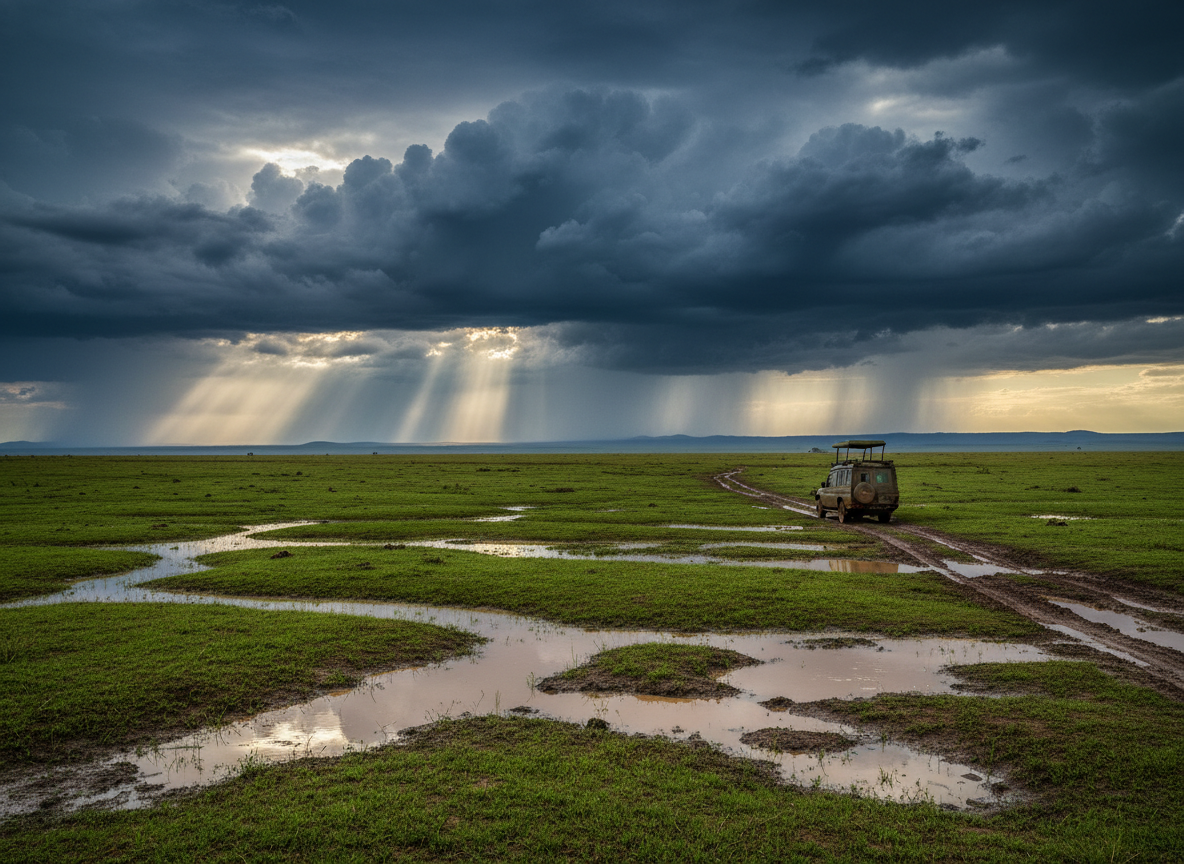
April is the wettest month in the Masai Mara weather calendar. Rainfall peaks, roads get challenging, and most international safari visitors move on to drier destinations. But April is not without its rewards.
April temperatures in Masai Mara:
- Daytime: 20°C to 26°C (68°F to 79°F)
- Mornings: 13°C to 15°C (55°F to 59°F)
- Rainfall: Heaviest of the year: average 23 rainy days, afternoon storms regular
Weather masai mara april delivers the ecosystem at its most lush and photogenic. The plains are deep emerald green. Waterfalls appear on the Siria Escarpment. Seasonal pools fill across the reserve, attracting elephants and buffalo to unexpected locations. The sky over the Masai Mara in April is dramatic: towering cumulus clouds build against blue skies between storms, producing extraordinary landscape photography conditions.
Weather in masai mara kenya in april brings a practical challenge: black cotton soil becomes genuinely difficult without a high-clearance 4×4 Land Cruiser. Some tracks inside the Masai Mara National Reserve close temporarily after heavy overnight rains.
April safari conditions: Green and visually stunning. Very low crowd levels. Lowest accommodation prices of the year. A specialist month for dedicated wildlife enthusiasts and landscape photographers.
Masai Mara Weather in May
Weather in Masai Mara in May is the final chapter of the long rains. Rainfall begins to decrease through May, and by the end of the month, the transition toward the dry season is underway.
May temperatures in Masai Mara:
- Daytime: 21°C to 27°C (70°F to 81°F)
- Mornings: 13°C to 15°C (55°F to 59°F)
- Rainfall: Moderate: decreasing through the month. Still expect 15 to 18 rain days
Masai Mara weather in May is the green season at its finest from a birding perspective. European migratory birds have arrived: rollers, bee-eaters, storks, kestrels: joining over 450 resident species. May is the single best month for bird watching in the Masai Mara, and the lush green landscape adds colour to every bird and wildlife photograph.
Weather masai mara may is also ideal for exclusive game drive access. A quality 4×4 is still essential. Low visitor numbers mean private sightings are common. Outstanding for birding tours and safaris.
May safari conditions: Improving through the month. Accommodation rates remain at their lowest.
Weather in Masai Mara in June
Masai Mara weather in June marks the shift that safari travellers wait for all year. The long rains end. Tracks dry and firm up rapidly. The grass shortens as grazing wildlife moves across the plains. And the first columns of the Great Migration wildebeest herds begin crossing from Tanzania into Kenya.
June temperatures in Masai Mara:
- Daytime: 22°C to 26°C (72°F to 79°F)
- Mornings and evenings: 12°C to 14°C (54°F to 57°F)
- Rainfall: Low and declining: occasional showers in early June, mostly dry by late June
Weather in masai mara kenya in june is cool and clear. The morning chill at 12°C means layers are essential for early game drives. Days warm up quickly. Weather masai mara june delivers some of the most cinematically beautiful conditions of the year: clear air, perfect light, short green grass, and the first migration dust clouds visible in the distance.
By late June, the early Great Migration wildebeest are crossing into the Masai Mara ecosystem. Predator prides position themselves early. The Mara River begins to see its first wildebeest scouts.
June safari conditions: Excellent and improving rapidly. Game drive tracks firm and accessible. Accommodation prices climbing toward peak: book ahead.
Masai Mara Weather in July
Masai Mara weather in July is the peak of the dry season and the peak of the Great Migration. July is consistently one of the two most popular safari months in Kenya: and the weather is a key reason why.
July temperatures in Masai Mara:
- Daytime: 22°C to 25°C (72°F to 77°F)
- Mornings: 12°C to 13°C (54°F to 55°F)
- Rainfall: The driest month of the year: minimal rain, clear skies
Weather masai mara july is cool, clear, and perfectly suited for wildlife viewing. The lower temperatures mean wildlife is active throughout the morning and into early afternoon. Game drive tracks are at their firmest. Visibility across the open plains is at its maximum as the dry-season grass shortens.
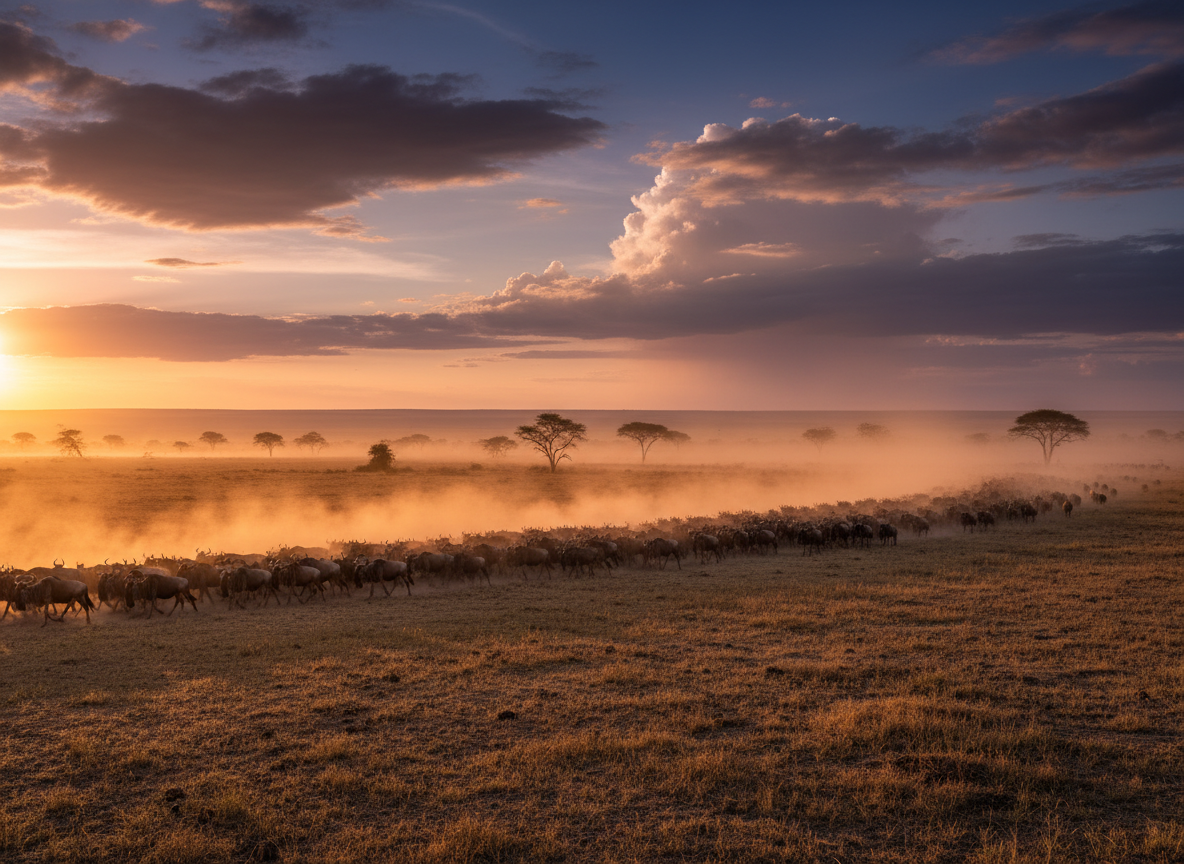
Weather in masai mara in july coincides with the peak Great Migration river crossings. Over 1.5 million wildebeest and hundreds of thousands of zebra are in the Masai Mara ecosystem. Mara River crossings happen daily, sometimes multiple times per day.
Masai mara weather in july also brings the soft golden light of cool dry-season mornings: low in the sky, hitting the migration dust clouds and the red coats of thousands of wildebeest in a scene that no photograph ever fully captures.
July safari conditions: The best of the year. Perfect game drive access. Peak wildlife density. Book camps 6 to 9 months ahead.
Weather in Masai Mara in August
Weather in Masai Mara in August is nearly identical to July: dry, cool, and extraordinary. The Great Migration remains in full force. The Mara River crossings continue. Weather masai mara august delivers the same blue-sky, cool-morning game drive conditions that make July so compelling.
August temperatures in Masai Mara:
- Daytime: 23°C to 26°C (73°F to 79°F)
- Mornings: 12°C to 14°C (54°F to 57°F)
- Rainfall: Minimal: occasional brief evening showers possible late August
Masai mara weather in august is slightly warmer than July as the dry season begins its gradual transition. Weather in masai mara kenya in august remains superb safari weather, and the wildlife spectacle is unchanged.
What makes weather masai mara august distinctive: August typically sees some of the most dramatic Mara River crossing events of the entire migration season. As the wildebeest herds build up pressure against the river banks: animals pushing from behind, crocodiles waiting in the water ahead: the crossings become larger and more intense. August Mara River crossings are frequently the most photographed moments in African wildlife.
August safari conditions: Peak safari season. Excellent across every category. Peak accommodation prices: book well ahead through Trunktrails Safaris to secure allocations.
Masai Mara Weather in September
Masai Mara weather in September continues the dry season with warming days and slightly more wildlife movement as the migration herds begin their gradual southward dispersal. September is considered by experienced safari travellers to be the sweet spot of the Masai Mara year.
September temperatures in Masai Mara:
- Daytime: 25°C to 28°C (77°F to 82°F)
- Mornings: 13°C to 15°C (55°F to 59°F)
- Rainfall: Very low: clear skies with occasional afternoon cloud build-up
Weather in masai mara in september delivers the Great Migration in its final act. Mara River crossings continue. But crowd levels begin to decline from August’s peak, meaning game drive vehicles at sightings are fewer and the experience more private.
Masai mara weather in september is slightly warmer and sunnier than July and August. The morning chill is less severe. Game drive conditions remain excellent. Wildlife density is still at annual peak levels across all species. Trunktrails Safaris consistently places September as our top month recommendation for wildlife-first Kenya safari travellers.
September safari conditions: Outstanding. Full Great Migration experience with less vehicle pressure than July/August.
Weather in Masai Mara in October
Weather in Masai Mara in October marks the transition from the long dry season toward the short rains. The Great Migration wildebeest begin returning south to Tanzania. Weather masai mara october is warm, generally dry, and increasingly variable toward the end of the month.
October temperatures in Masai Mara:
- Daytime: 25°C to 29°C (77°F to 84°F)
- Mornings: 14°C to 16°C (57°F to 61°F)
- Rainfall: Low in early October: increasing short showers late October
Masai mara weather in october still delivers excellent game drive conditions in the first half. The departure of the wildebeest herds southward creates an interesting wildlife dynamic: lion prides and other predators shift focus back to resident prey: topi, zebra, warthog, impala.
Weather in masai mara kenya in october late-month can bring the first short-rain showers, greening the landscape quickly. The Masai Mara ecosystem responds rapidly: grass begins shooting within days, and the savannah takes on a two-tone appearance of golden dry and vivid new green simultaneously.
October safari conditions: Good to excellent in early October. Variable from mid-month. Prices begin to ease from peak-season highs.
Masai Mara Weather in November
Masai Mara weather in November marks the short rains: lighter and more predictable than the long rains of April and May. November masai mara weather brings afternoon and evening showers, but mornings are typically clear and game drives in the early hours are largely unaffected.
November temperatures in Masai Mara:
- Daytime: 24°C to 28°C (75°F to 82°F)
- Mornings: 14°C to 16°C (57°F to 61°F)
- Rainfall: Regular afternoon and evening showers: typically 10 to 15 rain days
Weather masai mara november is the month that most experienced Kenya safari travellers overlook: and benefit from as a result. The short rains are not the day-long downpours of April. A typical November day in the Masai Mara sees clear blue skies until mid-afternoon, a storm for 30 to 90 minutes, and then clearing skies again for the evening game drive. Mornings are ideal for game drives in all conditions.
Masai mara weather in november also coincides with the arrival of a second wave of migratory birds from Europe and northern Asia. Resident wildlife: lion, cheetah, leopard, elephant, buffalo: is abundant and active. A strong value month for Trunktrails Safaris Kenya safari packages: good wildlife, excellent pricing, and the Masai Mara largely to yourself.
November safari conditions: Good. Morning game drives excellent in all weather. Accommodation prices at post-peak lows.
Weather in Masai Mara in December
Weather in Masai Mara in December continues the short rains through early-to-mid month and then typically eases toward Christmas and the festive season. December masai mara weather is warm, occasionally wet, and builds toward the dry conditions of January.
December temperatures in Masai Mara:
- Daytime: 24°C to 29°C (75°F to 84°F)
- Mornings: 14°C to 17°C (57°F to 63°F)
- Rainfall: Moderate in early December: easing from mid-month, clear by late December
Masai mara weather in december brings a returning green to the landscape as short rains continue, followed by the transition to dry conditions in the last two weeks. Wildlife is distributed widely: elephant families with calves, buffalo herds, and resident predators are all active and frequently sighted on game drives.
Late December sees rising accommodation demand as the festive-season travel peak arrives. Weather in masai mara kenya in december late-month is typically dry, clear, and excellent: delivering New Year Kenya safari experiences that combine good weather with celebratory camp atmospheres across the Masai Mara’s luxury properties. Trunktrails Safaris secures festive-season Masai Mara allocations months ahead for our Kenya safari guests.
December safari conditions: Variable early month. Excellent from mid-December. Festive-season demand means key camps book out early.
Quick Reference: Masai Mara Weather Month by Month
| Month | Weather | Wildlife | Crowds | Price Level |
| Jan | Warm, dry | Excellent (birthing) | Low | Moderate |
| Feb | Warm, dry | Excellent | Moderate | Moderate |
| Mar | Transitioning | Very good (early) | Low | Low-Moderate |
| Apr | Wet | Good (access varies) | Very low | Low |
| May | Wet/easing | Good (birding peak) | Very low | Low |
| Jun | Drying | Very good (migration starts) | Moderate-High | High |
| Jul | Dry, cool | Peak (Great Migration) | Peak | Peak |
| Aug | Dry, cool | Peak (Great Migration) | Peak | Peak |
| Sep | Dry, warm | Peak (migration continuing) | High | High |
| Oct | Warm, drying | Excellent | Moderate-High | High |
| Nov | Short rains | Excellent | Low-Moderate | Moderate |
| Dec | Short rains/dry | Excellent | Moderate-High | Moderate-High |
Plan Your Kenya Safari with Trunktrails Safaris
Whether you want the full Great Migration spectacle in July, the birthing season game drives of January, or a private green-season Masai Mara experience in April, Trunktrails Safaris builds Kenya safari packages around the Masai Mara weather calendar: matching the right season to your wildlife priorities, budget, and travel style.
Our tours and safaris team plans every detail: camp selection, game drive vehicle, season-appropriate routing, and on-the-ground adjustments for unexpected weather. We have operated Kenya safaris in every month of the Masai Mara weather calendar. We know what each season delivers.
Every Masai Mara weather window has its own wildlife character. Every month is worth visiting for the right traveller. Our job at Trunktrails Safaris is to match you to yours. ✨
Every booking with Trunktrails Safaris contributes 5% to wildlife conservation in the Masai Mara ecosystem: protecting the conditions that make every season worth visiting.