

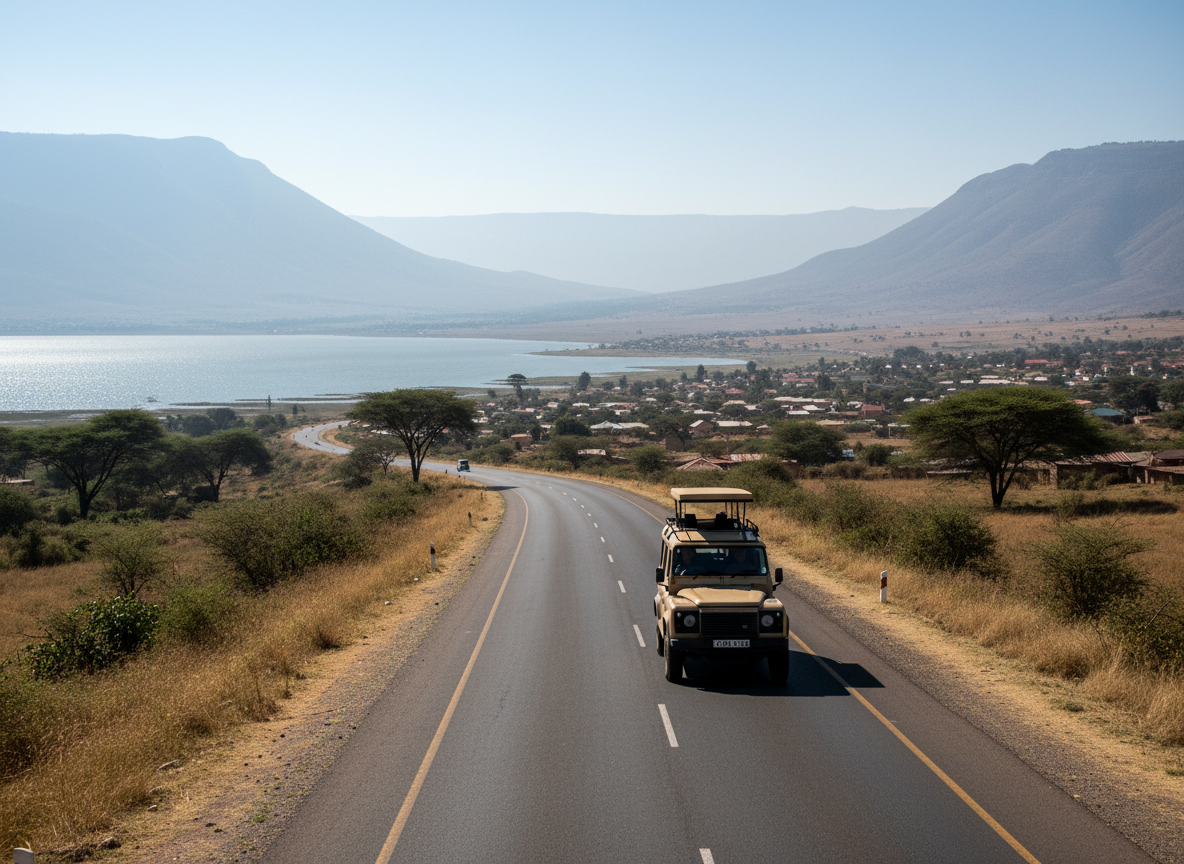
If you are driving from Nairobi to the Masai Mara, two main overland routes serve the journey. The Narok Road is the most direct and most commonly used route, taking you southwest through Naivasha and Narok before heading down to the Mara gates. The Mai Mahiu Road offers an alternative routing via the Rift Valley escarpment with dramatic scenery: but adds time and distance to the journey.
This guide from Trunktrails Safaris compares both routes across distance, time, road conditions, scenery, and which option suits different types of travelers and itineraries.
Quick Comparison: Narok Road vs Mai Mahiu Road
| Factor | Narok Road (A104) | Mai Mahiu Road (B3) |
| Route | Nairobi → Naivasha → Narok → Masai Mara gates | Nairobi → Mai Mahiu → Narok → Masai Mara gates |
| Distance | Approximately 265 to 280km | Approximately 280 to 300km |
| Estimated Drive Time | 5 to 7 hours | 6 to 8 hours |
| Road Quality | Paved to Narok; murram/gravel from Narok to gate | Paved to Narok junction; similar gravel thereafter |
| Scenery | Rift Valley floor, Naivasha lake views, Narok town | Dramatic Rift Valley escarpment, volcanic landscape |
| Traffic | Moderate to heavy through Nairobi and Naivasha | Less traffic through Nairobi; longer but less congested |
| Common Stops | Naivasha (fuel, lunch); Narok (fuel) | Mai Mahiu viewpoint; Lake Naivasha area |
| Best For | Direct routing; most common choice | Scenic route; combining with Naivasha or Nakuru |
| Road Cautions | Nairobi traffic; Naivasha speed humps | Escarpment road; some steep sections |
The Narok Road: Most Direct Route
Route Overview
The Narok Road is the standard and most commonly used route from Nairobi to the Masai Mara. From Nairobi, you take the A104 highway heading southwest, passing through the Rift Valley towns of Naivasha and eventually reaching Narok: the last significant town before the Masai Mara.
From Narok, the road continues southwest, transitioning from tarmac to gravel and murram tracks as you approach the various Masai Mara gates (Sekenani, Talek, and others depending on your camp location). This final section from Narok to the gate takes approximately 1.5 to 2.5 hours on rough roads.
Road Quality
- Nairobi to Naivasha: Paved and generally good condition; heavy trucks on some sections; speed bumps through towns
- Naivasha to Narok: Paved; moderate quality; Narok town roads can be congested
- Narok to Masai Mara gates: Gravel and murram; quality varies significantly by season and maintenance; can be rough and dusty in dry season; muddy and difficult after heavy rains
Key Stops on Narok Road
- Naivasha: Approximately 90 kilometers from Nairobi; good fuel stations, restaurants, and a rest stop opportunity; Lake Naivasha viewpoints visible from the road
- Narok: Approximately 140 kilometers from Nairobi; the last fuel station before the park; market town with supplies available
- Ewaso Ngiro Bridge area: Midway between Narok and the Mara; often where guide stops to show the escarpment views down into the Mara ecosystem
Typical Journey Time
5 to 7 hours including stops, depending on:
- Nairobi traffic at departure time
- Number of stops for fuel and food
- Road conditions in the final Narok-to-gate stretch
- Destination within the Masai Mara (some camps require longer internal tracks)
The Mai Mahiu Road: The Scenic Alternative
Route Overview
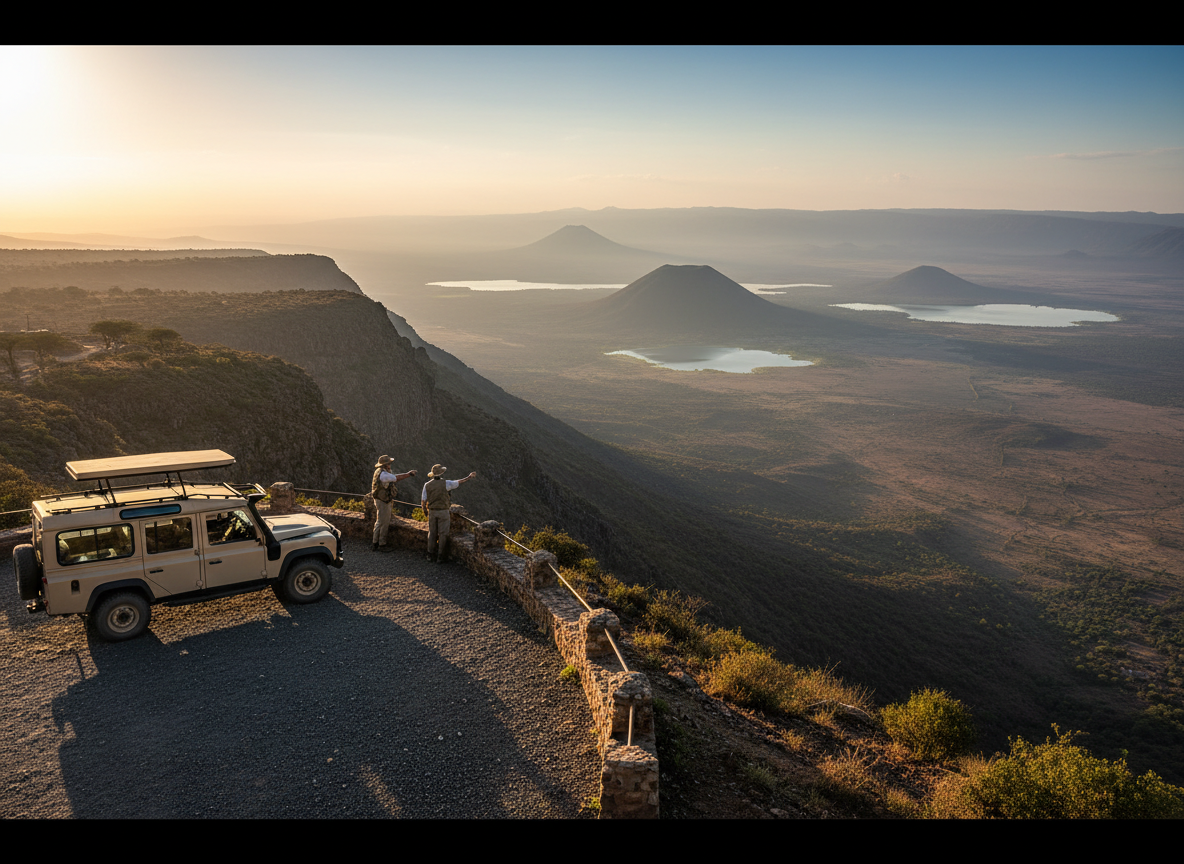
The Mai Mahiu Road takes you out of Nairobi on the Nakuru highway (A104) before turning southwest at Mai Mahiu and descending the dramatic Great Rift Valley escarpment. From the escarpment viewpoints, the scale of the Rift Valley floor below is extraordinary: volcanic ridges, flat-bottomed plains, and the shimmering lakes visible on clear days.
From Mai Mahiu, the route continues to the Rift Valley floor and eventually connects back to the Narok–Masai Mara routing. This adds approximately 20 to 40 kilometers to the total distance compared to the direct Narok route.
What Makes This Route Special
The Mai Mahiu escarpment viewpoints are among the most dramatic in Kenya. The descent from the highland plateau into the Rift Valley is steep, scenic, and highly photogenic. Extinct volcanic cones are visible from the road, and the flat Rift Valley floor stretches to the horizon.
If you are combining your Masai Mara safari with a stop at Lake Naivasha, Hell’s Gate National Park, or Lake Nakuru, the Mai Mahiu routing integrates these naturally into the journey.
Road Quality
- Nairobi to Mai Mahiu junction: Paved and good quality
- Mai Mahiu escarpment descent: Paved but steep; caution with heavy braking; good views throughout
- Rift Valley floor to Narok junction: Paved sections; variable quality
- Narok to Masai Mara gates: Same as Narok Road; gravel and murram
Typical Journey Time
6 to 8 hours, slightly longer than the Narok Road due to the escarpment routing and additional distance. However, with a stop at a Rift Valley viewpoint or Lake Naivasha, the extra time becomes part of the day’s experience rather than pure driving.
Adding Stops: Making the Drive an Experience
Both routes can incorporate meaningful stops that make the overland journey part of the safari experience:
| Stop | Route | What to See |
| Great Rift Valley Viewpoint | Mai Mahiu | Panoramic escarpment views; volcanic cones |
| Lake Naivasha | Both (Narok Road passes closer) | Hippos; bird life; Hell’s Gate access |
| Hell’s Gate National Park | Narok Road (detour) | Cycling safari; gorges; geothermal activity |
| Lake Nakuru | Mai Mahiu (detour northward) | Flamingos; rhino sanctuary |
| Narok Market | Narok Road | Maasai craft market; cultural stop |
Trunktrails Safaris driver-guides can incorporate viewpoint stops and optional detours on both routes, making the overland drive to the Mara genuinely informative and scenic.
When Road Conditions Change Your Choice

Dry Season
Both routes are generally passable in dry conditions. The Narok to Masai Mara gate section is dusty but navigable in a 4×4. The Narok Road is slightly preferred for its directness during dry season.
Wet Season (April to May, October to November)
Heavy rain can make the murram sections between Narok and the Mara gates difficult on both routes. Some specific tracks within the park itself can become impassable without 4×4 recovery equipment. Trunktrails Safaris uses experienced drivers who know which sections to avoid after heavy rain.
During the long rains, the scenic beauty of the Rift Valley escarpment on the Mai Mahiu route is at its most vivid: bright green, dramatic clouds: but road conditions require extra time.
Which Should You Choose?
Choose Narok Road If You:
- Want the most direct route with the fewest additional kilometers
- Are on a tight schedule and want to maximize game drive time on arrival
- Are traveling in dry season with good road conditions
- Have been to Kenya before and are not prioritizing new overland scenery
Choose Mai Mahiu Road If You:
- Are combining your Masai Mara safari with Lake Naivasha, Hell’s Gate, or Lake Nakuru
- Want to experience the dramatic Rift Valley escarpment scenery
- Are a first-time visitor to Kenya who wants to understand the landscape context
- Have a flexible schedule and can allow an extra 1 to 2 hours
For most direct Nairobi-to-Masai Mara transfers, the Narok Road is the practical choice. For travelers wanting to make the overland journey an experience in itself, the Mai Mahiu route is memorable and rewarding.
Let Trunktrails Safaris Handle Your Overland Transfer
Trunktrails Safaris provides private 4×4 ground transfers from Nairobi to all Masai Mara camps and conservancies on both routes. Our experienced driver-guides know the road conditions in every season and will advise on the best route for your specific dates and itinerary.
Tell us your Nairobi hotel, camp destination, and travel dates: and Trunktrails Safaris will take care of the rest.