

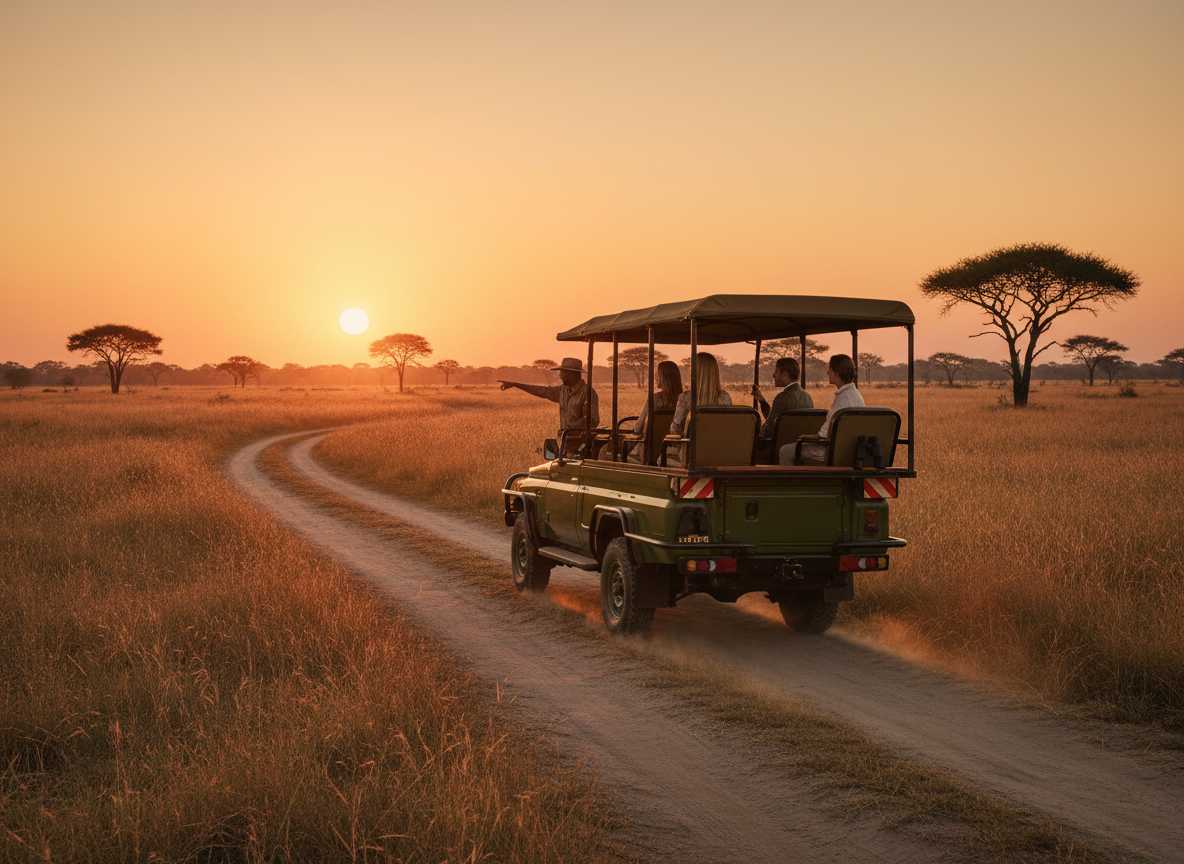
A private safari isn’t just about exclusivity. It’s about control—over your schedule, your pace, your focus. It’s the difference between following a set itinerary and shaping the experience around what matters to you.
In East Africa, private safaris open doors that group tours can’t. You get access to conservancies with vehicle limits, the flexibility to linger at sightings that captivate you, and guides who adapt to your interests in real time.
Here’s what makes a private safari in East Africa worth the investment, and how to plan one that delivers.
What “private” actually means
Private doesn’t always mean the same thing. Some operators offer private vehicles with shared lodges. Others offer fully exclusive experiences—private conservancies, private guides, private camps.
The key is understanding what level of privacy you’re after.
Private vehicle, shared lodge means you have your own guide and vehicle, but stay in a lodge with other guests. Private conservancy access offers limited vehicles, exclusive traversing rights, often paired with high-end lodges. Fully private safari includes custom itinerary, private guide, and exclusive-use camps or villas.
Each tier offers different benefits. The right choice depends on your budget, group size, and how much solitude you’re seeking.
Why East Africa is ideal for private safaris
East Africa’s conservancy model makes it uniquely suited for private experiences. In Kenya and Tanzania, private conservancies operate alongside national parks, offering lower vehicle density and more flexible safari rules.
You can drive off-road to follow a leopard. You can stop for sundowners in the middle of the plains. You can do night drives and walking safaris—activities often restricted in national parks.
The wildlife is the same, but the experience feels fundamentally different. Quieter. More intentional. Less performative.
Choosing your destination
East Africa offers several strong options for private safaris.
Masai Mara Conservancies in Kenya include Mara Naboisho, Olare Motorogi, and Mara North. Low vehicle density, excellent predator sightings, migration access.
Laikipia Plateau in Kenya offers rhino tracking, diverse landscapes, fewer tourists, and strong conservation focus.
Serengeti Private Concessions in Tanzania feature Grumeti, Singita, and Lamai. Migration routes, luxury lodges, exclusive traversing.
Ngorongoro Highlands in Tanzania provide crater access, cultural experiences, and dramatic scenery.
Each region offers something distinct. The Mara is classic savanna drama. Laikipia is rugged and varied. The Serengeti concessions are polished and remote. Ngorongoro blends wildlife with geology and culture.
What to expect from a private guide
A private guide changes everything. Instead of catering to a group with mixed interests, they’re focused entirely on you.
Want to spend an hour watching a leopard? Done. Interested in birds? They’ll adjust. Prefer early starts and long drives? They’ll make it happen.
The best guides in East Africa are storytellers, naturalists, and trackers rolled into one. They don’t just find animals—they read the landscape, anticipate behavior, and create moments that feel spontaneous but are actually the result of deep knowledge.
When booking a private safari, ask about guide qualifications. Look for bronze, silver, or gold certifications from the Kenya Professional Safari Guides Association or equivalent bodies in Tanzania.
Timing and seasonality
Private safaris work year-round, but timing affects availability and experience.
High season runs July through October and December through February. Migration, dry weather, higher rates, advance booking essential.
Shoulder season covers March through June and November. Fewer tourists, lush landscapes, excellent value, strong wildlife sightings.
If flexibility is possible, shoulder season offers the best balance of experience and exclusivity.
Cost and value
Private safaris in East Africa typically start around $800 to $1,200 per person per night for mid-range conservancy experiences, and can exceed $2,000 plus per night for ultra-luxury or fully exclusive setups.
That includes accommodation, meals, game drives, park fees, and guiding. Flights, tips, and drinks are usually extra.
Is it worth it? If you value flexibility, intimacy, and the ability to shape your own experience, absolutely. The difference between a good safari and a transformative one often comes down to how much control you have over the details.
How to book
Work with operators who specialize in private safaris and have direct relationships with conservancies and lodges. Trunktrails Safaris is one example—they focus on curated, private experiences across Kenya and Tanzania, with an emphasis on conservancies and lesser-known gems.
Avoid generic booking platforms. Private safaris require nuance, and the best experiences come from operators who know the ground intimately.
Why it matters
A private safari isn’t just a luxury. It’s a different way of experiencing wild places. It’s about depth over breadth, presence over checklist, and the freedom to let the landscape unfold on your terms.
East Africa offers some of the best private safari infrastructure in the world. If you’re ready to go beyond the standard circuit, this is where it gets interesting.
[…] Practical tips before you go […]