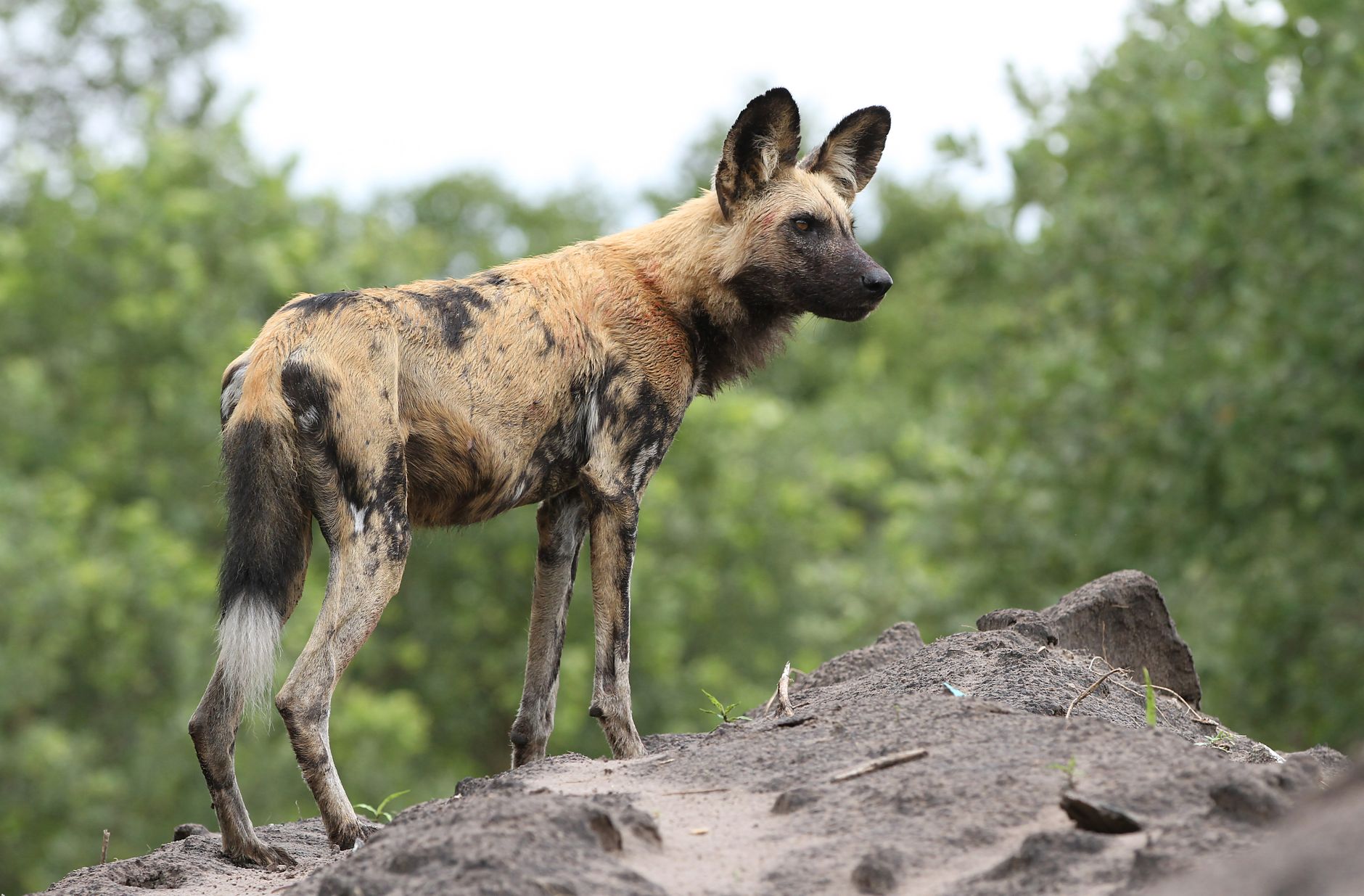
Where can you find wild dogs in Kenya? The honest answer begins with a warning. No park or conservancy can promise a sighting. That said, Laikipia’s network of private and community conservancies, together with the wider Laikipia-Samburu ecosystem, offers the most consistent practical odds in Kenya today. Samburu National Reserve, Buffalo Springs, Shaba, parts of Tsavo, and the Maasai Mara’s private areas all hold roaming packs. Sightings in those places vary far more week to week. This guide ranks the options without brochure hype. You can plan around real pack behaviour, access, and season.
Where Can You Find Wild Dogs in Kenya?
Kenya’s wild dog population is small and highly mobile. The strongest region is Laikipia, where several conservancies report packs regularly. The second tier includes Samburu, Buffalo Springs, and Shaba. Tsavo West and parts of Tsavo East come next, but with lower predictability. The Maasai Mara, often the headline park for first-time visitors, produces wild dog sightings only occasionally. Those sightings usually happen in the private conservancies, not the national reserve. Other areas, including parts of the coast and northeastern Kenya, have very low reliability but occasional records.
The table below gives a realistic starting point. Road times are indicative and depend on the route, season, and road conditions.
| Region | Practical sighting category | Best months | Minimum stay | Access notes |
|---|---|---|---|---|
| Laikipia conservancies | Strongest in Kenya | June to September, December to February | Two nights | Road from Nairobi, roughly four to six hours, or bush flight to Loisaba or Nanyuki |
| Samburu, Buffalo Springs, Shaba | Moderate | June to October, December to March | Two nights | Road from Nairobi, roughly six to seven hours, or scheduled flight to Samburu |
| Tsavo West and parts of Tsavo East | Lower, unpredictable | June to September | Two nights | Road from Nairobi or the coast; large area, long drives |
| Maasai Mara conservancies | Occasional, not guaranteed | July to October | Two to three nights | Road or flight; combine with big cats and migration |
Why Is Laikipia the Most Reliable Region for Wild Dogs in Kenya?
Laikipia is not a single national park. It is a mosaic of private ranches, community conservancies, and wildlife areas that stretch north from Mount Kenya toward Samburu. This mixed landscape suits wild dogs. Packs can move through acacia scrub, open grassland, and rocky hills without crossing heavily trafficked park gates. Several named conservancies, including Ol Pejeta Conservancy, Loisaba Conservancy, Mugie Conservancy, and Borana Conservancy, report resident or semi-resident packs. Our Ol Pejeta Conservancy guide covers one of those areas in more detail.
Two-night minimums are common in Laikipia because packs roam widely. A single afternoon drive rarely works. Morning and late-afternoon drives give you the best chance, because wild dogs tend to hunt around dawn and dusk. Guides also share real-time sightings through radio networks and local WhatsApp groups. That cooperation across conservancy boundaries makes Laikipia stronger than any single park.
Denning season is a special trade-off. From around June to August, packs often den in rocky or bushy areas. Guides may know the general den zone. Responsible conservancies restrict vehicle access near active dens to protect pups. That can mean a longer, quieter sighting from a distance. It also means you need a guide who follows the rules. Avoid any operator who promises close den access.
Can You See African Wild Dogs in Samburu, Buffalo Springs, and Shaba?
Yes, but treat Samburu as a good second choice rather than a guaranteed one. The three reserves, Samburu, Buffalo Springs, and Shaba, sit along the Ewaso Nyiro River. They share a dry, beautiful landscape of riverine forest and acacia scrub. Wild dogs use this ecosystem, but their packs move across large areas. Sightings improve in the dry months when prey concentrates near water. Our Samburu safari guide explains the wider wildlife and travel practicalities for this region.
Samburu works best when you combine it with Laikipia. The two zones are close enough that packs sometimes move between them. A two-night stay in Samburu plus two nights in Laikipia gives you a better overall chance of a wild dog encounter than either area alone. Guides in both areas talk to each other, so a pack seen near the Laikipia border one morning can inform your afternoon drive in Samburu.
How Likely Are Wild Dog Sightings in Tsavo East and Tsavo West?
Tsavo is a wild dog setting, not a wild dog guarantee. Tsavo West and Tsavo East together form one of Kenya’s largest protected ecosystems. Wild dogs do occur there, but the area is huge and the road network is limited. Packs can disappear into remote country for weeks. Tsavo West is often considered slightly more productive for wild dogs than Tsavo East, but the difference is not large enough to plan around.
Choose Tsavo if you want a wild, low-vehicle safari and accept that wild dogs are a bonus. You will likely see elephants, baobabs, and dry-country birds. You may also see a pack if one is active near a water source. Our Tsavo safari guide covers the practical access questions for this vast region. Do not make Tsavo your only wild dog plan.
Are There Wild Dogs in the Maasai Mara and Neighbouring Conservancies?
Occasionally, yes. The Maasai Mara National Reserve itself has very few reliable wild dog records. The private conservancies around the reserve, including Mara North, Naboisho, Lemek, and Olderkesi, produce occasional sightings. Packs sometimes cross from the Serengeti side or move through the conservancies when prey shifts. Those sightings are real, but they are not predictable. If you visit the Mara only for wild dogs, you will likely be disappointed. If you visit for big cats, migration, and general plains wildlife, a wild dog sighting becomes a memorable surprise. Our Maasai Mara guide covers what you can expect more consistently in the reserve and its conservancies.
What Other Locations Have Reported Wild Dogs in Kenya?
A few other places deserve a mention. Meru National Park, east of Laikipia, has occasional wild dog records. Parts of northeastern Kenya and the coast have scattered reports. These are not practical targets for a short safari. Access is harder, sightings are rare, and tourism infrastructure for wild dog tracking is thin. Treat these areas as places where a wild dog may appear, not places to plan a trip around. If a guide reports a pack near Meru, you could consider a flexible extension. Otherwise, stick to Laikipia, Samburu, or Tsavo.
What Is the Best Time of Year and Time of Day to See Wild Dogs?
The dry seasons, roughly June to October and December to March, are the strongest. Prey concentrates near water, and vegetation thins out. That makes packs easier to spot. Denning season, from about June to August, can offer sightings near a den site. But access may be limited, and packs may stay in thick cover. That is the trade-off. Early morning and late afternoon are the best times of day. Wild dogs are largely crepuscular, meaning they move most around dawn and dusk. Midday heat usually sends them into shade.
If you are weighing shoulder-season travel, consider how April and May compare for a Kenya safari. Those months bring rain but also lower rates and fewer vehicles. For wild dogs, rain can scatter prey and make tracking harder. If you want to add night drives, ask your camp about nocturnal wildlife experiences. Wild dogs are not strictly nocturnal, but moonlit nights can bring activity you will not see at midday.
How Do Wild Dog Packs Hunt, Move, and Den in Kenya?
African wild dogs live in cooperative packs. Most packs contain fewer than twenty adults, plus pups. They hunt as a group, using stamina to run down prey over distances. Hunt success rates for wild dogs are often high compared to lions or leopards, but the pack must eat quickly. Lions and hyenas frequently steal their kills. That pressure helps explain why wild dogs cover such large home ranges. A pack may move tens of kilometres in a day.
Denning changes everything. The alpha female gives birth in a den, often a reused burrow or rocky crevice. The pack stays close to the den for several weeks. Pups emerge after a few weeks under heavy guard. The pack hunts nearby and returns to feed the pups. This is the period when sightings near a den become possible, but also the period when disturbance can harm the litter. Responsible guides keep their distance.
How Difficult Are Wild Dogs to Find on a Kenya Safari?
Wild dogs are hard to find, but not impossible. Compared to lions, leopards, cheetahs, and elephants, wild dogs demand more patience and better planning. If you keep asking where can you find wild dogs in Kenya, the answer shifts with pack movements. No guide can guarantee a sighting. Even in Laikipia, the strongest region, you need at least two nights and often three. Local guides with fresh sightings information make the difference. A lodge that participates in wild dog monitoring gives you an advantage. If an operator promises wild dogs on a one-afternoon drive, treat that claim with caution.
How Should You Plan a Wild Dog Safari, Including Road Access and Bush Flights?
Start by choosing Laikipia or Samburu as your anchor. Book at least two nights in one of those areas. Ask the camp or operator about current pack activity before you commit. Some camps share daily sightings with guests. That is what you want. If you have limited time, a bush flight saves a full afternoon on the road and gets you into camp for the evening drive. Road travel is cheaper, but it eats into prime viewing hours. Weigh the cost and time trade-off between road transfers and bush flights before you book.
A sample short plan could be two nights in Laikipia, then two nights in Samburu, with road transfers or a short flight between them. Three nights in Laikipia alone also works. Avoid splitting your time across too many regions. Wild dogs reward repeat drives in the same area, not fast park-hopping. Ask your guide to prioritise wild dog zones on early mornings and late afternoons. If a pack is denning, ask about the camp’s den policy before you pay.
What Threats Do Kenya’s Wild Dogs Face and How Are They Protected?
Wild dogs face several serious threats. Habitat loss pushes packs into smaller areas. Snares set for bushmeat injure and kill wild dogs. Disease, especially canine distemper and rabies, can sweep through packs after contact with domestic dogs. Vehicle collisions are another risk on busy roads. These pressures keep Kenya’s wild dog population small and fragmented.
Conservation work in Laikipia and Samburu helps. Conservancy teams run anti-snaring patrols, vaccinate domestic dogs to reduce disease, and monitor packs with radio collars and sightings reports. Some conservancies restrict vehicle numbers near dens. By staying at camps that support these programmes, you contribute directly. Ask operators how they fund wild dog monitoring. The best ones will have a clear answer.
How Can You Compare Safari Operators for a Wild Dog Trip?
Wild dog sightings reward patient planning. Before you commit, compare itineraries that include at least two nights in Laikipia or Samburu. Ask operators how they share current pack locations. Ask about den-season policies and guide experience. You can browse packages through FindMySafari, Valley Safaris, and Trunktrails Safaris. Compare included drives, guide experience, and den-season policies before you pay. You can also find more planning detail at touringinsights.com.
Where Can You Find More Safari Planning Resources?
- Samburu National Reserve guide from Trunktrails Safaris
- Ol Pejeta and Sweetwaters safari package from Valley Safaris
- Samburu destination guide on FindMySafari