What Is the Best Time for the Great Migration in Kenya?
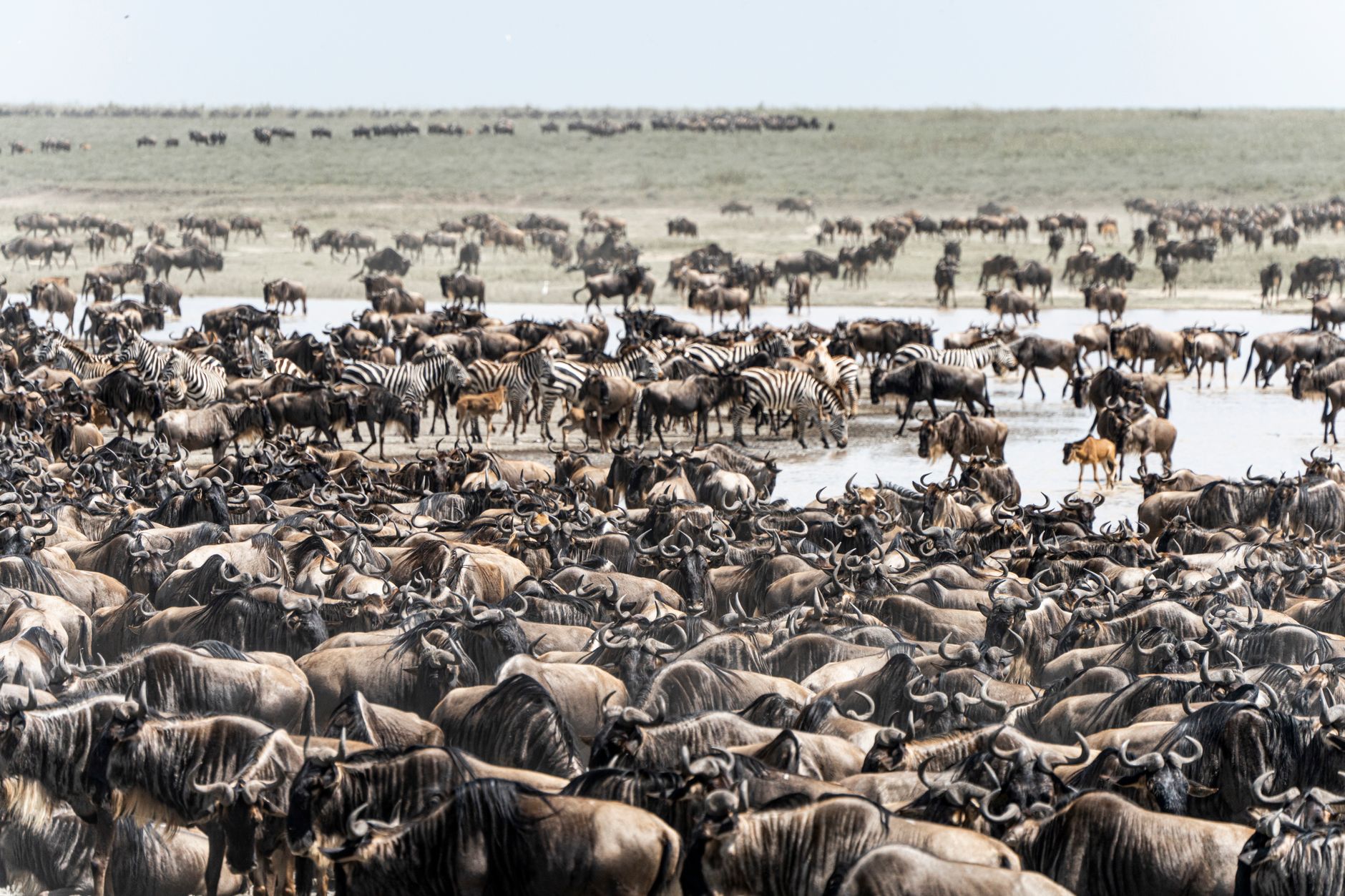
Ask any safari guide what is the best time for the great migration in Kenya and you will get a confident answer: July through October. Ask a second guide and you will hear a more careful reply, because the migration is not a train schedule. It is a rolling wave of around 1.5 million wildebeest, plus zebra and gazelle, moving with rainfall and fresh grass. The herds do not check a calendar.
Still, for planning purposes, the July to October window is the right answer for most travelers. The herds are in the Masai Mara ecosystem during these months, and Mara River crossings happen most reliably between August and September. If you want the highest chance of seeing a river crossing, late August into September is your best bet. If you want the full spectacle of wildebeest herds spread across the plains, July through October all deliver.
This guide breaks down the migration from the Kenya side. It covers which Mara areas matter, how herd behavior shifts month by month, and why the best time for you might not be the most popular time.
What Months Is the Great Migration in Kenya?
The migration is a year-round cycle, but it only reaches Kenya for a defined stretch. The herds spend December through March calving on the short-grass plains of the southern Serengeti in Tanzania. Through April and May they push north and west. By June and July, the leading columns cross the Grumeti River and move toward the Mara River, which forms the border between Tanzania and Kenya.
In a typical year, the herds enter Kenya’s Masai Mara in July. They stay through October. Some years they arrive in June; some years they linger into November. The timing shifts with rainfall patterns, so no one can give you exact dates in advance.
The herds do not arrive as one solid mass. They move in waves, with different groups crossing at different points. This is why you can visit the Mara for a week in August and see crossings daily, or visit the same week and see almost nothing if the herds are spread out on the Tanzanian side.
By November, the short rains begin and the herds turn south. They recross the Mara River and head back through the Serengeti toward the calving grounds. By December, most of the migration has left Kenya.
When Do the Mara River Crossings Happen?
The Mara River crossings are the main event for most visitors. This is where hundreds or thousands of wildebeest bunch up at a riverbank, hesitate, then surge across churning water while crocodiles wait.
Crossings happen throughout the herds’ time in Kenya, but the odds are not even across the season. The crossings are most frequent and most dramatic from late July through September. August and September are the peak months. During this window, crossings can happen multiple times a day somewhere along the river.
The key word is “can.” Crossings are not guaranteed on any given day. Herds may spend days building up at a crossing point, then abort at the last moment. They may cross at dawn, at midday, or not at all. Guides with good radio networks and local knowledge improve your odds, but no one can control the herds.
Late September into October is still a strong crossing window, though the herds begin to fragment as they move into the eastern Mara. Some herds cross back into Tanzania as early as late October. If you visit in November, you may catch stragglers, but the main spectacle is usually over.
Is August or September Better for the Great Migration?
For river crossings, late August through mid-September is the strongest period. The herds are at their peak density in the Mara, and crossing activity is consistently high. This is the time professional photographers and seasoned safari-goers aim for.
August offers nearly the same odds, with the added benefit that the grass is shorter and the plains are more open. September can see thicker vegetation in places, which can make it harder to spot herds at a distance. But September also brings slightly fewer vehicles in some years, because the crowds that peak in August begin to thin after the summer holidays.
The honest answer is that both months are excellent, and the difference between them is small. If you can only choose one, pick late August to early September for the best combination of crossing activity and manageable crowd levels.
One thing to note: the exact shape of the season varies by year. In drought years, the herds may arrive earlier and leave earlier. In wet years, they may linger. Book with a flexible mindset and trust your guide to position you where the herds actually are.
What Is the Best Area in the Mara to See the Migration?
The Masai Mara National Reserve is the core viewing area, but the migration is not evenly distributed across it. The western escarpment and the areas near the Mara River, particularly around the Musiara Swamp and the main crossing points, see the most concentrated herd movement.
Our /masai-mara-guide explains the different sectors, gate locations, and where the herds congregate each month.
The Mara Triangle, on the western side of the reserve, is a strong choice. It has fewer vehicles than the eastern sectors and hosts major crossing points. The reserve’s ranger post at Mara Rianda and the Lookout Hill area are also reliable vantage points in peak season.
The private conservancies bordering the reserve, such as Mara Naboisho, Olare Motorogi, and Mara North, offer a different experience. The herds move through these areas, especially in late September and October. You get exclusive-use driving rights, lower vehicle density, and often better predator viewing because the herds attract lions and hyenas. The trade-off is that the conservancies are not located at the most famous crossing points, so river crossing views are less central to the experience.
For first-time visitors who want the classic crossing spectacle, staying inside the reserve is the simple choice. For repeat visitors or those who value uncrowded game drives, a conservancy stay often delivers a better overall safari.
How Predictable Is the Migration Timing?
The migration is not a precise event. It is a natural process driven by rainfall, and rainfall is not predictable months in advance. Every guide who tells you the herds will be in a specific spot on a specific date is guessing to some degree.
What you can rely on is the broad seasonal pattern. The herds are almost certainly in Kenya from August through September. They are almost certainly in the southern Serengeti from January through March. The edges of that pattern, in July and October, are where the unpredictability lives.
This matters for planning. You can book your safari with confidence for the August to September window. For July or October, you should understand that you might catch the herds or you might miss them by a few days. The Mara is a superb wildlife destination regardless, with resident lions, leopards, elephants, and buffalo. A migration safari that does not catch a crossing is still a very good safari.
| Migration Activity by Month | Location | Crossing Likelihood | Crowd Level |
|---|---|---|---|
| January to March | Southern Serengeti, calving season | Not in Kenya | Low to moderate |
| April to June | Central and western Serengeti | Not in Kenya | Low |
| July | Herds enter Masai Mara | Moderate, building | Moderate |
| August | Mara River, peak density | High | High |
| September | Mara River and eastern plains | High | High, easing late month |
| October | Eastern Mara, herds begin dispersal | Moderate, decreasing | Moderate |
| November | Herds recross to Tanzania | Low | Low |
What Is the Difference Between Seeing the Migration in Kenya and Tanzania?
Both countries offer outstanding migration viewing, but the experience differs in real ways. In Kenya, the action is concentrated in the Masai Mara from July to October, and the headline act is the Mara River crossing. The Mara is a relatively compact ecosystem, which makes it easier to be in the right place on the right day.
In Tanzania, the migration is spread across the vast Serengeti. The calving season in the southern Serengeti from January to March offers a different spectacle: hundreds of thousands of births, with abundant predator action as lions and hyenas target the vulnerable young. The Grumeti River crossings in June are less famous than the Mara crossings but can be equally dramatic.
For photography, the Mara’s open grasslands and abundant big cats are a strong draw. For a more remote, low-crowd experience, the Serengeti’s northern reaches in September and October rival the Mara without the same vehicle pressure.
Many travelers combine both countries on a single itinerary, though this adds cost and travel time. If you have limited time, pick one ecosystem and commit to it rather than trying to chase the herds across two countries.
How Far in Advance Should I Book a Great Migration Safari?
Peak migration season, especially August and September, is the most sought-after safari period in Kenya. Camps and lodges in the Mara and the surrounding conservancies fill up quickly. For the best choice of accommodations, book eight to twelve months in advance.
If you want a specific camp in the Mara Triangle or a conservancy with exclusive-use rights, lead times of a year or more are not unusual. Top-tier camps in September can sell out six months ahead.
Booking late is possible, especially if your dates are flexible. You may find last-minute availability in July or October, when demand is slightly lower. But you will have less choice in camps and may pay a premium for what remains.
Working with a specialist operator helps. They know which camps are near active crossing points and which conservancies have the herds in a given season. They can also advise on trade-offs you might not have considered, like whether a camp with a waterhole view matters more than one with direct river access.
Understanding /kenya-safari-cost early in your planning helps you set a realistic budget for peak-season rates and internal flights.
What Else Should You Know About a July to October Safari?
The July to October window is the dry season in Kenya, which brings reliable weather for game viewing. Days are warm, often reaching the high 20s Celsius, and mornings and evenings are cool. Rain is rare, though short afternoon showers can occur even in peak season.
The dry conditions concentrate wildlife around the Mara River and permanent water sources, which improves sightings across the board. This is the best time not just for the migration but for the resident predators that follow the herds. Lions, leopards, cheetahs, and hyenas are all highly visible during this period.
Crowds and costs are the main downsides. Vehicle numbers in the reserve can be high, especially at famous crossings. Park fees and camp rates are at their peak, which affects your overall safari budget. If you have some flexibility, the shoulder weeks in early July and late October offer most of the benefits with fewer vehicles and slightly lower rates.
Conservation is also worth considering. The Mara ecosystem faces pressure from tourism development, habitat loss, and climate variability. Choosing camps with strong conservation commitments, staying in conservancies that share revenue with local communities, and following responsible wildlife viewing guidelines all help protect the very spectacle you are there to see.
For a month-by-month breakdown of weather and wildlife across the whole year, see our guide on /best-time-to-visit-masai-mara. It will help you compare the migration season with the green season.
Ready to Plan Your Migration Safari?
The best time for the Great Migration in Kenya is clear: plan for July through October, aim for late August to mid-September if crossings are your priority, and book well ahead. The herds are one of nature’s greatest spectacles, and being in the right place at the right time is what separates a good safari from an unforgettable one.
To secure the best camps and guides for your dates, compare safari operators through FindMySafari, Valley Safaris, or Trunktrails Safaris. Browse packages that match your timing and budget, and go see the greatest wildlife show on Earth.
Where Can You Find More Safari Planning Resources?
- Masai Mara Great Migration guide from Trunktrails Safaris
- Wildebeest migration route map from Valley Safaris
- Great Migration safari collection on FindMySafari