Volcanoes Gorilla Trek Sector Choice: 12 Families, 1 Answer
Search for volcanoes gorilla trek sector choice and you will find dozens of pages listing gorilla families by name. Almost none of them explain that the word sector does not apply here the way it does across the border in Uganda. Volcanoes National Park in Rwanda has one headquarters, one daily briefing, and no sector system at all. What travelers actually need is a way to predict which of the 12 gorilla families they will likely trek, based on fitness, trailhead direction, and where they choose to stay.
What Does Volcanoes Gorilla Trek Sector Choice Actually Mean?
Volcanoes National Park has no fixed trekking sectors like Bwindi’s Buhoma, Ruhija, Rushaga and Nkuringo. All 12 habituated gorilla families are managed from one park headquarters in Kinigi, and rangers assign trekkers to a family each morning based on fitness, not a pre-booked geographic zone.
If you have already read up on Bwindi’s four trekking sectors, you might expect Volcanoes to work the same way, with lodges clustered near a specific booking zone. It does not work that way. There is one gate, one 7am briefing, and twelve possible gorilla families. The real decision point is not a sector on a map. It is how fit you say you are when you check in at Kinigi.
How Are Gorilla Families Assigned in Volcanoes National Park?
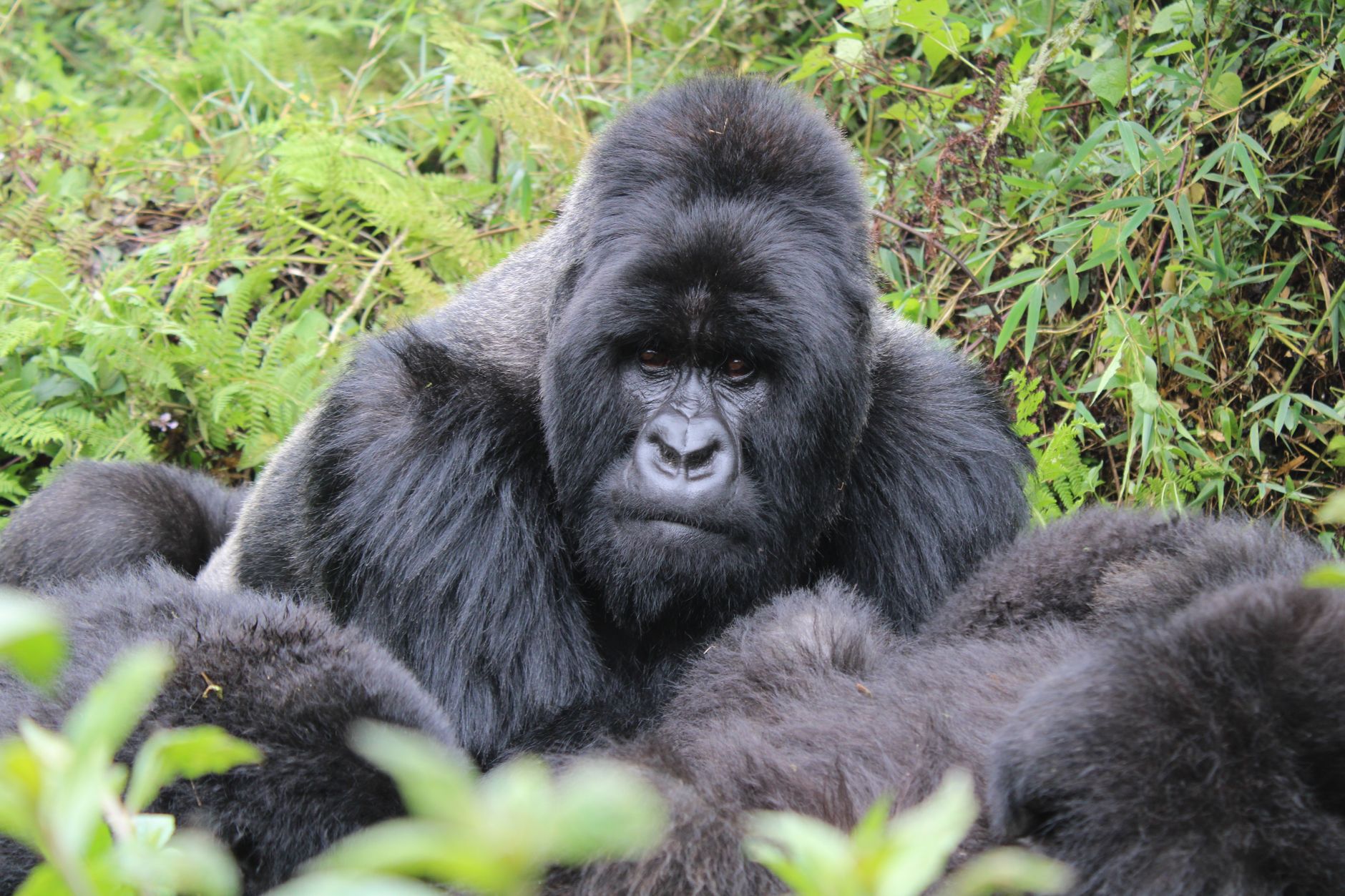
Rangers assign gorilla families at the daily briefing in Kinigi after grouping trekkers by self-reported fitness level. Fitter guests go to families ranging high on Bisoke, Karisimbi or Muhabura, while less fit or older guests get lower-slope families such as Sabyinyo or Agashya, typically under two hours of hiking.
This is the piece most Volcanoes National Park gorilla families content skips. There is no sign-up sheet by family name when you buy your permit. Your tour operator can share your fitness level in advance, and park staff use that, along with which families are sitting on which slope that morning, to build the day’s groups. Be honest about your fitness. Overstating it just means a harder morning on the volcano.
Which Gorilla Families Are Easiest and Which Are Hardest to Trek?
Sabyinyo and Agashya are the most accessible families, often reached in under 90 minutes. Karisimbi and Susa are the hardest, sometimes demanding 5 to 7 hours round trip up steep volcanic terrain above 3,000 meters. Most families fall in between, with actual difficulty shifting week to week as gorillas move.
A rough guide to Volcanoes National Park trekking difficulty looks like this:
- Easier treks: Sabyinyo and Agashya, on lower ground near Mount Gahinga.
- Moderate treks: most of the remaining families, with hiking time that changes as the gorillas move.
- Harder treks: Karisimbi and Susa, on steep, high-altitude ground.
None of this is fixed. A family that was easy last month can climb higher this month, and vice versa. That is exactly why the park assigns on the day rather than letting you book a family months out.
Where Do Gorilla Treks Start in Volcanoes National Park?
Every trek starts from Kinigi park headquarters, but the walk-in point differs by family. Sabyinyo and Kwitonda groups are reached via trailheads toward Mount Gahinga and Muhabura, while Karisimbi and Susa require driving further west before hiking up Karisimbi’s slopes, adding 30 to 45 minutes of extra transfer time.
Kinigi gorilla trekking always begins with the same paperwork and coffee at the same gate. What changes is the drive after the briefing. If you get assigned to a family on the west side, expect a longer vehicle transfer before your boots hit the trail. Your guide will know the route once the assignment is made, so there is no need to plan for it yourself.
Can You Request a Specific Gorilla Family?
Tour operators can request a specific family in advance for guests wanting a known silverback or terrain type, and rangers generally honor requests when fitness allows. The official system prioritizes matching ability to terrain, so a confirmed request is a preference, not a guarantee.
If you have a strong reason for wanting a particular family, say so when you book. Mention it again at the Kinigi briefing. Rangers try to accommodate requests, but they will not put an unfit trekker on a family that requires hours of steep climbing just because it was requested.
How Should You Choose a Lodge Without Sector Boundaries?
Basing yourself near Kinigi keeps every family within a short morning transfer, since Volcanoes National Park has one central starting point rather than sector-specific lodges. Choose a lodge by budget and views of Bisoke or Karisimbi rather than by proximity to a particular family, since assignment happens the morning of the trek.
In practice, your volcanoes gorilla trek sector choice is really a lodge and comfort choice, not a location choice. Whether you stay in a simple guesthouse or a higher-end lodge near the park boundary, you will still drive to Kinigi first and find out your family assignment there. Pick the lodge that fits your budget and pace, not one you think sits closer to a specific family.
How Much Does a Gorilla Trekking Permit Cost in Rwanda?
Rwanda issues close to 96 to 98 gorilla trekking permits per day across 12 families, priced at $1,500 per person. Permits sell out months ahead for June through September and December through February, so booking 4 to 6 months in advance is the practical way to secure a preferred trek date.
That Rwanda gorilla trekking permit cost is notably higher than Uganda’s, which is worth knowing if you are weighing Bwindi vs Volcanoes gorilla trekking for your trip. Here is how the two parks compare on structure and price.
| Feature | Volcanoes National Park (Rwanda) | Bwindi Impenetrable Forest (Uganda) |
|---|---|---|
| Trekking structure | One headquarters at Kinigi, no sectors | Four sectors: Buhoma, Ruhija, Rushaga, Nkuringo |
| Habituated families | 12 | Roughly 20, spread across all sectors |
| How you get assigned | Ranger assigns family by fitness on the morning of the trek | You choose a sector when booking, then get a family within it |
| Typical trek length | Under 90 minutes to 5-7 hours, depending on family | Roughly 2 to 6 hours, depending on sector and family (indicative range) |
| Permit cost per person | $1,500 | Roughly $700 to $800, depending on season (indicative range) |
If you are combining both countries on one trip, it helps to plan the logistics around what happens if your gorilla trek is canceled and factor in how much to tip your gorilla trek staff at each park, since the norms differ slightly between the two.
Is Dry Season or Wet Season Better for Gorilla Trekking?
In the dry seasons, June through September and December through February, gorillas range higher for food, which means longer treks and firmer trails. During the rains, March through May and October through November, gorillas often feed lower on the slopes, shortening some treks but adding mud and slippery volcanic terrain underfoot.
There is no wrong season for seeing gorillas well. Dry season gives you easier footing but busier permits. Wet season can mean shorter walks and quieter trails, at the cost of mud and less predictable weather. Choose based on how firm you need the ground to be, not on the calendar alone.
So Which Gorilla Family Fits You?
If you are reasonably fit and want the fullest experience of Volcanoes’ slopes, do not worry about steering toward Karisimbi or Susa. Tell your operator you are up for a longer climb and let the ranger assignment handle it. If you have joint pain, limited hiking experience, or are traveling with older family members, say so clearly. You will likely land with Sabyinyo, Agashya, or another lower-slope family, and still get a full hour with the gorillas.
Where Can You Find More Safari Planning Resources?
These sister-site guides cover the broader Kenya and East Africa trip planning that sits around your gorilla trekking days.
- Kenya family safari from SafariPure
- Best time to visit Kenya from Trunktrails Safaris
- Best time to visit Kenya month-by-month map from Valley Safaris
- Family safari collection on FindMySafari
Travelers weighing this trip alongside Uganda’s park structure may also want to read about Bwindi’s four trekking sectors before deciding which country fits their itinerary and budget better. Once you know your fitness range and rough travel dates, the best next step is to compare safari operators such as FindMySafari, Valley Safaris, or Trunktrails Safaris and browse packages that build in the Kinigi logistics, permit booking, and lodge choice around your answer.