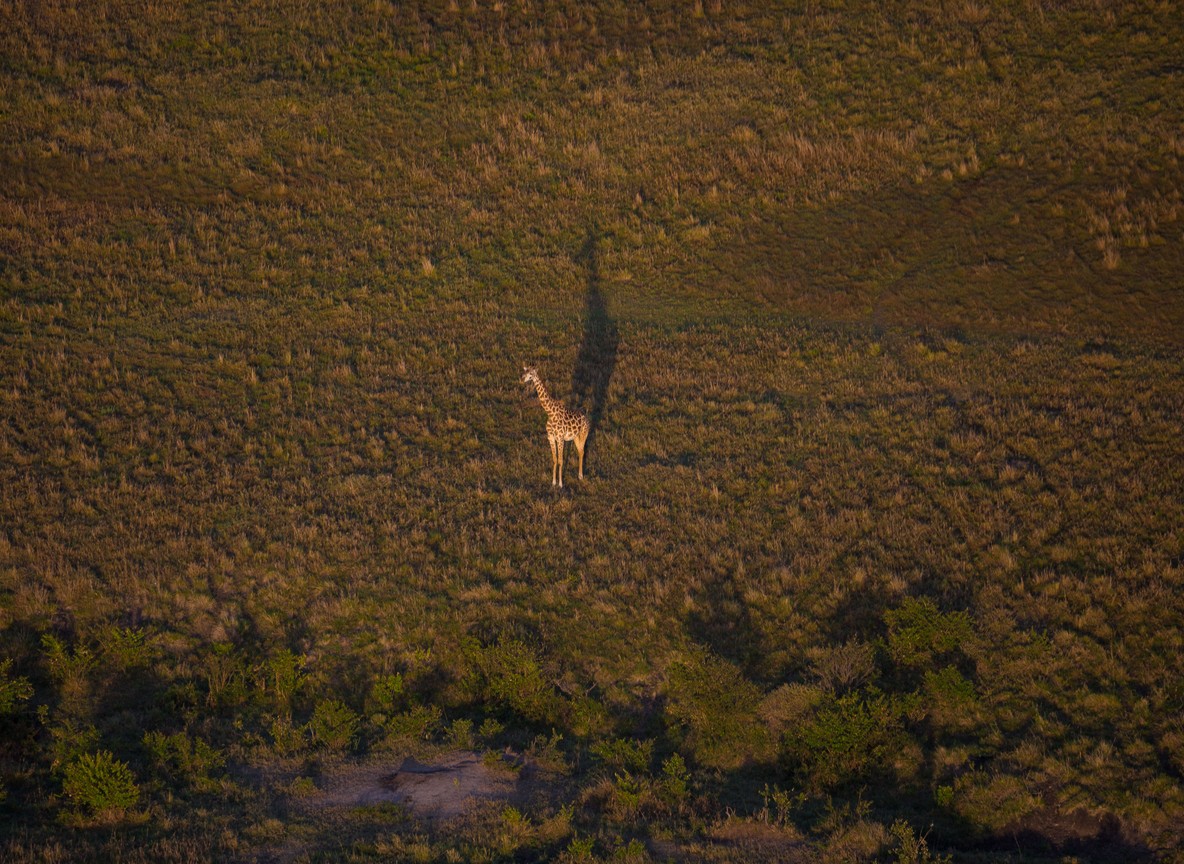
Rangers in Murchison Falls National Park spent three days this week doing something delicate: darting, crating, and trucking 12 of the world’s rarest giraffes across northern Uganda. The translocation ran from July 22 to July 24, 2026, moving the animals 106 kilometers from the park to Ajai Wildlife Reserve near Arua. The reason is not habitat loss or disease. It is oil. TotalEnergies’ Tilenga project sits inside Murchison Falls, and Uganda Wildlife Authority wants this giraffe population clear of the drilling zone before activity there intensifies. Touring Insights breaks down what moved, where it went, and what it means for anyone planning a Murchison Falls safari this year.
What Happened: 12 Nubian Giraffes Moved 106km
Uganda Wildlife Authority (UWA) captured and relocated 12 Nubian giraffes from Murchison Falls National Park to Ajai Wildlife Reserve between July 22 and July 24, 2026. The operation covered 106 kilometers (about 65 miles), moving the animals from Uganda’s largest national park to a much smaller reserve on the west bank of the Nile near Arua. Wildlife translocations of this size are logistically hard. Each giraffe has to be darted, kept calm during transport, and released into unfamiliar terrain with enough water and browse to survive the transition. UWA has run smaller giraffe moves before, but this one was explicitly tied to industrial activity inside a national park, which makes it a different kind of story than a routine population-management exercise.
Why These Giraffes Were at Risk: The Tilenga Oil Project
Roughly 40% of Uganda’s known oil reserves sit under the Murchison Falls area. TotalEnergies began drilling inside the park under the Tilenga project in June 2023, part of a wider development that also includes the East African Crude Oil Pipeline running to the Tanzanian coast. Tilenga’s well pads and access roads overlap with parts of the park giraffe use for grazing and movement. UWA’s stated goal for the relocation is to reduce the population’s exposure to that industrial footprint while drilling activity continues. It is worth being direct about the tradeoff here: Uganda is pursuing oil production inside a national park boundary, and this relocation is a mitigation step, not a reversal of that decision. Readers who want the conservation angle without the industrial context are getting only half the picture.
Where the Giraffes Went: Ajai Wildlife Reserve
Ajai Wildlife Reserve is a 166 km2 protected area on the western bank of the White Nile, about 40 km east of Arua town in northwestern Uganda. UWA has managed it since 1965, though it has been under-visited compared to Murchison Falls or Queen Elizabeth for decades. The giraffe introduction is part of a broader restocking effort. Southern white rhinos, buffalo, zebras, and Uganda kobs have also been reintroduced there in recent years, aimed at rebuilding a reserve that lost much of its large-mammal population to poaching pressure in past decades.
| Detail | Ajai Wildlife Reserve |
|---|---|
| Size | 166 km2 |
| Location | West bank of the White Nile, approx. 40 km east of Arua |
| Distance from Kampala | approx. 385 km, 7 hr drive (indicative, via Arua route) |
| Managed by | Uganda Wildlife Authority |
| Established | 1965 |
| Other reintroduced species | Southern white rhino, buffalo, zebra, Uganda kob |
| Current giraffe population | 12 (July 2026 translocation) |
Murchison Falls vs Ajai: Two Very Different Parks
Murchison Falls and Ajai now share a giraffe population, but they are not comparable safari destinations yet. One is Uganda’s flagship park with three airstrips and a full lodge circuit. The other is a small, quiet reserve with almost no tourism infrastructure. The table below lines up the basics.
| Feature | Murchison Falls National Park | Ajai Wildlife Reserve |
|---|---|---|
| Size | 3,893 km2 | 166 km2 |
| Distance from Kampala | approx. 305 km, 5 hr drive | approx. 385 km, 7 hr drive |
| Main access point | Kichumbanyobo Gate | Reachable via Arua town |
| Airstrips | Pakuba, Chobe, Bugungu | None currently |
| Standard non-resident entry fee | indicative USD 40-45 per 24 hr | not yet standardized for tourism; confirm with UWA |
| Tourism infrastructure | Full lodge circuit, boat cruises, game drives | Minimal, still developing |
| Oil development inside boundary | Yes, Tilenga project | No |
Fees and distances are indicative and can change. Confirm current figures with Uganda Wildlife Authority before booking a trip built around either site.
The Nubian Giraffe: Why This Subspecies Matters
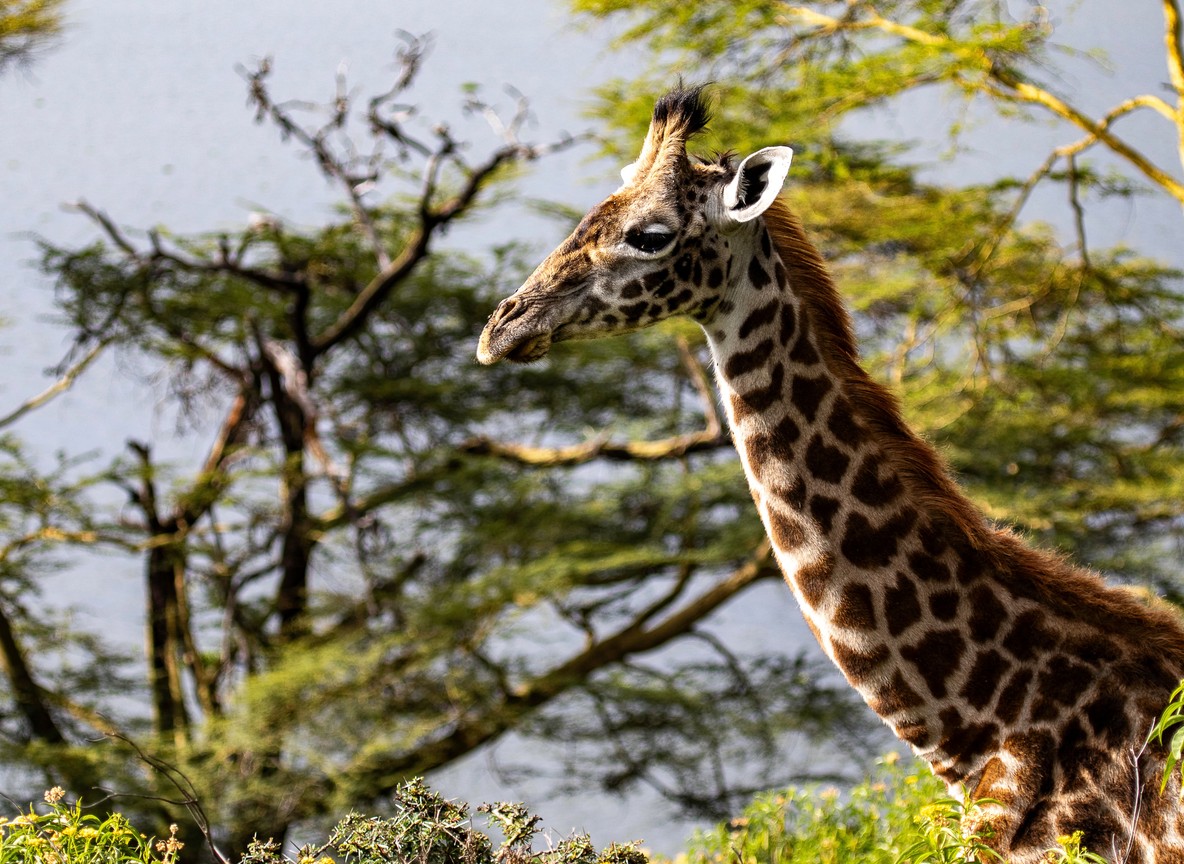
The Nubian giraffe (Giraffa camelopardalis camelopardalis) is the most endangered giraffe subspecies alive today. Uganda’s population, long known locally as the Rothschild’s giraffe, was reclassified under the Nubian giraffe grouping following updated genetic research. Murchison Falls holds one of the largest remaining Nubian giraffe populations anywhere, built up over decades after the subspecies nearly disappeared from Uganda in the 1990s due to civil conflict and poaching. That history is part of why this relocation drew international attention. A population that conservationists spent 25 years rebuilding is now the same population sitting closest to an active oil development.
What This Means for a Murchison Falls Safari Right Now
Travelers do not need to change Murchison Falls plans because of this news. The park still holds the bulk of its giraffe population, along with lion, elephant, buffalo, and the boat route below the falls on the Victoria Nile. UWA has not restricted general tourist access to the Buligi circuit, where most giraffe sightings happen on a standard game drive. What has changed is the long-term picture. Drilling infrastructure will become more visible in parts of the park over the next few years, and this relocation is an early signal of how UWA plans to manage that overlap. Anyone booking a Murchison Falls trip specifically for giraffe photography should ask their operator or lodge for current sighting patterns on the Buligi and Nile Delta tracks, since animal movement can shift as construction activity changes.
Can You Visit Ajai Wildlife Reserve Yet?
Not in any organized way. Ajai has no lodges, no airstrip, and no standard game-drive circuit set up for visitors. The reserve sits close enough to Arua town to reach by road, but infrastructure for tourists is still limited. UWA’s restocking program, including this giraffe introduction, reads as a multi-year plan to eventually open Ajai as a secondary wildlife destination in Uganda’s West Nile region. For now, treat it as a conservation story rather than a bookable safari stop. Travelers curious about West Nile Uganda more broadly should look at it as an emerging region to watch over the next few years, not a place to add to a 2026 itinerary.
Explorer Notes
Ask your Murchison Falls guide directly about giraffe sighting locations before you book activities. Rangers track movement patterns daily and know which stretch of the Buligi circuit is producing sightings that week. If a guide mentions Tilenga well pads or access roads while driving, that is normal context now, not a sign anything is wrong with the trip. The Nile ferry crossing at Paraa remains the standard way to reach the northern game-viewing circuit from most lodges south of the river, and that crossing is unaffected by the relocation. For photographers, early morning light on the Rabongo or Kaniyo Pabidi side trails still offers strong giraffe and forest bird combinations, away from the busier main tracks.
FAQ
How many giraffes were moved and where did they go? UWA relocated 12 Nubian giraffes 106 kilometers from Murchison Falls National Park to Ajai Wildlife Reserve, in an operation that ran July 22 to July 24, 2026.
Why did Uganda move the giraffes out of Murchison Falls? To reduce their exposure to TotalEnergies’ Tilenga oil project, which is drilling inside the park. Roughly 40% of Uganda’s known oil reserves sit in the Murchison Falls area.
Is Murchison Falls still a good safari destination after this news? Yes. The park retains the majority of its giraffe population along with lion, elephant, and buffalo, and standard game drives on the Buligi circuit continue as normal.
Can tourists visit Ajai Wildlife Reserve to see the giraffes? Not yet in any organized way. Ajai has no lodges or airstrip and is not currently set up for standard safari tourism, though UWA is restocking it with rhino, buffalo, zebra, and kob alongside the giraffes.
What is a Nubian giraffe, and why is it rare? It is the most endangered giraffe subspecies, encompassing the population long called Rothschild’s giraffe in Uganda. Murchison Falls holds one of the largest surviving populations after decades of conservation work.
What to Read Next
- Planning a Murchison Falls trip? See how the park’s size, gates, and airstrips compare against Queen Elizabeth National Park for a two-park Uganda itinerary.
- Curious about the Tilenga project’s wider footprint? Ask a partner operator how oil development areas are being routed around current game-drive circuits.
- Want the bigger conservation picture? Look at how Uganda Wildlife Authority is restocking under-visited reserves like Ajai for the next wave of safari destinations.
This translocation is still unfolding, and sighting patterns inside Murchison Falls may shift over the coming months. Check the Tour Packages page for current Murchison Falls itineraries, or ask a partner operator for the latest word from rangers on where the giraffes are moving before you lock in a game-drive route.